
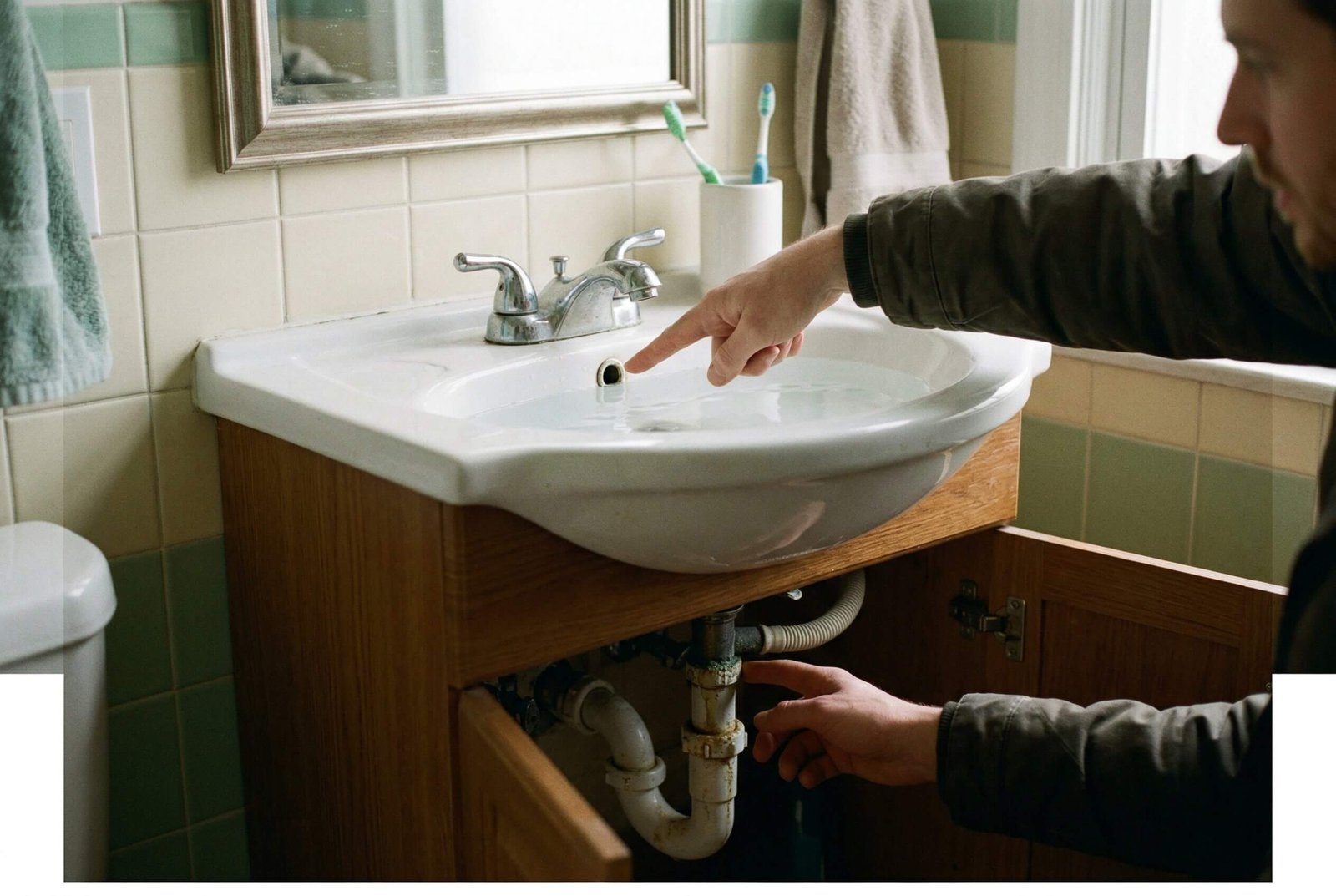
A bathroom sink overflow drain is a small but important feature built into most bathroom sinks in American homes. The overflow opening is usually located near the top edge of the sink basin and is designed to prevent water from spilling over the sink if the faucet is left running. When the water level rises high enough, the overflow hole allows excess water to enter a hidden internal channel inside the sink and flow down into the main drain pipe.
Many homeowners do not notice the overflow drain until it stops functioning properly. In some cases, water may rise to the top of the sink without entering the overflow opening. In other situations, the overflow hole may produce unpleasant odors or drain very slowly. These symptoms often indicate that debris or buildup inside the overflow channel is preventing it from working correctly.
The bathroom sink overflow system also plays a secondary role in the plumbing system. In addition to preventing sink flooding, it helps introduce air into the drain system, which can improve how water flows through the pipes. When the overflow passage becomes clogged or restricted, it can sometimes affect how efficiently the sink drains.
Understanding how the overflow drain works and what causes it to stop functioning properly can help homeowners recognize the early signs of a developing drain issue. Identifying the source of the blockage inside the overflow system can also prevent larger plumbing problems from developing in the sink’s drainage system.
What This Page Covers
ToggleUnderstanding How a Bathroom Sink Overflow Drain Works
The bathroom sink overflow drain is a built-in safety feature designed to prevent water from spilling over the edge of the sink. Although many homeowners rarely think about it, this small opening plays an important role in how the sink’s drainage system functions. The overflow system allows excess water to enter a hidden channel inside the sink and travel safely into the main drain pipe.
In most modern bathroom sinks used in U.S. homes, the overflow drain is integrated directly into the sink structure. The overflow hole connects to an internal passage molded inside the sink that leads down to the main drain assembly. When water rises high enough inside the sink basin, it enters this passage and flows into the same pipe that normally carries water from the sink drain opening.
What the Overflow Drain Opening Does
The overflow drain opening is the small hole located near the upper wall of the sink basin. Its primary function is to act as a safety outlet for excess water.
If the faucet is accidentally left running while the sink stopper is closed, the water level will rise in the basin. Once the water reaches the overflow opening, it can enter the overflow channel instead of spilling over the sink rim and onto the bathroom floor.
This feature helps reduce the risk of water damage in bathrooms where sinks are frequently used.
How the Overflow Channel Inside the Sink Works
Inside the sink, there is a hidden vertical passage known as the overflow channel. This channel connects the overflow hole near the top of the sink to the main drain assembly at the bottom.
When water enters the overflow hole, it travels down through this internal channel and eventually merges with the water flowing through the primary drain pipe. Because the channel is enclosed inside the sink body, debris buildup inside this passage can be difficult to detect.
Over time, materials such as soap residue, toothpaste, hair particles, and bacteria buildup can accumulate in this hidden channel and restrict the flow of water.
How the Overflow Connects to the Main Sink Drain
At the base of the sink, the overflow channel connects to the drain assembly just above the tailpiece pipe. This connection allows water entering the overflow system to join the main drain flow.
From this point, the water moves through the standard drain path:
-
Sink drain assembly
-
Tailpiece pipe
-
P-trap
-
Branch drain line inside the wall
If debris accumulates near the connection point between the overflow channel and the drain assembly, water entering the overflow opening may not flow properly into the drain system.
Why the Overflow Also Helps Sink Drainage Airflow
In addition to preventing overflow, the overflow opening also helps introduce air into the drain system. When water drains from a sink filled with water, air must enter the drain pipe to replace the space left behind by the draining water.
The overflow opening can allow additional air to enter the drain system, helping water flow more smoothly through the pipes. If the overflow passage becomes clogged, this airflow assistance may be reduced, which can sometimes contribute to slower drainage or unusual drain behavior.
Signs the Bathroom Sink Overflow Drain Is Not Working
A bathroom sink overflow drain usually operates unnoticed until it fails to function properly. Because the overflow system is only used when the sink fills to a high water level, many homeowners do not realize there is a problem until water rises higher than expected or other unusual symptoms appear. When the overflow passage becomes clogged or restricted, the sink may lose an important safety feature that prevents water from spilling onto the bathroom floor.
Several warning signs can indicate that the overflow drain is not working correctly. Recognizing these symptoms early can help homeowners understand that buildup or blockage may exist inside the hidden overflow channel.
Water Not Draining Through the Overflow Hole
One of the clearest signs of an overflow drain problem occurs when the sink basin fills with water and nothing flows through the overflow opening. Normally, once the water level reaches the overflow hole, excess water should begin entering the opening and draining away.
If the water level continues rising without entering the overflow opening, the internal overflow channel may be blocked by debris or buildup.
Sink Water Level Rising Too High
When the overflow system is working properly, it helps prevent the water level from rising too close to the rim of the sink. If the overflow passage becomes blocked, the sink may fill almost to the top before draining.
This situation can increase the risk of accidental overflow if the faucet is left running.
Slow Drainage When Sink Is Full
Some homeowners notice that the sink drains more slowly when the basin is filled with water. A properly functioning overflow system allows air to enter the drain system and helps water flow smoothly.
If the overflow passage becomes clogged, airflow into the drain may be reduced, which can sometimes affect how quickly the sink empties.
Unpleasant Odors Coming From the Overflow Opening
Because the overflow channel is a dark and damp environment, bacteria and organic debris can accumulate inside the passage. When buildup develops inside the overflow channel, it may produce unpleasant smells that emerge from the overflow opening.
These odors are often described as musty or similar to dirty drain smells.
Gurgling or Airflow Problems in the Drain
In some situations, a clogged overflow passage may affect the airflow balance in the sink drain system. When the sink drains, homeowners may hear unusual gurgling sounds or notice air bubbles appearing in the water.
These symptoms can indicate that the overflow system is no longer helping provide proper airflow to the drain.
Most Common Causes of a Bathroom Sink Overflow Drain Not Working
When a bathroom sink overflow drain stops functioning properly, the issue is usually caused by buildup inside the hidden overflow channel. Unlike the main sink drain, the overflow passage is not frequently flushed with large amounts of water. Because of this, small amounts of debris can gradually accumulate inside the channel and restrict the flow of water.
In U.S. homes, bathroom sinks are regularly used for brushing teeth, washing hands, shaving, and grooming. During these daily activities, substances such as soap, toothpaste, and grooming products may splash near the overflow opening or enter the overflow passage. Over time, these materials can stick to the interior surfaces of the channel and create a blockage that prevents the overflow system from working properly.
Understanding the most common causes of overflow drain problems helps homeowners identify why the overflow opening may no longer allow water to pass through.
Soap and Toothpaste Residue Buildup
Soap and toothpaste frequently contribute to buildup inside bathroom sink overflow channels. When soap mixes with minerals present in tap water, it can form a sticky residue commonly known as soap scum.
This residue can coat the inside of the overflow channel and gradually narrow the passage. Toothpaste can also leave behind a paste-like film that traps other debris. As this buildup thickens, it may eventually prevent water from flowing through the overflow system.
Hair and Grooming Debris Inside the Overflow Channel
Hair particles and small grooming debris can sometimes enter the overflow opening during everyday bathroom use. Although the overflow hole is small, tiny strands of hair or beard trimmings can become trapped inside the channel.
Once hair becomes lodged in the passage, it can begin catching other materials such as soap residue or dirt. Over time, this combination of debris may form a blockage inside the overflow channel.
Bacteria Sludge and Biofilm Formation
The interior of the overflow channel is often damp and dark, creating an environment where bacteria can grow. When organic materials accumulate inside the passage, bacteria begin breaking down the debris.
As bacteria grow, they can form a slimy layer called biofilm along the inside of the channel. This biofilm can trap additional debris and further restrict the flow of water through the overflow system.
Mineral Deposits From Hard Water
In many regions of the United States, tap water contains minerals such as calcium and magnesium. Over time, these minerals can form deposits inside plumbing fixtures and pipes.
If mineral deposits accumulate inside the overflow channel, they can narrow the passage and make it easier for debris to collect in that area.
Cosmetic and Personal Care Product Residue
Bathroom sinks are often used while applying or removing cosmetics, shaving products, and skincare items. Many of these products contain oils, waxes, or thick ingredients that do not dissolve completely in water.
When these substances enter the overflow opening or splash into the channel, they can stick to the interior surfaces and contribute to buildup that eventually restricts water flow.
Hidden Causes Homeowners Often Miss
While many bathroom sink overflow problems are caused by simple buildup near the overflow opening, some issues originate deeper inside the overflow channel or at the connection between the overflow passage and the main drain assembly. Because this part of the plumbing system is hidden inside the sink structure, homeowners often overlook these causes when trying to understand why the overflow drain is not working.
Professional plumbers frequently investigate these less obvious causes when the overflow opening appears clear but water still does not pass through it properly. These hidden issues can involve internal blockages, drain assembly interference, or airflow conditions within the plumbing system that affect how the overflow passage functions.
Deep Blockage Inside the Overflow Channel
The overflow channel inside the sink is typically a narrow vertical passage molded into the sink body. Over time, debris such as soap residue, toothpaste particles, and bacteria buildup can collect along the interior walls of this channel.
Because the passage is hidden and difficult to access, debris can accumulate for long periods without being noticed. If the buildup thickens enough, it may completely block the path that water must travel through when entering the overflow opening.
Drain Stopper Assembly Blocking the Overflow Path
The sink drain assembly sits directly below the area where the overflow channel connects to the main drain. If the drain stopper mechanism becomes misaligned or if debris collects around this area, it may partially block the opening where overflow water enters the drain system.
When this connection point becomes restricted, water entering the overflow channel may have difficulty reaching the drain pipe.
Internal Sink Manufacturing Debris
In rare cases, sinks may contain small pieces of manufacturing debris or leftover materials inside the overflow channel. These materials can remain inside the passage from the time the sink was produced.
If these materials shift or combine with debris buildup over time, they may contribute to a blockage that prevents the overflow system from functioning properly.
Plumbing System Pressure Issues
The overflow channel can also be affected by airflow and pressure conditions within the plumbing system. If the main drain line or vent system experiences airflow restrictions, it may influence how water moves through the overflow connection.
In some situations, pressure imbalances inside the drain system may make it more difficult for overflow water to enter the main drain pipe.
Improper Sink Installation
If the sink drain assembly is installed incorrectly, it may interfere with the connection point where the overflow channel meets the drain system. A misaligned drain gasket or improperly tightened drain assembly may partially block this opening.
When this occurs, water entering the overflow channel may not be able to flow freely into the drain pipe.
Where Overflow Drain Blockages Usually Occur
When a bathroom sink overflow drain stops working, the blockage is typically located in specific parts of the overflow system where debris tends to accumulate. Because the overflow passage is narrow and not frequently flushed with water, small amounts of residue can gradually build up and restrict the flow path. Over time, this buildup may prevent water from traveling through the overflow channel and into the main drain pipe.
Professional plumbers often focus on a few key areas when diagnosing overflow drain problems. These locations are where debris, bacteria, and mineral buildup most commonly collect inside the overflow system.
Overflow Entry Hole in the Sink Basin
The overflow entry hole is the small opening located near the upper wall of the sink basin. This is the first point where water enters the overflow system when the sink fills beyond its normal level.
Soap residue, toothpaste splashes, and grooming products can accumulate around this opening. Over time, this buildup can partially block the hole and reduce the amount of water that can enter the overflow passage.
Internal Overflow Channel Inside the Sink
The internal overflow channel is the hidden passage inside the sink that carries water from the overflow opening to the drain assembly. Because this passage is enclosed within the sink body, debris buildup inside the channel can remain unnoticed for long periods.
Bacteria growth, soap scum, hair particles, and mineral deposits can gradually narrow the passage and restrict water flow through the overflow system.
Connection Point Between Overflow and Drain Pipe
At the bottom of the sink, the overflow channel connects to the main drain assembly. This connection point allows overflow water to merge with the water flowing through the regular sink drain.
If debris collects near this connection, it can block the path where overflow water enters the drain pipe. This is one of the most common locations where plumbers find overflow drain blockages.
Upper Section of the Sink Tailpiece
The tailpiece is the vertical pipe located directly beneath the sink drain assembly. In some cases, debris buildup near the top of the tailpiece can restrict the area where overflow water joins the main drain flow.
When this section becomes partially blocked, water entering the overflow channel may not be able to move freely into the drain system.
How Professional Plumbers Diagnose Overflow Drain Problems
When a bathroom sink overflow drain is not working, plumbers focus on identifying where the blockage or restriction is occurring inside the overflow system. Because the overflow channel is hidden inside the sink structure, diagnosing the problem requires examining both the visible overflow opening and the internal drain components connected to it.
Professional plumbers typically follow a systematic inspection process to determine whether the problem is caused by debris buildup, drain assembly interference, or a deeper drainage issue. This process helps locate the exact point where water flow through the overflow channel is being restricted.
Visual Inspection of Overflow Openings
The first step usually involves examining the overflow hole located near the upper wall of the sink basin. Plumbers check this opening for visible signs of residue, soap buildup, or debris that may be restricting the entry point.
They may also inspect the surrounding sink surface to see whether grooming products, toothpaste, or soap splashes have accumulated around the overflow hole.
Testing Water Flow Through the Overflow System
To determine whether the overflow channel is functioning properly, plumbers may test how water flows through the system. This often involves allowing water to fill the sink basin to the level of the overflow opening.
If the overflow system is working correctly, water should enter the hole and begin draining through the internal channel. If the water level continues rising without entering the overflow opening, it indicates a blockage somewhere inside the overflow passage.
Inspecting the Sink Stopper Assembly
The sink drain stopper assembly is located directly below the connection point where the overflow channel meets the drain system. Plumbers inspect this area to ensure that the stopper mechanism or debris around the drain assembly is not blocking the overflow outlet.
Hair, soap scum, and grooming residue can sometimes collect near this area and interfere with the flow of overflow water.
Drain Camera Inspection
In cases where the blockage is suspected deeper inside the drain system, plumbers may use a small inspection camera designed for plumbing pipes. This camera allows them to view the interior of the drain assembly and connected pipes.
A camera inspection can reveal debris buildup, mineral deposits, or obstructions that may be affecting the overflow connection point.
Checking Vent and Drain Pressure Conditions
Although less common, plumbers may also check whether airflow or pressure issues inside the plumbing system are affecting how water flows through the overflow channel. Problems with vent pipes or shared drain lines can sometimes influence drainage behavior in the sink.
By evaluating both the overflow passage and the connected plumbing system, plumbers can determine the exact cause of the overflow drain problem.
Warning Signs of a Larger Drain System Problem
A bathroom sink overflow drain that stops working is often caused by buildup inside the overflow channel itself. However, in some situations the issue may indicate a deeper problem within the sink’s drainage system. When additional symptoms appear along with the overflow failure, plumbers begin investigating whether the main drain line, vent system, or other connected plumbing components are contributing to the issue.
Recognizing these warning signs can help homeowners understand when the problem may extend beyond the overflow opening and involve a larger portion of the plumbing system.
Overflow Not Working With Slow Sink Drainage
If the sink overflow drain is not working and the sink also drains slowly, the problem may involve buildup deeper inside the drain pipe. Hair, soap residue, toothpaste, and grooming products can accumulate inside the drain assembly and pipes beneath the sink.
As this buildup grows, it may affect both the normal sink drain and the connection point where overflow water enters the drain system.
Overflow Smells Like Sewer Gas
A strong unpleasant odor coming from the overflow opening may indicate bacterial buildup or sewer gas entering the overflow channel. Because the overflow passage is often damp and dark, it can become a place where bacteria grow if debris accumulates inside the channel.
In some cases, the odor may also indicate issues with the P-trap or vent system that allow sewer gases to move through the drain.
Multiple Bathroom Fixtures Draining Slowly
When several fixtures in the same bathroom begin draining slowly at the same time, the problem may exist in the shared branch drain line rather than in the sink itself. Bathroom sinks, showers, and bathtubs often connect to the same drain pipe inside the wall.
If this shared pipe becomes partially blocked, it can affect how water drains from each fixture.
Water Backing Up When Sink Is Full
If water backs up or drains very slowly when the sink basin is filled, the plumbing system may be experiencing a restriction deeper inside the pipes. In these situations, the overflow drain may appear not to work simply because water cannot move efficiently through the connected drain system.
When this occurs, professional inspection may be necessary to locate the restriction inside the plumbing.
Real Plumbing Scenarios in U.S. Homes
Bathroom sink overflow drain problems often develop in ways that reflect how sinks are used in everyday life. Professional plumbers across the United States frequently encounter similar situations when homeowners report that the overflow drain is not working properly. These real-world scenarios help explain why overflow channels become clogged and why the issue may appear gradually over time.
The design of the sink, the age of the home, the water quality in the area, and daily bathroom habits can all influence how quickly debris builds up inside the overflow passage.
Bathroom Sinks in Older Homes
Older homes in the United States sometimes have sinks that have been in use for many years without the overflow channel ever being cleaned or flushed. Over time, soap residue, toothpaste splashes, and organic debris can slowly accumulate inside the hidden overflow passage.
Because the overflow channel is rarely exposed to large amounts of water flow, the buildup inside this passage may remain undisturbed for years until it eventually restricts the path where overflow water should travel.
Homes With Heavy Grooming Product Use
In many households, bathroom sinks are used frequently for grooming activities such as shaving, applying cosmetics, washing hair, or using facial cleansers. These activities can introduce a variety of products into the sink environment.
Substances such as shaving cream, hair products, makeup residue, and skincare products may splash near the overflow opening or enter the channel during normal sink use. Over time, these products can coat the interior surfaces of the overflow passage and contribute to buildup.
Homes With Hard Water Mineral Deposits
In regions where the water supply contains high levels of minerals, plumbing fixtures may develop mineral deposits over time. Hard water minerals such as calcium and magnesium can accumulate inside plumbing components and narrow the internal passages.
When mineral deposits form inside the overflow channel, they can reduce the diameter of the passage and make it easier for debris to collect in that area.
Sinks Used Frequently for Shaving and Hair Washing
Bathroom sinks that are regularly used for shaving or washing hair are more likely to experience debris buildup in both the main drain and the overflow channel. Small hair particles can sometimes enter the overflow opening and become trapped inside the passage.
Once hair becomes lodged inside the channel, it can catch soap residue and other debris, gradually forming a blockage that prevents the overflow system from functioning properly.
Basic Prevention Tips for Overflow Drain Issues
Although bathroom sink overflow drains are not used as frequently as the main drain opening, keeping this part of the sink system clean can help prevent blockages from developing inside the hidden overflow channel. Because the passage is narrow and receives limited water flow, small amounts of debris can gradually accumulate and restrict the path where overflow water should travel.
Professional plumbers often recommend simple maintenance habits that help reduce the chances of buildup forming inside the overflow system. These habits focus on minimizing debris near the overflow opening and ensuring that the sink drain system remains clear.
Keeping Overflow Openings Clear
The small overflow hole located near the top of the sink basin should remain free of debris. Soap residue, toothpaste splashes, and grooming products can sometimes collect around this opening.
Wiping the sink surface around the overflow hole during routine bathroom cleaning can help prevent buildup from entering the overflow passage.
Avoiding Product Buildup Near the Sink Rim
Many bathroom products used near the sink contain oils, waxes, or thick ingredients that may stick to surfaces. When these products splash near the overflow opening, they can eventually enter the overflow channel.
Avoiding excessive product residue around the upper portion of the sink can reduce the amount of material that may enter the overflow system.
Periodic Drain Flushing Habits
Occasionally running warm water through the sink after normal use can help move small particles of debris further down the drain system. While the overflow passage itself may not receive direct water flow, keeping the main drain system clear can reduce the chance that debris accumulates near the overflow connection point.
Regular sink use combined with proper drainage helps keep the plumbing system functioning efficiently.
Monitoring Sink Drain Performance
Homeowners can also watch for early signs that the overflow system may be developing buildup. If water begins rising higher than expected in the sink or if unpleasant odors appear near the overflow opening, it may indicate that debris is accumulating inside the overflow passage.
Identifying these symptoms early can help prevent the overflow drain from becoming completely blocked.
When to Call a Professional Plumber
A bathroom sink overflow drain that is not working is often caused by buildup inside the hidden overflow channel or near the connection point where the overflow passage meets the main drain. In many cases, homeowners may not notice the issue until the sink fills with water and the overflow opening fails to drain the excess water. While minor buildup may sometimes be manageable, certain situations indicate that the problem may require professional inspection.
Plumbers have the experience and tools needed to diagnose hidden blockages inside the sink’s drain assembly and determine whether the overflow issue is connected to a larger plumbing problem. Because the overflow channel is built into the sink structure, locating the exact cause of the blockage can sometimes require specialized inspection methods.
Persistent Overflow Drain Failure
If the overflow opening consistently fails to allow water to drain from the sink, the internal overflow channel may be blocked by debris, soap residue, or mineral deposits. When the blockage cannot be identified from the visible opening, plumbers may need to inspect the connection point where the overflow channel meets the main drain assembly.
Persistent failure of the overflow system usually indicates that buildup has developed deeper inside the hidden passage.
Strong Odors From the Overflow Opening
Unpleasant smells coming from the overflow opening can indicate that organic debris or bacteria buildup has accumulated inside the channel. Because the overflow passage remains damp and receives limited water flow, it can become a place where bacteria grow if debris is present.
A plumber can determine whether the odor is caused by buildup inside the overflow channel or by a separate issue within the drain system.
Sink Drainage Problems Appearing at the Same Time
If the sink overflow drain is not working and the sink also drains slowly, the issue may involve buildup deeper in the drain pipes. Debris inside the drain assembly can sometimes affect both the main drain and the overflow connection point.
In these cases, professional inspection may be necessary to determine whether the restriction exists in the sink drain, the branch drain line, or another part of the plumbing system.
Professional Tools Used for Diagnosis
Professional plumbers use specialized tools that allow them to inspect drain systems and locate hidden blockages without damaging the plumbing.
Common diagnostic tools include:
-
Drain inspection cameras used to view the inside of drain pipes
-
Drain augers (plumbing snakes) used to locate debris buildup
-
Hydro jetting equipment used to clear heavy drain blockages
-
Vent inspection tools used to evaluate airflow in the plumbing system
These tools help plumbers determine whether the overflow drain problem is caused by a local blockage in the sink or by a deeper plumbing issue.
Final Thoughts
A bathroom sink overflow drain is a simple but important feature designed to protect your home from accidental sink overflows. When functioning correctly, the overflow opening allows excess water to enter a hidden internal channel and safely drain into the plumbing system. This prevents water from spilling over the sink rim and causing damage to the bathroom floor or cabinets.
When the overflow drain stops working, the problem is usually caused by buildup inside the narrow overflow channel. Materials such as soap residue, toothpaste, grooming products, hair particles, bacteria sludge, and mineral deposits can gradually accumulate inside the passage. Because the overflow system is hidden and not regularly flushed with water, debris can build up over time without being noticed.
Although an overflow blockage may seem like a small issue, it can reduce an important safety feature of the sink. Understanding the signs, causes, and locations of overflow drain blockages can help homeowners identify the problem early. In some cases, persistent overflow issues may also signal buildup in the sink drain system that requires further inspection.
Maintaining a clean sink area and paying attention to unusual drain behavior can help prevent overflow system problems and keep the sink’s drainage system working properly.