
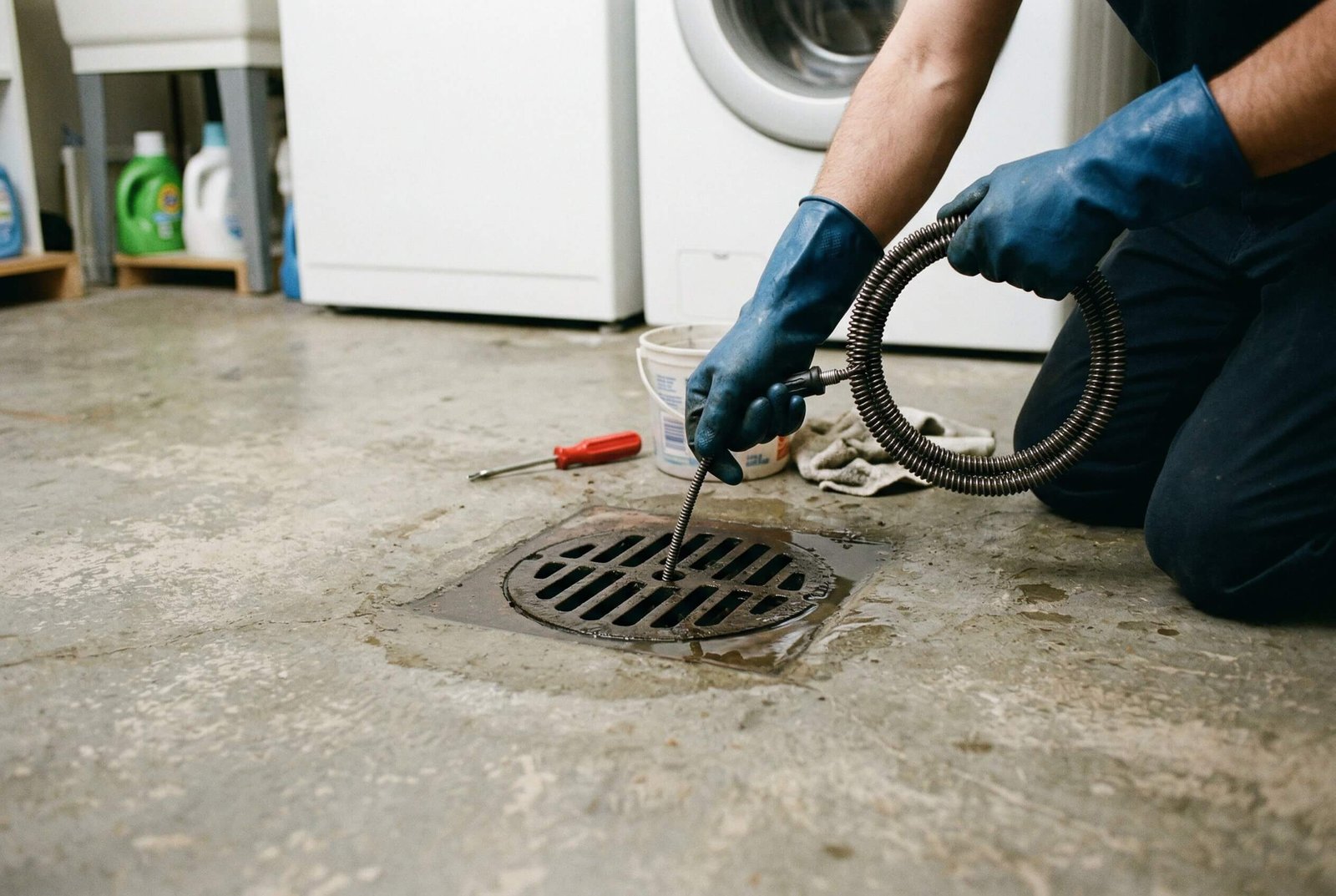
A laundry room floor drain is designed to handle excess water from washing machines, utility sinks, and accidental overflows. In many U.S. homes, this drain acts as a backup safety feature—preventing water from flooding the laundry area when something goes wrong. However, because it handles lint-heavy water, detergent residue, and dirt, it’s also one of the most common drains to clog over time.
Unlike bathroom or kitchen drains, laundry drains deal with fabric fibers, soap buildup, and fine debris that gradually collect inside the pipe. Over time, these materials combine to form a thick, sticky sludge that restricts water flow. If not addressed early, this buildup can lead to slow drainage, standing water, or even full backups during a washing cycle.
When a laundry room floor drain gets clogged, the risks can escalate quickly. Water from your washing machine may overflow onto the floor, potentially damaging walls, flooring, and nearby appliances. In some cases, standing water can lead to mold growth or unpleasant odors, especially in enclosed laundry spaces.
The good news is that many laundry floor drain clogs can be cleared using safe and practical DIY methods. Simple solutions like removing lint, flushing the drain, or using a plunger can often restore proper flow. For more stubborn clogs, tools like drain snakes or wet/dry vacuums may be required.
In this guide, you’ll learn how to clear a laundry room floor drain clog step-by-step. We’ll walk through quick fixes, more effective methods, and professional solutions, along with tips to prevent future clogs and avoid costly repairs.
What This Page Covers
ToggleIdentify the Type of Clog Before Clearing
Before you start trying to clear a laundry room floor drain clog, it’s important to understand what kind of blockage you’re dealing with. In real U.S. homes, laundry drains handle a unique mix of lint, detergent residue, and fine debris, which means clogs can form in different ways. Using the wrong method—like pushing water into a deep lint blockage—can make the situation worse.
A quick diagnosis helps you choose the safest and most effective approach, saving time and preventing damage to your plumbing system.
Lint Buildup vs Deep Pipe Blockage
Most laundry room floor drain clogs are caused by lint and fabric fibers from washing machines. These materials accumulate near the drain opening or along the pipe walls, forming a soft but restrictive blockage.
Signs of lint buildup:
- Slow drainage during or after washing cycles
- Visible lint or residue near the drain opening
- Problem improves slightly after flushing
A deep pipe blockage is more serious and occurs further down the drain line.
Signs of a deep blockage:
- Water backs up quickly when the washer drains
- No visible debris at the surface
- No improvement after basic cleaning methods
Temporary vs Recurring Laundry Drain Issues
Understanding whether the clog is temporary or recurring helps determine how aggressive your fix needs to be.
Temporary clog:
- Caused by recent lint or residue buildup
- Usually resolves with basic cleaning
- No prior history of drainage problems
Recurring clog:
- Drain slows down repeatedly over time
- Flow improves temporarily, then worsens again
- Indicates buildup deeper in the pipe system
Recurring clogs often require more thorough cleaning or professional attention.
Warning Signs of Serious Laundry Drain Problems
Some symptoms suggest the issue may go beyond a simple clog and involve a larger plumbing problem.
Watch for these signs:
- Water backing up onto the laundry room floor during washing cycles
- Strong musty or sewage odor from the drain
- Gurgling sounds when water drains
- Slow drainage in other parts of the home
These signs often indicate a deeper blockage or system-wide issue.
Local Laundry Drain vs Main Sewer Line Issue
It’s important to determine whether the clog is isolated to the laundry drain or connected to the main sewer line.
Local drain clog:
- Only the laundry drain is affected
- Other fixtures work normally
- Typically caused by lint and residue buildup
Main sewer line issue:
- Multiple drains in the home are slow or backing up
- Laundry drain overflows when other fixtures are used
- Higher risk of sewage backup
This distinction matters because DIY methods are effective for local clogs but not for deeper sewer line problems.
Once you clearly identify the type of clog, you can move forward with the right method to clear it safely and effectively.
Quick Fixes You Can Try First (Low Risk)
If the clog appears minor or recently formed, it’s best to begin with simple, low-risk methods. In most U.S. laundry rooms, floor drain clogs are caused by lint, detergent residue, and light sludge buildup—problems that can often be cleared without tools or chemicals.
Starting with these methods helps you avoid unnecessary damage to pipes while solving the issue quickly and affordably.
Hot Water Flush for Detergent and Residue
Hot water is one of the easiest ways to break down detergent residue and light sludge inside a laundry floor drain. Over time, soap and fabric softener can coat the inside of pipes, slowing water flow.
When it works best:
- Drain is slow but not fully blocked
- No standing water on the floor
- Problem started recently
Limitations:
- Won’t clear heavy lint buildup
- Ineffective for deep clogs
Pour hot (not boiling) water slowly into the drain to help dissolve and move the residue through the pipe.
Dish Soap Treatment for Grease and Fabric Residue
Laundry drains often accumulate sticky residue from detergents, softeners, and dirt. Dish soap can help break down this buildup and improve water flow.
How it helps:
- Loosens sticky residue inside pipes
- Breaks down light grease and buildup
- Makes flushing more effective
Best use cases:
- Mild slow drainage
- Residue buildup from regular washing
- Early-stage clogs
Let the soap sit for several minutes before flushing with hot water for better results.
Manual Removal of Lint and Debris
In many cases, the clog is right at the drain opening. Lint, hair, and debris can collect under the drain cover and restrict water flow.
What to do:
- Remove the drain cover if accessible
- Pull out visible lint and debris using gloves
- Clear buildup around the opening
Important tips:
- Avoid pushing debris deeper into the drain
- Dispose of material properly
- Wear gloves for hygiene and safety
This is often one of the quickest ways to restore normal drainage.
Using a Plunger on Laundry Floor Drains
A plunger can be effective for clearing soft clogs caused by lint and residue. It works by creating pressure that dislodges the blockage.
Steps to follow:
- Ensure there is water covering the drain
- Place the plunger firmly over the opening
- Push and pull to create suction
- Repeat several times and test drainage
Common mistakes:
- Not sealing the plunger properly
- Using too little water
- Stopping too soon
Plunging is especially useful when combined with flushing to clear loosened debris.
These quick fixes can resolve many laundry room floor drain clogs if the blockage is not too deep. If the problem persists, it’s time to move on to more effective intermediate methods.
Intermediate Fix Methods (More Effective)
If the quick fixes didn’t clear the clog, it usually means the blockage is more compacted or sitting deeper inside the drain line. Laundry room floor drains commonly collect dense lint mixed with detergent residue, which forms a sticky sludge that simple flushing can’t remove.
At this stage, you’ll need methods that physically break up or pull out the clog. These techniques are commonly used in real U.S. plumbing work and are still safe for homeowners when done carefully.
Baking Soda and Vinegar for Organic Buildup
This method works well for breaking down detergent residue and light organic buildup. The reaction creates fizzing action that helps loosen sludge inside the pipe.
How it helps:
- Breaks down soap and residue buildup
- Loosens lint stuck to pipe walls
- Improves flow when followed by hot water
Best use cases:
- Mild to moderate clogs
- Residue-heavy buildup
- Situations where chemicals are not preferred
Limitations:
- Not effective for heavy lint clogs
- Won’t clear deep or solid blockages
Using a Drain Snake or Hand Auger
A drain snake is one of the most effective tools for clearing laundry drain clogs. It reaches into the pipe to break apart or pull out lint and debris.
What it does:
- Reaches deeper into the pipe system
- Breaks compacted lint buildup
- Pulls out sludge and debris
Best for:
- Moderate to deep clogs
- Blockages that don’t respond to flushing
- Recurring drainage issues
Important considerations:
- Move slowly to avoid damaging pipes
- Do not force the tool if resistance is high
- Clean the tool after use
Wet/Dry Vacuum for Lint and Water Removal
A wet/dry vacuum works especially well for laundry drains because many clogs consist of loose lint and sludge. Instead of pushing debris further in, it pulls it out.
When it works best:
- Loose lint buildup
- Standing water in the laundry room
- Shallow to mid-level clogs
Advantages:
- Removes clog material completely
- Reduces risk of pushing blockage deeper
- Quick results for certain clogs
Limitations:
- Requires a tight seal over the drain
- Not effective for deep or hardened clogs
Cleaning the Laundry Drain Trap
Many laundry floor drains include a trap that collects debris over time. Lint, soap residue, and sludge can build up in this area and restrict water flow.
Signs the trap may be clogged:
- Persistent slow drainage
- Musty odor from the drain
- Water pooling near the opening
What to focus on:
- Removing accumulated lint and sludge
- Clearing residue buildup
- Restoring proper flow
Important notes:
- Use gloves and basic tools
- Avoid dismantling complex components
- Expect some odor during cleaning
These intermediate methods are often enough to clear most laundry room floor drain clogs. If the drain still doesn’t clear, the blockage is likely deeper or more severe, requiring stronger solutions.
Advanced Fix Methods (Stronger Solutions)
If intermediate methods didn’t clear the clog, the blockage is likely deeper, denser, or more compacted than typical lint buildup. In laundry room floor drains, this often means a combination of lint, detergent residue, and sludge has hardened inside the pipe, restricting water flow significantly.
At this stage, stronger solutions are needed—but they must be used carefully. Over-aggressive methods can damage pipes, especially in older U.S. homes with aging plumbing systems.
Enzyme Cleaners for Lint and Organic Waste
Enzyme-based cleaners are a safe and effective option for breaking down lint, soap residue, and organic sludge over time. They use natural bacteria to digest buildup inside the pipes.
How they work:
- Break down organic material gradually
- Clean pipe walls over time
- Improve long-term drainage
Best use cases:
- Recurring slow drains
- Lint-heavy buildup
- Preventative maintenance after clearing a clog
Advantages:
- Safe for pipes
- Environmentally friendly
- Helps prevent future clogs
Limitations:
- Slow results (often overnight or longer)
- Not effective for solid or deep blockages
Chemical Cleaners (Use with Caution)
Chemical drain cleaners can break down stubborn detergent and organic buildup quickly, but they should be used carefully.
When they may be used:
- Tough clogs that haven’t responded to other methods
- Situations where faster results are needed
Risks to consider:
- Can damage older or weakened pipes
- Produces strong fumes in enclosed laundry rooms
- Hazardous if misused
Safety guidelines:
- Follow manufacturer instructions strictly
- Never mix different chemical products
- Ensure proper ventilation
Chemical cleaners should be a last resort for DIY fixes.
High-Pressure Water Flushing
High-pressure water flushing helps break apart compacted lint and detergent sludge inside the pipe. While not as strong as professional hydro jetting, it can still improve flow.
How it helps:
- Dislodges buildup from pipe walls
- Pushes debris through the system
- Restores water movement
Best use cases:
- Sludge-heavy clogs
- Residue buildup from detergents
- After loosening debris with other methods
Limitations:
- May push clog deeper instead of removing it
- Not effective for solid obstructions
Deep Snaking for Severe Blockages
Deep snaking involves extending the drain snake further into the pipe system to reach stubborn clogs. This method targets blockages beyond the immediate drain area.
Signs you need deeper snaking:
- Water backs up quickly during washing cycles
- No improvement after intermediate methods
- Repeated clogging
What it addresses:
- Compacted lint deep in pipes
- Partial blockages restricting flow
- Early-stage sewer line buildup
Important considerations:
- Do not force the tool against resistance
- Excess pressure can damage pipes
- Stop if the clog doesn’t clear after multiple attempts
If these advanced methods still don’t resolve the issue, the blockage is likely severe or located deep within the system. In such cases, professional plumbing solutions are the safest and most effective option.
Professional Drain Fix Methods
When a laundry room floor drain clog goes beyond DIY and advanced methods, professional plumbers use specialized tools to clear the system completely and identify the root cause. In many U.S. homes, laundry drains connect to long horizontal pipes or the main sewer line, which means deeper clogs require more than just surface cleaning.
Professional solutions focus not only on removing the blockage but also on restoring full drainage performance and preventing future issues.
Hydro Jetting for Heavy Lint and Sludge Buildup
Hydro jetting is one of the most effective methods plumbers use to fully clean laundry drain lines. It uses high-pressure water to remove buildup from inside the pipes.
What it does:
- Breaks apart compacted lint and detergent sludge
- Removes residue from pipe walls
- Flushes out debris throughout the system
Best for:
- Severe or recurring clogs
- Thick lint and soap buildup
- Drains connected to larger pipe systems
Advantages:
- Thorough cleaning, not just clog removal
- Long-lasting results
- Reduces future buildup
Limitations:
- Requires professional equipment
- Not suitable for weak or damaged pipes
Motorized Augers for Deep Drain Blockages
Motorized augers (power snakes) are used to break through tough clogs deep inside the drain system. These tools are stronger and more effective than manual snakes.
How they work:
- Rotating cable cuts through compacted lint and sludge
- Breaks apart blockages
- Clears the path for water flow
Best for:
- Deep clogs beyond DIY reach
- Hardened buildup inside pipes
- Partial blockages restricting flow
Advantages:
- Highly effective for stubborn clogs
- Faster than manual methods
- Can restore drainage quickly
Camera Inspection for Diagnosis
Professional plumbers often use camera inspections to identify the exact cause and location of a clog. This eliminates guesswork and ensures the correct solution is applied.
What it helps identify:
- Location and severity of the clog
- Lint and residue buildup patterns
- Pipe damage or corrosion
- Structural issues
Why it matters:
- Prevents unnecessary work
- Ensures accurate repairs
- Helps avoid recurring problems
Pipe Repair if Needed
In some cases, the issue isn’t just buildup—it’s a problem with the pipe itself. Laundry drains in older U.S. homes may have damaged or deteriorating pipes that contribute to repeated clogs.
Situations requiring repair:
- Recurring clogs despite cleaning
- Cracked or corroded pipes
- Structural damage in the drainage system
Possible solutions:
- Localized pipe repair
- Pipe relining (in some cases)
- Full pipe replacement for severe issues
Professional drain fix methods provide the most reliable solution for severe laundry room floor drain clogs. While they involve higher costs, they address the root cause and help prevent future problems.
Tools Used to Clear Laundry Room Floor Drain Clogs
Clearing a laundry room floor drain clog effectively depends on using the right tools for the situation. In real U.S. plumbing work, professionals always choose tools based on the type of clog—especially since laundry drains deal heavily with lint, detergent residue, and sludge buildup.
Understanding these tools helps you decide whether a DIY fix is enough or if the problem requires professional equipment.
Basic Homeowner Tools
These tools are ideal for handling minor or surface-level clogs, which are common in laundry drains.
Common tools:
- Plunger (cup-style for flat drains)
- Rubber gloves for removing lint and debris
- Bucket for flushing or removing water
- Screwdriver or tool to remove drain cover
When to use:
- Slow drainage
- Visible lint buildup
- Recent clogs caused by washing cycles
These tools are simple but often effective for early-stage blockages.
Intermediate Tools
When the clog is deeper or more compacted, intermediate tools provide better reach and effectiveness.
Common tools:
- Hand auger (manual drain snake)
- Wet/dry vacuum for suction removal
- Flexible brushes for cleaning trap areas
When to use:
- Lint buildup beyond the surface
- Sludge formed from detergent residue
- Standing water in the laundry room
Advantages:
- Can break apart or remove clogs
- More effective than basic methods
- Suitable for most moderate blockages
Professional Equipment
For severe or deep clogs, professional plumbers use advanced tools designed for powerful cleaning and accurate diagnosis.
Common tools:
- Power auger (motorized snake)
- Hydro jetting machine
- Drain inspection camera
What they’re used for:
- Deep or stubborn clogs
- Sewer line involvement
- Identifying hidden pipe issues
Advantages:
- Highly effective for tough situations
- Provides long-term solutions
- Helps prevent recurring problems
Limitations:
- Requires professional expertise
- Not suitable for DIY use in most cases
Using the right tool at the right time is key to successfully clearing a laundry room floor drain clog. Starting simple and progressing carefully ensures you fix the problem without causing additional damage.
Cost to Clear a Laundry Room Floor Drain Clog
The cost to clear a laundry room floor drain clog depends on how severe the blockage is and whether you handle it yourself or hire a professional. In U.S. homes, laundry drain clogs often start small but can become more expensive if lint and detergent buildup are left untreated.
Understanding the cost breakdown helps you decide the most practical and cost-effective approach early.
DIY Cost Range
For minor clogs, DIY methods are usually affordable and effective. Most homeowners can clear light lint and residue buildup using basic tools and cleaners.
Typical DIY costs:
- Plunger: $10 – $25
- Hand auger: $25 – $80
- Enzyme cleaner: $10 – $30
- Chemical cleaner: $10 – $25
- Wet/dry vacuum (if needed): $50 – $150+
Estimated total:
- Basic fix: $10 – $50
- With tool purchase: $50 – $150+
DIY is best suited for shallow clogs and early-stage buildup.
Plumber Cost Range (U.S.)
If DIY methods don’t work, hiring a plumber is the next step. Costs vary depending on the method required to clear the clog.
Typical pricing:
- Service call fee: $75 – $150
- Basic snaking: $100 – $300
- Motorized auger: $250 – $600
- Hydro jetting: $300 – $800+
- Camera inspection: $150 – $400
More severe clogs involving thick lint or deeper buildup may require advanced tools and higher costs.
Factors That Affect Cost
Several factors influence the final cost of clearing a laundry room floor drain clog.
Key factors:
- Severity of lint and sludge buildup
- Depth of the blockage
- Accessibility of the drain system
- Age and condition of pipes
- Equipment required for the job
More complex and deeper clogs generally result in higher costs.
Emergency Overflow Costs
If the clog causes water to back up during washing cycles, it can lead to flooding and additional expenses.
Potential costs:
- Emergency plumbing service: $150 – $500+
- Water cleanup and drying: $300 – $1,500+
- Mold prevention or remediation: $500 – $2,500+
- Damage to flooring or walls: varies
Addressing the issue early can prevent these additional costs.
Clearing a laundry room floor drain clog early is always more affordable than waiting. Acting quickly can save money and prevent larger plumbing problems.
When NOT to Clear It Yourself
While many laundry room floor drain clogs can be handled with DIY methods, there are situations where trying to fix the problem yourself can lead to bigger issues. In U.S. plumbing systems, laundry drains often connect directly to the main drainage line, and misjudging the severity of a clog can result in backups, pipe damage, or costly repairs.
Recognizing these situations early helps you avoid turning a manageable problem into a major one.
Sewer Line Issues
If the clog is connected to the main sewer line, DIY methods are usually ineffective and can make the situation worse.
Signs of a sewer line issue:
- Laundry drain backs up when toilets or sinks are used
- Multiple drains in the home are slow or clogged
- Strong sewage odor from the drain
Why to avoid DIY:
- Standard tools cannot reach deep blockages
- Risk of pushing the clog further into the system
- Requires professional equipment like hydro jetting
Multiple Fixtures Affected
When more than one fixture in your home is experiencing drainage issues, the problem is not limited to the laundry drain.
Common signs:
- Slow drainage in sinks, showers, and toilets
- Water backing up in multiple areas
- Gurgling noises across different drains
Why DIY is not enough:
- Indicates a deeper blockage in the system
- Surface-level fixes won’t solve the issue
- Incorrect attempts can increase pipe pressure
Recurring Laundry Drain Clogs
If your laundry room floor drain keeps clogging even after cleaning, it’s a sign of an underlying issue.
Possible causes:
- Partial blockage deep in the pipe
- Heavy lint and detergent buildup
- Structural or design issues in the drainage system
Why to stop DIY:
- Temporary fixes won’t address the root cause
- Repeated attempts can stress pipes
- Professional inspection is needed
Risk of Pipe Damage
Older homes in the U.S. often have aging plumbing systems that are more vulnerable to damage.
Risk factors:
- Old cast iron or clay pipes
- Signs of corrosion or leaks
- Strong resistance when using a drain snake
- History of plumbing issues
Why DIY can be risky:
- Forcing tools can crack pipes
- Chemical cleaners can weaken pipe structure
- Repairs can become significantly more expensive
In these situations, calling a professional plumber is the safest and most effective option. Attempting to fix a serious issue yourself can often lead to greater damage and higher costs.
How to Prevent Future Laundry Room Drain Clogs
Clearing a laundry room floor drain clog solves the immediate problem, but prevention is what keeps your system working long-term. In most U.S. homes, laundry drains clog because of continuous lint, detergent residue, and fabric fibers entering the system with every wash cycle. Without proper habits, buildup will return.
A few simple maintenance steps can significantly reduce the chances of future clogs and keep your drain flowing efficiently.
Managing Lint from Washing Machines
Lint is the number one cause of laundry drain clogs. Even though washing machines have built-in filters, a large amount of lint still passes into the drainage system.
Best practices:
- Install an external lint trap on the washer discharge hose
- Clean lint filters regularly
- Avoid washing heavily lint-producing items without precautions
Why it matters:
- Lint accumulates quickly inside pipes
- Combines with detergent to form sludge
- Leads to recurring clogs if unmanaged
Regular Drain Cleaning Routine
Consistent maintenance is essential to prevent buildup inside the drain.
Recommended routine:
- Flush the drain with hot water once a month
- Use enzyme cleaners periodically to break down residue
- Inspect the drain opening for lint and debris
Benefits:
- Prevents sludge buildup
- Maintains smooth water flow
- Reduces chances of sudden blockages
Avoiding Excess Detergent Use
Using too much detergent is a common mistake that contributes to clogging. Excess soap doesn’t fully dissolve and instead sticks to pipe walls.
What to do:
- Follow manufacturer-recommended detergent amounts
- Avoid overusing fabric softeners
- Use high-efficiency detergents when possible
Why it matters:
- Soap residue traps lint and debris
- Forms thick buildup inside pipes
- Makes clogs harder to remove over time
Using Drain Covers
Installing a drain cover is a simple but effective way to prevent debris from entering the system.
Benefits:
- Catches lint and larger particles
- Reduces buildup inside pipes
- Easy to clean and maintain
Make sure to clean the cover regularly to keep it effective.
Annual Professional Inspection
For long-term prevention, consider having your drainage system inspected annually by a professional.
What they check:
- Early signs of buildup
- Pipe condition and structural integrity
- Potential drainage issues
Benefits:
- Prevents major clogs before they happen
- Extends the life of your plumbing system
- Saves money on emergency repairs
Preventing laundry room drain clogs is simple when you stay consistent. With proper habits and routine maintenance, you can avoid recurring issues and keep your drain working efficiently.
Final Thoughts
Clearing a laundry room floor drain clog is more than just fixing slow drainage—it’s about preventing water damage, protecting your home, and keeping your plumbing system running efficiently. In many U.S. homes, these drains handle a constant flow of lint, detergent residue, and debris, which means clogs can build up gradually and become serious if ignored.
The best approach is always to start simple and move step-by-step. Many clogs can be cleared using basic methods like removing lint, flushing with hot water, or plunging. If those don’t work, intermediate tools like a drain snake or wet/dry vacuum are usually effective for deeper buildup. The key is choosing the right method based on the type of clog instead of jumping straight to aggressive solutions.
It’s equally important to recognize when the problem is beyond DIY. Signs like recurring clogs, multiple drain backups, or strong odors often indicate a deeper issue in the system. In these cases, professional solutions such as hydro jetting, camera inspections, or motorized augers provide a safer and more reliable fix.
Acting early can save you money. A simple DIY solution may cost very little, but delaying the problem can lead to expensive repairs, especially if water damage or mold develops.
Ultimately, the goal is not just to clear the clog—it’s to prevent future ones. With proper maintenance, smart detergent use, and regular inspections, you can keep your laundry room floor drain working efficiently and avoid unexpected issues.