
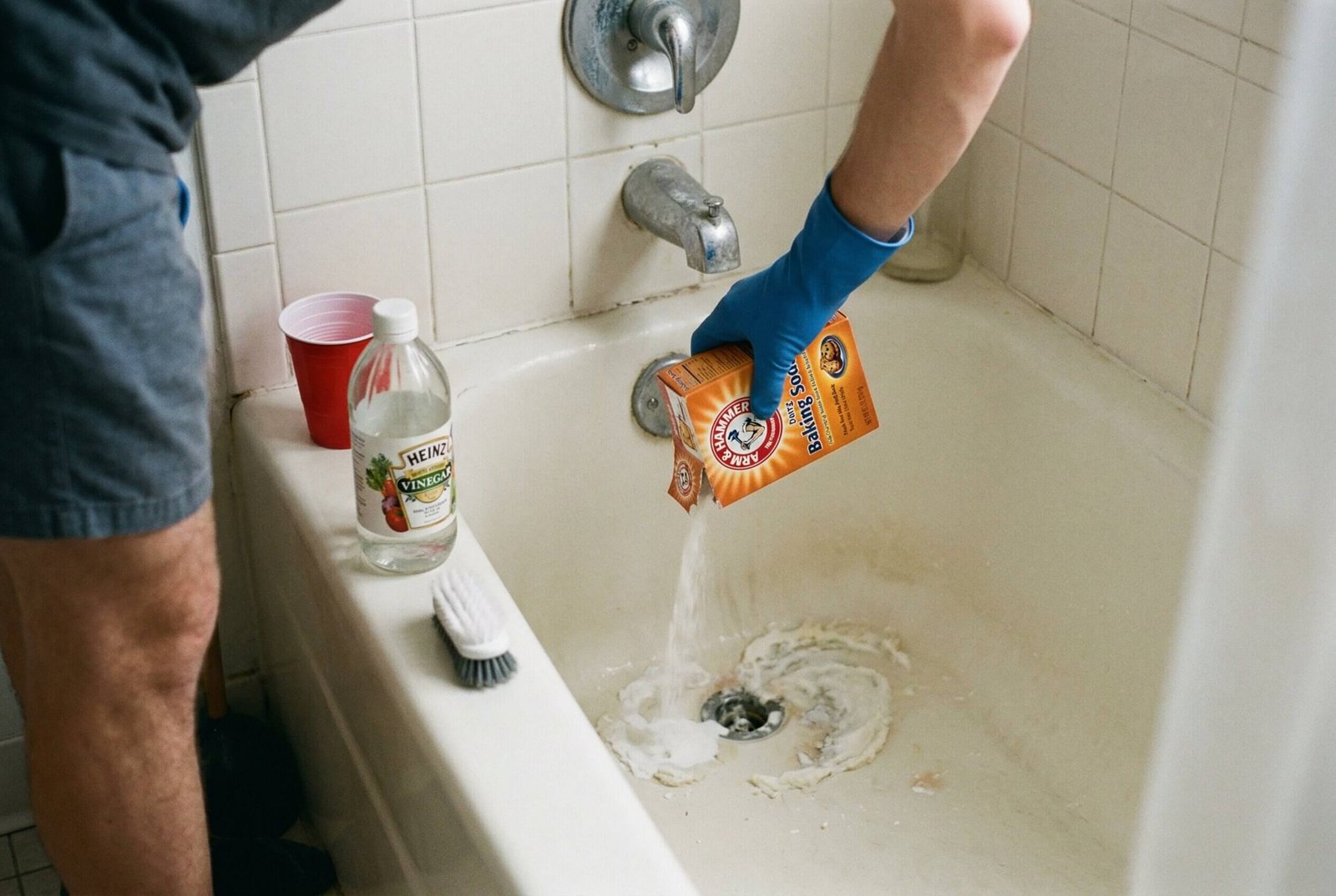
Soap buildup in a bathtub drain is one of the most common causes of slow drainage in U.S. homes, especially in households that regularly use bar soaps, conditioners, and bath products. Unlike hair clogs that create a visible blockage, soap buildup forms gradually as a sticky residue that coats the inside of your pipes. Over time, this layer thickens and narrows the pipe, restricting water flow and causing the tub to drain slowly.
This problem is even more common in areas with hard water, where minerals like calcium and magnesium combine with soap to create a stubborn substance known as soap scum. Instead of washing away, this residue sticks to pipe walls and acts like glue—trapping hair, dirt, and other debris. As the buildup grows, it turns into a dense blockage that standard rinsing or occasional cleaning won’t fix.
The good news is that you can usually clear soap buildup in a bathtub drain using the right step-by-step approach. Light buildup can often be removed with simple methods like hot water flushing or mild cleaning solutions, while thicker or deeper buildup may require tools like a drain snake or stronger treatments.
In this guide, you’ll learn how to clear soap buildup in a bathtub drain effectively, starting with safe DIY methods and progressing to more advanced solutions when needed. You’ll also understand when the buildup is too severe for DIY and requires professional cleaning, helping you avoid wasted effort and potential pipe damage.
What This Page Covers
ToggleIdentify Soap Buildup vs Other Types of Clogs
Before you try to clear soap buildup in a bathtub drain, it’s important to confirm that soap residue is actually the main problem. Many bathtub clogs are a combination of soap, hair, and debris—and using the wrong method can leave part of the blockage behind.
Professional plumbers always identify the clog type first because soap buildup behaves very differently compared to solid blockages.
What Soap Buildup Looks Like in Pipes
Soap buildup doesn’t usually form a single solid clog. Instead, it creates a thick, sticky coating along the inner walls of the pipe.
You may notice:
- A white, gray, or slightly chalky residue
- A slippery or waxy texture
- Gradual reduction in water flow over time
This layer builds up slowly and doesn’t always block water completely. Instead, it narrows the pipe diameter, making drainage slower and more restricted.
Soap Scum vs Hair Clogs
Soap buildup alone is rarely the only issue. In most bathtub drains, it combines with hair to create a more stubborn clog.
Here’s how they differ:
- Soap buildup:
- Coats pipe walls
- Develops gradually
- Causes slow, consistent drainage
- Hair clogs:
- Form tangled blockages
- Often sit near the drain opening
- Can suddenly block water flow
When combined, soap acts like glue, holding hair together and making the clog harder to remove. This is why simple rinsing often doesn’t fix the problem.
Temporary vs Heavy Soap Accumulation
Not all soap buildup requires aggressive cleaning. Some cases are light and easy to clear, while others are thick and compacted.
A light buildup usually:
- Causes mild slow drainage
- Responds well to hot water or mild cleaning methods
- Hasn’t fully narrowed the pipe
A heavy buildup typically:
- Has formed over months or years
- Significantly slows drainage
- Traps hair and debris inside it
- Requires tools or stronger cleaning methods
Recognizing the difference helps you choose the right solution without overdoing it.
Warning Signs of Severe Buildup
In some cases, soap buildup becomes serious enough that basic methods won’t work. Identifying these signs early can save time and prevent pipe damage.
Watch for:
- Drain slows down quickly after cleaning
- Water pools in the tub even after attempts to fix it
- You’ve already tried basic methods with little improvement
- The clog feels deeper rather than near the surface
- Drain performance keeps getting worse over time
These signs usually indicate that the buildup has extended deeper into the pipe and may require advanced methods or professional cleaning.
Once you confirm that soap buildup is the primary issue, you can move forward with the most effective methods to break it down and restore proper drainage.
Quick Fixes You Can Try First (Low Risk)
If the soap buildup in your bathtub drain is still in the early stages, you can often clear it using simple, low-risk methods. These approaches focus on loosening and flushing away residue rather than forcing or cutting through a blockage.
Start here before moving to stronger solutions. In many cases, these methods are enough to restore normal drainage.
Hot Water Flush for Soap Residue
Hot water is one of the most effective ways to soften and loosen soap buildup, especially when the residue hasn’t hardened completely.
Soap scum becomes more pliable when heated, allowing it to break away from pipe walls and wash down the drain.
How to do it:
- Boil a pot of water
- Slowly pour it into the drain in stages
- Allow a few seconds between pours
Best used when:
- Drain is slow but not fully blocked
- Buildup is recent or mild
- No standing water is present
Important note:
Use caution with very hot water in older plumbing systems. Frequent use of boiling water can stress certain pipe materials over time.
Dish Soap + Hot Water Method
This method works well when soap buildup is mixed with oils, conditioners, or bath products. Dish soap helps break down greasy residue, making it easier to flush away.
How to do it:
- Pour a generous amount of liquid dish soap into the drain
- Let it sit for 10–15 minutes
- Follow with hot water
Best used when:
- You use oily bath products or conditioners
- The drain feels sluggish rather than blocked
This combination is especially effective for soft, sticky buildup.
Manual Cleaning of Drain Opening
Soap buildup often starts near the drain opening, where residue mixes with hair and debris. Removing this layer manually can immediately improve water flow.
What to do:
- Remove the drain cover or stopper
- Use gloves or a simple drain tool
- Clean out visible residue and debris
What you’ll notice:
- Faster drainage right away
- Less resistance when water flows
This step is simple but often overlooked—and it can make a big difference.
Plunger Method for Soap Sludge
When soap buildup has started to thicken into a soft clog, a plunger can help move it along and break it apart.
How to do it correctly:
- Add a small amount of water to the tub
- Seal the overflow drain to maintain pressure
- Place the plunger firmly over the drain
- Push and pull steadily for 15–20 seconds
- Test drainage
Best used when:
- Water drains slowly but still moves
- The clog feels soft or sludge-like
Common mistake:
Not sealing the overflow drain, which reduces pressure and makes plunging ineffective.
These low-risk methods are often enough to clear early-stage soap buildup and restore proper drainage. If you see improvement, continue with maintenance to prevent the buildup from returning.
If the drain remains slow, it means the soap residue is thicker or deeper in the pipe—and you’ll need more effective methods next.
Intermediate Fix Methods (More Effective)
If low-risk methods didn’t fully clear the soap buildup, the residue has likely thickened or moved deeper into the drain line. At this stage, you need methods that can either break apart the buildup more effectively or physically remove the material stuck inside the pipe.
These techniques are still safe for homeowners when done correctly, but they require a more targeted approach.
Baking Soda and Vinegar for Soap Breakdown
This method helps loosen and break apart soap scum that has started sticking to the pipe walls. The reaction creates bubbling action that can help lift residue and make it easier to flush out.
How to use it:
- Pour about ½ cup of baking soda into the drain
- Follow with 1 cup of vinegar
- Let the mixture sit and react for 15–20 minutes
- Flush with hot water
Best used when:
- Buildup is moderate and not fully solid
- Drain is slow but still partially flowing
Limitations:
- Not strong enough for thick or hardened buildup
- Won’t remove heavy hair clogs mixed with soap
Think of this as a deep cleaning step, not a full removal method.
Drain Snake for Mixed Soap + Hair Clogs
When soap buildup combines with hair, it creates a sticky mass that simple flushing won’t remove. A drain snake is one of the most effective tools to physically clear this type of clog.
How to use it safely:
- Remove the drain stopper or overflow plate
- Insert the snake into the drain
- Rotate gently while pushing forward
- Pull it out slowly to remove debris
- Repeat as needed
Best used when:
- You suspect hair trapped inside soap buildup
- The clog feels deeper than the surface
Important tip:
Avoid forcing the snake aggressively, especially in older pipes.
Wet/Dry Vacuum Extraction
A wet/dry vacuum can be very effective for pulling out soft soap sludge and debris instead of pushing it further down the pipe.
How to do it:
- Set the vacuum to liquid mode
- Create a tight seal over the drain opening
- Run the vacuum for several seconds
- Check if debris has been extracted
Best used when:
- The clog is soft and not fully hardened
- You want to avoid pushing buildup deeper
This method works best when combined with other cleaning steps.
Cleaning Overflow Channel
In many bathtub systems, the overflow opening (located below the faucet) connects directly to the drain line. Soap buildup often collects here without being noticed.
What to do:
- Remove the overflow plate
- Insert a snake or cleaning tool through the opening
- Remove hidden residue and buildup
Best used when:
- Standard drain cleaning didn’t fully solve the issue
- You suspect buildup beyond the visible drain
These intermediate methods are where most soap buildup problems get fully resolved. If your drain starts flowing significantly better after these steps, you’ve likely removed the main obstruction.
If the issue still persists, it means the buildup is more severe, deeper, or hardened, requiring stronger or professional-level solutions.
Prompt me to continue to the next section: Advanced Fix Methods (Stronger Solutions)
Advanced Fix Methods (Stronger Solutions)
If intermediate methods didn’t fully clear the soap buildup, it usually means the residue has hardened, spread deeper into the pipe, or combined with other debris. At this stage, simple cleaning isn’t enough—you need stronger methods that can break down or remove thick, stubborn buildup.
These approaches are more effective, but they must be used carefully to avoid damaging your plumbing system.
Enzyme Cleaners for Organic Soap Residue
Enzyme-based cleaners are one of the safest advanced options for breaking down soap buildup over time. They use natural bacteria and enzymes to digest organic materials like soap residue, body oils, and trapped debris.
How they work:
- Poured into the drain and left overnight
- Gradually break down buildup inside the pipe
Best used when:
- You have recurring soap buildup
- Pipes are coated rather than fully blocked
- You want a safe, long-term solution
Advantages:
- Safe for most pipe materials
- Helps prevent future buildup
- No harsh chemicals
Limitations:
- Slow results
- Not effective for solid or heavily compacted clogs
Chemical Cleaners (Soap Dissolution Risks)
Chemical drain cleaners can dissolve soap buildup quickly, but they come with risks and should only be used when other methods fail.
When they might help:
- Thick soap scum that hasn’t responded to other methods
- Moderate buildup that isn’t fully hardened
Risks to consider:
- Can corrode pipes with repeated use
- May damage older plumbing systems
- Heat generated can weaken PVC pipes
Important precautions:
- Use only as directed
- Never mix with other cleaning agents
- Avoid repeated applications
Most professional plumbers limit or avoid chemical cleaners due to these risks.
High-Pressure Water Flushing
High-pressure water can help remove soap buildup that is stuck along pipe walls. It works by breaking apart residue and flushing it through the system.
Best used when:
- Buildup has been loosened but not fully cleared
- You need to flush remaining debris
Limitations:
- Less effective on fully hardened buildup
- Requires controlled pressure to avoid pipe damage
While basic versions can be done at home, professional-grade systems are significantly more effective.
Deep Snaking for Compacted Soap Clogs
When soap buildup becomes dense and compacted, deeper snaking is often required. This involves using a longer or more flexible auger to reach further into the drain line.
What this method targets:
- Thick soap + hair combinations
- Blockages beyond the P-trap
- Recurring clogs that weren’t fully cleared
Key considerations:
- Requires patience and control
- Forcing the tool can damage pipes
- May not clean pipe walls completely
If these advanced methods still don’t resolve the issue, it’s a strong indication that the soap buildup has become a system-level problem, such as heavy pipe coating or deeper blockage.
At that point, professional cleaning methods are the most effective and safest solution.
Professional Drain Cleaning Methods
When soap buildup becomes thick, hardened, or spread throughout the drain line, DIY methods often stop working. At this point, professional plumbers use specialized equipment to completely remove buildup—not just partially clear it.
This is especially important when the pipe walls are coated with residue, because partial cleaning will only lead to the problem coming back quickly.
Hydro Jetting for Soap-Coated Pipes
Hydro jetting is one of the most effective ways to remove heavy soap buildup. It uses high-pressure water streams to clean the entire inside of the pipe.
Unlike snaking, which punches a hole through the clog, hydro jetting:
- Breaks apart thick soap scum
- Flushes out residue stuck to pipe walls
- Restores full pipe diameter
Best used when:
- Soap buildup has coated the pipe
- Recurring clogs keep returning
- Other methods only provided temporary relief
This method is widely used by professionals because it provides a long-lasting solution.
Motorized Auger for Dense Clogs
A motorized auger (power snake) is used when the soap buildup has combined with hair and formed a dense blockage deeper in the drain line.
This tool uses a rotating cable to:
- Cut through compacted debris
- Break apart solid clogs
- Reach further than manual tools
Best used when:
- Hand augers were not effective
- The clog is deep or tightly packed
- Drain flow is severely restricted
This is one of the most common professional tools for stubborn bathtub drain clogs.
Camera Inspection for Pipe Condition
If the problem keeps coming back or isn’t fully resolved, plumbers often perform a camera inspection to identify the root cause.
A small waterproof camera is inserted into the drain to check:
- Exact location of the buildup
- Pipe condition (corrosion, narrowing, damage)
- Hidden issues causing repeated clogs
This step ensures the solution is targeted and prevents guesswork.
Pipe Descaling or Repair
In older homes or systems with long-term soap buildup, the residue can harden and significantly reduce pipe diameter. In these cases, cleaning alone may not be enough.
Plumbers may recommend:
- Descaling: Removing hardened buildup from pipe walls
- Pipe repair: Fixing damaged or misaligned sections
- Partial replacement: If the pipe is too restricted or deteriorated
When this is needed:
- Drain remains slow even after cleaning
- Buildup has been present for years
- Pipes show signs of wear or damage
Professional methods focus on solving the root cause, not just improving flow temporarily. While they cost more upfront, they prevent repeated clogs and protect your plumbing system from long-term damage.
If your bathtub drain has ongoing soap buildup issues, this is usually the point where calling a plumber becomes the most effective solution.
Tools Used to Remove Soap Buildup from Bathtub Drain
Choosing the right tool is critical when trying to clear soap buildup in a bathtub drain. Unlike solid clogs, soap residue tends to coat pipe walls and trap debris, which means some tools are better at cleaning, while others are better at removing blockages.
Understanding what each tool does helps you avoid trial-and-error and move directly toward an effective fix.
Basic Tools
These tools are suitable for light soap buildup and early-stage slow drainage. They’re inexpensive and easy to use for routine cleaning.
- Plunger
Creates pressure to loosen soft soap sludge and improve flow in partially blocked drains. - Drain Stick / Zip Tool
Ideal for pulling out hair mixed with soap residue near the drain opening. - Rubber Gloves
Essential for manually removing buildup safely and hygienically.
These tools are most effective when the buildup is still near the surface.
Intermediate Tools
When soap buildup has moved deeper or combined with debris, intermediate tools help reach into the pipe and remove the clog physically.
- Hand Auger (Drain Snake)
Extends into the drain to break apart or pull out soap and hair buildup further down the pipe. - Wet/Dry Vacuum
Uses suction to extract soft soap sludge and debris instead of pushing it deeper.
These tools are commonly used by homeowners for moderate clogs and provide better results than basic methods.
Professional Equipment
For heavy soap buildup or recurring issues, professional tools are designed to clean the pipe thoroughly and restore full flow.
- Power Auger (Motorized Snake)
Cuts through dense clogs deep inside the drain line with rotating force. - Hydro Jet Machine
Uses high-pressure water to remove soap residue coating the entire pipe interior. - Inspection Camera
Allows plumbers to locate buildup, check pipe condition, and identify hidden problems.
Each tool serves a specific purpose. For example, a drain snake is excellent for removing hair mixed with soap, but it won’t clean residue coating the pipe walls—something hydro jetting handles effectively.
If basic and intermediate tools don’t fully restore drainage, it usually means the buildup is deeper or more severe, and professional equipment will be required for a complete fix.
Cost to Clear Soap Buildup in Bathtub Drain
The cost to clear soap buildup in a bathtub drain depends on how severe the buildup is and whether you handle it yourself or hire a professional. Soap buildup is often gradual, which means early-stage issues are inexpensive to fix—but heavy buildup can become more costly if it spreads deeper into the pipe system.
DIY Cost Range
For light to moderate soap buildup, DIY methods are usually very affordable and often effective.
Typical DIY costs:
- Hot water + dish soap: $0 – $10
- Baking soda + vinegar: $5 – $15
- Enzyme cleaners: $10 – $30
- Drain snake (one-time purchase): $15 – $50
Most homeowners can clear early soap buildup for under $30, especially if tools are reused. This makes DIY the best option when the drain is slow but still flowing.
Plumber Cost in the U.S.
If the soap buildup is thick, recurring, or deep in the drain line, professional cleaning may be required.
Typical professional costs:
- Minor bathtub drain cleaning: $100 – $300
- Standard drain cleaning service: $150 – $400
- Bathtub/shower drain cleaning (average): $250 – $500
- Drain snaking (common method): $100 – $275
For most soap buildup cases, homeowners typically fall in the $150–$350 range, depending on severity.
Factors That Affect Cost
Several factors influence how much you’ll pay to clear soap buildup:
- Thickness of buildup
Light residue is cheaper to remove than hardened deposits - Depth of the clog
Surface buildup costs less than deep pipe cleaning - Pipe condition
Older or narrowed pipes require more careful work - Tools required
Basic snaking is cheaper than hydro jetting - Accessibility
Easy-to-reach drains cost less than hidden or complex systems
Advanced and Emergency Costs
If the soap buildup has been ignored for a long time or caused recurring clogs, more advanced methods may be needed.
Advanced service costs:
- Hydro jetting: $300 – $600+
- Severe drain cleaning: $300 – $700+
- Full drain cleaning range: $100 – $600 depending on severity
Emergency service costs:
- Typically $200 – $500+ depending on urgency and timing
In most cases, starting with DIY methods is the most cost-effective approach. But if soap buildup has become thick, recurring, or deep inside the drain, professional cleaning can save money in the long run by fully resolving the issue instead of temporarily improving it.
When NOT to Fix Soap Buildup Yourself
While soap buildup is often manageable with DIY methods, there are situations where trying to clear it yourself can worsen the problem or damage your plumbing system. Knowing when to stop and call a professional can save both time and costly repairs.
Recurring Buildup Despite Cleaning
If your bathtub drain keeps slowing down even after multiple cleaning attempts, it’s a strong sign that the soap buildup is deeper or more extensive than it appears.
You might notice:
- Drain improves briefly, then slows again
- You’ve already used hot water, vinegar, or a snake
- The problem returns within days or weeks
This usually means the pipe walls are still coated with residue or there’s buildup further down the line that hasn’t been fully cleared. Continued DIY attempts often only provide temporary relief.
Multiple Drain Issues
If more than one drain in your home is slow—such as the bathtub, sink, or shower—it’s unlikely that soap buildup in one drain is the only issue.
This can indicate:
- A blockage in the main drain line
- A developing sewer line problem
Warning signs include:
- Water backing up in different fixtures
- Slow drainage across multiple areas
- Gurgling sounds when water flows
This type of issue requires professional tools and should not be handled with basic DIY methods.
Signs of Pipe Narrowing or Damage
Long-term soap buildup can harden and reduce the internal diameter of pipes. In older homes, this may be combined with corrosion or mineral deposits.
Red flags:
- Drain has been slow for months or years
- Water flow never fully returns to normal
- You suspect buildup inside older pipes
In these cases, aggressive DIY methods can damage already weakened pipes, making repairs more expensive.
Risk of Chemical Damage
Chemical cleaners may seem like a quick solution, but repeated use can harm your plumbing system.
Common risks include:
- Pipe corrosion from strong chemicals
- Heat damage in PVC pipes
- Residual chemicals reacting with other substances
If you’ve already used chemical cleaners once and the problem persists, it’s best not to repeat the process. At this point, professional cleaning is safer and more effective.
Knowing when not to continue DIY is a key part of solving the problem properly. If any of these situations apply, calling a professional plumber is often the safest and most cost-effective way to fully clear soap buildup and restore proper drainage.
How to Prevent Soap Buildup in Bathtub Drains
Once you clear soap buildup from your bathtub drain, preventing it from coming back should be a priority. Soap residue doesn’t form overnight—it builds gradually with everyday use. With a few simple habits, you can keep your pipes clean and avoid repeated slow drainage issues.
Professional plumbers often emphasize that prevention is far easier than dealing with hardened buildup later.
Reduce Soap Residue
Not all soaps behave the same inside your plumbing system. Some leave behind more residue than others, especially when combined with hard water minerals.
What helps reduce buildup:
- Use liquid body wash instead of heavy bar soaps
- Avoid thick, waxy, or heavily fragranced products
- Limit use of oily bath products and conditioners
These changes reduce the amount of residue that sticks to pipe walls and slows down drainage over time.
Regular Hot Water Flushing
One of the simplest ways to prevent soap buildup is flushing your drain regularly with hot water. This helps melt and wash away residue before it hardens.
Recommended routine:
- Pour hot water down the drain once or twice a week
- Do this after heavy product use (oils, conditioners, etc.)
This habit keeps buildup from sticking and accumulating inside the pipe.
Monthly Enzyme Cleaning
Using an enzyme-based cleaner once a month helps break down organic residue before it turns into a clog. This is one of the safest long-term maintenance methods.
Benefits:
- Gradually removes soap residue and oils
- Keeps pipes clear without harsh chemicals
- Reduces chances of recurring clogs
This is especially useful in homes with frequent bathtub use.
Use of Drain Covers
While soap buildup is the main issue, it often becomes worse when combined with hair. Hair sticks to soap residue and creates thicker, more stubborn clogs.
Best practices:
- Install a drain cover or hair catcher
- Clean it regularly to prevent buildup
- Remove trapped hair before it enters the drain
This prevents the combination of soap + hair, which is one of the hardest clogs to remove.
Preventing soap buildup is about consistency, not effort. Small maintenance steps done regularly can keep your bathtub drain flowing properly and eliminate the need for repeated cleaning or costly repairs.
Final Thoughts
Clearing soap buildup from a bathtub drain is rarely about one single fix—it’s about using the right method at the right stage. In the early stages, simple solutions like hot water flushing or mild cleaners can remove residue before it becomes a problem. But as buildup thickens and combines with hair and debris, stronger methods and tools become necessary.
The most important takeaway is understanding that soap buildup is gradual. It doesn’t suddenly block your drain—it slowly narrows the pipe until water flow is restricted. That’s why early action makes such a big difference. Addressing the issue when the drain first starts slowing down is far easier than dealing with a hardened blockage later.
If you’ve worked through multiple methods and the drain still isn’t improving, it’s usually a sign that the buildup is deeper or more severe than it appears. In those cases, professional cleaning methods provide a more complete and long-lasting solution.
With the right combination of proper cleaning, smart tool use, and simple prevention habits, you can keep your bathtub drain clear and avoid recurring issues. The goal isn’t just to fix the problem once—it’s to maintain smooth drainage over time.