
Most drain clogs don’t happen because of one big mistake—they happen because of small, repeated habits that seem harmless in the moment. Pouring a little grease, letting some hair go down the drain, rinsing off food scraps—these are everyday actions that slowly build up inside your pipes without you noticing.
From a plumber’s perspective, clogged drains are rarely a surprise. The signs are always there, but the cause is usually long-term behavior rather than a single event. Over time, these habits create layers inside the pipe. Once that layer forms, it starts catching more debris, and that’s when slow drainage, odors, and recurring clogs begin to show up.
The problem is that most homeowners don’t connect their daily habits to these issues. By the time a drain becomes fully clogged, the buildup has already been developing for weeks or even months. At that point, fixing the problem is more difficult and often more expensive.
In this guide, you’ll learn the most common household habits that cause drain clogs and how they affect your plumbing system. More importantly, you’ll understand how to change these habits in simple, practical ways so you can prevent clogs before they ever become a problem.
What This Page Covers
ToggleWhy Small Habits Lead to Big Drain Problems
Most drain clogs are not caused by a single event—they’re the result of repeated small habits that slowly build up inside your pipes. Each time you pour grease, wash soap, or rinse debris down the drain, a tiny amount sticks to the pipe walls. At first, this layer is thin and doesn’t affect water flow. But over time, it thickens and begins to narrow the inside of the pipe.
Once that buildup starts, it creates a rough surface inside the pipe. This is where the real problem begins. Smooth pipes allow water and waste to flow freely, but rough surfaces trap debris much more easily. Hair, food particles, lint, and other materials start catching on this layer, accelerating the buildup process.
What makes this worse is that the change happens gradually. You don’t notice it right away. Water still drains, just slightly slower. There might be a faint smell or an occasional gurgle, but nothing serious enough to take action. Meanwhile, the restriction inside the pipe continues to grow.
From a real-world plumbing perspective, this is why maintenance matters. The earlier you stop buildup, the easier it is to manage. But if these small habits continue unchecked, they eventually lead to full blockages that require much more effort—and cost—to fix.
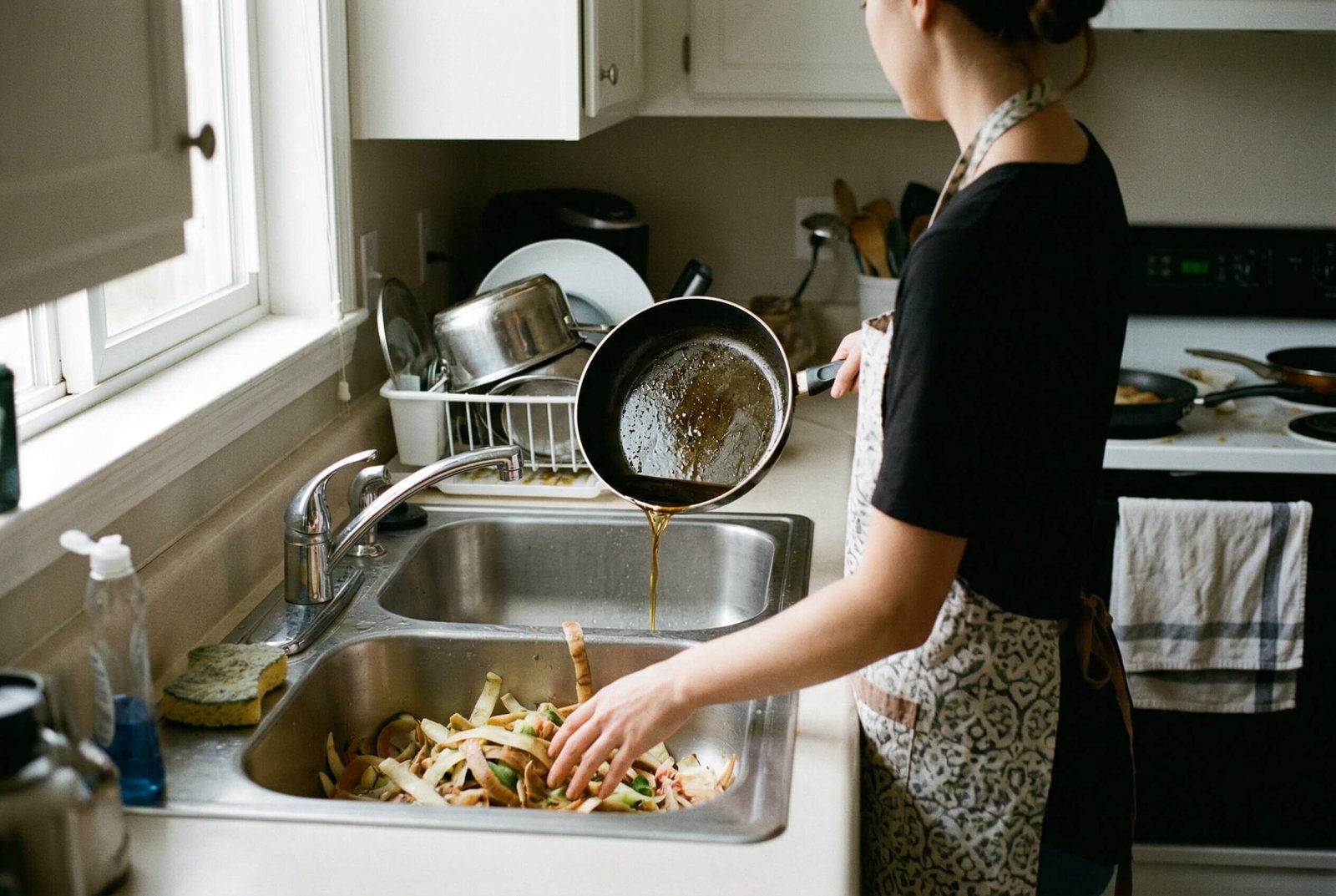
Pouring Grease and Oil Down the Drain
This is one of the most common habits that leads to clogged drains, especially in the kitchen. Many homeowners assume that if grease is in liquid form, it will simply wash away with water. The reality is very different once it enters your plumbing system.
When hot grease or oil goes down the drain, it may flow easily at first. But as it travels through the pipes, it begins to cool and solidify. Once it hardens, it sticks to the inner walls of the pipe and forms a thin, sticky layer. Over time, this layer thickens and starts catching food particles, debris, and other waste passing through.
What makes grease particularly problematic is how it builds up silently. You won’t notice an immediate issue, but repeated exposure creates a coating inside your pipes that gradually reduces water flow. Eventually, this leads to slow drainage, foul odors, and full blockages.
From a plumbing standpoint, grease is one of the hardest types of buildup to remove without professional equipment. Even strong DIY methods struggle to break down thick grease layers once they’ve formed.
The best approach is prevention. Instead of pouring grease down the drain, let it cool and dispose of it in the trash. Wiping greasy pans with a paper towel before washing and using hot water with dish soap regularly can also help reduce residue. Small changes like these make a significant difference in preventing long-term drain issues.
Putting Food Scraps in the Sink
Many homeowners rely on their kitchen sink or garbage disposal to handle food waste, but this habit is one of the leading causes of drain clogs. Even if you have a disposal unit, it doesn’t mean everything can safely go down the drain.
Garbage disposals are designed to break food into smaller pieces—not dissolve it. Those small particles still travel through your pipes, where they can settle and combine with grease or residue already present. Over time, this creates a thick buildup that restricts water flow and leads to clogs.
Certain types of food are especially problematic. Fibrous foods like celery, onion skins, and corn husks don’t break down easily and can wrap around disposal blades or stick inside pipes. Starchy foods like rice, pasta, and potatoes expand when exposed to water, forming a paste-like substance that clings to pipe walls. Coffee grounds are another common issue—they don’t dissolve and tend to collect into dense clumps inside the drain.
Even small amounts of these materials, when repeated daily, can lead to significant buildup over time.
The better approach is to treat your sink as a water system, not a waste bin. Scrape food into the trash or compost before rinsing dishes, and use a drain strainer to catch leftover particles. If you use a garbage disposal, run it with plenty of cold water and avoid overloading it.
Changing this one habit alone can significantly reduce the chances of clogged kitchen drains and improve long-term pipe performance.
Letting Hair Go Down the Drain
Hair is one of the most common causes of clogs in bathroom drains, especially in showers and sinks. On its own, a single strand of hair may not seem like a problem, but hair doesn’t dissolve or break down in water. Instead, it collects inside the drain and gradually forms clumps.
What makes hair particularly problematic is how it combines with other materials. Soap residue, shampoo, and conditioner create a sticky layer inside the pipe. Hair easily sticks to this layer, and over time, more strands attach to it, forming a tangled mass that restricts water flow.
This buildup usually starts just below the drain opening, which is why shower drains often begin to slow down before fully clogging. Many homeowners ignore this early stage, thinking it’s a minor issue, but that small accumulation can quickly grow into a blockage that’s harder to remove.
From a plumbing standpoint, hair clogs are one of the most preventable problems. The simplest solution is using a drain strainer or hair catcher. These devices stop hair before it enters the pipe, making it easy to remove and dispose of regularly.
Cleaning the strainer frequently is important. If it’s left full, hair can still slip through and start building up inside the drain. For existing buildup, occasional manual cleaning near the drain opening helps remove early-stage clogs before they move deeper into the system.
Preventing hair from entering your pipes in the first place is far easier than removing it later, and it plays a major role in keeping bathroom drains clear.
Letting Hair Go Down the Drain
Hair is one of the most common causes of clogs in bathroom drains, especially in showers and sinks. On its own, a single strand of hair may not seem like a problem, but hair doesn’t dissolve or break down in water. Instead, it collects inside the drain and gradually forms clumps.
What makes hair particularly problematic is how it combines with other materials. Soap residue, shampoo, and conditioner create a sticky layer inside the pipe. Hair easily sticks to this layer, and over time, more strands attach to it, forming a tangled mass that restricts water flow.
This buildup usually starts just below the drain opening, which is why shower drains often begin to slow down before fully clogging. Many homeowners ignore this early stage, thinking it’s a minor issue, but that small accumulation can quickly grow into a blockage that’s harder to remove.
Why Hair Causes Fast Buildup
- Hair does not dissolve in water
- It easily binds with soap and residue
- It forms clumps that trap more debris
- It often collects near the top of the pipe first
How to Prevent Hair Clogs
- Use a drain strainer or hair catcher at all times
- Clean the strainer every few days
- Remove visible hair buildup near the drain opening
- Avoid letting large amounts of hair go down during showers
From a plumbing standpoint, hair clogs are one of the most preventable problems. Stopping hair before it enters the drain is far easier than removing it once it has formed a blockage deeper in the system.
Using Too Much Soap and Personal Care Products
Most people don’t realize that soap is one of the biggest contributors to drain buildup. It feels like something that should clean your pipes, but in reality, it often leaves residue behind—especially when used in large amounts.
When soap, shampoo, and body wash go down the drain, they mix with minerals in the water and form what’s known as soap scum. This residue sticks to the inner walls of pipes and creates a slightly rough surface. Once that layer forms, it becomes much easier for hair, dirt, and other debris to stick and build up over time.
This problem is more common in bathroom drains, where daily use of personal care products creates a steady flow of residue. The buildup happens slowly, so it often goes unnoticed until drainage becomes visibly slower.
Why Soap Causes Buildup
- Soap reacts with minerals in water and forms residue
- It creates a sticky layer inside pipes
- That layer traps hair and debris easily
- Buildup increases faster with frequent product use
Common Products That Contribute to Clogs
- Bar soaps (leave more residue than liquid soap)
- Thick shampoos and conditioners
- Body washes with oils or heavy moisturizers
- Face washes and creams rinsed into the sink
How to Prevent Soap-Related Drain Issues
- Use moderate amounts of soap and products
- Flush drains with warm or hot water after use
- Clean drain openings regularly to remove residue buildup
- Use enzyme cleaners occasionally to break down organic material
From a real plumbing perspective, soap buildup is rarely the only cause of a clog—but it’s almost always part of the problem. Managing this habit helps reduce the chances of debris sticking inside your pipes and keeps your drains flowing more efficiently.
Flushing the Wrong Items Down the Toilet
Toilets are designed to handle only human waste and toilet paper. However, many households regularly flush items that don’t break down properly in water. These materials don’t dissolve like toilet paper, which means they can easily get stuck in pipes and create blockages.
The problem is that many of these items are marketed as “flushable,” but from a plumbing standpoint, that doesn’t mean they are safe for your system. Instead of breaking apart, they often stay intact long enough to catch on rough spots inside pipes or combine with other debris.
Common Items That Should Never Be Flushed
- Wet wipes (even “flushable” ones)
- Paper towels and tissues
- Sanitary products (pads, tampons)
- Cotton balls and swabs
- Dental floss
- Grease or food waste
Why These Items Cause Clogs
- They do not break down quickly in water
- They can get caught in pipe bends or rough surfaces
- They combine with grease and debris to form larger blockages
- They can travel deeper and clog the main sewer line
One of the biggest risks is that these items don’t always cause an immediate clog. Instead, they move partially through the system and create a blockage further down the line. This can lead to multiple drains backing up at once, which is a much more serious issue.
How to Prevent Toilet-Related Clogs
- Only flush toilet paper and waste
- Keep a trash bin in the bathroom for all other items
- Educate household members about what should not be flushed
- Avoid relying on “flushable” labels
From a plumber’s perspective, toilet misuse is one of the most preventable causes of major drain problems. Changing this habit alone can significantly reduce the risk of serious blockages and sewer line issues.
Ignoring Drain Strainers and Filters
Drain strainers are one of the simplest and most effective tools for preventing clogged drains, yet many homeowners either don’t use them or fail to maintain them properly. This small habit can make a major difference in how much debris actually enters your plumbing system.
Strainers act as a barrier between your daily usage and your pipes. Without them, everything—food particles, hair, lint, and debris—flows directly into the drain. Once inside, these materials start building up and combining with grease or soap residue, creating the foundation for clogs.
The mistake isn’t just not using strainers—it’s also not cleaning them regularly. A clogged or overflowing strainer stops doing its job and allows debris to slip through into the pipe.
Why Strainers Are So Important
- They catch debris before it enters the pipes
- They reduce the amount of buildup forming inside drains
- They protect against both kitchen and bathroom clogs
- They make cleanup easier and more manageable
Common Mistakes Homeowners Make
- Not using strainers at all
- Letting strainers overflow with debris
- Cleaning them too infrequently
- Using the wrong type for specific drains
How to Use Strainers Properly
- Install strainers in all sinks, showers, and tubs
- Empty and clean them every few days
- Rinse them thoroughly before placing them back
- Replace damaged or ineffective strainers when needed
From a practical standpoint, this is one of the easiest habits to fix with the biggest impact. A properly used and maintained strainer can prevent a large percentage of debris from ever entering your pipes, making your overall drain maintenance much easier and more effective.
Washing Dirt, Sand, and Debris Down Drains
This is a habit many homeowners don’t think about, but it can cause serious long-term issues—especially in floor drains, utility sinks, and outdoor-connected drainage systems. Dirt, sand, and debris may seem harmless when rinsed away with water, but unlike organic material, they don’t break down or dissolve.
When these materials enter your drains, they tend to settle at the bottom of pipes or in low-flow areas. Over time, they accumulate and create a dense layer that restricts water movement. This becomes even more problematic when combined with grease, soap residue, or lint, forming a heavy blockage that’s difficult to remove.
Why Dirt and Debris Cause Problems
- They do not dissolve or break down in water
- They settle inside pipes and create buildup layers
- They combine with other materials to form dense clogs
- They can accumulate in traps and low-flow sections
Common Situations Where This Happens
- Washing muddy shoes or tools in sinks
- Rinsing mops or dirty buckets indoors
- Cleaning construction dust or sand through drains
- Allowing outdoor debris to enter floor drains
These situations are common in garages, basements, and utility areas where drains are used for cleanup rather than regular water flow.
How to Prevent This Issue
- Shake off dirt and debris outside before washing
- Use a bucket to collect heavy dirt instead of rinsing it into drains
- Install strainers or filters in utility sinks
- Periodically clean floor drain covers and remove visible debris
From a plumbing perspective, sediment buildup is one of the harder problems to fix once it settles deep inside the system. Preventing it from entering your drains in the first place is far more effective than trying to remove it later.
Overusing Chemical Drain Cleaners
Chemical drain cleaners are often seen as a quick solution when drains start slowing down, but relying on them too often can actually make the problem worse over time. While they may clear part of a blockage, they don’t remove buildup completely—and they can damage your pipes in the process.
These cleaners work by creating a chemical reaction that generates heat to break down organic material. The issue is that this heat doesn’t just affect the clog—it also affects the pipe itself, especially if used repeatedly or in older plumbing systems.
Why Chemical Cleaners Cause Long-Term Problems
- They create heat that can weaken or warp pipes
- They don’t fully remove buildup, leaving residue behind
- They can damage seals and pipe joints over time
- They may push partially broken clogs deeper into the system
Another concern is that chemical cleaners often give a false sense of resolution. The drain may start flowing again, but the underlying buildup remains, which means the clog is likely to return.
When Homeowners Overuse Them
- Using them regularly instead of proper maintenance
- Applying them at the first sign of slow drainage
- Using multiple treatments in a short period
- Mixing different chemical products (very risky)
Safer Alternatives for Drain Maintenance
- Hot water flushing to manage light buildup
- Dish soap treatment for grease breakdown
- Enzyme cleaners for organic waste
- Manual cleaning for surface-level debris
From a professional standpoint, chemical cleaners should be a last resort—not a routine solution. Proper drain maintenance focuses on preventing buildup safely, without causing long-term damage to your plumbing system.
Skipping Regular Drain Maintenance
One of the most common reasons drains end up clogged isn’t what homeowners do—it’s what they don’t do. Skipping regular drain maintenance allows small amounts of buildup to accumulate over time until they become a serious problem.
Most drains don’t fail suddenly. They gradually collect grease, soap residue, hair, lint, and debris. Without routine care, these materials settle inside the pipes and begin forming layers. Once that layer builds up, it starts trapping more waste, accelerating the clogging process.
The issue is that everything may seem fine in the beginning. Water still drains, and there are no major warning signs. Because of this, maintenance often gets delayed or ignored until symptoms like slow drainage or odors appear. By then, the buildup is already well established.
What Happens When Maintenance Is Skipped
- Buildup forms inside pipes without being noticed
- Water flow gradually becomes restricted
- Debris starts sticking more easily to pipe walls
- Minor issues turn into recurring clogs
- Deeper blockages develop over time
Why This Leads to Bigger Problems
- Simple fixes no longer work once buildup thickens
- You may need stronger tools or professional cleaning
- Risk of pipe damage increases with pressure buildup
- Costs increase due to repeated or emergency repairs
How to Stay Consistent with Maintenance
- Follow a simple weekly and monthly routine
- Address early signs like slow drainage immediately
- Use safe maintenance methods regularly
- Don’t wait for a clog to take action
From a plumbing perspective, consistency is the difference between a system that runs smoothly and one that constantly has issues. Regular maintenance keeps buildup under control and prevents small problems from turning into costly repairs.
How to Break These Habits (Practical Fixes)
Changing drain-damaging habits doesn’t require a complete lifestyle overhaul. Most clogs can be prevented with a few simple adjustments that become part of your daily routine. The key is replacing harmful habits with easy, repeatable actions that protect your pipes over time.
Simple Habit Changes That Make a Big Difference
- Scrape food into the trash before rinsing dishes
- Never pour grease or oil down the sink
- Use drain strainers in all sinks and showers
- Empty and clean strainers every few days
- Flush drains with hot water regularly (especially kitchen sinks)
These small steps prevent the majority of debris from ever entering your plumbing system.
Smarter Daily Drain Usage
- Use moderate amounts of soap and personal care products
- Run water properly when using garbage disposals
- Avoid rinsing dirt, sand, or heavy debris into drains
- Keep a trash bin in bathrooms to avoid flushing non-flushable items
These habits reduce the amount of residue and solid material entering your pipes each day.
Build a Simple Maintenance Routine
- Do a quick visual check for slow drainage or debris buildup
- Flush drains weekly with hot water
- Use dish soap or enzyme treatments periodically
- Clean visible buildup near drain openings
This routine doesn’t take much time but keeps your drains functioning properly.
Think Prevention, Not Reaction
Most homeowners react only when there’s a clog. The smarter approach is to prevent the conditions that cause clogs in the first place. Once you shift to this mindset, drain maintenance becomes easy and predictable rather than stressful and urgent.
Fixing these habits is not about perfection—it’s about consistency. When you make these small changes part of your routine, you significantly reduce the chances of clogged drains and keep your plumbing system running smoothly long-term.
Long-Term Impact of Bad Drain Habits
Bad drain habits don’t just cause occasional clogs—they slowly damage your entire plumbing system over time. What starts as minor buildup can eventually lead to restricted flow, increased pressure inside pipes, and long-term wear that affects how your system performs.
In the early stages, the impact is small. You might notice slightly slower drainage or mild odors. But as buildup continues, pipes lose their smooth interior surface. This makes it easier for debris to stick and harder for water to flow freely, which puts constant stress on the system.
What Happens Over Time
- Pipes develop thick internal buildup layers
- Water flow becomes restricted and uneven
- Pressure increases inside the plumbing system
- Drains begin clogging more frequently
- Minor issues turn into recurring problems
As these conditions continue, the risk of more serious problems increases. Blockages can form deeper in the system, including in the main sewer line, which affects multiple drains in your home at once.
Financial and Structural Impact
- Frequent plumbing service calls increase costs
- Higher risk of emergency drain backups
- Potential pipe damage or leaks
- Expensive repairs for deep clogs or sewer line issues
In some cases, severe neglect can even lead to water damage inside the home if drains back up or overflow.
System-Wide Effects
- Kitchen, bathroom, and laundry drains all become affected
- Odors can spread through the plumbing system
- Overall efficiency of water flow decreases
- Lifespan of pipes is reduced
From a real-world plumbing perspective, most of these issues are avoidable. The longer bad habits continue, the more difficult and expensive the solution becomes.
The long-term impact of poor drain habits is not immediate, which is why many homeowners overlook it. But over time, the damage adds up. Preventing these issues through better habits and regular maintenance is always easier, cheaper, and more effective than dealing with the consequences later.
Final Thoughts
Clogged drains are rarely caused by one major mistake. They are almost always the result of small, repeated habits that allow buildup to form inside your pipes over time. The good news is that these habits are easy to recognize and even easier to change once you understand their impact.
The most effective way to protect your plumbing system is to focus on prevention. Simple actions—like managing what goes down your drains, using strainers, and following a basic maintenance routine—can eliminate the majority of clog-related problems before they start.
Consistency is what makes the difference. You don’t need complicated tools or aggressive cleaning methods if you’re maintaining your drains regularly. Small, steady efforts keep your pipes clear, reduce stress on your system, and prevent the need for costly repairs.
By avoiding these common household habits and replacing them with smarter practices, you’re not just preventing clogs—you’re extending the life of your entire plumbing system and keeping your home running smoothly without unexpected issues.