
Most homeowners don’t think much about their drains—until something starts going wrong. It usually begins quietly. The kitchen sink takes a little longer to empty. The shower starts holding water around your feet. Maybe there’s a faint smell coming from the bathroom drain that you can’t quite ignore anymore. At this point, it feels like a small inconvenience—not something that needs serious attention.
But in real homes, these early signs are rarely isolated. They’re usually the result of buildup forming inside the pipe over time. Grease from cooking, soap residue, hair, and everyday debris slowly stick to the pipe walls. As that layer thickens, the space inside the pipe narrows, and water flow becomes restricted. What feels like a minor slowdown is often the early stage of a much larger issue.
Left alone, this buildup doesn’t stay stable—it continues to grow. That’s when you start seeing recurring clogs, strange sounds, or even water backing up in places it shouldn’t. In some homes, the problem spreads beyond a single drain and begins affecting multiple fixtures. At that stage, the issue is no longer surface-level—it’s part of the drainage system itself.
- Slow drainage is often the first warning sign
- Recurring clogs usually mean buildup hasn’t been removed
- Odors often come from material sitting inside the pipe
- Multi-fixture issues point to deeper line problems
A drain cleaning service exists to deal with exactly this kind of situation—not just to open a blocked drain, but to clear what’s building inside the system. Whether the issue is in a kitchen line, bathroom drain, or the main sewer connection, the goal is to restore proper flow and prevent the same problem from repeating again.
What This Page Covers
ToggleWhat This Service Actually Means
When homeowners hear “drain cleaning service,” it often sounds like a simple task—remove a clog and restore flow. But in real homes, the situation is usually more layered than that. Most drain problems are not caused by a single object blocking the pipe; they’re caused by gradual buildup that reduces how much water the pipe can carry over time.
A plumber doesn’t just arrive and immediately start clearing the drain. The first part of the process is understanding the pattern behind the issue. Whether the problem is new, recurring, or spreading across fixtures gives important clues about what’s happening inside the system. This is what separates a quick fix from a proper cleaning approach.
What Happens When a Plumber Arrives
Before any tools are used, the situation is assessed based on real symptoms and usage.
- How long the issue has been happening
- Whether it’s getting worse over time
- If multiple drains are affected
- Signs like odors, sounds, or backups
This step helps determine whether the issue is isolated to one drain or connected to a larger section of the plumbing system.
In many homes, what appears to be a simple clog is actually a symptom of restricted flow deeper in the pipe. That’s why understanding the full context matters before choosing how to clean it.
What’s Actually Being Cleaned Inside the Pipe
Drain cleaning is not just about removing what’s blocking the opening—it’s about addressing what’s lining the inside of the pipe.
- Grease buildup in kitchen drains from cooking oils
- Soap and residue layers in bathroom pipes
- Hair accumulation forming dense clogs
- Organic sludge that sticks to pipe walls
Over time, this buildup acts like a narrowing tunnel inside the pipe. Water still passes through, but not efficiently. That’s why many drains don’t fully block at first—they just become slower and more prone to clogging.
Temporary Clearing vs Real Drain Cleaning
This is one of the most important differences homeowners should understand. Not every “cleared” drain has actually been cleaned.
- A basic tool may punch a hole through the blockage
- Water starts flowing again temporarily
- The majority of buildup remains untouched
- The clog returns after repeated use
A proper drain cleaning service focuses on removing enough of that buildup so the pipe can function close to its original capacity. That’s what reduces repeat issues instead of just delaying them.
Why This Matters for Long-Term Pipe Health
Ignoring buildup doesn’t just lead to clogs—it gradually stresses the plumbing system.
- Increased internal pressure inside pipes
- Higher risk of complete blockage
- Greater chance of water backup
- More frequent need for repeated interventions
Over time, what could have been handled with a proper cleaning becomes a more complex problem. Understanding what this service actually involves helps homeowners make better decisions—not just reacting to symptoms, but addressing the cause behind them.
When You Actually Need a Drain Cleaning Service
In most homes, drain problems don’t appear all at once—they build slowly. What makes it tricky is that the early signs don’t feel urgent, so they’re easy to ignore. But in real situations, it’s not the first symptom that matters—it’s the pattern that develops over time.
A single slow drain or occasional clog doesn’t always mean you need a full drain cleaning service. But when the same issue keeps returning or starts spreading, it usually means there’s buildup inside the pipe that isn’t being fully removed. Recognizing that shift early can save a lot of trouble later.
Early Signs That Something Is Building Inside the Pipe
These are the signals most homeowners notice first. At this stage, the system is still functioning, but not efficiently.
- Water draining slower than usual
- Minor pooling in sinks, tubs, or showers
- Occasional need to use a plunger
- Slight odor coming from the drain
These signs typically point to partial restriction, not a full blockage. It’s often the easiest stage to resolve if addressed properly.
Recurring Clogs That Don’t Fully Go Away
If you’re dealing with the same clog again and again, it’s rarely just bad luck. It usually means only part of the blockage is being cleared each time.
- The same drain clogs every few days or weeks
- Flow improves briefly, then slows again
- Basic tools seem to “work,” but only temporarily
- The issue feels repetitive rather than random
This is a strong indication that buildup remains along the pipe walls and needs deeper cleaning.
Sounds and Smells That Point to Deeper Issues
Not all drain problems are visible. Some show up through changes in sound or smell, which often indicate restricted flow deeper in the system.
- Gurgling or bubbling noises when water drains
- Air sounds coming from nearby fixtures
- Persistent unpleasant or sewage-like odors
- Smells that return even after surface cleaning
These signs usually mean there’s material sitting inside the pipe affecting airflow and drainage.
Multiple Fixtures Showing Problems Together
When more than one fixture is affected, the issue is rarely local. It often means the blockage is deeper in the shared drainage line.
- Sink, shower, and toilet draining slowly at the same time
- Water backing up in one fixture when another is used
- Basement or floor drains showing signs of overflow
- Problems appearing across different areas of the home
At this point, the problem may be in the main drain line rather than an individual pipe.
When It Becomes a Main Drain or Sewer Line Issue
As the situation progresses, the symptoms become more noticeable and harder to manage with basic methods.
- Frequent backups instead of just slow drainage
- Water appearing where it shouldn’t
- Strong, persistent sewage odors indoors
- Entire plumbing system affected rather than one drain
This stage usually requires more than a simple fix—it often involves deeper drain cleaning or sewer line cleaning.
How to Think About the Decision
In real situations, the decision isn’t about one symptom—it’s about how things are changing over time.
- One-time issue → may not need full service
- Occasional slow drain → monitor and maintain
- Recurring clog → likely buildup inside pipe
- Multiple fixtures affected → deeper system issue
If the problem keeps returning, spreading, or getting worse, that’s when a drain cleaning service becomes the practical step—not just to fix what you see, but to deal with what’s happening inside the pipes.
How Professional Drain Cleaning Service Is Performed
In real homes, drain cleaning isn’t a one-step fix—it follows a sequence based on what’s actually happening inside the pipes. The goal is not just to restore flow for the moment, but to understand the condition of the line and clear it in a way that prevents the same issue from returning.
A proper job starts with understanding the problem, moves through targeted cleaning, and ends with verifying that the system is flowing correctly again. Skipping any of these steps often leads to temporary results rather than a lasting solution.
Initial Inspection and Understanding the Situation
Before any tools are used, the plumber focuses on the pattern behind the issue. This step is important because it guides everything that follows.
- How long the problem has been happening
- Whether it’s recurring or getting worse
- Which fixtures are affected
- Any signs like smells, sounds, or backups
In many homes, this quick assessment already points toward whether the issue is localized or part of a deeper system restriction.
Diagnosing What’s Inside the Pipe
Once the symptoms are understood, the next step is identifying the actual cause. This is where experience plays a major role.
- Estimating blockage location based on symptoms
- Identifying type of buildup (grease, hair, debris)
- Checking if the issue is partial restriction or full blockage
- Using camera inspection for deeper or recurring issues
A proper diagnosis ensures that the cleaning method matches the problem instead of guessing and hoping for results.
Selecting the Right Cleaning Method
Not all drain problems should be handled the same way. The method is chosen based on severity, depth, and pipe condition.
- Light clogs → basic snaking or manual removal
- Moderate buildup → mechanical cleaning tools
- Heavy grease or sludge → hydro jetting
- Main line issues → deeper cleaning with inspection
Choosing the right method is critical. A tool that works for a shallow clog may not be effective—or safe—for deeper buildup.
Performing the Actual Drain Cleaning
This is where the cleaning process is carried out based on the selected method. The focus is on removing enough buildup to restore proper flow, not just creating a temporary opening.
- Breaking apart or loosening the blockage
- Pulling out or flushing away debris
- Clearing buildup stuck along pipe walls
- Restoring the internal space for water flow
In real situations, simply opening a path isn’t enough. The more buildup removed, the less likely the problem is to return.
Testing and Verifying Proper Flow
After cleaning, the system is tested to make sure the issue has actually been resolved. This step confirms whether the cleaning was complete.
- Running water at full flow through the drain
- Checking how quickly and smoothly it drains
- Listening for gurgling or air movement
- Watching for any signs of backup
If something still feels off at this stage, it usually means the root cause hasn’t been fully addressed.
What a Properly Completed Job Looks Like
A finished drain cleaning job has clear, noticeable results in everyday use.
- Water drains quickly without pooling
- No unusual sounds during drainage
- No lingering odors from the pipe
- Multiple fixtures work without affecting each other
When these conditions are met, it’s a strong sign that the pipe has been properly cleaned—not just temporarily cleared.
Methods Used in Drain Cleaning Service
In real homes, there isn’t a single method that works for every drain problem. The right approach depends on what’s inside the pipe, how long it has been building up, and how deep the blockage is. A shallow clog near the surface is handled very differently from heavy buildup inside a main sewer line.
Understanding these methods helps you see why some fixes last while others don’t. It also explains why pricing and results can vary depending on the situation.
Drain Snaking (Auger Cleaning)
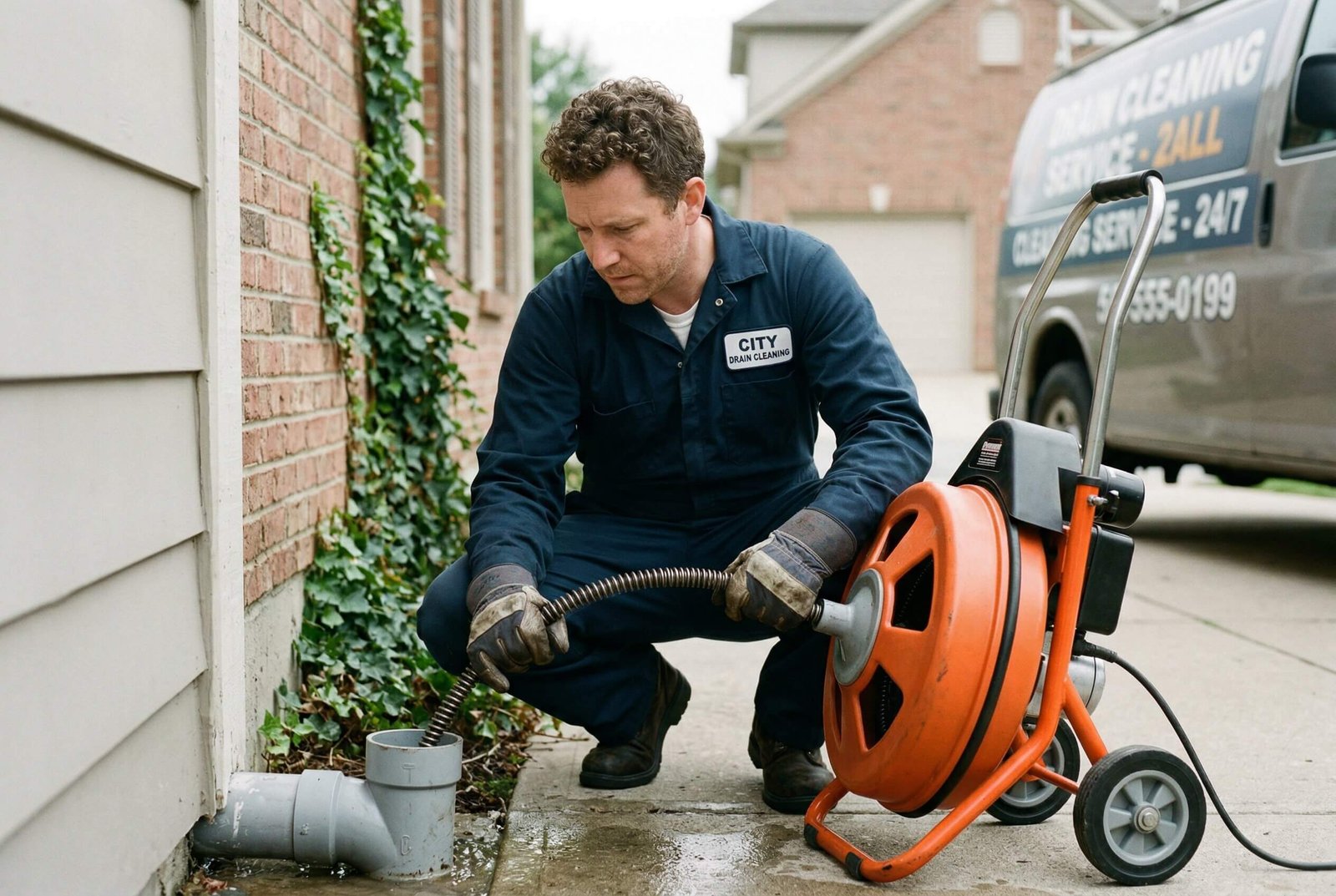
This is one of the most commonly used methods for everyday drain problems. It’s typically the first step when the blockage is localized and not too severe.
- A flexible cable is inserted into the drain
- The cable rotates to break apart or hook debris
- Commonly used for hair clogs, food buildup, and small obstructions
- Effective for bathroom drains and smaller kitchen line issues
Snaking works well when the problem is concentrated in one area. However, it usually clears a path through the blockage rather than fully cleaning the pipe walls, which is why clogs can return if buildup remains.
Hydro Jetting (High-Pressure Cleaning)
Hydro jetting is a more advanced method used when there is heavy buildup inside the pipe. Instead of breaking a hole through the clog, it cleans the pipe more thoroughly.
- Uses high-pressure water to clean the inside of pipes
- Removes grease, sludge, and long-term buildup
- Restores pipe diameter closer to its original condition
- Commonly used for kitchen lines and main sewer lines
This method is especially useful for recurring clogs because it addresses the root cause—buildup along the pipe walls—rather than just the blockage itself.
Manual and Basic Cleaning Methods
For very simple or accessible clogs, basic tools may be enough to resolve the issue.
- Plungers for surface-level blockages
- Hand tools for removing visible debris
- Cleaning traps under sinks
- Quick fixes for isolated, one-time issues
These methods are typically used when the problem hasn’t progressed deeper into the system. They are effective for immediate relief but not designed for long-term buildup removal.
Camera Inspection and Diagnostic Tools
In more complex situations, understanding what’s inside the pipe becomes essential before cleaning.
- Small camera inserted into the pipe
- Helps locate the exact blockage position
- Shows pipe condition and buildup severity
- Identifies issues like cracks or structural problems
This step is often used for recurring problems or main line issues where guessing can lead to incomplete or incorrect cleaning.
Choosing the Right Method Based on the Situation
In real scenarios, the method isn’t chosen randomly—it’s based on what will actually solve the problem.
- Shallow clog → snaking or manual removal
- Sticky buildup → mechanical cleaning
- Heavy grease or sludge → hydro jetting
- Repeated issues → inspection + deeper cleaning
Using the right method is what separates a temporary fix from a lasting solution. When the method matches the condition of the pipe, the results tend to last longer and reduce the chances of the same problem coming back.
DIY vs Professional Drain Cleaning (Decision Section)
Most homeowners try to handle drain issues on their own first—and in many cases, that makes sense. Some problems are minor and can be resolved without bringing in a professional. The challenge is knowing where that line is, because continuing DIY methods on a deeper issue often makes things worse over time.
The difference usually comes down to depth and buildup. Surface-level clogs can often be handled at home, but anything forming inside the pipe over time typically needs proper drain cleaning.
When DIY Drain Cleaning Actually Works
There are situations where simple methods are enough to restore normal flow.
- A one-time clog in a sink or shower
- Hair buildup near the drain opening
- Minor food blockage in kitchen drains
- Slow drainage that hasn’t become recurring
In these cases, tools like a plunger or basic hand cleaning can resolve the issue because the blockage is close to the surface and hasn’t spread deeper into the pipe.
Common DIY Methods Homeowners Use
Most DIY approaches focus on clearing what’s immediately accessible.
- Plungers to create pressure and dislodge clogs
- Hand removal of visible debris
- Cleaning the trap under the sink
- Store-bought drain cleaners (chemical solutions)
These methods can restore flow temporarily, especially if the problem is small and recent.
Where DIY Methods Start Failing
As soon as the problem moves beyond the surface, DIY solutions become less effective.
- Clogs return after a short time
- Water drains slowly even after “fixing” it
- Multiple fixtures begin showing symptoms
- Chemical cleaners don’t improve the situation
At this stage, the issue is usually buildup along the pipe walls or a blockage deeper in the system—not something reachable with basic tools.
Risks of Continuing DIY for Deeper Problems
Trying to force a DIY solution on a deeper issue can create additional problems.
- Pushing the blockage further down the pipe
- Damaging older or weaker pipes
- Chemical cleaners causing pipe corrosion over time
- Delaying proper cleaning, allowing buildup to worsen
In many real cases, what could have been resolved with a proper cleaning becomes more complicated because the underlying issue wasn’t addressed early.
When Professional Drain Cleaning Becomes the Better Option
There’s a clear point where professional intervention is the more practical choice.
- Recurring clogs that don’t stay fixed
- Slow drainage across multiple fixtures
- Gurgling sounds or persistent odors
- Signs of deeper line or sewer issues
At this stage, the goal shifts from “clearing a clog” to cleaning the pipe properly, which requires the right tools and approach.
How to Think About the Decision
The decision isn’t about avoiding professional help—it’s about using it at the right time.
- Small, isolated issue → DIY is reasonable
- Repeating or worsening issue → likely buildup inside pipe
- System-wide symptoms → deeper problem requiring proper cleaning
In real homes, DIY works best for quick, surface-level problems. But when the issue keeps coming back, a professional drain cleaning service is usually what actually solves it—not just for now, but for the long term.
Cost of Drain Cleaning Service in the U.S.
The cost of a drain cleaning service can vary quite a bit, and for most homeowners, that’s where confusion starts. Two people can call for what seems like the same issue—“clogged drain”—and end up with very different pricing. The reason is simple: the cost isn’t based on the symptom, it’s based on what’s actually happening inside the pipe.
A simple, localized clog near the drain opening is quick to handle and usually costs less. But when the issue involves deeper buildup, multiple fixtures, or the main sewer line, the work becomes more involved, requires different equipment, and takes more time.
Typical Price Ranges for Common Situations
While exact pricing varies by location and access, there are general ranges homeowners often see.
- Basic drain cleaning (sink, tub, shower): $100 – $250
- Moderate clogs requiring deeper work: $150 – $400
- Main drain or sewer line cleaning: $300 – $800+
- Hydro jetting (deep cleaning method): $400 – $1,000+
These ranges reflect typical scenarios, but the final cost depends on the actual condition of the pipe.
Emergency Drain Cleaning Cost
Emergency situations usually come with higher pricing because of urgency and timing.
- After-hours or weekend calls cost more
- Immediate response increases service charges
- Severe backups may require additional work
- Equipment usage may be more intensive
In many cases, emergency drain cleaning can cost noticeably more than a scheduled visit for the same issue.
Why Costs Vary From One Job to Another
The biggest factor in pricing is what the plumber finds after inspection. Even two homes with similar symptoms can have very different underlying problems.
- Severity of the clog (partial vs complete blockage)
- Depth and location of the issue inside the pipe
- Accessibility (easy access vs difficult or hidden lines)
- Type of buildup (soft debris vs heavy grease or sludge)
The more complex the situation, the more time and equipment are needed to properly clean the drain.
Role of Equipment and Method in Pricing
Different cleaning methods come with different costs, mainly due to the tools involved.
- Basic snaking → lower cost, quicker job
- Mechanical cleaning → moderate cost
- Hydro jetting → higher cost due to equipment and effectiveness
- Camera inspection → added cost for deeper diagnosis
In many real cases, a slightly higher upfront cost for proper cleaning reduces the need for repeated service calls later.
Why the Same Problem Can Have Different Prices
Homeowners often compare prices without realizing that the visible issue doesn’t always reflect the actual work required.
- A slow kitchen sink may be a surface clog—or heavy grease buildup deep in the line
- A bathroom clog could be simple—or connected to a larger drainage issue
- A recurring problem may require full cleaning, not just clearing
Because of this, pricing is less about the label of the problem and more about the condition inside the pipe.
How to Think About Cost as a Homeowner
In real situations, cost should be viewed alongside effectiveness, not just as a number.
- Lower cost → often quick clearing, may be temporary
- Moderate cost → partial cleaning depending on method
- Higher cost → deeper cleaning, longer-lasting results
Understanding what you’re paying for helps you decide whether you’re solving the problem properly or just delaying it.
Risks of Delaying Drain Cleaning
Drain problems rarely stay the same—they usually get worse over time. What starts as a slow drain or minor clog can gradually turn into a much larger issue if the buildup inside the pipe isn’t addressed. The longer it’s left untreated, the more pressure and stress it puts on the entire drainage system.
In real homes, delaying drain cleaning doesn’t just mean dealing with inconvenience—it often leads to damage that is more difficult and expensive to handle later.
Gradual Pipe Buildup Turns Into Full Blockage
When buildup continues to collect inside the pipe, the flow becomes more restricted with time.
- Grease, soap, and debris layers continue to thicken
- The pipe diameter narrows further
- Water flow slows down more noticeably
- Eventually, the pipe can become fully blocked
At this stage, what could have been a manageable cleaning becomes a complete obstruction.
Water Backup and Interior Damage
As pressure builds inside a restricted pipe, water starts finding ways to push back instead of flowing out.
- Water backing up into sinks, tubs, or toilets
- Overflow from floor or basement drains
- Standing water inside the home
- Damage to floors, cabinets, and surrounding areas
This is one of the most common escalation points when drain issues are ignored.
Mold and Hygiene Concerns
Stagnant water and organic buildup create conditions that affect indoor hygiene.
- Moist environments encouraging mold growth
- Bacteria buildup inside drains
- Persistent unpleasant odors in living spaces
- Reduced air quality in affected areas
These issues often develop quietly and become noticeable only after they’ve progressed.
Sewage Backup Situations
In more serious cases, especially with main line problems, untreated buildup can lead to sewage-related issues.
- Wastewater backing up into the home
- Strong sewage odors indoors
- Contamination of surfaces and fixtures
- Health concerns due to exposure
This is usually the result of a deeper blockage that wasn’t addressed earlier.
Long-Term Plumbing Damage
Ongoing pressure and buildup can affect the structure of the plumbing system itself.
- Increased strain on older or weaker pipes
- Risk of cracks or leaks developing
- Potential for pipe failure over time
- More complex repairs beyond simple cleaning
What starts as a maintenance issue can eventually lead to repair or replacement work.
How the Problem Escalates Over Time
In real situations, the progression is usually predictable.
- Slow drain → recurring clog
- Recurring clog → partial blockage
- Partial blockage → full blockage
- Full blockage → backup and damage
Understanding this progression helps homeowners act earlier, when the solution is simpler and less disruptive.
Where Drain Cleaning Is Common in Homes
Drain issues don’t happen randomly—they tend to show up in specific areas of the home based on how those drains are used. Each location has its own type of buildup, and understanding that helps explain why some drains clog more often than others.
In real homes, it’s not unusual for different drains to develop issues at different times. What matters is recognizing the pattern and knowing where problems typically start.
Kitchen Drains (Grease and Food Buildup)
Kitchen lines are one of the most common places where drain cleaning is needed because of daily usage and the type of waste that goes through them.
- Grease and oil sticking to pipe walls
- Food particles accumulating over time
- Soap mixing with grease and forming thick residue
- Gradual narrowing of the pipe from inside
Kitchen drains often develop slow buildup rather than sudden clogs, which is why the problem can go unnoticed for a while.
Bathroom Drains (Hair and Soap Residue)
Bathroom drains deal with a different type of material, but the result is similar—restricted flow over time.
- Hair forming dense clumps inside the pipe
- Soap residue creating a sticky coating
- Toothpaste and hygiene products adding to buildup
- Water draining slower after repeated use
These clogs are often closer to the surface initially but can move deeper if not addressed properly.
Basement and Floor Drains
These drains are usually less used but can become a problem when there’s a deeper issue in the system.
- Water backing up from lower-level drains
- Debris or dirt entering from ground-level exposure
- Signs of main line blockage showing first here
- Overflow during heavy usage or system pressure
Basement drains often reveal problems happening further down the line.
Main Drain and Sewer Line
This is where all household drainage eventually connects, making it one of the most important areas to monitor.
- Buildup from multiple fixtures combining
- Tree roots or external intrusion (in some cases)
- Grease and debris accumulating over time
- Blockages affecting the entire home system
When the main line is affected, the symptoms are usually seen across multiple drains rather than just one.
Outdoor and Storm Drains
Outdoor drainage systems can also require cleaning, especially in homes with exposed or open drain connections.
- Leaves and debris entering the drain
- Dirt and sediment buildup
- Water pooling in outdoor areas
- Overflow during rain or heavy use
These drains are often overlooked until visible water accumulation becomes a problem.
How Usage Patterns Affect Drain Problems
In real situations, how a drain is used directly impacts how often it needs cleaning.
- High kitchen usage → more grease buildup
- Frequent showers → more hair and soap accumulation
- Older homes → higher chance of internal pipe buildup
- Multiple occupants → increased load on the system
Understanding these patterns helps explain why some drains develop issues faster than others, and why regular cleaning may be needed in certain areas more than others.
Finding Help for Drain Cleaning Service Locally
At some point, most homeowners reach a stage where the issue isn’t improving with basic efforts. That’s when the focus shifts from trying to manage the problem to getting it properly handled. In real situations, this step usually comes after repeated clogs, slow drainage that doesn’t go away, or signs that the issue is affecting more than one part of the home.
Drain cleaning is something local plumbers deal with every day. Whether it’s a kitchen line, bathroom drain, or a deeper sewer connection, these problems are common across homes, and most areas have professionals equipped to handle them. The key is recognizing when the issue has moved beyond a simple fix and requires proper tools and inspection.
When Local Help Becomes Necessary
There’s a clear point where calling for help becomes the practical choice rather than continuing trial-and-error.
- The same drain keeps clogging repeatedly
- Water drains slowly across multiple fixtures
- Gurgling sounds or odors persist
- Basic tools and methods no longer improve the situation
At this stage, the issue is usually deeper than what can be reached or resolved from the surface.
How Local Plumbers Typically Handle These Issues
Drain problems are not unusual, and most local professionals follow a similar approach based on experience.
- Assessing the symptoms and usage patterns
- Identifying whether the issue is local or system-wide
- Using appropriate tools based on the condition of the pipe
- Ensuring the flow is properly restored after cleaning
Because these situations are routine for them, they’re often able to identify the cause quickly once they understand the symptoms.
Connecting This to Local Area Pages
For homeowners looking for help, drain cleaning services are usually tied closely to local availability.
- Most service providers operate within specific cities or regions
- Response times depend on proximity and availability
- Emergency situations are handled faster when local support is accessible
- Local conditions (older pipes, usage patterns) can influence common issues
This is why many homeowners look for drain cleaning services based on their specific location rather than general information.
What to Keep in Mind When Seeking Help
The goal isn’t just to get someone quickly—it’s to ensure the problem is handled correctly.
- Understanding the symptoms helps explain the issue clearly
- Recognizing whether the problem is recurring or new
- Being aware of how widespread the issue is in the home
- Knowing when it has moved beyond a simple fix
In real situations, getting the right help at the right time often prevents the problem from becoming more disruptive and costly to deal with later.
How to Choose the Right Drain Cleaning Service Provider
Choosing the right drain cleaning service isn’t about picking the first available option—it’s about making sure the problem is understood and handled properly. In real situations, the difference between a quick fix and a lasting solution often comes down to how the work is approached, not just who shows up.
Many homeowners only realize this after dealing with recurring clogs that were “fixed” multiple times but never fully resolved. A proper approach focuses on identifying the cause and clearing it effectively, not just restoring flow for the moment.
What to Look for in a Drain Cleaning Service
A reliable approach is usually visible in how the problem is handled from the beginning.
- Willingness to understand symptoms before starting work
- Clear explanation of what might be causing the issue
- Use of appropriate tools based on the situation
- Focus on resolving the root cause, not just symptoms
These signs indicate that the service is based on diagnosis and experience rather than guesswork.
Importance of Proper Inspection Before Cleaning
Jumping straight into clearing the drain without understanding the issue often leads to incomplete results.
- Identifying whether the problem is local or deeper in the system
- Checking for recurring patterns rather than one-time issues
- Using inspection tools when necessary
- Matching the cleaning method to the actual condition
A proper inspection reduces the chances of the same problem returning shortly after.
Equipment and Method Matter More Than Speed
Not all drain cleaning is the same, and the tools used can affect how well the issue is resolved.
- Basic tools for surface-level clogs
- Mechanical equipment for moderate buildup
- High-pressure methods for deeper cleaning
- Diagnostic tools for recurring or complex problems
The goal is not just speed—it’s effectiveness based on the situation.
Common Mistakes Homeowners Make
In many cases, issues repeat because of decisions made early on.
- Choosing based only on lowest cost
- Accepting quick fixes without understanding the cause
- Ignoring signs of deeper problems
- Delaying proper cleaning after temporary relief
These mistakes often lead to repeated service calls instead of a single proper solution.
Red Flags to Be Aware Of
There are certain signs that the approach may not be focused on solving the actual problem.
- No questions asked about symptoms or history
- Immediate action without inspection
- Vague explanations of what’s being done
- Repeated need for the same service in a short time
These situations usually indicate that the root cause isn’t being addressed.
How to Think About the Decision
In real homes, the goal isn’t just to fix a drain—it’s to prevent the issue from coming back.
- Short-term fix → quick relief, likely recurrence
- Proper cleaning → longer-lasting results
- Understanding the cause → fewer future issues
Taking a few extra moments to choose the right approach often saves time, cost, and frustration in the long run.
Final Thoughts
Drain problems rarely start as emergencies—they build slowly and give warning signs along the way. A slow drain, a recurring clog, or a faint odor might not seem serious at first, but in real situations, these are often early indicators of buildup forming inside the pipes. Ignoring them doesn’t keep things stable—it allows the problem to progress.
Understanding how drain cleaning actually works changes how you respond to these issues. It’s not just about clearing a blockage in the moment—it’s about removing what’s causing the restriction in the first place. When that buildup is properly addressed, the system flows better, and the chances of repeated problems drop significantly.
- Early symptoms are easier to resolve than advanced blockages
- Recurring issues usually mean the pipe hasn’t been fully cleaned
- Multiple fixture problems often point to deeper system concerns
- Proper cleaning focuses on long-term flow, not temporary relief
In real homes, the difference between a minor inconvenience and a disruptive plumbing issue often comes down to timing. Acting when the signs first appear keeps the solution simpler. Waiting until the problem escalates usually means more effort, more cost, and more impact on the home.
A drain cleaning service, when done properly, isn’t just a reaction—it’s a way to restore how the system is supposed to function and keep it that way.