
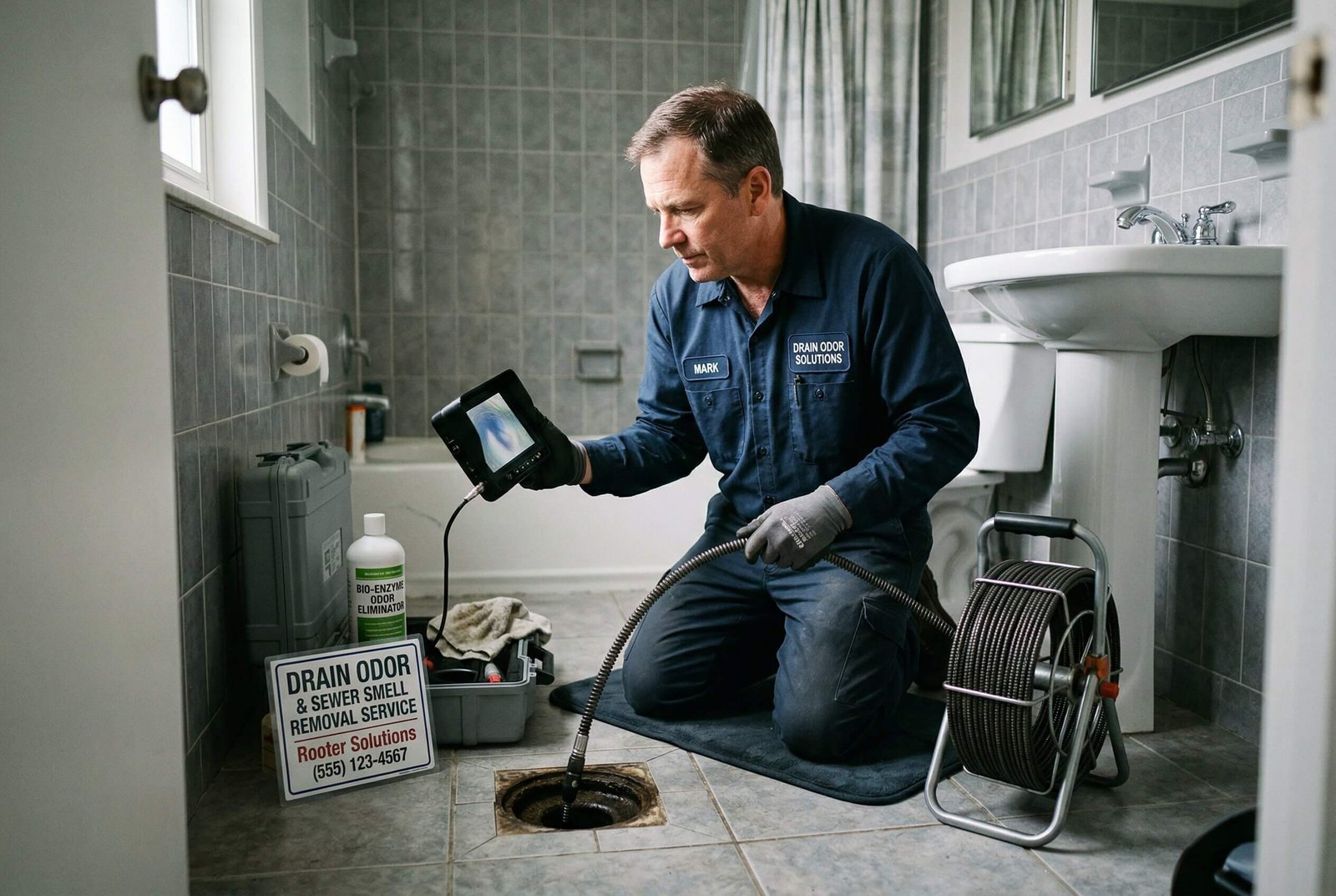
Drain odors are one of the most frustrating plumbing issues because they don’t always come with visible signs. You might walk into your kitchen or bathroom and notice a strong, unpleasant smell — something like rotten food, musty buildup, or even a sewer-like odor — without any obvious clog or standing water. It often feels unpredictable, sometimes stronger in the morning or after using the sink or shower.
What’s happening behind the scenes is usually a buildup of organic material inside the drain or a disruption in how the plumbing system is supposed to block sewer gases. Waste, soap residue, grease, and bacteria can collect along the pipe walls and begin to break down, creating odors that travel back up through the drain. In other cases, the issue isn’t buildup at all — it can be something like a dry drain trap or improper airflow in the system.
Drain odors commonly occur in kitchen sinks, bathroom drains, floor drains, and even unused plumbing fixtures. If the source isn’t addressed properly, the smell tends to return no matter how much surface cleaning is done. Over time, what starts as a mild odor can become more persistent, indicating a deeper issue within the drain or sewer system that needs proper attention.
What This Page Covers
ToggleWhat Drain Odor / Sewer Smell Removal Service Actually Means
Drain odor removal service is not about masking smells or using temporary fresheners. It’s about identifying why the smell is coming back and fixing the actual source inside the plumbing system. In most cases, the odor is a symptom of something happening deeper in the drain — not just at the surface.
What many homeowners experience is a recurring smell that disappears after cleaning but returns shortly after. That usually means the underlying cause hasn’t been addressed. A proper service focuses on removing buildup, restoring proper drainage conditions, or correcting system issues that allow odors to escape.
What actually causes bad smells in drains
Drain odors typically come from organic material breaking down inside the pipes or from sewer gases entering the home. These are two very different causes, but they can feel similar from the surface.
Common sources include:
- Food, grease, and waste buildup inside kitchen drains
- Hair, soap residue, and debris in bathroom drains
- Bacteria growing along pipe walls
- Trapped waste sitting in low-flow areas
As this material decomposes, it produces gases that travel back up through the drain opening.
Surface odor vs deeper sewer smell
Not all drain smells are the same. Some are mild and localized, while others are stronger and more noticeable throughout the room.
Surface-level odors:
- Usually come from buildup near the drain opening
- Smell organic or musty
- May improve temporarily after cleaning
Deeper sewer-related odors:
- Come from further inside the plumbing system
- Smell stronger, similar to sewage
- Often return quickly after cleaning
This distinction matters because deeper odors usually require more than simple cleaning — they often involve drain cleaning or sewer system evaluation.
Role of bacteria and organic buildup
Inside the drain, moisture and waste create an environment where bacteria thrive. These bacteria break down organic material and release gases that produce unpleasant smells.
Over time:
- Buildup thickens along pipe walls
- Bacteria multiply within that layer
- Odors become stronger and more persistent
Even if the drain is flowing normally, this internal buildup can still cause noticeable smells.
Dry P-trap vs active sewer gas issue
One of the most overlooked causes of drain odor is a dry P-trap. The P-trap is designed to hold water and block sewer gases from coming back into the home. If that water evaporates, the barrier is lost.
This can happen when:
- A drain isn’t used for a long time
- Water in the trap dries out naturally
- There’s a slow leak affecting the trap seal
On the other hand, if the P-trap is functioning but odors are still present, it may indicate a deeper issue such as venting problems or buildup further in the system.
Temporary deodorizing vs actual odor removal
Many common fixes focus on reducing the smell rather than removing its source. Cleaning the drain opening, using hot water, or applying household solutions may improve the situation briefly.
However:
- The underlying buildup often remains inside the pipe
- Bacteria continue to grow
- Odor returns once the temporary effect wears off
A real odor removal service focuses on eliminating the cause — whether it’s buildup, trapped waste, or a system issue — so the smell doesn’t keep coming back.
Understanding what’s actually causing the odor is the key difference between short-term relief and a lasting solution.
When You Actually Need Drain Odor Removal Service
Drain odors often start as a mild inconvenience, something you notice occasionally but can ignore for a while. The problem is that smells coming from drains rarely fix themselves. If the cause is buildup, bacteria, or a plumbing issue, the odor usually becomes more frequent and more noticeable over time.
Knowing when the smell is temporary versus when it signals a deeper issue helps you avoid ongoing frustration and potential plumbing problems later.
Early signs of drain odor issues
In the beginning, the smell may come and go. It might not be strong enough to cause concern, but it’s usually the first indication that something is starting to develop inside the drain.
You may notice:
- A light musty or stale smell near the sink or shower
- Odor appearing after running water
- Smell noticeable at certain times of the day
- Slight odor that fades after a short time
At this stage, the issue is often minor buildup or early bacterial activity inside the pipe.
Recurring odors that indicate buildup or blockage
When the smell keeps returning, it’s usually a sign that the underlying cause hasn’t been addressed. This is where many homeowners try repeated cleaning methods without long-term results.
Common patterns include:
- Smell returning shortly after cleaning the drain
- Odor becoming stronger over time
- Drain functioning normally but still producing smell
- Cleaning only reduces the smell temporarily
This typically means there is organic buildup inside the pipe that continues to produce odor.
Signs the odor may be related to sewer gas
Some smells are stronger and more distinct, often described as a sewer-like odor. These are different from typical organic smells and may indicate an issue beyond simple buildup.
You may experience:
- Strong, unpleasant smell similar to sewage
- Odor spreading into the room rather than staying near the drain
- Multiple drains producing the same smell
- Smell present even when the drain is not in use
These signs can point to issues like a dry trap, venting problems, or deeper system concerns that may require drain cleaning or sewer system inspection.
When odor becomes persistent and disruptive
There’s a point where the smell is no longer occasional — it becomes part of the daily environment. At this stage, the issue is unlikely to resolve without proper intervention.
You should consider professional help when:
- The smell is present most of the time
- Multiple areas of the home are affected
- Basic cleaning methods no longer help
- The odor worsens despite attempts to fix it
Persistent odors usually indicate that the source is deeper in the system or involves more than just surface buildup.
Early vs late action — what changes
Addressing the issue early often means dealing with a smaller amount of buildup or a simple cause like a dry trap. The process is quicker and more straightforward.
Waiting longer can lead to:
- Increased buildup inside the pipes
- Stronger and more difficult-to-remove odors
- Potential spread to other parts of the plumbing system
- Need for more detailed inspection and cleaning
Recognizing when the odor is more than just a temporary issue helps you decide when it’s time to move beyond surface cleaning and address the actual source of the problem.
How Drain Odor / Sewer Smell Removal Service Is Performed (Step-by-Step)
Fixing a drain odor isn’t about applying one solution — it’s about identifying the exact source and addressing it correctly. Since odors can come from multiple causes (buildup, dry traps, venting issues, or deeper drain problems), the process follows a structured approach to avoid guesswork.
The goal is to locate where the smell is coming from and remove or correct that source so the odor doesn’t return.
Initial inspection of affected drains
The first step is understanding where the smell is strongest and how it behaves. This helps narrow down whether the issue is isolated or affecting multiple parts of the system.
The plumber typically checks:
- Which drains are producing odor
- When the smell is most noticeable (after use, constant, etc.)
- Whether one or multiple fixtures are affected
This stage helps determine if the issue is local or connected to a larger part of the plumbing system.
Identifying the source of the odor
Once the affected area is known, the next step is identifying what’s causing the smell. This is the most important part of the process, as different causes require different solutions.
The source could be:
- Organic buildup inside the drain
- A dry or compromised P-trap
- Sewer gases entering through the system
- Blockage or residue deeper in the pipe
Accurate identification prevents applying the wrong fix.
Checking the P-trap water seal
The P-trap plays a key role in blocking sewer gases. If the water inside it is missing or low, odors can travel directly into the home.
At this stage, the plumber checks:
- Whether the trap contains enough water
- Signs of evaporation or leaks
- Whether the trap is properly installed
If the issue is a dry trap, restoring the water seal may resolve the smell quickly.
Inspecting venting and airflow
Proper venting allows air to move through the plumbing system, helping maintain pressure and preventing gases from being forced back into the home.
If venting is not functioning correctly:
- Odors may be pushed back through drains
- Water seals in traps may be affected
- Smells may appear intermittently
This step ensures that airflow within the system is working as intended.
Selecting the appropriate solution
Based on the identified cause, the correct method is chosen. This could range from simple cleaning to more involved work, depending on the issue.
Examples include:
- Cleaning buildup from inside the pipe
- Restoring or repairing trap function
- Addressing airflow or vent-related issues
- Performing deeper drain cleaning or sewer line cleaning
The solution is always matched to the root cause, not just the symptom.
Removing buildup or correcting the issue
This is the stage where the actual work is done. If the odor is caused by buildup, the drain is cleaned to remove organic material and bacteria. If it’s a system issue, the necessary adjustment or repair is made.
The focus is on:
- Eliminating the source of odor
- Preventing immediate recurrence
- Restoring normal system function
This step ensures that the smell is addressed at its origin.
Final odor testing and verification
After the work is completed, the system is tested to confirm that the odor has been resolved. This involves checking the drain under normal usage conditions.
The plumber verifies:
- No smell returning from the drain
- Proper drainage and airflow
- Consistent performance across affected fixtures
If everything checks out, it confirms that the issue has been properly resolved rather than temporarily masked.
A structured approach like this ensures that drain odors are not just reduced for a short time but eliminated by addressing what’s actually causing them.
Methods Used for Drain Odor / Sewer Smell Removal
There isn’t a single fix for drain odors because the cause can vary from simple buildup to deeper system issues. The method used depends entirely on what’s creating the smell — whether it’s bacteria inside the pipe, a dry trap, or gases entering from further down the line.
A proper approach focuses on eliminating the source of the odor, not just covering it up.
Drain cleaning to remove organic buildup
One of the most common causes of drain odor is organic material stuck along the pipe walls. Food waste, grease, soap residue, and debris create a layer where bacteria grow and produce smell.
Cleaning the drain helps:
- Remove buildup from inside the pipe
- Eliminate bacteria causing the odor
- Restore cleaner flow through the system
This type of drain cleaning is often enough when the smell is coming from accumulated residue rather than a deeper issue.
Bio-enzyme or bacterial treatments
In some cases, bio-enzyme treatments are used to break down organic material inside the drain. These solutions introduce beneficial bacteria that consume waste and reduce odor over time.
They are useful for:
- Breaking down residual buildup after cleaning
- Reducing odor in drains with mild to moderate issues
- Maintaining cleaner pipes over time
These treatments work gradually and are often used as a follow-up rather than a primary solution for severe problems.
Hydro jetting for deeper buildup
When buildup extends further into the pipe or has become thick over time, hydro jetting may be used. This method uses high-pressure water to clean the inside of the pipe more thoroughly.
It helps:
- Remove stubborn buildup from pipe walls
- Clear areas that standard methods can’t reach
- Flush out debris contributing to odor
Hydro jetting is typically used when the smell is linked to deeper or long-term accumulation that basic cleaning cannot fully address.
Trap refilling or replacement
If the odor is caused by a dry or faulty P-trap, restoring the water seal is often the simplest solution. This prevents sewer gases from entering the home.
This may involve:
- Refilling the trap with water
- Fixing leaks that cause water loss
- Replacing the trap if it’s damaged or improperly installed
This method is effective when the issue is not buildup but a failure in the system’s odor barrier.
Vent inspection and correction
Plumbing systems rely on proper venting to regulate airflow. If vents are blocked or not functioning correctly, odors can be pushed back into the home through drains.
Correcting vent issues helps:
- Restore proper airflow in the system
- Prevent pressure buildup that pushes odors upward
- Maintain stable water seals in traps
This step is important when odors are inconsistent or appear without visible buildup.
Sewer line cleaning when required
In more advanced cases, the source of the odor may be deeper in the system, such as in the main drain line. Buildup or blockage in this area can allow gases to travel back into the home.
In these situations:
- Sewer line cleaning may be required
- Deeper inspection may be needed to identify the issue
- Multiple drains may be affected at once
This method addresses the root cause when the problem extends beyond individual fixtures.
Choosing the right method based on cause
The effectiveness of odor removal depends entirely on using the right method for the actual cause. Applying a generic solution without identifying the source often leads to temporary results.
In many real-world situations, a combination of methods is used:
- Cleaning the drain to remove buildup
- Addressing trap or vent issues
- Flushing the system to prevent recurrence
This approach ensures that the odor is not just reduced, but properly eliminated at its source.
DIY vs Professional Odor Removal (Decision Section)
Drain odors are one of the few plumbing issues where DIY solutions can sometimes work — but only if the cause is simple. The challenge is that many odors feel similar on the surface, even though the underlying reason can be very different. That’s why some quick fixes seem to work immediately, while others fail or only provide temporary relief.
Understanding when you’re dealing with a minor issue versus a deeper problem helps you avoid repeating the same ineffective solutions.
When simple DIY fixes can actually work
If the odor is caused by something basic, a simple fix may resolve it quickly. These situations are usually easy to identify once you know what to look for.
DIY methods may work when:
- The drain hasn’t been used for a long time (dry trap)
- The smell is mild and localized
- The issue appeared recently
- There are no recurring or spreading odors
In these cases, running water to refill the trap or doing a light cleaning can often restore normal conditions.
Why masking odors doesn’t solve the problem
Many homeowners try to deal with drain smells by covering them up — using air fresheners, strong cleaners, or scented solutions. While this may reduce the smell temporarily, it doesn’t address what’s causing it.
Typically:
- The odor fades briefly
- The source inside the pipe remains unchanged
- The smell returns once the effect wears off
This creates a cycle where the odor feels unpredictable but never fully goes away.
Limits of common home cleaning methods
Basic cleaning methods like hot water, baking soda, or vinegar can help with light buildup, but they have limits. They usually affect only the surface or upper portion of the drain.
When the issue is deeper:
- Buildup further inside the pipe remains untouched
- Bacteria continue to grow
- Odor persists or returns quickly
This is why repeated cleaning often doesn’t lead to lasting results.
Signs the odor is coming from a deeper issue
There are clear indicators that the smell is not just a surface problem and needs more than simple cleaning.
You may notice:
- Odor returning repeatedly after cleaning
- Smell coming from multiple drains
- Strong sewer-like odor instead of mild smell
- No visible buildup near the drain opening
These signs often point to deeper causes that require proper drain cleaning or system inspection.
When professional odor removal is the better option
Professional help becomes necessary when the goal is to eliminate the odor completely, not just reduce it temporarily. This is especially true for recurring or strong smells.
A proper service helps:
- Identify the exact source of the odor
- Remove buildup inside the pipes
- Correct system issues like venting or trap problems
- Prevent the smell from returning quickly
In more complex cases, deeper work such as sewer line cleaning may be required to fully resolve the issue.
The real decision point
The decision comes down to whether the problem is simple or persistent.
If the smell is mild, recent, and clearly linked to something like an unused drain, DIY can work. But if the odor keeps returning, spreads to multiple areas, or becomes stronger over time, it usually means the source hasn’t been addressed.
Continuing with temporary fixes in those situations often delays the real solution and allows the underlying issue to develop further.
Cost of Drain Odor / Sewer Smell Removal in the U.S.
The cost of fixing drain odors depends entirely on what’s causing the smell. In some homes, it’s a simple issue like a dry trap or light buildup. In others, it involves deeper cleaning, inspection, or even addressing sewer-related problems. Because of this, pricing can vary more than most basic plumbing services.
You’re not just paying to “remove a smell” — you’re paying to identify and fix the source behind it.
Typical cost range for odor diagnosis and removal
For common odor-related issues, most services fall within a general range.
You can expect:
- $75 – $200 for simple issues (dry trap, light cleaning)
- $150 – $400 for moderate odor caused by drain buildup
- $400 – $900+ for deeper issues requiring inspection or advanced cleaning
The cost increases when the problem is harder to locate or requires more involved work.
Cost difference: simple vs complex odor issues
Simple cases are usually quick to fix. For example, if the issue is a dry P-trap or minor buildup near the drain, the solution is straightforward and takes less time.
More complex cases involve:
- Locating odor sources deeper in the pipe
- Inspecting multiple drains or system components
- Removing buildup from longer sections of pipe
- Addressing venting or airflow issues
These situations require more time and sometimes specialized tools, which affects the overall cost.
Emergency plumbing cost considerations
If the odor is linked to a more serious issue — such as a blockage or early-stage backup — emergency service may be needed.
In these cases:
- Emergency visits can add $100 – $300+
- After-hours or weekend calls cost more
- Urgent issues often involve more complex conditions
Emergency costs reflect both the urgency and the potential severity of the problem.
Factors that affect the total cost
Several real-world factors influence how much the service will cost. Many of these are only clear after inspection.
Key factors include:
- Source of odor – surface buildup vs deeper system issue
- Number of affected drains – single fixture vs multiple areas
- Need for inspection – camera or vent checks
- Type of work required – cleaning vs repair
- Time and labor involved – quick fix vs extended service
Each of these elements determines how simple or complex the solution will be.
Why pricing varies between homes
Drain odor issues are not always obvious from the outside. Two homes with similar smells may have completely different underlying causes — one may be a minor buildup, while another may involve deeper drain or venting issues.
The difference in cost reflects:
- How much investigation is needed to find the source
- How far into the system the issue extends
- How much work is required to fully resolve it
Understanding this helps set realistic expectations. The goal is not just to reduce the smell temporarily, but to address the cause so it doesn’t keep returning.
Risks of Ignoring Drain Odor or Sewer Smell
Drain odor is rarely just a smell problem. In most homes, it’s an early signal that something inside the plumbing system isn’t functioning the way it should. Whether it’s organic buildup, poor airflow, or a failing trap seal, the odor is usually the first visible symptom of a deeper condition.
Ignoring it doesn’t keep the issue contained — it allows it to develop quietly until it starts affecting drainage, hygiene, or multiple areas of the home.
Odor turning into actual drain blockage
In many cases, the smell comes from organic material building up along the pipe walls. That same material doesn’t stay harmless — it continues to collect debris and gradually reduces the internal space of the pipe.
Over time:
- Buildup thickens and spreads further into the drain
- Water flow becomes slower and less consistent
- A partial restriction turns into a full clog
What could have been handled early as a simple cleaning can turn into a more involved drain cleaning issue once the buildup hardens.
Sewer gas entering the living space
When the smell resembles sewage, it often means sewer gases are escaping into the home instead of being contained within the system. This can happen if the water seal in a trap is lost or if airflow in the plumbing system is disrupted.
As the issue continues:
- The smell becomes stronger and more noticeable
- It spreads beyond a single drain into the room
- Multiple drains may begin releasing odor
This isn’t just unpleasant — it indicates that the system is no longer properly blocking gases from the sewer line.
Small hidden issues becoming larger problems
Drain odors can sometimes point to issues that haven’t fully developed yet, such as partial blockages or venting problems. These problems may not affect drainage immediately, but they worsen over time.
If left unresolved:
- Minor buildup can extend deeper into the system
- Airflow issues can affect multiple fixtures
- The source of odor becomes harder to isolate later
Addressing the odor early often prevents these hidden issues from turning into more complex plumbing problems.
Bacteria growth and persistent odor cycle
Organic buildup inside drains creates an environment where bacteria thrive. These bacteria continuously break down waste and release gases, which is what produces the smell.
As this process continues:
- The odor becomes stronger and more consistent
- Cleaning the surface has little effect
- The smell returns quickly after temporary fixes
Without removing the source, this cycle continues regardless of how often the drain is cleaned from the top.
Moisture-related issues and surrounding damage
When odor is linked to slow drainage or partial blockage, water may not move through the system as efficiently. This can lead to moisture buildup in areas around the drain.
Possible effects include:
- Damp conditions under sinks or near fixtures
- Water lingering in pipes or nearby surfaces
- Increased risk of mold in enclosed or humid areas
These issues often develop gradually and may not be noticed until they become more visible.
What ignoring the smell actually leads to
Drain odor doesn’t remain a surface-level issue. It typically points to a condition that continues to grow until it affects how the plumbing system functions.
Delaying action usually results in:
- Stronger and more persistent odors
- Greater buildup inside the pipes
- Increased likelihood of blockage or backup
- More time and effort needed to fully resolve the issue
What starts as a minor inconvenience often becomes a more involved problem simply because the source wasn’t addressed early.
Where Drain Odors Commonly Originate in Homes
Drain odors don’t come from one single place. They can originate from different parts of the plumbing system depending on the cause — whether it’s buildup, trapped waste, or a system-related issue. In many cases, the smell you notice is just where it exits, not where it actually starts.
Understanding the common origin points helps you connect the odor to what’s happening inside the system and why it keeps returning.
Kitchen sink drains
Kitchen drains are one of the most frequent sources of odor. Food particles, grease, and organic waste regularly go down the sink and can stick to the pipe walls over time.
This leads to:
- Buildup of decomposing food residue
- Bacteria growth inside the pipe
- Persistent, musty or rotten smell
Even if the sink drains normally, this internal buildup can continue producing odor until properly cleaned.
Bathroom sinks, showers, and tubs
Bathroom drains commonly develop odor due to a mix of hair, soap scum, and personal care products. These materials create a sticky layer where bacteria can grow.
You may notice:
- Mild to strong odor near the drain opening
- Smell increasing after water use
- Recurring odor despite surface cleaning
These odors often come from buildup just below the surface or deeper in the pipe.
Floor drains (basement or laundry areas)
Floor drains are often overlooked because they’re not used as frequently. When water in the trap evaporates, it allows sewer gases to enter the space.
Common situations include:
- Basement drains with no regular water flow
- Laundry room drains that are rarely used
- Smell appearing suddenly after long periods of inactivity
In many cases, simply restoring the trap seal can resolve the issue if no other problem exists.
Unused drains with dry traps
Any drain that isn’t used regularly can develop odor due to a dry P-trap. The water inside the trap acts as a barrier, and when it disappears, gases from the sewer system can pass through.
This is common in:
- Guest bathrooms
- Unused showers or sinks
- Secondary floor drains
The odor may appear suddenly even though there’s no visible buildup or blockage.
Garbage disposal units
Garbage disposals can trap small food particles inside the unit or along connected pipes. Over time, these particles begin to break down and create strong odors.
Typical signs include:
- Smell strongest when the disposal is used
- Odor lingering even after rinsing
- Buildup inside the unit or drain line
In these cases, cleaning the disposal and connected drain is often necessary.
Main drain line or deeper system
When multiple drains in the home produce odor, the source may be deeper in the plumbing system. This can indicate buildup or issues in the main drain line.
You might experience:
- Smell coming from more than one fixture
- Odor present even when drains are not in use
- Stronger, sewer-like smell spreading through the home
In such situations, deeper drain cleaning or sewer line cleaning may be required to address the root cause.
Drain odors often originate in one of these areas, but the exact source isn’t always obvious from the surface. Identifying where the smell is coming from is the first step toward removing it properly rather than dealing with temporary relief.
Finding Drain Odor / Sewer Smell Removal Help Locally
When drain odor becomes persistent, most homeowners start looking for help nearby — not just to get rid of the smell, but to understand where it’s coming from. Unlike a visible clog, odor issues often require proper diagnosis, which is why finding the right local help matters more than just finding someone quickly.
Local availability becomes especially important when the smell is strong, spreading, or affecting multiple areas of the home.
How homeowners usually search for odor problems
People rarely search using technical plumbing terms. Instead, they describe what they’re experiencing.
Common search patterns include:
- “Drain smells like sewer”
- “Bad smell from sink or shower”
- “Sewer smell in house”
- “Drain odor removal near me”
These searches typically lead to local plumbers who handle drain cleaning, odor issues, and sewer-related problems.
Why local plumbers matter for odor diagnosis
Drain odor isn’t always straightforward. The smell might be coming from one place but caused by something deeper in the system. Local professionals are better equipped to assess the situation in person and identify the actual source.
Working with someone local helps because:
- They can inspect multiple drains and system components directly
- They understand common plumbing setups in local homes
- They can respond faster if the issue becomes more serious
This is especially important when the odor is linked to deeper problems like buildup or airflow issues.
Connecting to city-specific service pages
City-based service pages can give more relevant information compared to general plumbing content. They often reflect real conditions homeowners experience in that specific area.
These pages may include:
- Typical pricing expectations in the region
- Common causes of drain odor in local homes
- Availability of emergency or same-day services
This makes it easier to understand what kind of help is needed before scheduling a visit.
When to prioritize urgent local help
Not all drain odors require immediate attention, but certain situations shouldn’t be delayed. Strong or spreading smells can indicate a deeper issue that may worsen over time.
You should seek faster local help when:
- The smell is strong and persistent
- Multiple drains are producing odor
- The odor resembles sewage
- The smell spreads into living areas
In these cases, searching for emergency plumbing or emergency drain cleaning locally is usually the next step.
Finding the right help locally is less about speed and more about proper diagnosis. A thorough approach ensures the odor is traced to its source and resolved correctly, rather than temporarily reduced.
How to Choose the Right Provider for Drain Odor / Sewer Smell Issues
Drain odor problems are often misdiagnosed because the smell can come from multiple sources — buildup, dry traps, venting issues, or deeper sewer line conditions. Choosing the right provider is less about who can “remove the smell” fastest and more about who can correctly identify and fix the root cause.
The difference shows up later — either the odor stays gone, or it keeps returning.
What to look for in an odor removal service
A reliable provider focuses on diagnosis first, not just applying a quick solution. Since odor issues are not always visible, understanding the system is critical.
You should expect:
- A clear process to identify the source of the smell
- Willingness to inspect multiple drains if needed
- Explanation of what’s causing the odor
- A solution based on the cause, not guesswork
A thoughtful approach usually leads to longer-lasting results.
Experience with diagnosing odor causes
Odor issues require a different level of understanding compared to standard clogs. The provider should be familiar with how plumbing systems handle airflow, waste, and sealing.
An experienced provider will:
- Distinguish between buildup odor and sewer gas
- Recognize signs of dry traps or vent issues
- Understand how odors travel through the system
This helps ensure the correct issue is being addressed rather than applying a generic fix.
Tools and inspection methods used
Because the source of odor is not always visible, proper tools play an important role in diagnosis and resolution.
Look for providers who use:
- Inspection tools to locate deeper issues
- Methods to evaluate airflow and venting
- Equipment suited for proper drain cleaning when needed
Using the right tools reduces guesswork and increases the chances of resolving the issue completely.
Transparency in process and pricing
Since odor issues can vary widely, clear communication is important. The provider should explain both the process and the reason behind the solution.
A trustworthy provider will:
- Outline what they are checking and why
- Explain what affects the cost
- Avoid vague or one-size-fits-all answers
This helps you understand what is being done and what to expect.
Ability to handle deeper system issues
Some odor problems go beyond surface-level cleaning and involve deeper parts of the plumbing system. It’s important that the provider can handle these situations if needed.
They should be able to:
- Perform deeper drain cleaning or sewer line cleaning
- Address venting or airflow problems
- Handle issues affecting multiple drains
This ensures that the solution is complete rather than partial.
Common mistakes homeowners make
It’s easy to focus on removing the smell quickly, but that can lead to repeated issues.
Common mistakes include:
- Using only deodorizing solutions
- Ignoring recurring odor patterns
- Choosing the quickest fix instead of proper diagnosis
These approaches often delay the real solution.
Red flags to watch for
Certain signs suggest that the service may not address the problem thoroughly.
Be cautious if:
- No inspection is done before suggesting a solution
- The same fix is recommended for every situation
- There’s no explanation of the odor source
- The focus is only on removing smell temporarily
Choosing the right provider ensures the issue is handled correctly the first time. A proper diagnosis and targeted solution eliminate the odor at its source, rather than creating a cycle of temporary fixes.
Final Thoughts
Drain odor is one of those issues that feels small at first but rarely stays that way. A slight smell near a sink or shower is usually the first sign that something inside the plumbing system isn’t working as it should — whether it’s buildup, trapped waste, or a disruption in how the system blocks sewer gases.
The important thing is understanding that odor is not the problem itself — it’s a symptom. Cleaning the surface or masking the smell may provide short-term relief, but if the source remains inside the pipe or system, the odor will keep returning.
Addressing it early makes a noticeable difference. When the cause is minor, such as light buildup or a dry trap, the solution is straightforward and quick. But as time passes, the issue can spread deeper into the system, involve multiple drains, or require more involved work to fully resolve.
A proper drain cleaning or system-based approach focuses on identifying and removing the source — not just reducing the smell. Once that’s done, the plumbing system returns to normal function, and the odor stops being a recurring issue.