
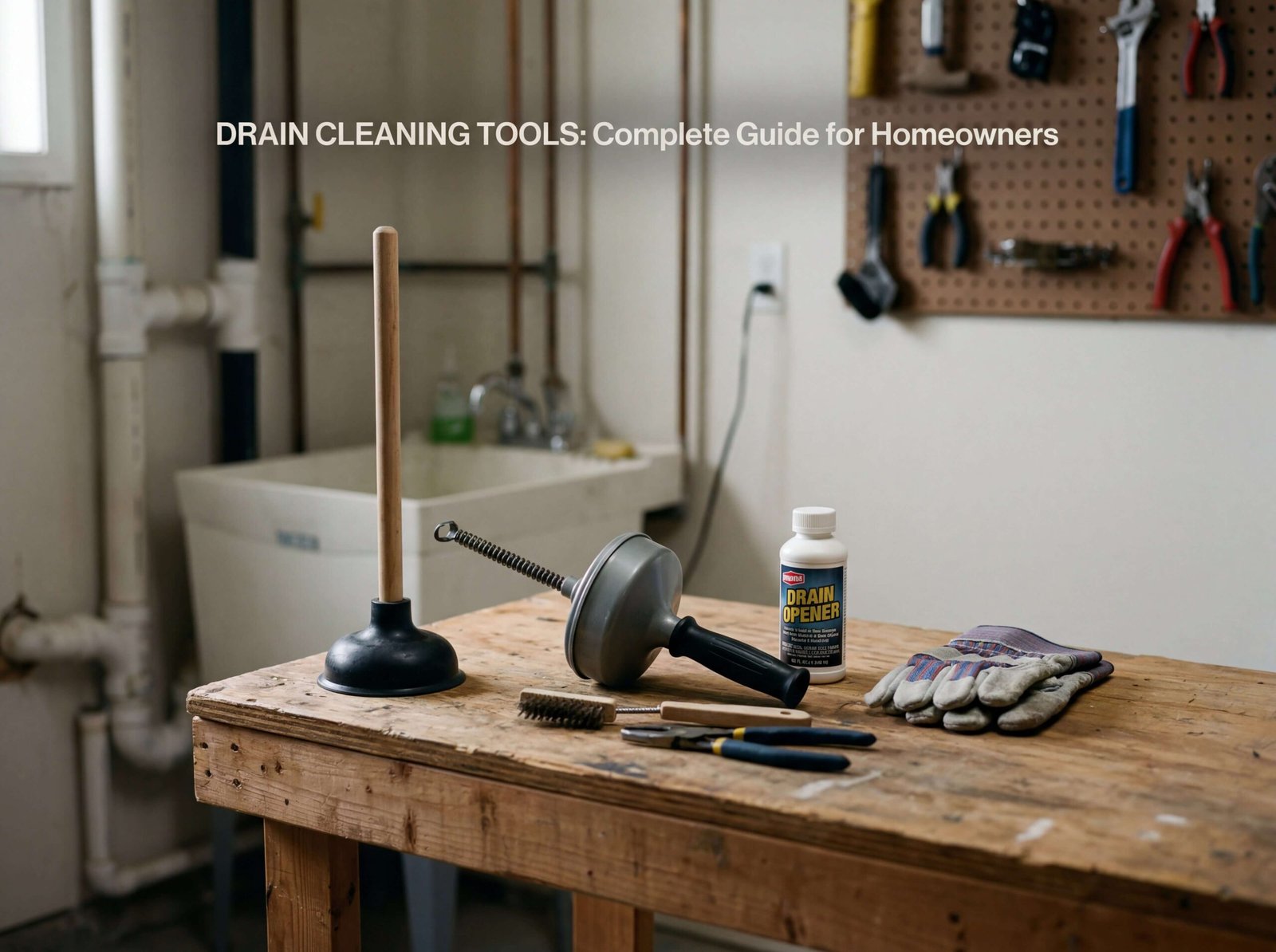
Most homeowners don’t actually have a drain problem—they have a tool selection problem.
What usually happens is simple. The sink starts draining slowly, so you grab the first thing you’ve seen before—a plunger, a cheap snake, or worse, a chemical cleaner. Sometimes it works temporarily. Most of the time, it either does nothing or pushes the problem deeper into the pipe. That’s where frustration builds, and small clogs turn into expensive plumbing issues.
In real homes, drains don’t clog randomly. Hair builds up in bathroom lines, grease hardens inside kitchen pipes, and debris collects over time in traps and bends. Each of these requires a different type of tool and approach. Using the wrong one isn’t just ineffective—it can damage pipes, loosen joints, or compact the clog even tighter.
This guide is built to fix that gap.
Instead of listing random drain tools, you’ll learn how to think like a plumber when choosing and using them. You’ll understand what each tool actually does inside your pipes, when it works, and when it doesn’t. More importantly, you’ll avoid the common mistakes that lead to broken pipes, wasted time, and unnecessary service calls.
By the end, you won’t just know what drain tools are—you’ll know exactly which one to use, when to use it, and how to use it safely in your own home.
What This Page Covers
ToggleWhy Drain Tools Matter in Real Homes
Most people think a clog is the problem. In reality, the clog is just the result of what’s been happening inside the pipe over time—and the tool you choose determines whether you solve it properly or make it worse.
In a real home, drains deal with very different types of buildup. Kitchen pipes collect grease that cools and sticks to the walls. Bathroom drains fill with hair that wraps and binds together. Floor and basement drains collect dirt, lint, and sludge. These are not the same problems, and they don’t respond to the same tools.
This is where most homeowners go wrong. They use whatever tool is available instead of using the right tool for the type of blockage.
A plunger, for example, works by creating pressure to move soft clogs. But if the clog is made of tangled hair or hardened grease, pressure alone won’t remove it—it may just push it deeper. Similarly, using a snake without understanding how the clog is formed can either miss the blockage entirely or compact it tighter.
Over time, repeated wrong attempts create bigger issues:
- Partial clogs turn into full blockages
- Pipe walls get scratched or weakened
- Joints loosen from excessive force
- Water starts backing up in multiple fixtures
Another important factor is the difference between a DIY mindset and a professional mindset.
Homeowners often try to “force a solution.” Plumbers focus on diagnosing first, then choosing the least aggressive tool that will actually work. That approach protects the pipe system while solving the problem efficiently.
Drain tools matter because they are not just for fixing clogs—they are part of a system for maintaining pipe health. The right tool, used at the right time, can clear buildup early, prevent major blockages, and extend the life of your plumbing.
When you understand this, you stop reacting to clogs—and start managing your drains proactively.
What Drain Tools Actually Do
Most homeowners think drain tools “remove clogs.” That’s only partially true.
In reality, different drain tools are designed to perform specific actions inside your pipes. If you understand these actions, choosing the right tool becomes much easier—and you stop guessing.
Breaking Clogs (Force-Based Tools)
Some tools work by applying pressure or force to break a blockage apart.
This is what a plunger does. It creates a push-and-pull pressure that can loosen soft clogs like food waste or toilet paper. Electric snakes and augers can also break through tougher obstructions by rotating and applying mechanical force.
This approach works best when:
- The clog is soft or loosely packed
- The blockage is recent
- There’s still some water movement
Where it fails:
- Hardened grease won’t “break” easily
- Hair clogs tend to compress instead of loosen
- Too much force can damage pipes or fittings
Pulling Debris (Extraction Tools)
Some tools are designed to grab and remove the clog instead of pushing it.
Zip tools, manual snakes, and certain auger heads fall into this category. These are especially effective for hair clogs, which tend to wrap and hold together rather than dissolve.
This approach works best when:
- The clog is made of hair or fibrous material
- The blockage is close to the drain opening
- You can physically reach the debris
Where it fails:
- Deep clogs may be out of reach
- Grease and sludge don’t “pull” cleanly
- Incorrect use can leave part of the clog behind
Flushing Buildup (Flow-Based Tools)
Some tools don’t break or pull—they wash buildup out of the pipe using water pressure.
This includes methods like hot water flushing, wet/dry vacuums (in some cases), and hydro jet-style tools. These are useful when the problem isn’t a solid clog, but a gradual buildup coating the pipe walls.
This approach works best when:
- Grease or soap buildup is lining the pipe
- The drain is slow but not fully blocked
- You’re doing preventive maintenance
Where it fails:
- Solid blockages won’t move with water alone
- Heavy buildup may require mechanical removal first
- Too much pressure can stress weak pipes
Inspecting Pipes (Diagnostic Tools)
Some of the most valuable tools don’t remove anything—they help you see what’s actually happening inside the pipe.
Inspection cameras allow you to identify:
- The exact location of the clog
- The type of blockage (hair, grease, roots, object)
- Pipe condition (cracks, buildup, misalignment)
This is how professionals avoid guesswork. Instead of trying multiple tools blindly, they choose the right one based on what they see.
For homeowners, even basic inspection tools can prevent:
- Using the wrong method repeatedly
- Damaging pipes unnecessarily
- Wasting time on ineffective solutions
When you look at drain tools this way, everything changes.
You’re no longer asking, “Which tool should I try?”
You’re asking, “What does this clog require—breaking, pulling, flushing, or inspecting?”
That shift is what separates trial-and-error from smart, effective drain maintenance.
Types of Drain Tools (Complete Breakdown)
This is where most guides go wrong—they list tools without explaining when they actually make sense to use.
In real homes, tools should be understood in levels. You don’t jump straight to advanced equipment. You start with the least aggressive option that fits the problem, then move up only if needed.
Basic Household Drain Tools
These are your first line of defense. Every homeowner should understand these before trying anything more aggressive.
Plunger
A plunger is not just for toilets—it’s one of the most effective tools for soft, recent clogs.
It works by creating pressure to move blockages, not remove them. That’s why it’s best for:
- Food waste in kitchen sinks
- Soap buildup in bathroom drains
- Toilet paper clogs
Real-world use:
If your sink suddenly stops draining after washing dishes, a plunger can often restore flow in seconds.
Where people go wrong:
- Using weak or inconsistent pressure
- Not sealing properly around the drain
- Expecting it to fix deep or hardened clogs
Manual Drain Snake
This is a flexible cable tool designed to reach slightly deeper than a plunger.
It doesn’t rely on pressure—it either breaks or hooks into the clog.
Best for:
- Bathroom sink clogs
- Shower drain blockages
- Early-stage buildup beyond the trap
Real-world use:
When water drains slowly and plunging doesn’t help, a manual snake can reach the clog and start breaking it apart.
Limitations:
- Limited reach
- Less effective on dense grease buildup
- Requires control to avoid scratching pipes
Zip Tool / Hair Remover
A simple but highly effective tool for surface-level hair clogs.
It works by pulling hair out rather than pushing it deeper.
Best for:
- Shower drains
- Bathroom sinks
- Visible or near-surface hair buildup
Real-world use:
If your shower starts draining slower over time, this tool can remove a surprising amount of trapped hair in seconds.
Limitations:
- Cannot reach deep clogs
- Not useful for grease or sludge
Boiling Water (Tool-Assisted Method)
This is often underestimated. When used correctly, it’s a maintenance tool, not just a quick fix.
It helps dissolve and flush light grease buildup before it hardens.
Best for:
- Kitchen sinks with early grease accumulation
- Preventive maintenance
Real-world use:
Pouring hot water regularly after cooking can prevent grease from sticking inside pipes.
Limitations:
- Won’t clear solid clogs
- Can damage certain pipes if misused (especially older PVC under extreme heat)
Intermediate Drain Tools
These tools are used when basic methods don’t work. They provide more reach, control, and power.
Hand Auger
A more advanced version of a manual snake, designed to go deeper and apply controlled force.
Best for:
- Clogs beyond the trap
- Recurring sink or tub issues
- Moderate blockages
Real-world use:
If a clog keeps coming back, it’s usually deeper than basic tools can reach—this is where a hand auger becomes useful.
Drill-Powered Auger
This tool adds mechanical rotation using a drill, making it easier to break tougher clogs.
Best for:
- Compacted debris
- Stubborn blockages
- Deeper pipe sections
Real-world use:
When manual effort isn’t enough, this tool provides the extra force needed without jumping to professional equipment.
Limitations:
- Easy to misuse with too much force
- Can damage pipes if not handled carefully
Wet/Dry Vacuum
This tool works differently—it can pull clogs out using suction.
Best for:
- Loose debris
- Shallow clogs
- Water and sludge removal
Real-world use:
In some cases, especially with bathroom sinks, suction can remove buildup without pushing it deeper.
Limitations:
- Not effective on solid or stuck clogs
- Requires proper sealing to work well
Enzyme Application Tools
These are used to apply biological cleaners in a controlled way.
Best for:
- Organic buildup (grease, soap, waste)
- Preventive maintenance
Real-world use:
Instead of reacting to clogs, this approach helps break down buildup over time.
Limitations:
- Slow process
- Not a solution for active blockages
Advanced DIY Drain Tools
These tools give homeowners access to near-professional capability, but they require more care and understanding.
Electric Drain Snake
A powered version of a drain snake that can reach deeper and handle tougher clogs.
Best for:
- Repeated clogs
- Deeper pipe blockages
- More serious buildup
Real-world use:
When standard tools fail repeatedly, this tool can reach and clear deeper sections of the system.
Risk:
- High potential for pipe damage if misused
- Requires steady control and patience
Mini Hydro Jet Attachments
These attach to pressure washers or hoses and use water force to clean pipes.
Best for:
- Grease buildup
- Sludge accumulation
- Preventive cleaning
Real-world use:
Instead of breaking clogs, this method cleans pipe walls, restoring proper flow.
Limitations:
- Not suitable for fragile or older pipes
- Requires correct pressure handling
Consumer Pipe Inspection Cameras
These tools allow you to see inside the drain before acting.
Best for:
- Identifying unknown clogs
- Diagnosing recurring problems
- Avoiding unnecessary tool use
Real-world use:
Instead of guessing, you can confirm whether the issue is hair, grease, or something more serious.
Professional Drain Tools
These are not typical DIY tools, but understanding them helps you know when to stop and call a professional.
Motorized Augers
Heavy-duty machines designed to clear deep, stubborn clogs.
Hydro Jetting Machines
High-pressure systems that completely clean pipe interiors.
Sewer Inspection Cameras
Used for precise diagnosis in long or complex pipe systems.
Root Cutters
Specialized tools to remove tree roots from sewer lines.
At this point, you should start seeing a pattern.
Drain tools are not about having more options—they’re about choosing the least aggressive tool that can actually solve the problem.
That’s how professionals protect pipes while fixing clogs efficiently.
How to Choose the Right Drain Tool
Choosing the right drain tool isn’t about picking the “best” tool—it’s about matching the tool to what’s actually happening inside the pipe.
This is where most homeowners go wrong. They choose based on convenience or guesswork, not on clog type, location, and severity. Once you understand these three factors, tool selection becomes simple and much more effective.
Based on Clog Type
Different materials behave differently inside pipes. If you misidentify the clog, you’ll likely use the wrong tool.
- Hair (bathroom drains)
- Best tools: zip tool, manual snake
- Why: hair binds together and needs to be pulled out, not pushed
- Grease (kitchen drains)
- Best tools: hot water flushing, hydro-style tools, auger (if hardened)
- Why: grease sticks to pipe walls and builds up over time
- Food waste (kitchen sinks)
- Best tools: plunger, hand auger
- Why: soft clogs respond well to pressure or light breaking
- Soap and sludge (bathroom + laundry)
- Best tools: flushing methods, enzyme tools
- Why: buildup coats pipes rather than forming a single blockage
- Foreign objects (accidental blockage)
- Best tools: retrieval tools, augers
- Why: pushing these deeper can make the problem worse
Based on Drain Location
Where the clog happens tells you how deep it likely is and how aggressive your approach should be.
- Kitchen sink
- Common issue: grease + food buildup
- Start with: hot water + plunger
- Move to: auger if clog persists
- Bathroom sink
- Common issue: hair + soap
- Start with: zip tool
- Move to: manual snake
- Shower / bathtub drain
- Common issue: deep hair clogs
- Start with: hair remover
- Move to: hand auger for deeper buildup
- Floor / basement drain
- Common issue: dirt, sludge, debris
- Start with: vacuum or auger
- Move to: advanced tools if needed
- Main sewer line
- Common issue: deep blockage, roots, heavy buildup
- Start with: nothing DIY if severe
- Action: professional tools usually required
Based on Severity of the Problem
Severity determines how aggressive your tool should be. Starting too aggressively is one of the biggest mistakes.
- Slow drain (early warning stage)
- Use: flushing methods, enzyme tools
- Goal: prevent buildup from turning into a clog
- Partial clog (water drains slowly but consistently)
- Use: plunger or manual snake
- Goal: break or remove developing blockage
- Full blockage (no drainage at all)
- Use: auger or stronger mechanical tools
- Goal: reach and clear solid obstruction
- Recurring clog (keeps coming back)
- Use: deeper tools or inspection camera
- Goal: identify root cause, not just symptoms
A Simple Decision Flow You Can Follow
Instead of guessing, use this quick approach:
- Observe the symptom
Slow, partial, or fully blocked - Identify likely cause
Hair, grease, sludge, or object - Start with the least aggressive tool
Never jump straight to heavy tools - Test and evaluate response
Improvement means you’re on the right track - Escalate only if needed
Move to deeper or stronger tools gradually
The Most Important Rule
Always choose the tool that solves the problem with the least force and least risk to your pipes.
That’s exactly how professionals approach it. They don’t start with the strongest tool—they start with the smartest one for the situation.
How to Use Drain Tools Safely
Using drain tools is not just about clearing a clog—it’s about clearing it without damaging your pipes.
Most pipe damage in homes doesn’t happen because of age. It happens because of overforce, wrong technique, or using the wrong tool in the wrong way. If you follow a simple, controlled approach, you can avoid almost all of these issues.
General Safety Principles
Before you touch any tool, understand this: your pipes are not designed to handle force—they’re designed to carry water.
- PVC pipes can crack under pressure or twisting
- Metal pipes can scratch, corrode, or loosen at joints
- Older plumbing systems are especially fragile
The biggest mistake homeowners make is trying to force the clog out quickly. Professionals do the opposite—they work gradually and let the tool do the job.
Key rules to follow:
- Always start with the least aggressive method
- Never force a tool when you feel strong resistance
- Avoid mixing tools with chemical cleaners (dangerous reactions + pipe damage)
- Stop if something feels unusual or worse than before
Step-by-Step Safe Usage Flow
This is the exact process plumbers follow to minimize risk and maximize results.
- Identify the likely clog type
Hair, grease, food, or unknown—this determines your tool - Prepare the area
Remove standing water if possible, ensure proper access - Choose the least aggressive tool first
Example: zip tool before snake, plunger before auger - Apply controlled, gradual effort
- For plungers: steady pressure, not random force
- For snakes: slow insertion and rotation
- Watch how the drain responds
- Improvement = continue carefully
- No change = consider next tool level
- Flush after clearing
Use water to confirm flow and remove remaining debris - Stop if resistance feels abnormal
This often signals pipe bends, joints, or a solid obstruction
Tool-Specific Safety Tips
Each tool has its own risks. Understanding them prevents costly mistakes.
Plunger
- Ensure a proper seal before applying pressure
- Use steady, controlled plunges—not aggressive bursts
- Avoid using on completely dry drains (reduces effectiveness)
Manual Snake / Auger
- Insert slowly—never push forcefully
- Rotate gently to engage the clog
- Pull back carefully to avoid splashing debris
- Clean the cable after use to prevent contamination
Drill-Powered or Electric Tools
- Start at low speed—high speed increases damage risk
- Maintain firm control of the cable
- Stop immediately if the cable jerks or binds
Hydro or Pressure-Based Tools
- Avoid excessive pressure in older pipes
- Ensure proper drainage before applying water force
- Never seal the system completely—pressure needs an outlet
Wet/Dry Vacuum
- Ensure tight sealing for effective suction
- Avoid pulling in materials that could damage the vacuum
- Clean the unit after use to prevent odor and bacteria buildup
Common Safety Mistakes to Avoid
Even with the right tool, these mistakes can turn a small issue into a major repair:
- Forcing a tool when it won’t move
- Using a metal snake aggressively in fragile pipes
- Repeatedly attacking the same clog without reassessing
- Ignoring warning signs like unusual sounds or resistance
- Continuing after partial success instead of flushing and checking
When to Stop Immediately
This is critical. Knowing when to stop prevents serious damage.
Stop using tools if:
- The tool won’t move forward or backward easily
- You feel grinding, scraping, or sharp resistance
- Water starts backing up in other drains
- The problem gets worse instead of better
At this point, continuing DIY efforts can turn a simple clog into a pipe repair or replacement situation.
Using drain tools safely is not about strength—it’s about control, patience, and knowing your limits.
If you follow this approach, you’ll not only clear clogs more effectively—you’ll protect your plumbing system in the process.
Common Mistakes When Using Drain Tools
Most drain problems don’t become serious because of the clog itself—they become serious because of how the tools are used.
In real homes, I’ve seen more pipe damage caused by incorrect tool usage than by the actual blockage. The mistake is usually not the tool—it’s the approach behind it.
Using the Wrong Tool for the Situation
This is the most common and most costly mistake.
Homeowners often grab whatever tool is available without understanding the clog type. A plunger gets used on a hair clog, or a snake gets pushed into grease buildup expecting it to “hook” something that isn’t there.
The result:
- The clog doesn’t clear
- It gets pushed deeper into the pipe
- The problem becomes harder to reach and remove
The fix is simple:
Always match the tool to the clog type. If you’re guessing, you’re increasing the risk of making it worse.
Applying Too Much Force
Force feels like progress—but in plumbing, it’s usually damage in disguise.
Pushing harder on a snake or auger doesn’t mean you’re clearing the clog. Often, it means:
- You’re hitting a pipe bend or joint
- The clog is compacting instead of breaking
- The cable is scraping or stressing the pipe
This is how pipes crack, joints loosen, and leaks begin.
A properly used tool should engage the clog, not fight the pipe.
Repeating the Same Method Without Reassessing
Many homeowners try the same tool again and again, hoping for a different result.
For example:
- Plunging repeatedly with no improvement
- Running a snake multiple times without clearing anything
- Flushing water without addressing the actual blockage
This wastes time and often worsens the situation.
If a method doesn’t work after a reasonable attempt, it’s a sign to:
- Re-evaluate the clog type
- Change the tool
- Or stop before damage occurs
Mixing Chemical Cleaners with Tools
This is not just ineffective—it can be dangerous.
Chemical cleaners:
- Weaken pipe materials over time
- Create heat and pressure reactions
- Leave residue that can splash back during tool use
If you insert a snake or auger into a drain that contains chemicals, you risk:
- Skin burns
- Toxic splashes
- Accelerated pipe damage
Professional practice avoids mixing chemicals with mechanical tools for this reason.
Ignoring Early Warning Signs
Drains rarely clog suddenly without warning. Most give clear signs:
- Slower drainage over time
- Gurgling sounds
- Occasional backups
Ignoring these signs leads to:
- Fully developed clogs
- Deeper blockages
- More aggressive tool usage later
Using the right tool early is always easier and safer than dealing with a severe blockage later.
Damaging Pipe Interiors Without Realizing It
Some mistakes don’t show immediate results but cause long-term problems.
- Scratching pipe walls with metal tools
- Twisting cables aggressively inside bends
- Repeatedly forcing tools through the same area
These actions weaken the pipe from the inside, leading to:
- Faster buildup in the future
- Higher risk of cracks or leaks
- Recurring clogs in the same spot
Trying to Solve Every Problem Yourself
One of the biggest mistakes is not knowing when to stop.
Some clogs are not just clogs—they’re signs of:
- Deep pipe issues
- Sewer line problems
- Structural damage
Continuing to use tools in these cases can make repairs more expensive.
A smart approach is not about doing everything yourself—it’s about knowing:
- When tools will work
- And when they won’t
If you avoid these mistakes, you’re already ahead of most homeowners.
Drain tools are effective—but only when used with the right judgment. Without that, even the best tool can create bigger problems than the clog itself.
When Drain Tools Are NOT Enough
Drain tools are effective—but only within their limits.
One of the biggest mistakes homeowners make is assuming that every clog can be solved with the right tool. In reality, some problems are beyond the reach of DIY tools, no matter how advanced they are.
Knowing when to stop is what protects your pipes, your time, and your money.
Signs the Problem Is Deeper Than a Simple Clog
Some blockages are not sitting near the drain opening—they’re deeper in the system, sometimes several feet away.
Common signs:
- Multiple drains backing up at the same time
- Water coming up from a different fixture (e.g., sink affects shower)
- Gurgling sounds across the plumbing system
- Slow drainage throughout the house, not just one drain
These usually point to a main line issue, not a localized clog. Standard tools like plungers or basic snakes won’t reach or fix the root problem.
Recurring Clogs That Keep Coming Back
If you clear a clog and it returns within days or weeks, that’s a warning sign.
This typically means:
- The clog was only partially removed
- There’s buildup along the pipe walls
- The real blockage is deeper than your tool can reach
Repeatedly using the same tool in this situation doesn’t solve anything—it just creates a cycle of temporary fixes.
Professionals handle this by:
- Inspecting the pipe
- Identifying the exact cause
- Using the correct method for full removal
Structural or Pipe Damage
Sometimes the issue isn’t a clog at all—it’s the pipe itself.
Problems like:
- Cracked or collapsed pipes
- Misaligned joints
- Corroded sections
These cannot be fixed with drain tools.
Warning signs:
- Persistent leaks
- Strong sewer odors
- Sudden worsening of drainage after using tools
- Unusual resistance when inserting a snake
In these cases, continuing to use tools can make the damage worse.
Tree Root Intrusion (Outdoor or Sewer Lines)
For homes with older sewer lines, especially outdoors, tree roots are a common cause of blockages.
Roots:
- Enter through small cracks in pipes
- Expand and trap debris
- Create solid obstructions over time
Basic DIY tools cannot remove roots effectively. Even if you break through temporarily, the problem will return.
This requires specialized tools like root cutters or hydro jetting—typically handled by professionals.
Hardened Grease and Heavy Buildup
In kitchen drains, grease doesn’t just sit—it hardens and sticks to pipe walls, gradually narrowing the flow.
At a certain point:
- Boiling water won’t help
- Snakes may pass through without fully clearing it
- Partial cleaning leads to quick re-clogging
This is where high-pressure cleaning methods are needed to restore the pipe properly.
When Tools Start Making Things Worse
This is the clearest signal to stop.
If you notice:
- Increased resistance with each attempt
- Water backing up more than before
- Debris returning immediately after clearing
- New noises or vibrations in pipes
It means the situation is escalating, not improving.
Continuing at this stage often leads to:
- Pipe damage
- Deeper clogs
- Higher repair costs
The Professional Threshold
A good rule to follow:
If you’ve:
- Tried 2–3 appropriate tools
- Used them correctly
- Seen little or no improvement
It’s time to stop DIY attempts.
Professionals don’t just have stronger tools—they have:
- Diagnostic equipment
- Experience identifying root causes
- The ability to solve the issue without damaging the system
Drain tools are powerful, but they’re not universal solutions.
The real skill is knowing when they work—and when they don’t. That’s what keeps a simple clog from turning into a major plumbing repair.
Drain Tool Maintenance and Storage
Most homeowners focus on using drain tools—but ignore what happens after.
That’s a mistake.
A poorly maintained tool doesn’t just wear out faster—it becomes less effective, harder to control, and in some cases, unsafe to use. On the other hand, well-maintained tools work better, last longer, and reduce the chances of damaging your pipes.
Cleaning Tools After Use
Every time you use a drain tool, it comes into contact with debris, grease, bacteria, and residue. Leaving that on the tool creates problems over time.
After each use:
- Rinse the tool thoroughly with clean water
- Remove any visible debris (hair, sludge, grease)
- Use mild soap if buildup is sticky or oily
- For snakes and augers, extend the cable fully and clean along its length
Why this matters:
- Prevents buildup from hardening on the tool
- Reduces odor and bacterial growth
- Keeps moving parts functioning smoothly
A dirty tool becomes harder to use and can even reintroduce debris into the drain next time.
Preventing Rust and Wear
Metal tools—especially snakes and augers—are prone to rust and corrosion if left wet.
Simple steps make a big difference:
- Dry tools completely before storing
- Wipe metal parts with a dry cloth
- Apply light lubrication to cables and moving components
- Avoid leaving tools in damp or humid areas
Why this matters:
- Rust weakens cables and increases breakage risk
- Rough surfaces from corrosion can scratch pipe interiors
- Lubricated tools move more smoothly and safely
Proper Storage Practices
How you store your tools affects both their lifespan and usability.
- Keep tools in a dry, well-ventilated area
- Store cables coiled properly to avoid kinks
- Avoid stacking heavy items on top of tools
- Use a dedicated container or toolbox if possible
For drain snakes and augers:
- Do not bend or twist cables tightly
- Keep them loosely coiled to maintain flexibility
For smaller tools:
- Store hair removers, plungers, and accessories separately
- Avoid mixing them with dirty or sharp items
Handling Electric and Advanced Tools
If you use powered tools, maintenance becomes even more important.
- Clean and dry the tool before storage
- Check cables and moving parts for wear
- Store in a protected case to avoid damage
- Ensure electrical components remain dry at all times
Regular inspection prevents unexpected failure during use.
When to Replace a Tool
Not all tools last forever. Using a worn-out tool can be risky.
Replace tools if you notice:
- Frayed or weakened cables
- Rust that doesn’t clean off
- Reduced flexibility or stiffness in snakes
- Cracks or damage in handles or components
A damaged tool is harder to control and more likely to harm your pipes than help them.
The Bigger Picture
Maintaining your drain tools isn’t just about keeping them clean—it’s about keeping them reliable.
A well-maintained tool:
- Works more efficiently
- Requires less force
- Reduces risk of pipe damage
- Gives you better results with less effort
This is how professionals treat their tools—and it’s one of the reasons they get consistent results.
Cost of Drain Tools (U.S.)
Understanding cost is not just about how much a tool costs—it’s about deciding when it makes sense to buy a tool versus when it’s smarter to hire a professional.
Drain tools range from very affordable to highly specialized equipment. But the real value comes from how often you’ll use them and whether they actually solve your type of problem.
Basic Drain Tools (Low-Cost Essentials)
These are inexpensive and should be part of every home setup.
- Hair removal tools: $5 – $15
- Manual drain snakes: $10 – $25
- Standard plungers: $10 – $30
These tools handle most common household clogs, especially in bathrooms and kitchens.
In many homes, this level alone is enough. Regular use of these tools can prevent small issues from turning into major blockages.
Intermediate Tools (Better Reach and Control)
These tools are useful when clogs go beyond surface level or keep returning.
- Hand augers (around 25 ft): $20 – $40
- Drill-powered augers: $30 – $100+
- Wet/dry vacuum: $50 – $150+
These provide more reach and strength, making them suitable for deeper or more stubborn clogs.
If you regularly deal with slow drains or repeat issues, investing in this category can reduce the need for service calls.
Advanced DIY Tools (Higher Capability)
These tools offer more power and access, but require careful handling.
- Electric drain snakes: $100 – $500+
- Consumer inspection cameras: $50 – $300+
- Hydro jet attachments: $50 – $200+
These are useful in situations where basic tools fail repeatedly. However, they are not necessary for occasional clogs and can be excessive for typical household use.
Professional-Level Equipment (High-Cost Category)
These tools are designed for full-scale drain cleaning and repair work.
- Professional drain machines: $500 – $1,800+
- Large sewer augers: $1,000+
- Hydro jetting systems: $2,000 – $10,000+
This level of equipment is typically used by professionals due to the cost, complexity, and risk involved.
For most homeowners, purchasing these tools is not practical.
Buy vs Hire: What Makes Sense
The decision should be based on how often the problem occurs and how complex it is.
Buying makes sense when:
- You deal with minor clogs regularly
- You want quick solutions without waiting
- You are building a basic home maintenance setup
Hiring makes more sense when:
- The clog is deep or keeps coming back
- The issue involves main lines or structural problems
- You are unsure about the cause
A professional visit may cost more upfront, but it includes proper diagnosis and reduces the risk of damage.
Tool Rental as a Middle Option
For one-time or occasional issues, renting tools can be a practical choice.
It allows access to more powerful equipment without the cost of ownership or long-term maintenance. This is especially useful for deeper clogs that basic tools cannot reach.
A Practical Cost Strategy
A simple and effective approach is:
- Start with basic tools and use them consistently
- Upgrade only if problems repeat
- Avoid buying advanced tools unless you clearly need them
- Consider renting or hiring for complex situations
Bottom Line
Drain tools themselves are not expensive. What becomes costly is using the wrong tool or using the right tool incorrectly.
A small investment in the right basic tools can prevent larger expenses later. At the same time, knowing when not to invest in tools is just as important as knowing when to buy them.
Tool-Based Drain Maintenance Routine
Most homeowners use drain tools only when there’s a problem. By that time, the clog has already developed.
A better approach is to use tools as part of a simple maintenance routine. This prevents buildup from turning into blockages and reduces the need for aggressive tools later.
Weekly Routine (Light Prevention)
This stage is about keeping drains clear before buildup starts to stick.
Focus areas:
- Kitchen sink
- Bathroom sink
- Shower drain
What to do:
- Run hot water through kitchen drains after heavy use
- Use a hair removal tool in shower drains if you notice early buildup
- Flush bathroom sinks with warm water to keep soap residue moving
Why it works:
Most clogs begin as a thin layer inside the pipe. Weekly flushing and light cleaning prevent that layer from forming into a blockage.
Monthly Routine (Deeper Cleaning)
This stage focuses on removing buildup that isn’t visible but is starting to affect flow.
What to do:
- Use a manual snake or hand auger in slow drains
- Apply enzyme-based cleaners for organic buildup
- Check and clean accessible traps if needed
Where to focus:
- Bathroom sinks (hair + soap buildup)
- Kitchen drains (early grease accumulation)
- Shower drains (deeper hair clogs)
Why it works:
Monthly maintenance reaches deeper into the system, where early clogs begin forming beyond the surface.
Quarterly Check (System Awareness)
Every few months, take a step back and evaluate how your drains are behaving.
What to check:
- Any drains slowing down consistently
- Gurgling sounds or minor backups
- Repeated need for the same tool in one location
What to do:
- Use a deeper tool like an auger if patterns appear
- Consider inspecting the drain if issues repeat
- Address small problems before they spread
Why it matters:
Recurring minor issues are early signals of larger problems. Catching them here avoids major blockages later.
Emergency Readiness (Be Prepared Before It Happens)
Every home should have a basic tool kit ready, not after a clog occurs.
Minimum setup:
- Plunger
- Manual drain snake
- Hair removal tool
Optional additions:
- Hand auger
- Wet/dry vacuum
Why this matters:
When a clog happens, timing matters. Having tools ready allows you to act early—before the blockage becomes severe.
The Real Goal of This Routine
This routine is not about constant work—it’s about reducing the need for heavy intervention.
When followed consistently:
- Drains stay clear longer
- Fewer full blockages occur
- Less force is needed when using tools
- Pipes last longer with less stress
A Simple Way to Think About It
- Weekly → prevent surface buildup
- Monthly → clear developing issues
- Occasionally → check patterns and adjust
Drain maintenance isn’t about reacting to problems. It’s about staying ahead of them with the right tools at the right time.
How Professionals Use Drain Tools Differently
Most homeowners focus on the tool itself. Professionals focus on how and why the tool is used.
That difference is what separates quick, effective results from trial-and-error.
Technique Matters More Than the Tool
A common misconception is that professionals succeed because they have better tools. In reality, they succeed because they use the right technique with the right tool.
For example:
- A homeowner may force a snake into the pipe
- A professional feeds it slowly, feeling resistance and adjusting direction
The tool is the same—but the outcome is completely different.
Professionals treat tools as precision instruments, not force-based solutions. They rely on control, timing, and feedback from the pipe.
Diagnosis Comes Before Action
Homeowners often start with a tool and hope it works.
Professionals do the opposite:
- Identify the type of clog
- Determine its location
- Choose the least aggressive tool that can solve it
This is why they avoid unnecessary damage. They are not guessing—they are targeting the problem.
Even without advanced cameras, experienced plumbers can often tell what’s happening based on:
- Drain behavior
- Sound
- Resistance inside the pipe
Gradual Escalation Instead of Immediate Force
Another key difference is how professionals escalate their approach.
They don’t jump straight to powerful tools. Instead, they:
- Start with a mild method
- Evaluate the response
- Increase intensity only if needed
This prevents:
- Pipe stress
- Compacted clogs
- Worsening the blockage
Homeowners often skip this process and go straight to aggressive tools, which increases risk.
Efficiency Through Experience
Professionals are faster—not because they rush, but because they:
- Recognize patterns quickly
- Choose the correct tool early
- Avoid repeating failed methods
What might take a homeowner multiple attempts can often be resolved in one or two passes with the right approach.
This efficiency reduces:
- Time spent on the problem
- Wear on the plumbing system
- Overall cost in the long run
Knowing When to Stop and Switch Methods
One of the most important professional habits is knowing when a tool is no longer the right solution.
Instead of forcing the same method repeatedly, professionals:
- Stop when progress stalls
- Reassess the situation
- Switch tools or strategies
This prevents small issues from becoming larger ones.
Respecting Pipe Limits
Professionals understand that pipes have limits—and they work within them.
They avoid:
- Excessive force
- High-speed tool use in fragile pipes
- Repeated aggressive attempts in the same area
This is why their work not only clears the clog but also preserves the integrity of the plumbing system.
The Real Difference
The biggest difference is mindset.
Homeowners often think:
“How do I clear this clog?”
Professionals think:
“What is the safest and most effective way to solve this without causing damage?”
When you start thinking this way, your results improve immediately.
You stop relying on trial-and-error and start using drain tools with purpose, control, and confidence.
Long-Term Strategy Using Drain Tools
Most homeowners think about drain tools only when something goes wrong. A better approach is to treat them as part of a long-term system—one that prevents problems, reduces costs, and keeps your plumbing working reliably.
The goal is not to own more tools. The goal is to use the right tools at the right time, consistently.
Build a Practical Home Toolkit
You don’t need a large collection. You need a small, reliable set of tools that cover most real situations.
Start with:
- Plunger
- Hair removal tool
- Manual drain snake
This setup handles the majority of everyday clogs.
If your home experiences recurring issues, you can expand with:
- Hand auger
- Wet/dry vacuum
The idea is to build gradually based on actual need—not assumptions.
Focus on Prevention, Not Just Reaction
The biggest shift in strategy is moving from reacting to clogs → to preventing them.
Instead of waiting for a blockage:
- Use basic tools regularly to remove early buildup
- Flush drains before grease or soap hardens
- Pull out hair before it forms deeper clogs
This reduces:
- Frequency of major blockages
- Need for aggressive tools
- Risk of pipe damage
Preventive use of tools is what keeps plumbing systems stable over time.
Use Tools Before the Problem Gets Serious
Timing matters more than tool strength.
- Early stage → light tools (zip tool, hot water, plunger)
- Developing issue → moderate tools (manual snake, auger)
- Severe blockage → advanced tools or professional help
Most major clogs could have been avoided if addressed earlier with simple tools.
Create a Simple Upgrade Path
Not every home needs advanced tools—but some situations justify them.
Upgrade only when:
- The same drain clogs repeatedly
- Basic tools stop being effective
- You clearly understand the problem type
Avoid upgrading just for convenience. More powerful tools increase both capability and risk.
Combine Tools with Awareness
Tools alone are not enough. You also need to pay attention to how your drains behave over time.
Watch for:
- Slower drainage patterns
- Recurring minor clogs
- Changes in sound or flow
These signals tell you when to act early instead of waiting.
Know Your Limits
A strong long-term strategy includes knowing when not to continue.
If a problem:
- Keeps returning
- Doesn’t respond to correct tools
- Shows signs of deeper issues
Then continuing DIY efforts is not efficient. At that point, professional help becomes part of the strategy—not a failure.
The Real Long-Term Advantage
When you follow this approach:
- You use less force overall
- You avoid emergency situations
- You reduce long-term repair costs
- Your plumbing system lasts longer
A Simple Way to Think About It
- Own a few essential tools
- Use them early and regularly
- Escalate only when necessary
- Stop before causing damage
Drain tools are not just for fixing problems—they are part of a system that keeps problems from happening in the first place.
When used this way, they become one of the most practical and cost-effective parts of home maintenance.
Final Thoughts
Drain tools are not complicated—but using them correctly requires the right mindset.
Most problems don’t come from the clog itself. They come from guesswork, using the wrong tool, or applying too much force. That’s what turns a simple blockage into a bigger plumbing issue.
If you take one thing from this guide, it should be this:
The goal is not to clear the clog as fast as possible.
The goal is to solve the problem without damaging your pipes.
That’s exactly how professionals approach it.
When you:
- Choose tools based on the actual clog
- Start with the least aggressive method
- Use controlled, patient technique
- Stop when something doesn’t feel right
You get better results with less risk.
Over time, this approach changes everything. You stop reacting to emergencies and start managing your drains proactively. Small issues get handled early, major clogs become rare, and your plumbing system lasts longer with fewer problems.
In the end, drain tools are only as effective as the way you use them.
Use them with the right judgment, and they become one of the most practical and reliable parts of maintaining your home.