
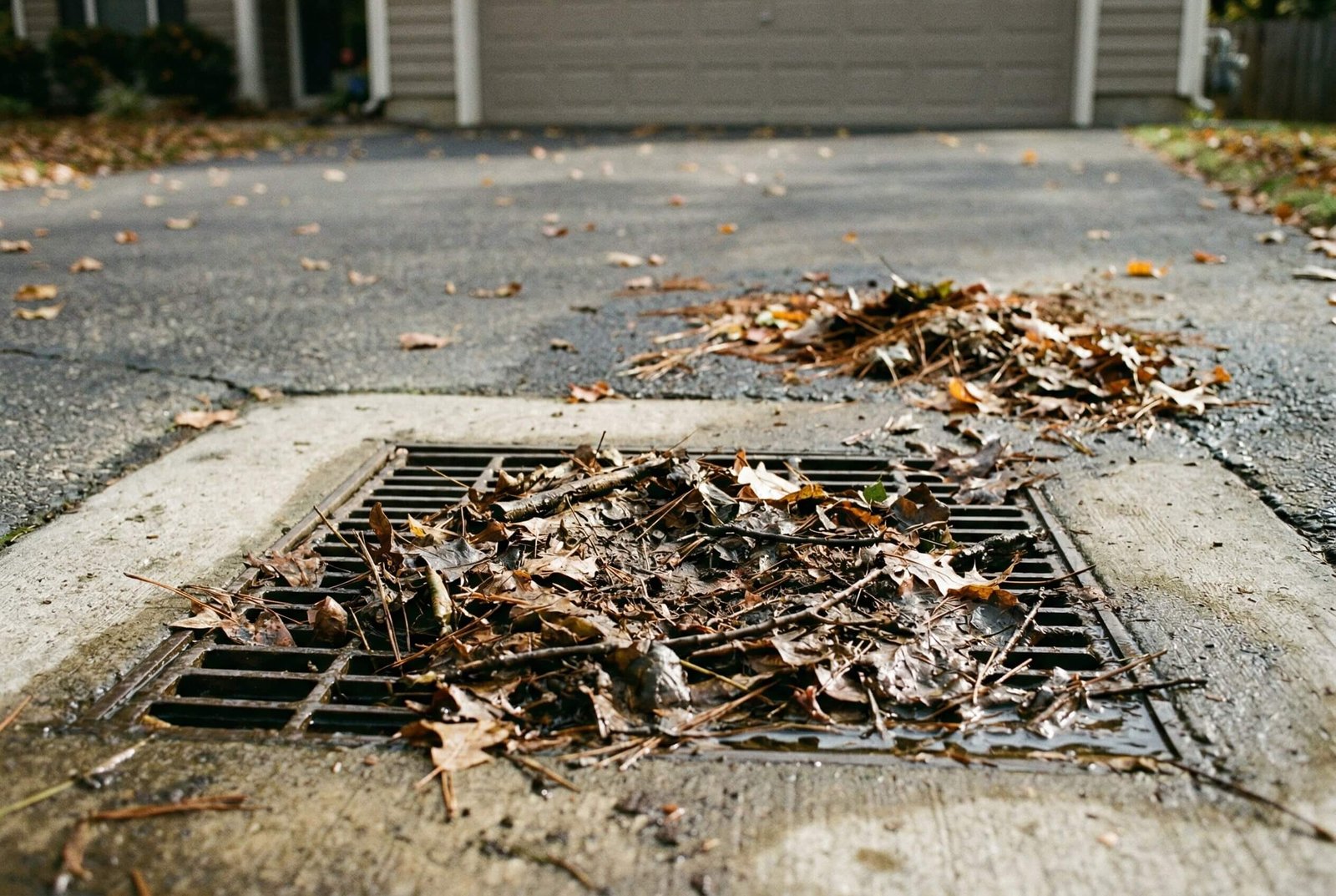
A driveway drain clogged with debris is a common but often underestimated problem in many U.S. homes. What starts as a thin layer of leaves, dirt, or mud across the drain grate can quickly turn into a serious drainage issue—especially during rain. Instead of water flowing away from your driveway, it begins to pool, spread, and in some cases, move directly toward your garage or home.
Driveway drains are designed to handle surface runoff from hard areas like concrete or asphalt, where water cannot soak into the ground. These systems rely on clear channels and unobstructed pipes to move water efficiently. But unlike indoor drains, driveway drains are constantly exposed to environmental debris—everything from leaves and soil to tire residue and construction dust. Over time, this material builds up and restricts the system’s ability to function properly.
In many cases, homeowners assume the clog is only at the surface, but the real problem often extends deeper into the drain channel or underground piping. Debris that enters the system doesn’t just disappear—it accumulates, compacts, and creates blockages that worsen with each rainfall. This is why driveway drain issues tend to return if the underlying cause is not understood.
In this guide, we’ll break down how driveway drains work, the most common symptoms of debris-related clogs, what causes them, where blockages typically occur, and how professional plumbers diagnose these issues. Understanding these factors will help you recognize early warning signs and prevent water from damaging your driveway, garage, or home.
What This Page Covers
ToggleWhat Is a Driveway Drain and How It Works
Driveway drains are designed to collect and redirect water from hard surfaces like concrete or asphalt driveways, where water cannot naturally soak into the ground. These systems are especially important in areas where the driveway slopes toward a garage or home, as they prevent water from flowing directly into the structure.
Unlike yard drains, which handle broader surface runoff, driveway drains are focused on fast-moving surface water. They must handle sudden water flow during rainstorms, car washing, or snowmelt. Because of this, even small obstructions can quickly impact performance.
Types of Driveway Drains in U.S. Homes
Driveway drainage systems vary depending on property design, but a few types are commonly used in residential settings.
-
Channel drains (trench drains)
Long, narrow drains installed across the width of the driveway, often near garage entrances. These are the most common type and are designed to capture water flowing downhill. -
Slot drains
Similar to channel drains but with a narrower surface opening, offering a more subtle appearance while still collecting runoff. -
Catch basins near driveway edges
Square or round drains placed at low points to collect water and direct it into underground piping. -
Garage entrance drains
Positioned directly in front of garage doors to prevent water from entering the interior space. -
Linear driveway drainage systems
Continuous systems that guide water along a defined path toward a discharge point.
These systems are often connected to underground pipes that carry water away from the driveway and home.
How Driveway Drain Systems Handle Water
Driveway drains operate using a simple but effective process that depends heavily on proper flow and unobstructed pathways.
-
Water collects on the driveway surface
Rainwater or runoff flows across the driveway toward the lowest point. -
Water enters the drain channel or grate
The drain captures water before it can reach the garage or home. -
Water moves through the channel system
In channel drains, water flows along the trench before entering an outlet pipe. -
Water travels through underground piping
The system directs water away using gravity-based flow. -
Water exits safely away from the property
Discharge points may include:-
Street curb
-
Storm drain system
-
Drainage field or dry well
-
Any disruption in this flow—whether at the surface, within the channel, or inside the pipe—can cause water to back up quickly.
Why Driveway Drains Are Important
Driveway drains serve a critical role in protecting both your home and outdoor surfaces.
-
Prevent water from entering the garage
Without proper drainage, water can easily flow into the garage during rain. -
Protect driveway materials
Standing water can weaken concrete or asphalt over time. -
Reduce slipping hazards
Proper drainage prevents water accumulation that can create unsafe conditions. -
Direct water away from the foundation
Helps minimize the risk of water reaching areas near the home.
When a driveway drain becomes clogged with debris, these protective functions are compromised. Water begins to accumulate where it shouldn’t, increasing the risk of property damage and safety concerns.
Common Symptoms of a Driveway Drain Clogged With Debris
When a driveway drain becomes clogged with debris, the signs usually appear quickly—especially during rain or when water flows across the surface. Because driveway drains handle fast-moving runoff, even a small blockage can disrupt the entire system and create visible problems.
Recognizing these symptoms early helps you understand whether the issue is surface-level or developing deeper within the drainage system.
Water Pooling on Driveway Surface
The most obvious symptom is water collecting on the driveway instead of draining away.
-
Puddles forming across the driveway
-
Water sitting near the drain channel
-
Pooling that spreads toward the garage
-
Standing water remaining after rain stops
This indicates that water is not entering or moving through the drain properly.
Slow Drainage After Rain or Washing
In some cases, the drain still works—but not efficiently.
-
Water drains very slowly
-
Puddles gradually disappear over time
-
Drain struggles during moderate rainfall
-
Water lingers longer than expected
This is usually a sign of a partial blockage, where debris is restricting flow but not completely stopping it.
Overflowing Channel or Drain Grate
When the drain cannot handle incoming water, it begins to overflow.
-
Water rising above the drain channel
-
Overflow spreading across the driveway
-
Drain working briefly before backing up
-
Increased pooling during heavy rain
Overflow suggests that the blockage is likely deeper in the system.
Water Flowing Toward Garage or House
One of the most serious symptoms is water moving in the wrong direction.
-
Runoff entering the garage area
-
Water collecting near doors or entry points
-
Drain failing to redirect water away
-
Increased risk of interior water damage
This happens when the drain system cannot keep up with water flow due to obstruction.
Dirt and Debris Visible in Drain
In many cases, the problem is clearly visible at the surface.
-
Leaves, mud, or sand covering the grate
-
Debris trapped inside the channel
-
Accumulation of dirt along drain edges
-
Signs of buildup after rain or vehicle use
Visible debris often indicates that more material has already entered the system.
Slippery or Dirty Driveway Conditions
Drainage issues can also affect the condition of the driveway surface.
-
Mud or residue spreading across the driveway
-
Slippery surfaces due to standing water
-
Stains from oil, dirt, or organic material
-
Increased maintenance needed to keep surface clean
These conditions not only affect appearance but can also create safety hazards.
These symptoms are early indicators that your driveway drain is not functioning properly. While some may seem minor at first, they often point to a growing blockage that can worsen with each rainfall or use.
Most Common Causes of Driveway Drain Clogs
A driveway drain clogged with debris typically develops over time as materials accumulate from daily use, weather, and environmental exposure. Unlike indoor drains, which deal mainly with water and small particles, driveway drains handle a wide range of debris—from dirt and leaves to oils and construction residue. This makes them especially prone to clogging.
Understanding the most common causes helps you identify what’s entering your system and how the blockage is forming.
Leaves, Dirt, and Road Debris
The most common cause of driveway drain clogs is everyday debris that collects on the surface.
-
Leaves and twigs blown onto the driveway
-
Dust and dirt from surrounding areas
-
Small stones and gravel from tires
-
Organic material breaking down into sludge
These materials often gather around the drain grate and eventually get pulled into the system, where they begin to restrict flow.
Mud and Sediment Buildup From Tires
Vehicles play a major role in bringing debris onto the driveway.
-
Mud carried in by car tires during wet conditions
-
Fine sediment settling into drain channels
-
Dirt washing into the system during rain
-
Compacted layers forming inside the drain
Over time, this buildup becomes dense and difficult for water to pass through, leading to slow drainage or full blockages.
Oil, Grease, and Residue Accumulation
Driveways are exposed to automotive fluids, which can contribute to clogging.
-
Oil drips from parked vehicles
-
Grease and residue mixing with dirt
-
Sticky buildup forming inside drain channels
-
Debris adhering to oily surfaces
This combination creates a thick, sticky layer that traps additional debris and accelerates clog formation.
Construction Dust and Sand Buildup
If your driveway or nearby areas have been recently worked on, fine materials can enter the drainage system.
-
Sand and cement dust washing into drains
-
Renovation debris settling inside pipes
-
Fine particles compacting over time
-
Reduced pipe diameter due to buildup
These materials are especially problematic because they settle quickly and are difficult to flush out.
Trash and Foreign Objects
Unexpected items can also block driveway drains.
-
Plastic wrappers or packaging
-
Small objects dropped on the driveway
-
Debris blown in by wind
-
Materials accidentally washed into the drain
Even small objects can become trapped inside the system and cause larger debris to accumulate around them.
Seasonal Debris Accumulation
Certain times of the year increase the likelihood of clogging.
-
Fall leaves building up rapidly
-
Spring pollen and organic material entering drains
-
Increased dirt during rainy seasons
-
Debris buildup after storms
Seasonal changes often accelerate clog formation and make maintenance more critical.
Most driveway drain clogs are not caused by a single issue but by a combination of materials building up over time. What starts as a small amount of debris at the surface can gradually turn into a dense blockage inside the drain system.
Hidden Causes That Lead to Recurring Clogs
Many driveway drains get cleared at the surface but continue to clog again and again. That’s because the real problem often isn’t just the visible debris—it’s what’s happening deeper inside the system. These hidden causes are the reason why a drain may seem fixed temporarily but fails again during the next rainfall or heavy use.
Underground Pipe Sediment Buildup
Even after surface cleaning, fine debris often remains inside the underground pipe.
-
Sediment settles at the bottom of pipes
Dirt, sand, and organic particles accumulate over time. -
Gradual narrowing of flow path
The pipe diameter effectively becomes smaller. -
Hard-to-see buildup
From the surface, the drain may appear clear. -
Leads to slow, recurring clogs
Each new debris layer builds on the existing one.
This type of buildup is one of the most common causes of repeated driveway drainage issues.
Improper Slope in Drain Channel
Driveway drains rely on proper slope to move water efficiently.
-
Water not flowing smoothly through the channel
-
Debris settling instead of being carried away
-
Pooling within the drain itself
-
More buildup forming over time
If the channel or pipe lacks the correct slope, debris will naturally accumulate rather than flush through the system.
Pipe Misalignment or Joint Separation
Over time, underground pipes can shift due to soil movement or external pressure.
-
Joints becoming uneven or separated
-
Edges inside the pipe catching debris
-
Material collecting at connection points
-
Blockages forming at specific locations
Even small misalignments can create points where debris gets trapped and builds up.
Drain System Connected to Overloaded Lines
Driveway drains are often connected to larger drainage systems.
-
Shared lines with yard drains or downspouts
-
High water volume during rain overwhelming the system
-
Partial clogs becoming full blockages under pressure
-
Water backing up into the driveway drain
In these cases, the issue may not originate in the driveway drain itself but in a connected system.
Compacted Debris Layers Inside Pipes
Over time, debris inside the drain can compact into dense layers.
-
Mud, sand, and organic material hardening together
-
Reduced water flow capacity
-
Blockages becoming more difficult to clear
-
Recurring issues even after cleaning
Compacted debris behaves differently from loose material—it resists movement and continues to restrict flow.
Hidden causes are often the reason driveway drain problems keep coming back. While removing visible debris may provide short-term relief, these underlying issues continue to affect the system until properly identified and addressed.
Where the Blockage Is Usually Located
When a driveway drain is clogged with debris, identifying where the blockage is located is essential to understanding the problem. The location of the clog affects how water behaves on your driveway and how severe the issue becomes. In many cases, what you see at the surface is only a small part of what’s happening inside the system.
Professional plumbers typically narrow down clogs to a few key areas based on symptoms and drain behavior.
At the Drain Grate or Channel Surface
This is the most visible and easiest-to-identify blockage location.
-
Leaves, dirt, and debris covering the grate
-
Mud sealing the drain opening
-
Debris trapped inside the channel
-
Immediate water pooling around the drain
When the blockage is at the surface, water cannot enter the system at all. This leads to quick pooling during rain or washing.
Inside the Channel Drain System
In channel or trench drains, debris often accumulates inside the drain itself.
-
Sediment settling along the bottom of the channel
-
Debris building up between drain segments
-
Restricted flow within the channel
-
Water moving slowly before entering the pipe
This type of clog allows some water to pass but reduces the system’s efficiency significantly.
In the Underground Pipe Line
Many serious clogs occur deeper in the system where they are not visible.
-
Mud, sand, and sludge buildup inside pipes
-
Oil and residue trapping debris
-
Pipe misalignment catching materials
-
Water draining slowly or backing up
These blockages often cause recurring issues and require professional inspection to confirm.
Near the Discharge or Exit Point
Sometimes the blockage occurs at the end of the system, where water exits.
-
Blocked curb outlet or discharge point
-
Debris accumulation at the pipe exit
-
Water backing up through the system
-
Drain working briefly before overflowing
This can be misleading because the drain may appear to function initially before failing under increased flow.
Understanding the location of the blockage helps explain why your driveway drain behaves the way it does. Immediate pooling usually indicates a surface issue, while slow drainage or repeated backups often point to deeper or downstream problems.
How Plumbers Diagnose a Driveway Drain Clog
Diagnosing a driveway drain clogged with debris involves more than just removing visible material from the surface. Because many issues develop inside the channel or underground piping, professional plumbers focus on identifying the exact cause, location, and severity of the blockage. This ensures the problem is fully understood and not just temporarily cleared.
Visual Inspection of Drain and Surface
The first step is a detailed visual inspection of the driveway and drain system.
Plumbers evaluate how water behaves on the surface and how debris is interacting with the drain.
-
Condition of the drain grate or channel
-
Visible debris buildup or blockage
-
Signs of water pooling or overflow
-
Dirt, mud, or oil accumulation on the surface
-
Slope of the driveway toward the drain
This step helps determine whether the problem is primarily at the surface or likely deeper in the system.
Water Flow Testing
After the initial inspection, plumbers test how the drain responds to water flow.
This is usually done by running water across the driveway or directly into the drain to simulate real conditions.
-
Water not entering the drain → surface blockage
-
Water entering but draining slowly → partial clog
-
Water backing up quickly → deeper obstruction
-
Delayed or no discharge at outlet → blockage near exit point
Flow testing provides immediate insight into how restricted the system is.
Checking Channel Drain Internals
For channel or trench drains, plumbers often inspect the inside of the drain itself.
-
Removing grates to examine internal buildup
-
Checking for sediment accumulation
-
Identifying compacted debris layers
-
Inspecting joints and connections within the channel
This step is important because many clogs form inside the channel before reaching the underground pipe.
Camera Inspection of Underground Pipes
When the issue is not visible at the surface, plumbers use specialized camera equipment to inspect underground pipes.
A small camera is inserted into the drain line, providing a real-time view of internal conditions.
This allows plumbers to identify:
-
Mud, sludge, or debris buildup
-
Oil and residue accumulation
-
Pipe misalignment or separation
-
Cracks or structural damage
-
Standing water indicating poor slope
Camera inspections are essential for diagnosing hidden problems accurately.
Identifying Debris Type and Severity
Finally, plumbers assess the type of material causing the blockage and how severe it is.
-
Loose debris vs. compacted buildup
-
Organic material vs. sediment or oil
-
Partial restriction vs. full blockage
-
Likelihood of recurring issues
Understanding the nature of the clog helps determine why it formed and whether it is likely to happen again.
Professional diagnosis focuses on understanding the entire drainage system, not just removing debris. By identifying the root cause and exact location of the blockage, plumbers can determine whether the issue is minor or part of a larger problem.
Real-World Scenarios of Driveway Drain Problems
Driveway drain clogs caused by debris rarely happen overnight. In real U.S. homes, these issues typically develop through daily use, environmental exposure, and gradual buildup inside the system. Understanding real-world scenarios helps connect the symptoms, causes, and system behavior you’ve learned so far.
Heavy Rain Causing Driveway Flooding
One of the most common situations occurs during heavy rainfall.
A homeowner notices that water begins pooling across the driveway instead of draining through the channel. As the rain continues, the drain overflows and water starts moving toward the garage.
In this scenario, plumbers often find:
-
Debris buildup inside the channel drain
-
Partial blockage in the underground pipe
-
System overwhelmed by high water volume
The drain may appear to work during light rain but fails when it’s needed most.
Mud and Tire Debris Blocking Channel Drain
Driveways are constantly exposed to dirt carried in by vehicles.
Over time, mud and fine sediment from tires accumulate inside the drain channel. During rain, this material washes deeper into the system and begins to compact.
Common findings include:
-
Thick layers of mud inside the channel
-
Sediment buildup restricting flow
-
Debris compacted into dense blockages
-
Slow drainage turning into full clogging
This type of issue develops gradually and often goes unnoticed until drainage becomes significantly affected.
Garage Water Backup Due to Clogged Drain
One of the most serious real-world problems occurs when a clogged driveway drain allows water to enter the garage.
A homeowner may notice water pooling near the garage door and eventually flowing inside during rain.
This usually happens when:
-
The drain is completely blocked at the surface or inside
-
Water cannot be redirected away from the garage
-
Driveway slope directs runoff toward the home
-
Drain system fails under pressure
This scenario highlights the importance of driveway drains as a protective barrier.
Construction Debris Blocking Drain System
Driveway drains are especially vulnerable during or after construction work.
Fine materials like sand, cement dust, and debris can easily enter the drain and settle inside the system.
Plumbers often find:
-
Compacted layers of construction dust inside pipes
-
Reduced pipe diameter due to buildup
-
Blockages forming quickly after installation or repairs
-
Drain system struggling even during light rainfall
These materials are difficult to remove once they settle and can cause long-term drainage issues.
These real-world scenarios show that driveway drain clogs are usually caused by a combination of factors rather than a single event. Daily exposure to debris, combined with water flow, gradually leads to blockages that affect the entire system.
Warning Signs of Serious Driveway Drain Issues
A driveway drain clogged with debris may start as a minor inconvenience, but certain warning signs indicate that the problem has become more serious. Because driveway drains protect key areas like garages and entry points, ignoring these signs can lead to water damage, structural issues, and safety hazards.
Water Entering Garage or Basement
One of the most critical warning signs is water moving into indoor spaces.
-
Water flowing under the garage door
-
Damp or wet garage floors after rain
-
Water reaching basement entry points
-
Increased moisture inside enclosed areas
This indicates that the drain is no longer redirecting water away effectively and poses a direct risk to your home.
Repeated Overflow After Cleaning
If the drain continues to overflow even after removing visible debris, the issue is likely deeper in the system.
-
Temporary improvement followed by recurring overflow
-
Drain failing during each rainfall
-
No lasting improvement after cleaning
-
Same symptoms returning repeatedly
This often points to hidden blockages or structural issues within the drainage system.
Cracks or Damage in Driveway Surface
Poor drainage can begin to affect the driveway itself over time.
-
Cracks forming in concrete or asphalt
-
Surface deterioration due to water exposure
-
Uneven sections developing
-
Water seeping into underlying layers
These signs suggest that standing water is weakening the structure of the driveway.
Persistent Slippery or Unsafe Conditions
Standing water and debris can create hazardous conditions.
-
Slippery surfaces due to water and residue
-
Mud spreading across the driveway
-
Increased risk of slips or falls
-
Difficulty maintaining a clean surface
This is not just a maintenance issue—it becomes a safety concern for anyone using the driveway.
Drain System Failing During Light Rain
A properly functioning drain should handle even moderate rainfall easily.
-
Drain struggling during light or short rain events
-
Water pooling quickly despite low volume
-
Reduced drainage capacity over time
-
System failing under minimal load
This indicates that the drain is significantly restricted and may soon become fully clogged.
These warning signs show that the problem is no longer limited to surface debris—it has likely developed into a deeper or more complex drainage issue that requires attention.
How a Clogged Driveway Drain Affects Your Property
A driveway drain clogged with debris does more than create puddles—it impacts multiple parts of your property, from structural elements to day-to-day usability. Because driveway drains sit at key water collection points, any failure in the system can quickly spread problems across both outdoor and indoor areas.
Garage Flooding Risks
One of the most immediate and serious effects is water entering the garage.
-
Water flowing directly under garage doors
-
Pooling inside enclosed spaces
-
Damage to stored items, tools, or vehicles
-
Increased cleanup and moisture-related issues
Since many driveways slope toward the garage, a clogged drain removes the primary barrier that keeps water out.
Driveway Structural Damage
Standing water can gradually weaken the driveway surface.
-
Water penetrating cracks and expanding them
-
Freeze-thaw cycles causing surface deterioration (in colder regions)
-
Asphalt softening or concrete erosion over time
-
Uneven or damaged driveway sections
Over time, this can lead to costly repairs or full resurfacing.
Foundation Water Exposure
Even though the drain is on the driveway, its failure can affect areas near the home.
-
Water redirected toward foundation walls
-
Increased soil moisture near the structure
-
Risk of seepage into basement or crawl space
-
Long-term pressure on foundation materials
This is especially concerning if the driveway is close to the house or connected to other drainage systems.
Safety Hazards From Standing Water
A clogged driveway drain can also create everyday safety risks.
-
Slippery surfaces from water and debris
-
Mud or residue spreading across walking areas
-
Reduced traction for vehicles
-
Increased risk of slips, falls, or minor accidents
These hazards can affect both residents and visitors, making the driveway less safe to use.
A clogged driveway drain doesn’t just affect water flow—it impacts the safety, durability, and functionality of your entire property. Addressing the issue early helps prevent these problems from developing into more serious and expensive damage.
Preventing Driveway Drain Clogs From Debris
Preventing a driveway drain clogged with debris is mainly about controlling what enters the system and maintaining consistent water flow. Since driveway drains are exposed to daily traffic, weather, and environmental debris, small preventive steps can significantly reduce the risk of clogging.
Regular Cleaning of Drain Channels
Keeping the drain surface and channel clean is the most effective way to prevent buildup.
-
Remove leaves, dirt, and debris from grates regularly
-
Check drains after rain or storms
-
Clear visible mud or sediment before it settles
-
Ensure the channel remains open and unobstructed
Routine cleaning prevents small debris from turning into larger blockages.
Managing Debris From Vehicles and Yard
Driveways constantly collect materials brought in by vehicles and surrounding areas.
-
Rinse off mud from vehicles when possible
-
Avoid tracking excessive dirt onto the driveway
-
Keep nearby yard areas clean to reduce debris flow
-
Prevent loose soil or mulch from washing into drains
Reducing incoming debris helps keep the system clear over time.
Avoiding Dirt and Sand Accumulation
Fine materials like sand and dust are especially problematic because they settle inside the system.
-
Sweep driveway regularly to remove fine particles
-
Avoid leaving construction materials near drains
-
Clean up sand or dust after outdoor work
-
Prevent buildup before it enters the drain
These materials are harder to remove once they settle inside pipes.
Installing Drain Covers or Filters
Simple additions can help block debris while allowing water to flow.
-
Use grates designed to prevent large debris entry
-
Install filter inserts in channel drains
-
Add protective covers to reduce clogging
-
Choose designs that balance flow and filtration
These measures reduce maintenance and protect the system from buildup.
Routine Inspection of Drain System
Regular checks help identify issues before they become serious.
-
Inspect drains visually every few weeks
-
Watch for slow drainage or pooling
-
Monitor performance during rainfall
-
Look for signs of debris buildup or restriction
Early detection allows you to address minor issues before they turn into major clogs.
Preventing driveway drain clogs is about consistency rather than complexity. Simple, regular maintenance and awareness of how your system behaves can keep water flowing properly and protect your property from drainage problems.
When to Call a Professional Plumber
A driveway drain clogged with debris can sometimes be managed at the surface, but many issues go deeper than what you can see. When symptoms persist or worsen, it’s a sign that the problem involves the internal drainage system, and professional diagnosis becomes necessary. Knowing when to call a plumber can prevent minor drainage issues from turning into costly property damage.
Persistent Water Pooling on Driveway
If water continues to collect on your driveway despite basic cleaning, the issue is likely beyond surface debris.
-
Water remains long after rain stops
-
Drain appears clear but does not function properly
-
Pooling spreads across larger areas
-
Drain struggles even during light rainfall
This often indicates a blockage deeper in the channel or underground piping.
Recurring Debris Blockages
If your drain keeps clogging repeatedly, it’s a sign of an underlying issue.
-
Temporary improvement after cleaning
-
Same clog returning after each rain
-
Frequent need for maintenance
-
No long-term resolution
Recurring clogs are often caused by sediment buildup, improper slope, or pipe misalignment.
Suspected Underground Pipe Issues
Problems inside underground pipes require specialized tools to diagnose.
-
Sudden change in drainage performance
-
Slow drainage without visible blockage
-
Water backing up unexpectedly
-
Signs of damage or shifting near drain lines
These issues may involve compacted debris, pipe damage, or structural defects.
Water Entering Garage or Home
This is one of the most serious situations and should be addressed immediately.
-
Water flowing into the garage
-
Pooling near entry points
-
Moisture affecting indoor areas
-
Increased risk of property damage
When drainage failure begins affecting indoor spaces, professional intervention is essential.
Calling a professional plumber ensures that the issue is fully diagnosed and not just temporarily cleared. With tools like camera inspections and flow testing, plumbers can identify the exact cause and location of the blockage, helping prevent recurring problems.
Final Thoughts on Driveway Drain Clogs
A driveway drain clogged with debris is one of those problems that often starts small but can quickly turn into a much bigger issue if ignored. What may begin as a thin layer of leaves or dirt at the surface can gradually develop into a deeper blockage inside the channel or underground piping, affecting how the entire drainage system performs.
Because driveway drains handle fast-moving surface water, even minor restrictions can disrupt flow and lead to visible problems like pooling, overflow, or water moving toward your garage. Over time, these issues don’t just affect drainage—they begin to impact the condition of your driveway, increase safety risks, and in some cases, expose your home to water damage.
One of the most important things to understand is that surface cleaning alone is not always enough. If the underlying cause involves sediment buildup, pipe misalignment, or compacted debris inside the system, the problem is likely to return. That’s why recognizing patterns—like recurring clogs or slow drainage—is key to identifying deeper issues early.
Maintaining a driveway drain is less about reacting to problems and more about understanding how the system behaves over time. Regular observation, consistent upkeep, and timely professional evaluation can help prevent minor debris buildup from turning into a major drainage failure.