
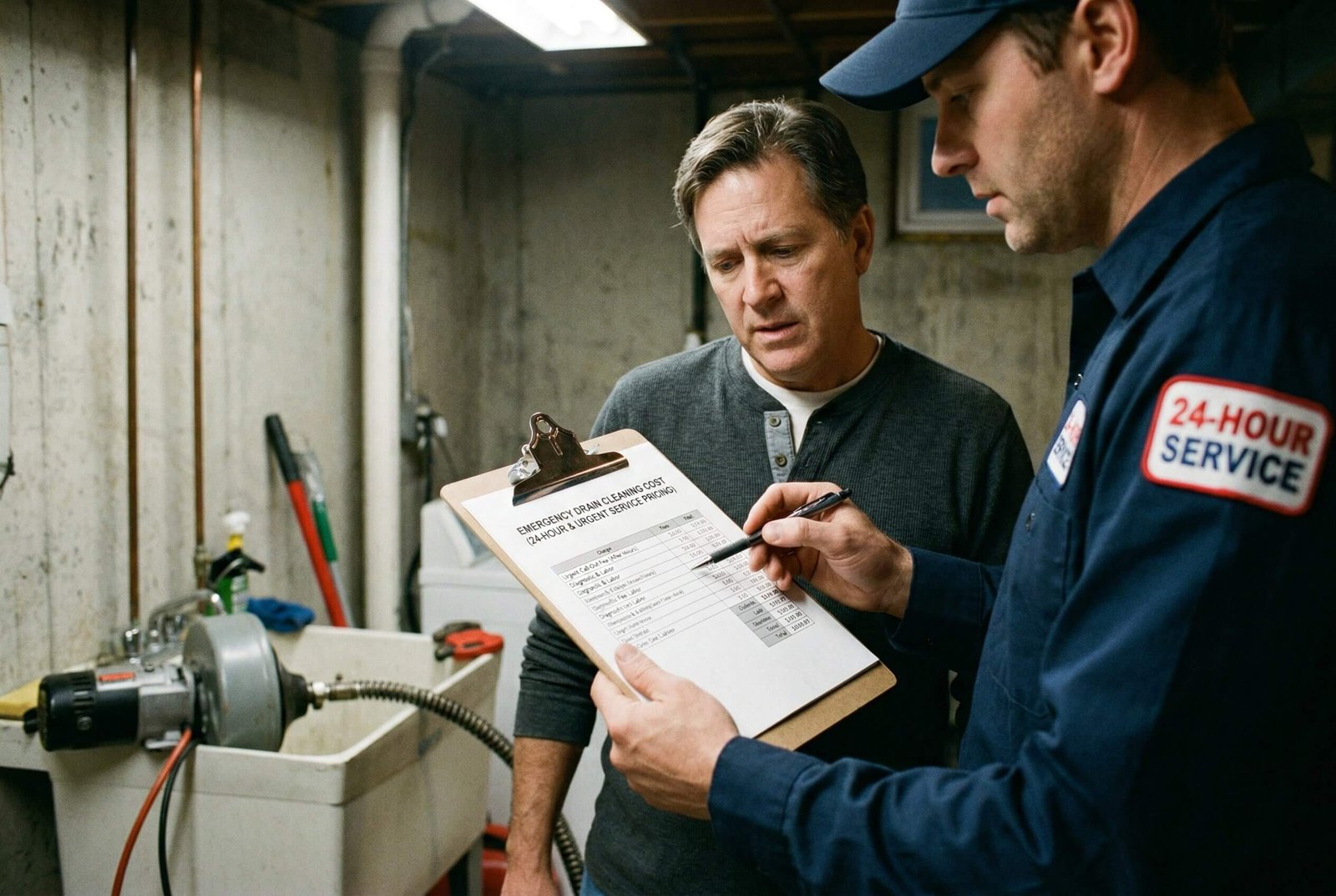
Drain problems don’t always give you time to think. In many homes, everything seems fine one moment—and the next, water is backing up into the sink, the shower won’t drain, or worse, wastewater starts coming up from a floor drain. These situations don’t feel like normal plumbing issues. They feel urgent, messy, and difficult to control.
An emergency drain problem is different from a slow drain or occasional clog. It usually means the system has reached a point where water can no longer move through the pipes properly. Instead of draining away, it starts reversing direction or overflowing into the home. This is when the problem shifts from inconvenience to something that can cause immediate damage.
In real situations, these emergencies often happen at the worst times—late at night, during weekends, or when the plumbing system is under heavy use. The pressure inside the pipes builds up over time, and once it reaches a limit, the system reacts quickly. What could have been a manageable issue earlier becomes a situation that needs immediate attention.
- Water backing up into sinks, tubs, or toilets
- Multiple drains failing at the same time
- Sudden overflow from floor or basement drains
- Strong sewage odors inside the home
Emergency drain cleaning service exists for these exact situations. It’s not about routine maintenance—it’s about responding quickly to restore flow, reduce damage, and stabilize the system before the problem spreads further.
What This Page Covers
ToggleWhat Emergency Drain Cleaning Service Actually Means
Emergency drain cleaning isn’t just a faster version of regular drain cleaning—it’s a different situation altogether. In real homes, it means the drainage system has reached a point where waiting is no longer an option. Water is either not moving at all, or it’s moving in the wrong direction, creating immediate risk inside the home.
Unlike routine service, which focuses on resolving buildup over time, emergency drain cleaning is about stabilizing the situation first. The priority is to stop overflow, reduce pressure in the system, and restore enough flow to prevent further damage. Once that’s under control, the deeper issue can be properly addressed.
What Qualifies as a Drain Emergency
Not every clog is an emergency. The urgency depends on how the problem is affecting the home right now.
- Water backing up into sinks, tubs, or toilets
- Overflow from floor or basement drains
- Multiple fixtures failing at the same time
- Wastewater appearing where it shouldn’t
- Strong sewage odors inside living spaces
These situations indicate that the blockage is no longer local—it’s affecting the system as a whole.
In many cases, the issue is connected to the main drain or sewer line. When that line is restricted, everything in the home that depends on it is affected at once.
How Emergency Service Differs From Regular Drain Cleaning
The biggest difference is timing and approach. Emergency work focuses on immediate control before complete resolution.
- Faster response, often outside normal working hours
- Quick assessment to identify the most critical issue
- Focus on restoring flow as soon as possible
- Work performed under urgency rather than planned scheduling
In routine service, there’s time to inspect, diagnose, and choose the best method carefully. In an emergency, the first goal is to stop the situation from getting worse.
Scope of Work During an Emergency Call
The work done during an emergency depends on how severe the situation is when the plumber arrives.
- Identifying where the blockage is causing pressure
- Opening the line enough to restore drainage
- Reducing immediate risk of overflow or backup
- Stabilizing the system for normal use
In some cases, the cleaning done during an emergency is a temporary solution to relieve pressure. A more thorough cleaning may be required afterward to fully resolve the underlying buildup.
Why Emergency Situations Escalate Quickly
Drain systems operate under flow and pressure. When that flow is restricted, pressure builds behind the blockage. Once it reaches a certain point, the system looks for the easiest path to release that pressure—often back into the home.
- Water cannot move forward due to blockage
- Pressure builds behind the restriction
- Weak points (like floor drains or lower fixtures) become outlets
- Backup or overflow happens suddenly
This is why emergency drain issues often feel like they appear “out of nowhere,” even though the buildup has been forming for a long time.
When You Actually Need Emergency Drain Cleaning
Not every clogged drain is an emergency. The challenge is knowing when the situation has crossed that line—from something inconvenient to something that can cause immediate damage if not handled quickly. In real homes, the difference becomes clear based on how fast the problem is escalating and how many parts of the system are affected.
Emergency drain situations usually don’t stay stable. Once they start, they tend to get worse within minutes or hours, not days. Recognizing that shift early is what helps prevent a small issue from turning into a much bigger problem.
Clear Signs You’re Dealing With a Drain Emergency
There are certain symptoms that indicate the problem can’t wait.
- Water backing up into sinks, tubs, or toilets
- Overflow from basement or floor drains
- Multiple fixtures stopping at the same time
- Water appearing in areas where it normally shouldn’t
These are strong signs that the blockage is deep in the system, often affecting the main drain line.
In these cases, the system is no longer draining—it’s reversing. That’s what makes the situation urgent.
Late-Stage Clog Symptoms That Turn Into Emergencies
Most emergencies don’t start suddenly—they’re usually the result of a problem that has been building for some time.
- Slow drains that were ignored earlier
- Recurring clogs becoming more frequent
- Gurgling sounds increasing over time
- Odors becoming stronger and more noticeable
When these signs are left untreated, the buildup inside the pipe continues to grow until the system can no longer handle normal flow.
Signs of a Main Sewer Line Problem
When the main line is involved, the entire home is affected rather than just one drain.
- Toilet, sink, and shower all backing up together
- Water rising in one fixture when another is used
- Basement drains showing overflow first
- Issues affecting multiple levels of the home
These situations almost always require immediate attention because the blockage is located at a central point in the drainage system.
Situations That Cannot Wait Until the Next Day
Some drain problems might seem manageable for a short time, but certain conditions require immediate action.
- Active overflow or standing wastewater
- Rapidly rising water levels in fixtures
- Strong sewage smells inside the home
- Inability to use any plumbing safely
Delaying in these situations increases the risk of damage and contamination.
How to Think About Urgency
In real situations, the decision isn’t about whether the drain is clogged—it’s about what’s happening right now.
- Slow drain → monitor or schedule service
- Recurring clog → needs proper cleaning soon
- Backup or overflow → emergency situation
- Multi-fixture failure → system-level issue
If water is coming back instead of draining away, that’s no longer a routine issue. That’s when emergency drain cleaning becomes necessary—not just to fix the problem, but to prevent it from spreading further inside the home.
How Emergency Drain Cleaning Is Performed in Real Homes
Emergency drain cleaning follows a different rhythm than routine service. There’s less time for a slow, step-by-step approach and more focus on quickly understanding what’s happening and stabilizing the situation. In real homes, the first priority isn’t perfection—it’s control.
Once the immediate risk is reduced, the work shifts toward clearing the blockage properly. But that first phase—getting the situation under control—is what defines emergency service.
Rapid Inspection and Immediate Assessment
When a plumber arrives during an emergency, the first step is a quick but focused assessment. There’s no delay because the situation is already active.
- Identifying where water is backing up
- Checking which fixtures are affected
- Locating the lowest point of overflow (often basement or floor drains)
- Understanding how fast the situation is escalating
This initial step helps determine how severe the blockage is and where pressure is building inside the system.
In many cases, experienced plumbers can quickly recognize whether the issue is local or connected to the main line just by observing how the water behaves.
Identifying Immediate Risk Areas
Before starting the cleaning, the focus shifts to preventing further damage. This is especially important when water or wastewater is already inside the home.
- Areas at risk of overflow or spreading water
- Fixtures where backup is most active
- Points where pressure is releasing
- Zones that may be affected next if the issue worsens
This helps prioritize where action is needed first rather than treating all drains equally.
Choosing the Fastest Effective Method
In emergency situations, the method is chosen based on speed and effectiveness—not just completeness.
- Snaking for quick relief of blockage
- Targeted clearing to open a path for water flow
- Avoiding methods that take longer unless necessary
- Adjusting approach based on pipe condition and severity
The goal at this stage is to restore movement in the system as quickly as possible.
Execution Under Urgency
Once the approach is selected, the actual cleaning is performed with urgency, but still with control.
- Breaking through the blockage to relieve pressure
- Allowing trapped water to drain out
- Clearing enough buildup to stabilize flow
- Monitoring how the system reacts during the process
This phase often brings immediate visible improvement as water starts draining again.
Temporary Relief vs Full Resolution
In many emergency calls, the initial work is focused on relief rather than complete cleaning.
- Opening the line enough to stop backup
- Reducing immediate pressure in the system
- Restoring basic usability of fixtures
- Planning for deeper cleaning if buildup remains
A full drain cleaning or sewer line cleaning may be scheduled later once the urgent situation is under control.
Testing and Stabilizing the System
After the immediate work is done, the system is checked to ensure it’s no longer in a critical state.
- Running water through affected fixtures
- Observing whether drainage is consistent
- Checking for any remaining signs of backup
- Confirming that pressure has normalized
A properly handled emergency leaves the system stable—even if additional work is needed later for long-term results.
Methods Used in Emergency Drain Cleaning
In emergency situations, the choice of method is driven by speed, effectiveness, and the condition of the pipe. The goal is not always to perform a perfect, deep clean right away—it’s to restore flow quickly and stop the situation from getting worse. Once that’s achieved, more thorough cleaning can be done if needed.
In real homes, the method used often depends on how severe the blockage is and how urgently the pressure inside the system needs to be relieved.
Rapid Drain Snaking for Immediate Relief
This is usually the first method used in emergencies because it works quickly and can restore flow in many situations.
- Flexible auger inserted into the drain line
- Breaks apart or pushes through the blockage
- Creates an immediate path for water to drain
- Commonly used for sudden backups and localized blockages
Snaking is effective for fast relief, especially when the goal is to stop overflow. However, it may not remove all buildup, which is why follow-up cleaning is sometimes needed.
In real scenarios, this method is often enough to stabilize the system and prevent further damage in the moment.
Hydro Jetting in Severe Emergency Situations
When the blockage is heavy or caused by long-term buildup, hydro jetting may be used—even in emergency conditions.
- High-pressure water used to clean pipe walls
- Removes grease, sludge, and dense buildup
- Restores flow more completely than basic clearing
- Often used for main line or sewer-related emergencies
Hydro jetting is more thorough but may take slightly longer to set up. It’s typically used when quick snaking isn’t enough or when the blockage is too severe to break apart easily.
Temporary Clearing vs Deep Cleaning
One important aspect of emergency work is understanding the difference between stabilizing the situation and fully resolving it.
- Temporary clearing → restores flow quickly
- Deep cleaning → removes underlying buildup
- Emergency focus → stopping backup and pressure
- Follow-up work → preventing recurrence
In many homes, the initial emergency visit is about control. A second visit may be needed to clean the pipe more thoroughly once things are stable.
Use of Inspection Tools During Emergencies
In some cases, especially when the cause isn’t clear, inspection tools are used even during urgent situations.
- Camera inspection to locate blockage
- Identifying depth and severity quickly
- Checking for structural issues in pipes
- Confirming whether the main line is involved
This helps avoid guesswork and ensures the chosen method actually addresses the problem.
When Full Sewer Line Cleaning Is Required
Some emergencies point directly to deeper system issues that need more than basic clearing.
- Repeated backups even after initial clearing
- Multiple fixtures failing simultaneously
- Signs of blockage in the main drain line
- Heavy buildup affecting overall system flow
In these cases, a full sewer line cleaning becomes necessary to prevent the problem from returning.
How Method Choice Affects Outcome
In real situations, the method used determines whether the issue is temporarily controlled or properly resolved.
- Fast method → immediate relief
- Thorough method → longer-lasting results
- Incorrect method → partial fix and repeat issue
Understanding this helps homeowners see why emergency work may focus on quick results first, followed by deeper cleaning if needed.
DIY vs Emergency Professional Help (Critical Decision Section)
In an emergency drain situation, the instinct to fix it yourself is completely natural. But unlike normal clogs, emergency conditions involve pressure inside the system, active water movement, and risk of damage. That changes what’s safe and what actually helps.
In real homes, the goal during an emergency is not to “solve everything” on your own—it’s to prevent the situation from getting worse until proper cleaning can be done.
What You Can Safely Try Immediately
There are a few simple steps that can help reduce pressure or slow down the situation without creating additional risk.
- Stop using all water fixtures immediately
- Turn off appliances like dishwashers or washing machines
- Use a plunger on a single affected drain if backup is minor
- Remove visible debris if it’s right at the drain opening
These steps can sometimes reduce the severity of the backup and prevent more water from entering the system.
In many cases, simply stopping water usage makes a noticeable difference because it prevents additional pressure from building behind the blockage.
What NOT to Attempt During an Emergency
Certain actions can make the situation worse, especially when the blockage is deep or the system is already under pressure.
- Pouring chemical drain cleaners into a backed-up drain
- Using forceful tools without knowing blockage location
- Continuing to run water to “push it through”
- Trying multiple DIY methods at the same time
These approaches can push the blockage further, damage pipes, or increase the risk of overflow.
In real scenarios, chemical cleaners are particularly risky during emergencies because they don’t act instantly and can sit inside pipes, creating additional complications.
Risks of Delaying or Forcing DIY Solutions
Trying to manage an emergency for too long often leads to escalation rather than improvement.
- Water levels rising and spreading to other areas
- Increased pressure inside the drainage system
- Greater chance of sewage backup
- Damage to floors, walls, or fixtures
What starts as a contained issue can quickly expand into a larger problem if not addressed in time.
When Immediate Professional Help Is Necessary
There’s a clear point where DIY efforts should stop and professional help becomes necessary.
- Active water or wastewater backup
- Multiple fixtures affected at once
- Strong sewage odors indoors
- No improvement after basic steps
At this stage, the issue is beyond surface-level access and requires proper tools and methods to control safely.
How to Think About the Decision in an Emergency
Emergency situations are about managing risk, not experimenting with solutions.
- Minor issue with control → limited DIY can help
- Situation stabilizing → monitor carefully
- Ongoing backup or spread → needs immediate intervention
- System-wide issue → professional cleaning required
In real homes, the safest approach is to reduce pressure, avoid actions that worsen the situation, and act quickly when the problem goes beyond basic control.
Cost of Emergency Drain Cleaning in the U.S.
Emergency drain cleaning almost always costs more than routine service, and the reason isn’t just the urgency—it’s the combination of timing, severity, and the level of response required. In real situations, you’re not just paying for the work itself, but for immediate availability, rapid response, and the ability to handle a problem that’s already active.
Unlike scheduled jobs, emergency calls often happen outside normal hours, involve higher risk, and may require faster decision-making and more intensive work to stabilize the system.
Typical Emergency Pricing Ranges
While exact costs vary by location and situation, there are general ranges homeowners often encounter.
- Basic emergency drain clearing: $150 – $350
- Moderate emergency cases (deeper blockage): $250 – $600
- Main line or sewer emergency cleaning: $500 – $1,200+
- Hydro jetting in emergency situations: $600 – $1,500+
These ranges reflect the added urgency and complexity compared to standard drain cleaning.
After-Hours and Weekend Cost Differences
One of the biggest cost factors is timing. Emergency services often happen when regular scheduling isn’t available.
- Night, weekend, or holiday calls carry higher rates
- Immediate dispatch increases service charges
- Limited availability can affect pricing
- Faster response often comes at a premium
In real homes, the same job can cost significantly more simply because it’s handled outside normal working hours.
How Severity Impacts Pricing
The more advanced the problem, the more work is required to stabilize and clean the system.
- Partial blockage → quicker relief, lower cost
- Full blockage with backup → more time and effort
- Multiple fixtures affected → deeper system involvement
- Sewer line issues → more complex handling
Severity affects not just the time required, but also the tools and approach needed.
Role of Equipment in Emergency Costs
Different situations require different tools, and those tools directly impact pricing.
- Basic snaking → lower cost, quick setup
- Mechanical equipment → moderate cost
- Hydro jetting → higher cost due to power and setup
- Camera inspection → added cost for diagnosis
In emergencies, the need for faster and more effective equipment can increase the overall cost compared to routine jobs.
Why Emergency Jobs Cost More Than Routine Service
The difference isn’t just about urgency—it’s about what the plumber has to handle in that moment.
- Immediate response instead of scheduled visit
- Higher pressure situations requiring quick action
- Increased risk of damage if not handled properly
- Need for rapid stabilization before full cleaning
In many cases, the focus is first on stopping the problem, then addressing the root cause.
How to Think About Emergency Costs
In real situations, cost should be viewed alongside the potential damage being prevented.
- Lower cost delay → higher risk of damage
- Immediate service → prevents escalation
- Temporary relief → may need follow-up cleaning
- Proper resolution → reduces repeat emergencies
Emergency drain cleaning is often less about saving money in the moment and more about avoiding larger repair costs that can come from waiting too long.
Risks of Delaying Emergency Drain Cleaning
In an emergency drain situation, time is the biggest factor. Unlike slow drain issues that develop gradually, emergency conditions are already at a breaking point. Delaying action—even by a few hours—can allow the problem to spread quickly and cause damage that goes beyond the plumbing system.
In real homes, once water starts backing up or overflowing, the situation rarely stabilizes on its own. It either stays the same under pressure or gets worse as more water enters the system.
Immediate Water Damage Inside the Home
When drainage stops and water has nowhere to go, it begins to accumulate and spread into living areas.
- Overflow from sinks, tubs, or toilets
- Water spreading across floors and into nearby rooms
- Damage to cabinets, flooring, and walls
- Increased cleanup effort the longer it sits
This kind of damage can start within minutes and worsen quickly if the source isn’t controlled.
Sewage Backup and Contamination Risks
If the issue involves the main drain or sewer line, the situation becomes more serious.
- Wastewater backing up into fixtures
- Contamination of surfaces and household items
- Strong and persistent sewage odors
- Health risks due to exposure
In these cases, it’s not just about water—it’s about hygiene and safety inside the home.
Rapid Escalation Across Multiple Fixtures
Emergency drain issues often spread beyond the original problem area.
- Backup moving from one fixture to another
- Lower-level drains (like basement) becoming overflow points
- Increased pressure affecting the entire system
- More areas of the home becoming impacted
What begins in one drain can quickly involve multiple parts of the house.
Structural and Long-Term Damage
Delaying action doesn’t just affect surfaces—it can also impact the structure of the home and plumbing system.
- Water seeping into subfloors and walls
- Weakening of materials over time
- Increased risk of mold growth
- Potential damage to the pipe system itself
These effects may not be immediately visible but can develop quickly after an emergency.
How Fast Emergency Situations Get Worse
One of the biggest challenges with emergency drain problems is how quickly they escalate.
- Minutes → visible backup or overflow
- Hours → spreading water and contamination
- Extended delay → structural and hygiene issues
This timeline is much faster than typical plumbing problems, which is why waiting is rarely a safe option.
Why Immediate Action Matters
In real situations, acting quickly doesn’t just fix the problem—it limits how far it can spread.
- Stops water from entering the home
- Reduces pressure in the system
- Limits damage to surfaces and structure
- Makes cleanup and repair more manageable
Emergency drain cleaning is not just about restoring flow—it’s about controlling a situation that can escalate rapidly if left unattended.
Where Emergency Drain Issues Commonly Occur
Emergency drain problems don’t happen randomly—they tend to show up in areas where water flow is heavy, pipes are under constant use, or the system is already under stress. In real homes, certain locations are more likely to become the first point of failure when the drainage system is overwhelmed.
Understanding where these issues commonly occur helps you recognize early warning signs and act faster when something starts to go wrong.
Kitchen Drain Emergencies (Sudden Overflow Situations)
Kitchen drains are one of the most frequent sources of emergency situations because of grease and food buildup.
- Water backing up quickly in the sink
- Overflow when running the tap or dishwasher
- Thick grease buildup causing sudden blockage
- Strong odors from trapped food waste
In many cases, kitchen emergencies happen when long-term buildup finally blocks the pipe completely, especially during heavy usage.
Bathroom Drain Backups
Bathroom drains deal with hair, soap, and daily usage, which can lead to sudden blockages under pressure.
- Shower or tub filling up without draining
- Toilet backup occurring alongside sink issues
- Water rising quickly during use
- Gurgling sounds before full blockage
These situations often indicate that the blockage has moved deeper than just the surface level.
Basement and Floor Drain Flooding
Basement drains are often the first place where pressure releases during a system-wide blockage.
- Water or wastewater coming up from floor drains
- Flooding in lower-level areas of the home
- Overflow without direct usage of that drain
- Visible pooling on basement floors
In real homes, this is one of the clearest signs of a main drain or sewer line issue.
Main Sewer Line Emergencies
When the main line is affected, the entire plumbing system begins to fail together.
- Multiple fixtures backing up at the same time
- Water moving between drains when one is used
- Persistent sewage odors throughout the home
- Repeated backups even after temporary clearing
These situations usually require immediate attention because the problem is at the core of the drainage system.
Outdoor Drain and Overflow Situations
Outdoor drains can also become part of an emergency, especially during heavy usage or blockage.
- Water pooling near external drain points
- Overflow during rain or high water usage
- Debris blocking outdoor drainage paths
- Backup affecting both indoor and outdoor systems
While often overlooked, outdoor drainage can contribute to pressure inside the system.
How Location Affects Severity
In real situations, the location of the blockage influences how quickly the emergency escalates.
- Surface-level blockage → localized overflow
- Mid-line blockage → affects nearby fixtures
- Main line blockage → impacts entire home
- Lower-level drains → first point of visible backup
Recognizing where the issue is happening helps determine how urgent the situation is and what kind of response is needed.
Finding Emergency Drain Cleaning Service Locally
In an emergency, the focus shifts quickly from understanding the problem to finding someone who can respond fast enough to control it. Unlike routine drain issues, where you can compare options and schedule a visit, emergency situations require immediate action. The longer it takes to get help, the more the problem can spread inside the home.
In real situations, response time matters just as much as the solution itself. A delay of even an hour can mean more water buildup, more areas affected, and more cleanup required afterward.
Why Fast Response Matters in Emergencies
When water is backing up or overflowing, every minute counts. The goal is to stop the situation from getting worse, not just fix it eventually.
- Preventing water from spreading into additional areas
- Reducing pressure inside the drainage system
- Limiting damage to floors, walls, and fixtures
- Containing the issue before it escalates further
Quick response doesn’t just solve the problem—it controls how far it can go.
How Local Availability Affects Response Time
Emergency drain services are typically handled by local providers who can reach the home quickly.
- Shorter travel time means faster arrival
- Local familiarity with common plumbing issues
- Better ability to handle area-specific pipe conditions
- Availability of nearby equipment and tools
In many cases, choosing someone closer makes a noticeable difference in how quickly the situation is stabilized.
What Emergency-Ready Service Actually Means
Not all services are prepared for emergency situations. The ability to respond quickly and handle urgent conditions requires readiness.
- Availability outside normal working hours
- Ability to respond at night, weekends, or holidays
- Equipment ready for immediate use
- Experience handling active backup situations
In real homes, the difference between a routine provider and an emergency-ready one becomes clear during urgent situations.
Connecting This to Local Service Areas
Emergency drain cleaning is closely tied to location because response time is critical.
- Services are usually organized by city or region
- Availability can vary depending on time and demand
- Emergency coverage may differ between areas
- Local conditions can influence common types of issues
This is why homeowners often look specifically for emergency drain cleaning within their local area rather than general service options.
What to Keep in Mind When Seeking Immediate Help
Even in urgency, a few practical considerations can help ensure the situation is handled effectively.
- Clearly describe what’s happening (backup, overflow, multiple fixtures)
- Mention how quickly the issue is worsening
- Identify which areas of the home are affected
- Focus on getting the situation stabilized first
In real situations, the goal is not to overanalyze—it’s to act quickly while making sure the response is appropriate for the severity of the problem.
How to Choose the Right Emergency Drain Cleaning Provider
In an emergency, the decision isn’t just about who can arrive first—it’s about who can handle the situation correctly under pressure. Speed matters, but accuracy matters just as much. In real homes, a fast response that doesn’t address the problem properly often leads to the same issue returning shortly after.
The right provider in an emergency is someone who can quickly understand the situation, take control of it, and stabilize the system without creating additional risk.
What Matters Most in Emergency Situations
During urgent conditions, certain factors become more important than they would be in routine service.
- Ability to respond quickly without long delays
- Experience handling active backups and overflows
- Confidence in identifying the problem under pressure
- Focus on stabilizing the system before full cleaning
In real scenarios, the first few decisions made on-site often determine how effectively the situation is controlled.
Equipment Readiness and Capability
Emergency drain cleaning requires more than basic tools. The ability to act quickly depends on having the right equipment available immediately.
- Tools ready for rapid blockage removal
- Capability to handle both small and deep clogs
- Equipment for managing main line issues
- Availability of inspection tools if needed
Without proper equipment, even a fast response may not resolve the issue effectively.
Clear Communication Under Urgency
Even in urgent situations, understanding what’s happening is important. Clear communication helps avoid confusion and ensures the right approach is taken.
- Explaining what is causing the backup
- Describing what needs to be done immediately
- Clarifying whether the fix is temporary or complete
- Setting expectations for what happens next
In real homes, this clarity helps homeowners make better decisions even under stress.
Common Mistakes During Emergency Selection
When urgency is high, it’s easy to focus only on speed and overlook other important factors.
- Choosing the first available option without understanding approach
- Ignoring signs of incomplete or temporary fixes
- Not recognizing deeper system issues
- Delaying follow-up cleaning after initial relief
These mistakes often lead to repeated emergencies rather than a proper resolution.
Red Flags to Watch for in Emergency Situations
Certain signs indicate that the situation may not be handled properly.
- Immediate action without understanding the problem
- No explanation of what is being done
- Focus only on quick clearing without addressing cause
- Repeated need for emergency service within a short time
In real situations, these patterns suggest that the root issue hasn’t been fully resolved.
How to Think About the Decision
Emergency situations require quick thinking, but not rushed decisions.
- Fast response + correct method → effective stabilization
- Fast response + poor approach → temporary relief
- Proper follow-up → long-term resolution
Choosing the right provider isn’t just about solving the immediate problem—it’s about preventing the situation from happening again.
Final Thoughts
Emergency drain problems don’t leave much room for planning—they force action. What makes them difficult isn’t just the blockage itself, but how quickly the situation can escalate once water starts backing up or overflowing into the home. In real homes, these situations often feel sudden, but they’re usually the result of buildup that has been developing over time.
The key difference in emergencies is timing. Acting quickly helps control the situation, reduce damage, and restore basic function to the system. Waiting, even for a short period, often allows the problem to spread further, affecting more areas and increasing the overall impact.
- Emergencies are about controlling the situation, not just fixing it
- Quick action limits damage and keeps the problem contained
- Temporary relief may still require deeper cleaning later
- Understanding the cause helps prevent repeat emergencies
In real situations, the goal is not just to react—but to respond in a way that stabilizes the system and prepares it for proper resolution. Once the immediate pressure is relieved, taking the next step toward full cleaning is what ensures the problem doesn’t return.
A well-handled emergency is not just about stopping the backup—it’s about restoring control and preventing the same situation from happening again.