
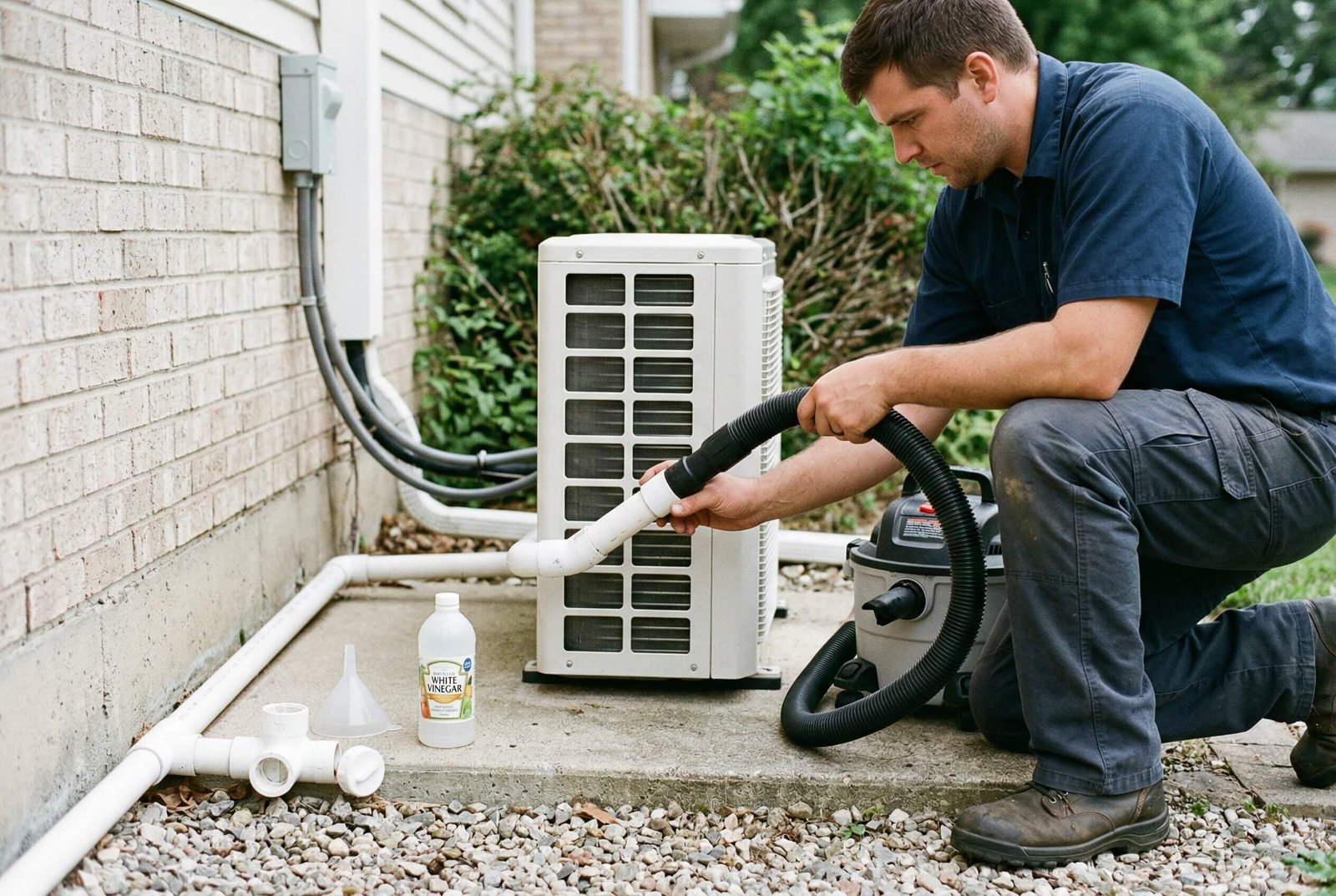
A clogged AC condensate drain is one of the most common HVAC problems in U.S. homes, especially during heavy summer usage. Every time your air conditioner runs, it removes humidity from the air, producing condensation that drains through a small pipe called the condensate line. Over time, this line can become clogged with algae, mold, dust, and sludge, blocking proper drainage.
In real residential setups—whether your HVAC system is installed in an attic, utility closet, garage, or basement—a clogged condensate drain can quickly lead to water overflowing from the drain pan. This is when homeowners start noticing water stains on ceilings, puddles near indoor units, or even a complete AC shutdown caused by a safety float switch.
The challenge is that not all clogs are the same. Some are simple surface blockages that can be cleared in minutes, while others are deeper inside the drain line and require more effort or professional tools. Using the wrong fix method can either fail to solve the problem or make it worse by pushing debris further into the pipe.
The good news is that many AC condensate drain clogs can be safely fixed using simple DIY methods if you understand the type of clog you’re dealing with. For more stubborn or recurring issues, there are advanced techniques and professional solutions that HVAC technicians use to fully restore proper drainage.
In this guide, you’ll learn how to fix a clogged AC condensate drain step by step—from quick, low-risk fixes to more advanced solutions—along with when it’s best to stop and call a professional.
What This Page Covers
ToggleIdentify the Type of Clog Before Fixing
Before you try to fix a clogged AC condensate drain, you need to understand what kind of blockage you’re dealing with. This step is where most homeowners go wrong—they jump straight into flushing or vacuuming without knowing whether the clog is near the surface or deeper in the line. Identifying the clog type helps you choose the right fix method and avoids pushing debris further into the pipe.
Surface Blockage vs Deep Line Clog
A surface blockage usually occurs near the drain pan or the opening of the condensate line. This is the most common type in U.S. homes, especially in attic or closet HVAC units. You might see visible sludge, algae, or dirt buildup right at the drain opening.
A deep line clog, on the other hand, is located further inside the drain pipe—often in longer horizontal runs or near the exterior outlet. These clogs are harder to reach and typically require suction (wet/dry vacuum) or pressure-based methods to clear.
Here’s how to quickly tell the difference:
- Water is sitting in the drain pan → Likely a surface or early-stage clog
- Drain pan is full and not draining at all → Possible deep blockage
- Water drains slowly but not fully → Partial clog inside the pipe
- No visible debris but backup continues → Deeper obstruction in the line
Temporary vs Recurring Drain Issues
Not every clog is a one-time issue. Some AC condensate drains clog repeatedly due to ongoing conditions inside the system.
A temporary clog usually happens due to:
- Seasonal dust buildup
- Short-term algae growth
- Debris entering during filter changes
A recurring clog points to a deeper problem, such as:
- Constant moisture promoting algae growth
- Poor drain line slope
- Dirty air filters allowing debris into the system
- Lack of regular HVAC maintenance
If you’ve cleared the drain before and it keeps clogging every few weeks or months, you’re likely dealing with a recurring issue that needs a more thorough fix or preventive solution.
Warning Signs of a Serious Problem
Sometimes, a clogged condensate drain is just a symptom of a larger issue. You should be cautious if you notice any of the following:
- Water overflowing from the drain pan repeatedly
- AC unit shutting off automatically (triggered by float switch)
- Strong musty or moldy smell coming from vents
- Visible mold or slime buildup around the HVAC unit
- Water damage on ceilings or walls near the unit
- Multiple drainage issues happening at the same time
These signs indicate that the clog may be severe, deep inside the system, or linked to a broader HVAC problem.
Taking a few minutes to properly identify the type of clog will save you time, prevent unnecessary effort, and help you choose the safest and most effective method to fix the issue.
Quick Fixes You Can Try First (Low Risk)
Once you’ve identified the type of clog, start with the safest and simplest methods. In many U.S. homes, AC condensate drain clogs are caused by light algae buildup or loose debris, which can often be cleared without tools or technical work. These low-risk fixes are designed to restore flow without damaging the drain line or HVAC components.
Turn Off HVAC System Before Starting
Before doing anything, always turn off your air conditioning system at the thermostat and, if possible, at the breaker. This prevents the unit from producing more condensation while you’re working and reduces the risk of water overflow or electrical issues.
Running the AC while the drain is clogged can continue filling the drain pan, making the situation worse. Shutting it off gives you control over the problem and keeps the area safe.
Clear Visible Debris From Drain Pan
Start by checking the drain pan located beneath your indoor AC unit. In attic or closet installations, this is usually easy to access once you remove the panel.
If you see standing water, sludge, or dirt buildup, remove it manually using gloves or a cloth. This is often enough to restore partial drainage if the blockage is near the opening.
Look for:
- Slimy algae buildup (common in humid climates)
- Dust and debris accumulation
- Mold-like residue around the drain opening
Removing this visible layer prevents it from being pulled deeper into the pipe during the next steps.
Flush Drain Line With Warm Water
If the clog appears light or near the surface, flushing the line with warm water can help loosen and push out debris.
Pour a small amount of warm (not boiling) water directly into the drain opening. This works best when:
- The clog is partial, not fully blocked
- There is slow drainage rather than a complete backup
Avoid using excessive force or large amounts of water, as this can overflow the drain pan if the blockage is deeper than expected.
Use Wet/Dry Vacuum on Drain Line Outlet
This is one of the most effective and widely used homeowner methods for clearing AC condensate drain clogs in the U.S.
Locate the outdoor drain line outlet—usually a small PVC pipe near the exterior wall of your home. Attach a wet/dry vacuum to the pipe opening and seal it as tightly as possible using a cloth or tape.
Run the vacuum for 1–2 minutes. This creates suction that pulls out algae, sludge, and debris from inside the drain line.
This method works best for:
- Deep clogs inside the pipe
- Algae and slime buildup
- Recurring blockages
After vacuuming, check if water begins to drain normally from the system. In many cases, this single step fully clears the clog.
Start with these low-risk methods before moving to more advanced solutions. They solve a large percentage of condensate drain issues without requiring tools or professional help.
Intermediate Fix Methods (More Effective)
If the basic methods didn’t fully clear the clog, it usually means the blockage is more stubborn or located deeper inside the condensate drain line. At this stage, you’ll need slightly more effective approaches that still remain safe for homeowners but provide stronger cleaning power.
These methods are commonly used in real U.S. HVAC maintenance and can handle algae buildup, slime layers, and partial obstructions inside the pipe.
Vinegar Flush to Break Down Algae
One of the most recommended HVAC maintenance techniques is flushing the condensate line with white vinegar. Vinegar helps break down algae, mold, and organic buildup that commonly forms inside AC drain lines.
Pour about 1 cup of distilled white vinegar directly into the drain line access point (usually a T-shaped vent pipe near the indoor unit). Let it sit for 20–30 minutes before flushing with a small amount of water.
This method works best for:
- Algae and slime buildup
- Mild to moderate clogs
- Preventive maintenance
Unlike harsh chemicals, vinegar is safe for PVC pipes and won’t damage your HVAC system when used occasionally.
Use Flexible Drain Brush or Wire
For clogs that are not too deep, a flexible brush or soft wire can help loosen debris stuck inside the drain line. This is especially useful if buildup has hardened slightly and cannot be flushed out easily.
Insert the brush gently into the drain opening and move it back and forth to break up the blockage. Avoid forcing it too far, as condensate lines are narrow and can be damaged if handled aggressively.
This method is useful for:
- Sticky sludge buildup
- Debris lodged near the entry point
- Partial clogs that resist flushing
Blow Out Drain Line With Air Pressure
Another effective method is using controlled air pressure to push the clog out of the drain line. This can be done using a shop vacuum in reverse mode or a low-pressure air compressor.
Apply short bursts of air into the drain line opening to dislodge the blockage. Be careful not to use excessive pressure, as this can disconnect joints or damage older PVC pipes.
Best used for:
- Deeper clogs that won’t move with water
- Sludge buildup inside longer pipe sections
- Situations where suction alone didn’t work
Clean the AC Drain Trap (If Installed)
Many U.S. HVAC systems include a drain trap (similar to a plumbing P-trap) to prevent air from flowing backward through the condensate line. Over time, this trap can collect debris and become a clog point.
If your system has an accessible trap:
- Remove the trap section carefully
- Clean out any sludge or buildup inside
- Rinse it thoroughly before reinstalling
A clogged trap often causes slow drainage or repeated backups, even if the rest of the line is clear.
These intermediate methods are more effective than basic fixes and can resolve most stubborn condensate drain clogs. If the drain still isn’t flowing properly after trying these, it’s time to consider advanced or professional-level solutions.
Advanced Fix Methods (Stronger Solutions)
If the clog still hasn’t cleared after intermediate methods, you’re likely dealing with a heavier buildup or a deeper blockage inside the condensate drain line. At this stage, stronger solutions can help—but they must be used carefully to avoid damaging your HVAC system or drain piping.
These methods are closer to what professionals use, but some can still be applied safely by homeowners with caution.
Enzyme-Based Drain Cleaners for HVAC Lines
Enzyme cleaners are one of the safest advanced solutions for AC condensate drains. These products use natural bacteria and enzymes to break down organic material like algae, slime, and mold inside the pipe.
Unlike chemical cleaners, enzyme solutions work gradually but are much safer for PVC pipes and HVAC components. They’re also ideal for ongoing maintenance if your system tends to clog frequently.
Use enzyme cleaners when:
- The clog is caused by organic buildup
- You want a safer long-term solution
- You’ve had recurring drain issues
They won’t provide instant results but can significantly improve flow over time and prevent future clogs.
Chemical Cleaners (When and When NOT to Use)
Chemical drain cleaners are sometimes used as a last resort, but they come with risks—especially in HVAC systems. Most condensate lines are made of PVC, which can be damaged by harsh chemicals if used incorrectly.
You should only consider chemical cleaners if:
- Other methods have failed
- The clog is severe and persistent
- You’re using a product labeled safe for HVAC or PVC
Avoid using them if:
- You’re unsure of the pipe condition
- The system has older or fragile components
- There’s already visible damage or leakage
Chemical cleaners can break down tough clogs quickly, but they may also weaken pipe joints or create long-term issues if overused.
High-Pressure Line Flushing
High-pressure flushing involves forcing water through the drain line to push out stubborn blockages. This is more controlled than basic flushing and is typically done using a hose attachment or specialized flushing tool.
It can be effective for:
- Thick sludge buildup
- Debris stuck in longer pipe runs
- Blockages near bends or elbows
However, excessive pressure can:
- Disconnect pipe joints
- Crack older PVC lines
- Push debris deeper if not done correctly
This method should be used carefully and only when you’re confident in the pipe’s condition.
Deep Line Clearing With Auger (Limited Use)
Using a hand auger or small drain snake is possible in some cases, but it’s not commonly recommended for AC condensate lines. These pipes are narrow and not designed for aggressive mechanical cleaning.
An auger may help if:
- The clog is close to the access point
- The pipe is straight and easily reachable
- Other methods have failed
But there are risks:
- Damaging or puncturing the pipe
- Getting the auger stuck
- Pushing the clog deeper instead of removing it
Because of these limitations, augers should only be used carefully and as a last DIY option.
Advanced methods can solve tougher clogs, but they also increase the risk of damage if used incorrectly. If you’re unsure at this stage—or if the clog still isn’t clearing—it’s usually smarter to move to professional solutions.
Professional Drain Fix Methods
When DIY and advanced methods don’t fully resolve the issue, it’s time to look at professional HVAC solutions. A clogged AC condensate drain that keeps coming back or doesn’t respond to standard fixes usually indicates a deeper problem—either inside the line or within the system itself.
Licensed HVAC technicians in the U.S. use specialized tools and methods that are more powerful, precise, and safe for the system. These approaches are designed not just to clear the clog, but to identify and fix the root cause.
Professional Vacuum and Suction Systems
HVAC professionals often use high-powered vacuum systems that are much stronger than standard wet/dry vacuums. These systems can generate consistent suction across longer drain lines, ensuring that even stubborn sludge and algae buildup are completely removed.
This method is effective for:
- Deep clogs in long condensate lines
- Heavy algae or mold buildup
- Recurring blockages that DIY suction couldn’t clear
Unlike basic homeowner tools, professional vacuums are designed to maintain pressure without losing efficiency, making them more reliable for complete clearing.
Camera Inspection for Persistent Clogs
If the clog keeps returning or cannot be located easily, technicians may use a small inspection camera to look inside the drain line. This allows them to visually confirm the cause and exact location of the blockage.
Camera inspections help identify:
- Hidden buildup deep inside the pipe
- Pipe misalignment or sagging sections
- Cracks or internal damage
- Improper installation issues
This step is especially useful when repeated cleaning attempts fail, as it prevents guesswork and ensures the correct fix is applied.
Hydro Jetting for Severe Blockages
In rare cases—usually with larger or more complex systems—professionals may use hydro jetting to clear the drain line. This involves sending high-pressure water through the pipe to completely remove buildup.
Hydro jetting can:
- Break apart thick sludge and algae layers
- Clean the inner walls of the pipe
- Restore full drainage flow
However, this method is not commonly used for standard residential condensate lines due to their small size. It’s more likely to be used in commercial or larger HVAC setups where the piping can handle higher pressure.
Drain Line Replacement or Rerouting
If the condensate line is damaged, poorly installed, or constantly clogging despite cleaning, replacement or rerouting may be necessary. This is a more permanent solution that addresses underlying issues rather than just clearing symptoms.
Professionals may recommend this if:
- The pipe has cracks or leaks
- The slope of the drain line is incorrect
- The line is too long or has too many bends
- Clogs keep returning frequently
Replacing or rerouting the line ensures proper water flow and reduces the chances of future blockages.
Float Switch and Safety System Repairs
Many U.S. HVAC systems include a float switch that shuts off the AC when the drain pan fills up, preventing water damage. If your system has been shutting down repeatedly, the float switch may need inspection or replacement.
Technicians will:
- Test the float switch functionality
- Clean or reset the switch if needed
- Replace faulty components
Fixing the safety system ensures your AC operates reliably and protects your home from overflow damage.
Professional methods not only clear the clog but also help prevent it from coming back. If you’ve reached this stage, it’s usually more cost-effective to get a proper diagnosis and long-term solution rather than continuing repeated DIY attempts.
Tools Used to Fix AC Condensate Drain Clogs
Fixing a clogged AC condensate drain involves a range of tools, from simple homeowner equipment to specialized HVAC tools used by professionals. Choosing the right tool depends on how severe the clog is and where it’s located in the drain line.
Most homeowners can resolve common clogs using basic tools, while deeper or recurring issues may require more advanced equipment.
Basic Tools for Homeowners
These are commonly used in U.S. households and are effective for most light to moderate clogs:
- Wet/Dry Vacuum
The most effective DIY tool for AC drain clogs. It uses suction to pull out algae, sludge, and debris from the drain line, especially from the outdoor outlet. - Measuring Cup or Funnel
Used to pour warm water or vinegar into the drain line cleanly without spilling. - Gloves and Cleaning Cloths
Helpful for removing visible sludge or debris from the drain pan safely. - Flexible Brush or Soft Wire
Used to gently loosen buildup near the drain opening without damaging the pipe.
These tools are low-cost, easy to use, and suitable for routine maintenance or minor clogs.
Intermediate Tools for Better Cleaning
When the clog is more stubborn, slightly more capable tools can improve results:
- Shop Vacuum With Reverse Airflow
Can be used to blow air into the drain line and push out blockages. - Low-Pressure Air Compressor
Provides controlled bursts of air to dislodge deeper clogs without damaging the pipe. - Drain Line Cleaning Kit
Specialized kits designed for HVAC drain lines, often including adapters and brushes.
These tools offer more power but should still be used carefully to avoid excessive pressure.
Professional HVAC Tools
HVAC technicians use advanced equipment for deeper cleaning and diagnosis:
- Motorized Vacuum Systems
Stronger and more consistent suction compared to standard shop vacs, ideal for long or heavily clogged lines. - Inspection Camera
Allows technicians to see inside the drain pipe and locate hidden clogs or structural issues. - Hydro Jet Equipment
Uses high-pressure water to clean pipe walls and remove severe buildup (typically for larger systems). - Motorized Auger (Limited Use)
Occasionally used for specific situations, though not common for narrow condensate lines.
These tools are designed for precision and efficiency, especially when dealing with recurring or complex issues.
Understanding which tools are appropriate helps you avoid unnecessary damage and improves your chances of successfully fixing the clog. Start with basic tools and only move to more advanced options when needed.
Cost to Fix a Clogged AC Condensate Drain
The cost to fix a clogged AC condensate drain can vary depending on whether you handle it yourself or hire a professional. In most U.S. homes, this is considered a minor HVAC issue, but costs can increase if the clog leads to water damage or requires deeper system work.
Understanding the cost upfront helps you decide whether a DIY fix is enough or if calling a technician makes more sense.
DIY Cost Range
Fixing the issue yourself is usually very affordable, especially if you already have basic tools at home. Most DIY solutions involve simple materials like vinegar, water, or using a wet/dry vacuum.
Typical DIY costs include:
- White vinegar or enzyme cleaner → $5 to $20
- Wet/dry vacuum (if not already owned) → $50 to $150
- Basic cleaning tools (brush, gloves, funnel) → $10 to $30
In many cases, the total cost to fix a clogged AC condensate drain yourself can be under $20 if you already have the necessary tools.
Professional HVAC Service Cost (U.S.)
Hiring a licensed HVAC technician is more expensive but provides a complete and reliable solution. For a standard condensate drain clog, most service calls fall within a predictable range.
Typical professional costs:
- Basic service call + drain cleaning → $75 to $200
- Advanced cleaning or multiple attempts → $150 to $350
- Camera inspection (if required) → $100 to $300 additional
If the issue is simple, most homeowners pay under $150 for a quick fix.
Factors That Affect Cost
Several factors can increase or decrease the final price:
- Location of HVAC unit
Attic units are harder to access and may cost more than basement setups - Severity of clog
Light algae buildup vs deep, stubborn blockage - Length and design of drain line
Longer or complex lines require more time and effort - Additional repairs needed
Float switch replacement, pipe repair, or rerouting
Emergency Service Pricing
If your AC stops working during peak summer or causes water damage, you may need emergency service. This is where costs can increase significantly.
Typical emergency pricing:
- After-hours or same-day service → $150 to $400+
- Weekend or holiday calls → Higher rates depending on provider
Emergency service is often worth it if there’s a risk of ceiling damage, mold growth, or system shutdown.
In most cases, fixing a clogged AC condensate drain is a low-cost repair. Starting with DIY methods can save money, but if the problem persists or worsens, professional service ensures the issue is resolved correctly and safely.
When NOT to Fix It Yourself
While many AC condensate drain clogs can be handled with simple DIY methods, there are situations where trying to fix the problem yourself can lead to more damage, higher repair costs, or even safety risks. Knowing when to stop is just as important as knowing how to fix the issue.
If any of the following conditions apply, it’s better to call a licensed HVAC professional instead of attempting further fixes.
Repeated Clogs Despite Cleaning
If you’ve already cleared the drain line and the clog keeps coming back within weeks or months, it usually indicates an underlying issue rather than a simple blockage.
Common causes include:
- Improper drain line slope
- Continuous algae growth due to moisture conditions
- Internal pipe buildup that isn’t fully removed
- HVAC system producing excess debris
Repeated DIY fixes may temporarily restore flow but won’t solve the root cause.
Water Damage Has Already Started
If you notice water stains on ceilings, damp drywall, or pooling water around the unit, the situation has already escalated beyond a simple clog.
At this stage:
- The drain system may be completely blocked
- The overflow pan may have failed
- Structural damage could be developing
Trying to fix the drain without addressing the water damage can make things worse.
AC Unit Keeps Shutting Off
Many modern HVAC systems have a float switch that shuts off the AC when the drain pan fills up. If your system repeatedly turns off and won’t stay running, the problem may not be just a clog.
Possible issues include:
- Faulty or stuck float switch
- Severe blockage deep in the line
- Electrical or sensor-related problems
This requires proper diagnosis, not just cleaning.
Mold or Heavy Sludge Inside the System
If you see thick black sludge, strong musty odors, or visible mold growth around the HVAC unit or inside the drain pan, the issue may be more serious than a typical clog.
This can indicate:
- Long-term moisture problems
- Poor system maintenance
- Potential indoor air quality concerns
Handling mold without proper equipment can spread contamination.
Drain Line Is Inaccessible or Inside Walls
In some homes, parts of the condensate drain line run behind walls, ceilings, or in tight attic spaces. Attempting to clear these sections without proper tools can cause pipe damage or leaks.
If the clog is not reachable from:
- The drain pan opening
- The access vent
- The outdoor drain outlet
…it’s best to leave it to a professional.
Trying to fix the wrong problem—or pushing beyond safe DIY limits—can turn a small issue into a costly repair. When in doubt, getting a proper inspection ensures the problem is handled correctly the first time.
How to Prevent Future AC Condensate Drain Clogs
Once you fix a clogged AC condensate drain, the next step is making sure it doesn’t happen again. In most U.S. homes, these clogs are preventable with simple maintenance habits. Since the primary cause is algae, mold, and debris buildup, regular cleaning and system care can keep the drain line flowing properly year-round.
Regular Vinegar Maintenance Routine
One of the easiest and most effective ways to prevent clogs is by flushing the condensate drain line with vinegar on a regular basis.
A simple routine:
- Turn off the AC system
- Locate the drain line access point (usually a T-shaped pipe)
- Pour about 1 cup of white vinegar into the line
- Let it sit for 20–30 minutes
Doing this once a month during peak cooling season helps break down algae before it becomes a blockage.
Install Drain Line Access Port
Some HVAC systems already have an access port, but if yours doesn’t, adding one can make maintenance much easier. This small vertical pipe allows you to pour cleaning solutions directly into the drain line without disassembling anything.
Benefits include:
- Easier routine cleaning
- Faster troubleshooting
- Better visibility of drain condition
It’s a simple upgrade that saves time and reduces the chances of neglecting maintenance.
Use Algae Tablets in Drain Pan
Algae prevention tablets are commonly used in HVAC systems to control biological growth inside the drain pan and line. These tablets slowly dissolve and help prevent slime buildup.
They are especially useful in:
- Humid climates
- Homes with frequent AC usage
- Systems that have had previous clog issues
Just place the tablet in the drain pan and replace it as recommended by the manufacturer.
Keep Air Filters Clean
Dirty air filters allow dust and debris to enter the HVAC system, which can eventually make its way into the condensate drain line. This contributes to faster clog formation.
To prevent this:
- Replace or clean filters every 1–3 months
- Check more frequently during heavy usage
- Use high-quality filters suited for your system
Cleaner air means less debris buildup inside the drain system.
Schedule Annual HVAC Maintenance
Even if everything seems to be working fine, a yearly HVAC inspection can prevent hidden issues from turning into major problems. Technicians will typically check and clean the condensate drain line as part of routine maintenance.
Professional maintenance helps:
- Catch early signs of clogging
- Ensure proper drain line slope
- Verify system efficiency and cleanliness
Preventing condensate drain clogs is much easier—and cheaper—than fixing them repeatedly. With a simple maintenance routine and a few smart habits, you can keep your AC system running smoothly without unexpected shutdowns or water damage.
Final Thoughts
Fixing a clogged AC condensate drain is usually straightforward if you approach it the right way. Most clogs are caused by algae, sludge, or debris buildup, and in many cases, they can be cleared using simple, low-risk methods like flushing, vacuuming, or basic cleaning.
The key is to start with the safest solutions first and only move to more advanced methods if needed. Jumping straight into aggressive techniques or chemicals can damage the drain line or make the problem worse, especially in narrow PVC condensate pipes commonly used in U.S. HVAC systems.
What matters most is understanding the situation before acting. A light surface clog can often be fixed in minutes, while deeper or recurring issues may require stronger methods or professional help. Ignoring warning signs like repeated backups, AC shutdowns, or water damage can lead to bigger and more expensive problems over time.
In many homes, this issue is not just about fixing the clog once—it’s about preventing it from coming back. Simple habits like monthly vinegar flushing, keeping filters clean, and scheduling routine maintenance can eliminate most condensate drain problems before they start.
If you’re unsure at any point, or if the clog doesn’t clear after multiple attempts, calling a professional HVAC technician is the smartest move. It ensures the problem is diagnosed correctly and fixed without risking damage to your system.