
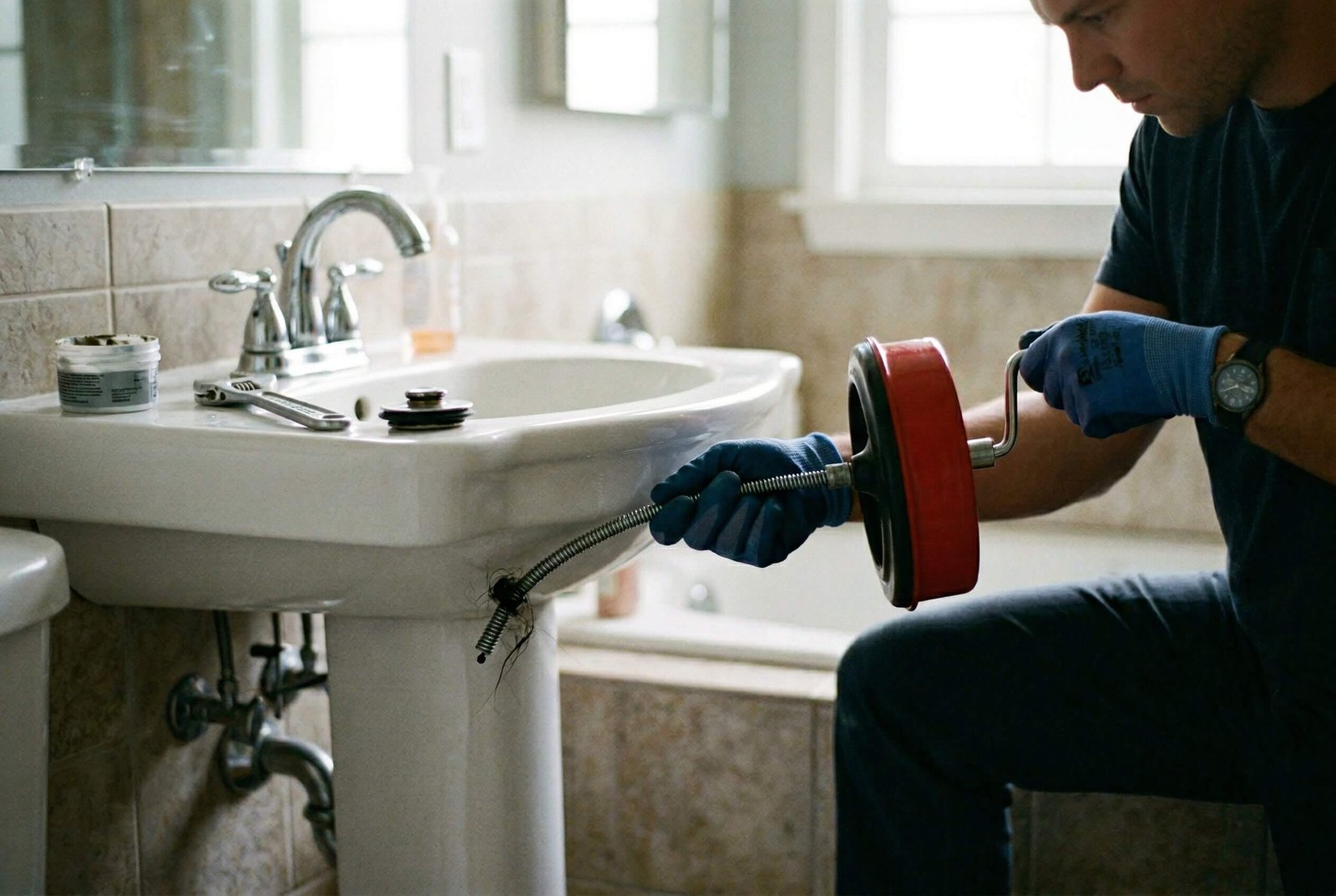
Clogged drains are a routine issue in U.S. homes, whether it’s a bathroom sink packed with hair, a shower drain slowed by soap buildup, or a kitchen line partially blocked with grease and food residue. While simple methods like hot water or plunging can sometimes help, they often don’t fully remove the clog—especially when it’s deeper inside the pipe.
This is where a drain snake becomes one of the most effective tools. Unlike chemical cleaners that try to dissolve the blockage, a drain snake physically reaches into the pipe to break apart or pull out the clog. That’s why professional plumbers rely heavily on snaking as a primary method for clearing drains.
When used correctly, a drain snake can fix a clogged drain quickly and completely, especially for hair, sludge, and compacted debris. However, improper use—such as forcing the cable or using the wrong type—can damage pipes or push the clog further down.
In this guide, you’ll learn exactly how to fix a drain clog with a drain snake, including proper technique, when it works best, when it won’t help, and how to combine it with other methods for a complete solution.
What This Page Covers
ToggleIdentify the Type of Clog Before Using a Drain Snake
Before you insert a drain snake into your pipes, you need to understand what kind of clog you’re dealing with. A drain snake is a powerful tool, but it works best in specific situations. Using it incorrectly can damage pipes or push the blockage deeper, making the problem worse.
A quick diagnosis helps you use the snake effectively and safely.
Surface vs Deep Clogs
Drain snakes are especially useful for clogs that are beyond the reach of plunging or simple flushing.
- Surface-level clog signs:
- Slow drainage
- Visible debris near the drain opening
- Can often be cleared without tools
- Deep clog signs (ideal for snaking):
- Water drains very slowly or not at all
- No improvement after plunging
- Resistance felt inside the pipe
A drain snake is designed to reach and clear deeper blockages.
Organic vs Solid Blockages
A drain snake works by grabbing, breaking, or pulling out debris.
- Works well for:
- Hair clogs
- Soap scum buildup
- Grease combined with debris
- Food residue
- Less effective for:
- Hard or solid objects
- Smooth items that can’t be hooked
- Large foreign objects
If something solid is stuck, snaking may push it further instead of removing it.
Fixture-Specific Considerations
Different drains require slightly different approaches.
- Bathroom sinks and showers:
Hair and soap buildup—ideal for snaking - Kitchen sinks:
Grease and food debris—may require loosening first - Floor drains:
Dirt and debris—may need deeper snaking
Understanding the fixture helps you choose the right technique and depth.
Warning Signs of Serious Issues
Some situations go beyond what a drain snake can fix.
- Multiple drains backing up at once
- Water coming up in other fixtures
- Strong sewer odors
- Gurgling sounds in multiple pipes
These are signs of a main sewer line issue, which requires professional equipment.
Identifying the clog type ensures you use the drain snake in the right situation. When the blockage is deep, organic, and reachable, snaking is one of the most effective ways to fully clear it.
Quick Preparation Before Using a Drain Snake
Proper preparation makes drain snaking easier, safer, and far more effective. In real plumbing work, most issues with snaking come from poor setup—like limited access, messy work areas, or using the wrong type of snake. Taking a few minutes to prepare ensures better control and reduces the risk of pushing the clog deeper or damaging the pipe.
This step is especially important for sinks, showers, and utility drains.
Clear Standing Water if Needed
If the drain is filled with standing water, it can make snaking difficult and messy.
- Remove excess water using a cup or container
- Leave a small amount to help identify flow improvement
- Avoid working in fully submerged conditions
This improves:
- Visibility
- Control of the snake
- Ability to feel resistance in the pipe
Remove Drain Cover or Stopper
To properly access the pipe, you need a clear opening.
- Unscrew or lift off the drain cover
- Remove sink stoppers if present
- For bathroom sinks, you may need to disconnect the stopper linkage
This allows:
- Direct entry into the drain line
- Better angle for the snake
- Reduced risk of scratching fixtures
Choose the Right Snake Type
Using the correct tool improves both effectiveness and safety.
- Hand auger (drain snake):
Best for most household clogs in sinks, tubs, and showers - Closet auger:
Designed specifically for toilets - Power auger:
Used for deeper or more severe clogs
For most DIY situations, a hand auger is sufficient.
Safety Preparation
Snaking can be messy, so basic precautions are important.
- Wear gloves to handle debris
- Place a bucket under sink pipes if needed
- Keep towels nearby for spills
- Work slowly to avoid splashing
This helps:
- Maintain a clean workspace
- Protect your hands
- Prevent accidental damage
Good preparation ensures smooth operation and better results when using a drain snake. It also reduces frustration and helps you complete the job more efficiently.
How to Use a Drain Snake Correctly (Core Section)
Using a drain snake properly is what determines whether you fully clear the clog or just move it around inside the pipe. In professional plumbing, technique matters more than force. The goal is to carefully guide the cable to the blockage, break it apart or hook it, and remove it without damaging the pipe.
Rushing or forcing the snake is the most common mistake homeowners make.
Step-by-Step Snaking Method
Follow this sequence for the best results:
- Insert the snake into the drain
Feed the tip of the cable slowly into the drain opening. - Push gently into the pipe
Advance the snake gradually while keeping a firm grip on the handle. - Rotate the handle as you feed
Turn the handle clockwise to help the cable move through bends in the pipe. - Stop when you feel resistance
Resistance usually means you’ve reached the clog. - Break up or hook the clog
Rotate the snake to either break apart the blockage or catch onto it. - Pull the snake out slowly
Remove the cable carefully and extract debris. - Repeat as needed
Reinsert the snake to remove remaining material until the clog is cleared.
Proper Technique Tips
Small technique details make a big difference:
- Never force the snake forward—let it find its way
- Use steady rotation instead of pushing hard
- Pull back slightly if you feel strong resistance
- Clean the cable after each pass
- Work in multiple passes rather than trying to clear everything at once
This approach prevents pipe damage and improves effectiveness.
Signs the Clog Is Clearing
As you work, watch for signs that the blockage is breaking up:
- Water begins to drain faster
- Less resistance when feeding the snake
- Debris is coming out with the cable
- Gurgling or flow sounds change
Once water flows freely, you’ve likely cleared the clog.
When used correctly, a drain snake is one of the most effective tools to fix a clogged drain. It doesn’t just loosen the blockage—it removes it completely, which is why plumbers rely on it so heavily.
Intermediate Fix Methods (If Snaking Partially Works)
If using a drain snake improves the drain but doesn’t fully clear it, that’s a strong indication the clog has been broken up but not completely removed. In real plumbing scenarios, this is very common. The solution is not to keep forcing the snake—but to combine it with other methods that help flush or extract the remaining debris.
This stage is where most clogs are fully resolved.
Combine With Hot Water Flush
After snaking, flushing the drain with hot water helps move loosened debris further down the pipe.
- Boil a pot of water
- Slowly pour it into the drain in stages
- Allow it to flow through completely
This helps:
- Wash away small debris left behind
- Clear grease or soap residue
- Improve overall flow
It’s especially effective for kitchen and bathroom drains.
Follow With Plunging
Once the clog is partially loosened, a plunger can help push remaining debris through.
- Add water to create a seal
- Perform 10–15 steady plunges
- Repeat if needed
This combination works because:
- The snake breaks up the clog
- The plunger moves it through the pipe
Together, they often fully restore drainage.
Clean the P-Trap
If the clog is close to the fixture, debris may still be trapped in the P-trap.
- Place a bucket underneath
- Unscrew the slip nuts
- Remove and clean the trap
- Reinstall securely
This method is ideal when:
- Water backs up quickly after snaking
- Debris is still present near the fixture
- The clog feels close to the drain opening
These intermediate steps help complete the job after snaking loosens the blockage. In most cases, combining methods is what ensures the drain is fully cleared—not just temporarily improved.
Advanced Fix Methods (If Snake Fails)
If a drain snake doesn’t fully clear the clog, the blockage is likely deeper, more compacted, or part of a larger buildup inside the pipe. At this stage, stronger mechanical methods are required to reach further into the system and fully break apart or remove the obstruction.
These methods are still non-chemical but require more care and, in some cases, better equipment.
Deep Auger Use
A longer or more heavy-duty auger allows you to reach clogs that are beyond the range of a standard hand snake.
- Feed the auger deeper into the drain line
- Rotate continuously to break through dense debris
- Pull back material in stages
- Repeat until flow improves
This method is effective for:
- Deep hair and sludge buildup
- Compacted grease and debris
- Clogs several feet inside the pipe
It’s often the next step before calling a professional.
Wet/Dry Vacuum Extraction
A wet/dry vacuum can be used to pull clogs out instead of pushing them further down.
- Set the vacuum to liquid mode
- Seal the hose tightly over the drain
- Turn on suction to extract debris
This helps:
- Remove loosened material
- Avoid pushing the clog deeper
- Clear partial blockages
It works best after the clog has been loosened by snaking.
High-Pressure Water Flushing
Using strong water pressure can help push through and clean out debris.
- Insert a hose or pressure attachment into the drain
- Run water at steady pressure
- Allow it to flush debris through the pipe
This method is useful when:
- Water can still pass slowly
- The clog has been partially broken up
- Pipes are in good condition
Avoid excessive pressure on older plumbing systems.
If these methods still don’t resolve the issue, it’s likely that the clog is part of a deeper or more complex plumbing problem that requires professional tools and inspection.
Professional Drain Fix Methods
If a drain snake and advanced DIY methods still don’t clear the clog, the blockage is likely deeper in the system or more severe than typical household buildup. In real U.S. plumbing scenarios, professionals use specialized equipment to fully remove clogs and restore proper drainage without damaging pipes.
These methods go beyond surface-level fixes and address the root cause of the problem.
Motorized Augers
Motorized augers (power snakes) are a more powerful version of manual drain snakes.
- Use a rotating cable powered by a motor
- Cut through dense, compacted clogs
- Reach deeper into the plumbing system
Commonly used for:
- Stubborn sink and shower clogs
- Deep blockages beyond hand auger reach
- Compacted debris that manual tools can’t break
These are highly effective for tough clogs that resist standard snaking.
Hydro Jetting
Hydro jetting uses high-pressure water to completely clean the inside of pipes.
- Removes grease, sludge, and scale buildup
- Clears long sections of pipe
- Restores pipe walls to near-original condition
Best for:
- Recurring clogs
- Heavy kitchen grease buildup
- Main sewer line cleaning
Unlike snaking, hydro jetting cleans the entire pipe, not just the clog.
Camera Inspection
To accurately diagnose the problem, plumbers use inspection cameras.
- Identifies the exact location of the clog
- Detects pipe damage, cracks, or root intrusion
- Eliminates guesswork
This is especially useful when:
- Clogs keep returning
- Multiple drains are affected
- The cause is unclear
Pipe Repair if Needed
Sometimes, the clog is caused by a structural issue rather than buildup.
- Collapsed or cracked pipes
- Tree root intrusion
- Misaligned pipe sections
In these cases, clearing the clog alone won’t solve the problem. The damaged section must be repaired or replaced to prevent future issues.
Professional methods ensure the clog is fully resolved and help prevent recurring problems. If your drain hasn’t improved after multiple attempts, calling a plumber at this stage is the safest and most effective solution.
Tools Used With a Drain Snake
Using a drain snake is often the core method for clearing clogs, but in real plumbing work, it’s rarely used alone. Supporting tools help improve access, remove debris more effectively, and ensure the clog is completely cleared rather than partially broken up.
Knowing these tools helps you get better results and avoid repeat blockages.
Basic Tools
These are commonly used alongside a drain snake for most household clogs.
- Hand Auger (Drain Snake)
The primary tool used to break apart or pull out clogs. - Gloves
Essential for handling debris and protecting your hands during messy work. - Bucket
Placed under pipes (especially P-trap) to catch water and debris.
These tools are sufficient for:
- Bathroom sink and shower clogs
- Hair and soap buildup
- Light to moderate blockages
Supporting Tools
These tools enhance the effectiveness of snaking.
- Plunger
Used after snaking to help push loosened debris through the pipe. - Hot Water Source
Helps flush out remaining buildup after debris is removed. - P-Trap Tools (Wrench or Hand Removal)
Used to remove and clean the trap if debris is still present near the fixture.
These combinations help:
- Fully clear loosened clogs
- Prevent partial blockages from returning
- Improve drainage performance
Advanced Tools
These are typically used when standard snaking is not enough.
- Power Auger (Motorized Snake)
Cuts through dense clogs and reaches deeper into the system. - Hydro Jet Equipment
Cleans pipe interiors using high-pressure water. - Inspection Camera
Identifies clog location and detects hidden issues.
These tools are used for:
- Deep or recurring clogs
- Main drain or sewer line issues
- Situations where the clog source is unclear
Using the right combination of tools ensures that the clog is completely removed, not just loosened. In most cases, a drain snake combined with flushing and minor tools is enough to restore full drainage.
Cost to Fix a Drain Using a Snake (U.S.)
Using a drain snake is one of the most cost-effective ways to fix a clogged drain, especially when compared to chemical cleaners or immediate professional service. In many cases, a single tool purchase is enough to handle multiple clogs over time. However, costs can increase depending on the severity of the blockage and whether professional help is required.
Understanding these costs helps you decide when DIY is enough and when to escalate.
DIY Cost
Drain snaking is relatively inexpensive and often a one-time investment.
- Hand auger (drain snake): $15–$40
- Heavy-duty manual snake: $40–$80
- Optional tools (gloves, bucket): $5–$15
Typical DIY total:
- $20–$80 depending on tool quality
These tools can be reused for years, making them highly cost-effective.
Plumber Cost Range
If DIY snaking doesn’t resolve the issue, a plumber may be needed.
- Minor clog (basic snaking): $100–$250
- Moderate clog (deeper blockage): $250–$500
- Severe clog (main line or compacted buildup): $500–$1,000+
Additional services:
- Hydro jetting: $300–$800
- Camera inspection: $150–$400
Factors Affecting Cost
Several real-world factors influence pricing:
- Clog location: Sink, shower, or main sewer line
- Severity: Partial vs complete blockage
- Depth: How far into the pipe the clog is
- Accessibility: Easy access vs behind walls or underground
- Equipment required: Manual vs motorized tools
Emergency Pricing
Urgent plumbing calls can significantly increase costs.
- Emergency surcharge: +$100–$300 or more
- Applies to nights, weekends, and holidays
Using a drain snake is often the most practical and affordable way to fix a clogged drain. Even if it doesn’t completely solve the issue, it can reduce the severity and potentially lower the cost of professional repair.
When NOT to Use a Drain Snake
A drain snake is one of the most effective tools for clearing clogs, but it’s not always the right solution. In some situations, using a snake can be ineffective or even cause damage if the underlying issue is more serious than a typical blockage.
Knowing when not to use a drain snake helps prevent bigger plumbing problems.
Fragile or Old Pipes
Older plumbing systems can be vulnerable to mechanical tools.
- Corroded metal pipes
- Weak or brittle PVC joints
- Pipes with existing cracks
Using a drain snake aggressively in these systems can:
- Scratch pipe interiors
- Worsen existing damage
- Cause leaks or breaks
If your plumbing is old or in poor condition, use extra caution or avoid snaking altogether.
Solid Object Blockages
A drain snake is designed to grab or break apart soft debris—not solid objects.
- Jewelry, toys, or plastic items
- Hard foreign objects
- Smooth items that can’t be hooked
In these cases:
- The snake may not grip the object
- It could push the item deeper into the pipe
- Removal becomes more difficult
Retrieval tools or professional help are usually required.
Main Sewer Line Issues
If the clog is in the main sewer line, a standard drain snake may not be effective.
- Multiple drains backing up
- Water coming up in other fixtures
- Strong sewer odors
These situations require:
- Longer, professional-grade equipment
- Camera inspection
- Hydro jetting or advanced tools
No Improvement After Multiple Attempts
If you’ve used the snake properly and see no improvement, continuing won’t help.
- No change in water flow
- Constant resistance at the same point
- No debris coming out
This indicates:
- A deeper or more severe clog
- Possible structural issue
Using a drain snake in the wrong situation can delay proper repair or make the clog harder to fix. If you notice these conditions, it’s better to switch methods or call a professional.
How to Prevent Future Drain Clogs
Using a drain snake can fully clear a clog, but preventing buildup is what keeps your plumbing system running smoothly long-term. In real U.S. homes, most clogs develop slowly due to everyday habits, not sudden events. Small changes in how you use and maintain your drains can significantly reduce the need for snaking again.
Prevention is always easier than repeated repairs.
Proper Usage Habits
What goes down your drain directly determines how often it clogs.
- Avoid pouring grease, oil, or fat into kitchen sinks
- Do not rinse food scraps unless properly using a garbage disposal
- Keep coffee grounds and fibrous food waste out of drains
- Limit heavy soap and product buildup in bathroom drains
Even small amounts of debris can stick to pipe walls and gradually create blockages.
Routine Maintenance
Regular maintenance helps keep pipes clean and free-flowing.
- Flush drains with hot water weekly
- Occasionally use safe cleaning methods like baking soda and hot water
- Check for early signs of slow drainage
Addressing buildup early prevents it from becoming compacted and harder to remove.
Use a Drain Snake Early
Using a drain snake at the first sign of a slow drain can prevent a full blockage.
- Don’t wait until the drain is completely clogged
- Light snaking can remove buildup before it hardens
- Helps maintain smooth water flow
Early intervention reduces the need for more aggressive methods later.
Bathroom Drain Care
Bathroom drains are highly prone to clogs due to hair and soap residue.
- Remove visible hair regularly
- Use drain strainers to catch debris
- Clean drain covers frequently
These simple habits can prevent most bathroom clogs.
Kitchen Drain Care
Kitchen drains deal with grease and food waste, making them more susceptible to buildup.
- Wipe greasy pans before washing
- Run cold water with garbage disposal
- Avoid dumping starchy or sticky foods down the drain
Consistent kitchen habits are one of the biggest factors in preventing deep clogs.
Preventing clogs reduces the need for repeated snaking and keeps your plumbing system functioning efficiently. With proper usage and simple maintenance routines, most drains can stay clear without major issues.
Final Thoughts
A drain snake is one of the most effective tools you can use to fix a clogged drain because it doesn’t just loosen the blockage—it removes it. Unlike plunging or flushing methods that rely on pressure, snaking allows you to physically reach into the pipe and pull out or break apart the clog. That’s why it’s one of the most commonly used tools by professional plumbers.
The key to success is using the right technique. Slow feeding, steady rotation, and multiple passes are far more effective than forcing the cable. When used correctly, a drain snake can clear most common household clogs, especially those caused by hair, soap buildup, grease, and debris.
It’s also important to follow a structured approach. Start with proper diagnosis and preparation, use the snake carefully, and combine it with flushing or plunging if needed. This layered method ensures the clog is fully removed, not just partially broken up.
At the same time, recognize the limits of DIY. If the clog is deep, recurring, or part of a larger plumbing issue, continuing to snake may not solve the problem. In those cases, professional tools and inspection are the best solution.
With the right approach and proper maintenance habits, a drain snake can be a reliable long-term tool for keeping your drains clear and functioning properly.