
A main sewer drain clog is one of the most serious plumbing problems a homeowner can face because it affects your entire drainage system—not just a single sink or shower. When the main sewer line becomes blocked, wastewater from your home has nowhere to go. Instead, it starts backing up into toilets, tubs, basement floor drains, or multiple fixtures at the same time. This isn’t just inconvenient—it can quickly turn into a messy, expensive, and even hazardous situation if not handled properly.
Unlike typical drain clogs that are isolated to one fixture, a sewer line clog usually builds up deeper in the system and often involves grease, debris, tree roots, or pipe damage. That’s why fixing it requires a different approach. Some minor sewer clogs can be cleared with safe DIY methods if caught early, especially if the blockage is close to the cleanout or caused by soft buildup. However, more serious clogs—especially recurring ones—often require professional tools like motorized augers, hydro jetting, or camera inspections to fully resolve the issue.
The key is knowing where your situation falls. This guide will walk you through how to fix a clogged main sewer drain step by step, starting with safe, low-risk methods and moving toward more advanced and professional solutions. You’ll also learn how to identify warning signs, avoid making the problem worse, and understand when it’s time to call a plumber before damage escalates.
Next, you need to determine exactly what type of clog you’re dealing with before attempting any fix.
What This Page Covers
ToggleIdentify the Type of Clog Before Fixing
Before attempting to fix a main sewer drain clog, you need to confirm that the problem is actually in the main line and not just a single fixture. This step is critical because using the wrong method—or treating a deep sewer clog like a simple sink blockage—can make the situation worse. Professional plumbers always diagnose first before choosing a fix, and homeowners should follow the same approach.
Signs of a Main Sewer Line Clog
A true sewer line clog usually shows multiple warning signs across your home rather than in just one location. These signs indicate that wastewater is backing up at the lowest point in the system because the main line is blocked.
- Multiple drains backing up at once (sink, tub, toilet)
- Toilets gurgling when water is used elsewhere
- Water backing up into a shower or bathtub after flushing
- Basement floor drain overflowing or filling with dirty water
- Slow drainage across several fixtures at the same time
If you notice two or more of these symptoms together, you are most likely dealing with a main sewer drain clog rather than a localized issue.
Surface vs Deep Sewer Blockage
Not all sewer clogs are the same. Some occur close to your home, while others are deep in the main line running toward the municipal connection or septic system.
A surface-level clog is typically:
- Located near the cleanout or just outside the home
- Caused by grease, sludge, or soft debris buildup
- Easier to clear with basic tools like a hand auger
A deep sewer blockage is usually:
- Farther down the main line
- Caused by tree roots, heavy buildup, or pipe damage
- Requires longer augers, hydro jetting, or professional tools
Understanding this difference helps you decide whether a DIY fix has a realistic chance of working.
Temporary vs Recurring Sewer Issues
A one-time clog is often caused by a sudden buildup of waste, grease, or debris. These can sometimes be cleared successfully with basic methods.
Recurring clogs, however, are a red flag. If your drains:
- Back up repeatedly over weeks or months
- Slow down even after cleaning
- Show the same symptoms again shortly after fixing
…it usually means there is a deeper issue such as partial blockage, pipe misalignment, or root intrusion. In these cases, temporary fixes won’t solve the root problem.
Warning Signs of Severe Sewer Problems
Some symptoms indicate a more serious condition where DIY methods may not be safe or effective.
- Strong sewage odors inside or outside the home
- Water pooling around basement drains or near the foundation
- Soggy patches or foul smells in the yard
- Sudden, severe backups with no gradual warning
- Visible contamination or wastewater overflow
These signs often point to major blockages, pipe damage, or structural issues in the sewer line. Attempting aggressive DIY fixes in these situations can risk further damage or exposure to hazardous waste.
Once you understand the type and severity of the clog, you can move forward with the safest and most effective fix method—starting with low-risk options.
Quick Fixes You Can Try First (Low Risk)
If you’ve confirmed the issue might be a minor or early-stage main sewer drain clog—especially one close to the cleanout—there are a few safe, low-risk methods you can try before moving to more aggressive solutions. These approaches work best when the blockage is caused by grease, soft sludge, or light organic buildup rather than solid obstructions or tree roots.
These fixes won’t solve every sewer clog, but they are the safest starting point and can sometimes restore normal flow without damaging your pipes.
Hot Water Flush for Minor Grease Build-Up
Hot water can help loosen and break apart grease or soap buildup inside the sewer line, especially if the clog is still soft and not fully compacted. This method is simple but only effective in early-stage blockages.
- Boil a large pot of water (or use very hot tap water if safe)
- Slowly pour it into the lowest drain in your home (often a basement drain or lowest fixture)
- Allow time for the heat to soften grease and push it downstream
This works best when:
- The clog formed recently
- Drainage is slow but not fully blocked
Avoid this method if you suspect PVC pipe damage or if the clog is completely solid, as hot water alone won’t clear it.
Dish Soap Lubrication Method
Dish soap helps break down grease and reduces friction inside the pipe, making it easier for buildup to move along the sewer line.
- Pour a generous amount of liquid dish soap into the drain
- Follow with hot water to push the soap through the pipe
- Let it sit briefly before flushing again
This method is especially useful when:
- Kitchen waste or grease is contributing to the clog
- Water is still draining slowly (not fully backed up)
It won’t remove solid obstructions but can improve flow enough to delay further buildup.
Manual Debris Removal from Cleanout Access
If your home has a sewer cleanout (usually located outside or in the basement), you can safely inspect and remove visible debris near the opening.
- Carefully remove the cleanout cap (expect some pressure or water release)
- Look for accessible debris near the opening
- Remove any visible blockages using gloves or a basic tool
This method helps when:
- The clog is close to the cleanout
- Debris is physically reachable
Never insert your hands deep into the pipe or force tools blindly, as this can push the clog further or cause injury.
Using a Plunger on Lowest Fixtures
Plunging can sometimes help dislodge minor sewer line clogs by creating pressure and movement within the pipe system.
- Use a heavy-duty plunger on the lowest drain (often a basement floor drain or toilet)
- Create a tight seal and apply steady, controlled plunges
- Repeat several times to loosen the blockage
This works best when:
- The clog is not too deep
- There is partial water movement in the system
Plunging won’t fix major sewer clogs but can help shift minor obstructions enough to restore flow.
These quick fixes are your first line of defense. If none of them improve drainage—or if the problem returns quickly—it’s a sign that the clog is deeper or more severe. In that case, you’ll need to move to more effective intermediate methods.
Intermediate Fix Methods (More Effective)
If basic methods didn’t resolve the issue, the clog is likely more established inside the main sewer line. At this stage, you’ll need tools or techniques that can reach deeper into the pipe and physically break apart or remove the blockage. These methods are still within reach for experienced homeowners but require more care and attention.
Baking Soda and Vinegar Reaction Method
This method uses a chemical reaction to loosen organic buildup such as grease, soap residue, and sludge. While it’s not powerful enough for solid obstructions, it can help soften material before using other tools.
- Pour baking soda into the drain (about 1 cup)
- Follow with vinegar (1–2 cups)
- Allow the mixture to fizz and react for 15–30 minutes
- Flush with hot water
This works best when:
- The clog is organic and partially blocking the pipe
- You plan to follow up with snaking or flushing
It’s a supportive method rather than a complete solution for sewer line clogs.
Using a Drain Snake Through Cleanout
A drain snake (hand auger) is one of the most effective DIY tools for clearing a main sewer drain clog, especially when the blockage is within reach.
- Insert the auger cable into the cleanout opening
- Rotate the handle to push the cable deeper into the pipe
- Continue until you feel resistance (the clog)
- Rotate and pull back to break apart or retrieve debris
Best for:
- Soft clogs (grease, sludge, paper buildup)
- Blockages within a moderate distance from the cleanout
Be careful not to force the cable too aggressively, as it can damage older pipes or get stuck if misused.
Wet/Dry Vacuum Extraction Method
A wet/dry vacuum can sometimes pull out soft clogs, especially near the cleanout or accessible drain openings.
- Set the vacuum to liquid mode
- Create a tight seal over the drain or cleanout
- Turn on the vacuum to pull debris out
This method works when:
- The clog is soft and close to the surface
- Water and debris can be suctioned effectively
It’s not useful for deep or solid blockages but can be surprisingly effective for early-stage sewer clogs.
Cleaning Accessible Trap or Drain Sections
In some homes, especially with basement floor drains, there may be accessible trap sections that collect debris before it enters the main sewer line.
- Remove the drain cover
- Inspect for buildup inside the trap
- Manually clean out sludge, debris, or sediment
This helps when:
- The blockage is near the entry point to the main line
- Debris has accumulated over time
These intermediate methods increase your chances of clearing the clog without professional help. However, if the blockage remains or quickly returns, it’s likely deeper in the sewer line or caused by more serious issues like roots or pipe damage. At that point, stronger solutions are required.
Advanced Fix Methods (Stronger Solutions)
When intermediate methods fail to clear the clog, you’re likely dealing with a more stubborn blockage deeper in the main sewer line. At this stage, stronger solutions can help—but they must be used carefully. These methods carry more risk if misused and are not always suitable for older or damaged pipes.
The goal here is to break down, loosen, or force out heavy buildup without causing pipe damage or pushing the clog further down the line.
Enzyme-Based Drain Cleaners
Enzyme cleaners use natural bacteria and enzymes to break down organic waste such as grease, food particles, and sludge inside the sewer line. Unlike harsh chemicals, they are safe for pipes and environmentally friendly.
- Pour the enzyme cleaner into the drain as directed
- Allow it to sit for several hours (often overnight)
- Flush with warm water
Best for:
- Organic buildup inside the pipe
- Preventative maintenance after partial clearing
Limitations:
- Works slowly, not ideal for emergency clogs
- Ineffective against solid obstructions like roots or heavy debris
This is a safer long-term solution rather than a quick fix.
Chemical Drain Cleaners (Risks Explained)
Chemical cleaners are sometimes used for stubborn clogs, but they come with serious risks—especially in main sewer lines.
They may help when:
- The clog is caused by grease or organic material
- Other methods have partially opened the pipe
However, you must understand the risks:
- Can damage PVC and older metal pipes
- Generate heat that weakens pipe joints
- Dangerous if sewage is already backing up
- Harmful fumes and chemical exposure risks
Avoid using chemical cleaners if:
- You suspect a complete blockage
- There is standing sewage water
- Pipes are old or fragile
In most professional plumbing scenarios, chemical cleaners are used cautiously or avoided altogether for main sewer lines.
High-Pressure Water Flushing
Using high-pressure water can help push through loosened clogs and clear buildup along the pipe walls.
- Insert a hose into the cleanout opening
- Seal the area as much as possible
- Run water at strong pressure to flush debris forward
Best for:
- Loosened clogs after snaking
- Grease and sludge buildup
Limitations:
- Won’t break apart solid obstructions
- May push the clog deeper if not already loosened
This method is often used as a follow-up step rather than a primary fix.
Deep Sewer Line Snaking
For tougher clogs located deeper in the line, longer and more flexible drain augers are required.
- Feed a longer auger cable into the cleanout
- Continue advancing until you reach the blockage
- Rotate to break apart or latch onto debris
- Pull back slowly to remove material
Effective for:
- Compact sludge buildup
- Paper blockages
- Early-stage root intrusion
Risks:
- Cable can get stuck in damaged pipes
- Excessive force may worsen pipe condition
These advanced methods can resolve many stubborn sewer clogs, but they also mark the point where DIY success rates start to drop. If the clog persists after these attempts—or if you’re unsure about pipe condition—the safest and most effective next step is to move to professional-level solutions.
Professional Drain Fix Methods
When a main sewer drain clog goes beyond what DIY methods can handle, professional plumbing solutions become necessary. These methods are designed to fully clear the line, diagnose the root cause, and prevent the problem from returning. In real U.S. plumbing scenarios, most serious sewer clogs—especially recurring ones—are resolved using specialized equipment that homeowners typically don’t have access to.
Hydro Jetting for Severe Blockages
Hydro jetting is one of the most effective methods plumbers use to completely clear a main sewer drain clog. It uses high-pressure water (often 3,000–4,000 PSI) to blast through buildup and clean the entire pipe interior.
- Breaks down grease, sludge, and debris
- Flushes out years of buildup along pipe walls
- Clears partial and full blockages
Best for:
- Heavy grease buildup
- Recurring clogs
- Preventative full-line cleaning
Unlike basic flushing, hydro jetting doesn’t just poke a hole through the clog—it restores the pipe close to its original flow capacity.
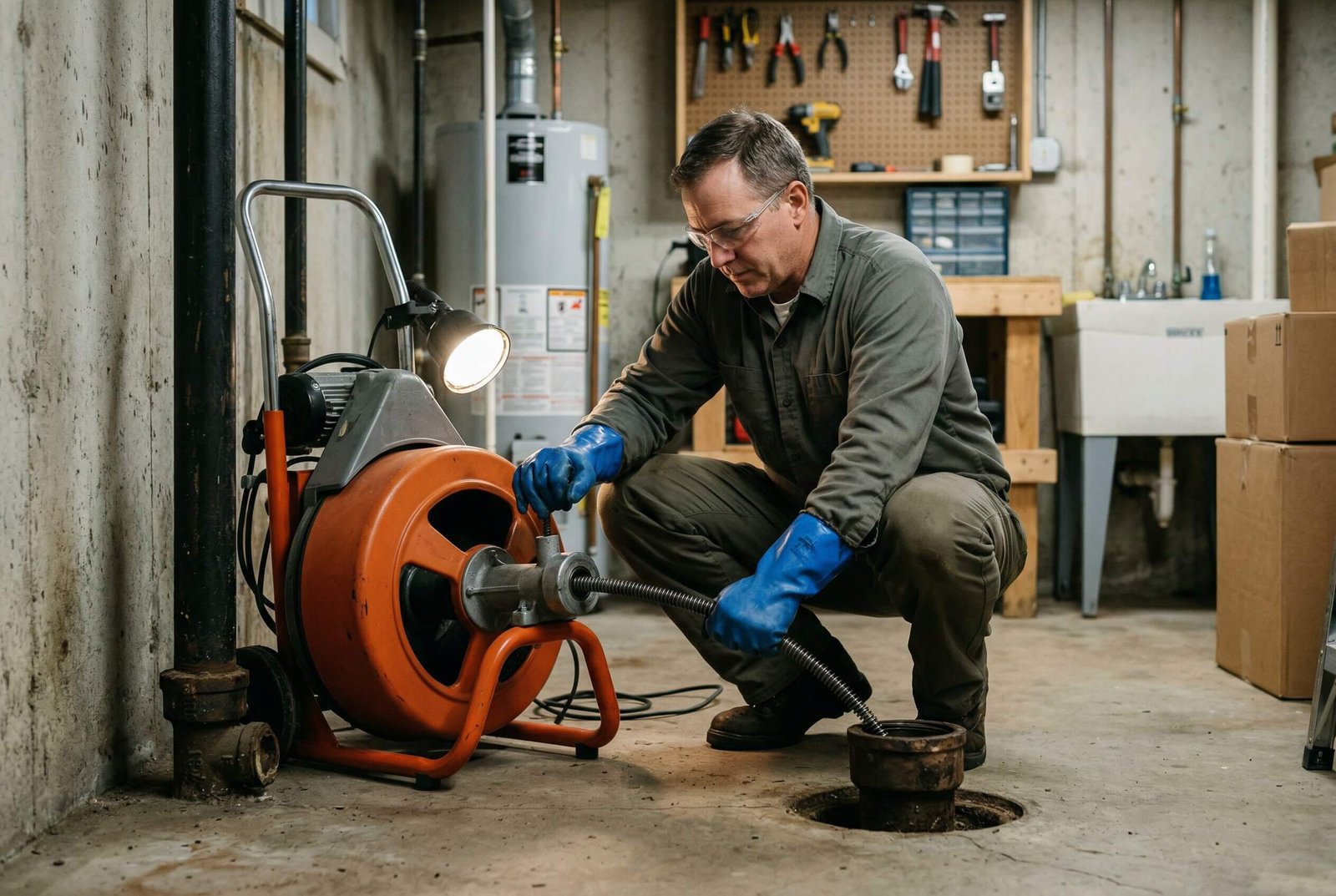
Motorized Augers and Root Cutters
For tougher obstructions, plumbers use motorized drain augers equipped with specialized cutting heads. These tools are powerful enough to break through solid blockages and even cut through tree roots inside the sewer line.
- Electric-powered cable for deep reach
- Interchangeable cutting heads for different clogs
- Can penetrate dense or compacted blockages
Best for:
- Tree root intrusion
- Solid debris or hardened buildup
- Deep sewer line clogs
This method is often the first step before hydro jetting in severe cases.
Sewer Camera Inspection
Before or after clearing the clog, plumbers often perform a camera inspection to see exactly what’s happening inside the sewer line.
- A waterproof camera is fed through the pipe
- Real-time video shows blockage location and cause
- Helps identify pipe damage, root intrusion, or misalignment
Benefits:
- Confirms whether the clog is fully cleared
- Prevents guesswork
- Helps plan long-term repairs if needed
This is one of the most valuable tools for diagnosing recurring sewer problems.
Sewer Line Repair or Replacement
If the clog is caused by structural damage, clearing it won’t solve the issue permanently. In these cases, repair or replacement may be required.
Common causes:
- Collapsed or cracked pipes
- Severe root intrusion
- Pipe misalignment (bellied pipe)
- Corrosion in older sewer lines
Solutions may include:
- Spot repair of damaged sections
- Pipe relining (in some cases)
- Full sewer line replacement
Professional methods are not just about clearing the clog—they’re about solving the underlying problem. If your sewer line keeps backing up, or if advanced DIY methods haven’t worked, professional intervention is the safest and most reliable way to fix the issue completely.
Tools Used to Fix Main Sewer Drain Clogs
Fixing a main sewer drain clog requires the right tools for the job. Using the wrong tool—or using the right tool incorrectly—is one of the most common reasons DIY attempts fail. Professional plumbers choose tools based on the type, depth, and severity of the clog, and homeowners should follow a similar approach.
Below is a breakdown of the most commonly used tools, from basic DIY options to advanced professional equipment.
Basic Tools (DIY Level)
These tools are safe, affordable, and suitable for early-stage or minor sewer clogs—especially when the blockage is close to the drain or cleanout.
- Plunger
Creates pressure to loosen minor clogs. Best used on toilets or basement floor drains where water is already present. - Hand Auger (Manual Drain Snake)
A flexible cable that reaches into the pipe to break up or pull out soft clogs. Ideal for shallow blockages. - Wet/Dry Vacuum
Useful for extracting loose debris or standing wastewater near the cleanout or drain opening.
These tools are best when:
- The clog is recent and not fully solid
- You have partial drainage (not a complete backup)
Intermediate Tools
These tools provide deeper reach and more control, making them effective for moderate sewer line clogs that basic tools can’t handle.
- Long Drain Snake (Extended Cable Auger)
Allows you to reach deeper into the main sewer line from the cleanout. Can break up thicker buildup or retrieve debris. - Cleanout Wrench
Used to safely open and close the sewer cleanout cap without damaging threads or fittings. - Hose Flushing Setup
A standard garden hose (sometimes with a bladder attachment) used to push water into the line and flush loosened debris.
These tools are useful when:
- The clog is farther down the pipe
- You’ve already attempted basic methods without success
Professional Tools
Professional-grade tools are designed for severe clogs, deep blockages, and long-term solutions. These are typically used by licensed plumbers due to their power and complexity.
- Power Auger (Motorized Drain Snake)
An electric machine that spins a heavy-duty cable through the pipe, capable of cutting through solid clogs and roots. - Hydro Jetting Machine
Uses high-pressure water to clean the entire pipe interior, removing grease, sludge, and buildup completely. - Sewer Inspection Camera
A specialized camera system that allows plumbers to visually inspect the inside of the sewer line and locate the exact problem.
These tools are required when:
- The clog is deep or recurring
- Tree roots or pipe damage are involved
- DIY tools fail to restore proper flow
Choosing the right tool depends on correctly diagnosing the clog. Starting with basic tools and progressing only when necessary helps reduce risk and prevents unnecessary damage to your sewer line.
Cost to Fix a Main Sewer Drain Clog
The cost to fix a main sewer drain clog can vary widely depending on how severe the blockage is, where it’s located, and whether you handle it yourself or hire a plumber. In the U.S., sewer line work tends to be more expensive than regular drain cleaning because it involves deeper access, specialized tools, and higher risk.
Understanding these costs helps you decide whether to attempt a DIY fix or call a professional early.
DIY Cost Range
If the clog is minor and close to the cleanout, DIY methods can be very affordable. Most homeowners spend money on tools rather than services.
Typical DIY costs:
- Plunger: $10 – $25
- Hand auger (drain snake): $25 – $100
- Wet/dry vacuum (if not already owned): $80 – $200
- Enzyme cleaners: $15 – $40
- Basic hose flushing tools: $20 – $50
Estimated total DIY cost:
- $25 – $150 for basic attempts
- Up to $200+ if purchasing multiple tools
DIY is cost-effective only if:
- The clog is minor or recent
- You can access the cleanout easily
- No pipe damage is involved
Plumber Cost Range (U.S.)
Professional sewer drain cleaning costs depend on the method used and the complexity of the job.
Typical pricing:
- Basic drain snaking: $150 – $400
- Main sewer line snaking: $250 – $600
- Hydro jetting service: $300 – $1,000
- Sewer camera inspection: $150 – $500
For most homeowners:
- A standard sewer clog fix usually falls between $250 and $600
- More advanced cleaning or combined services can reach $800 – $1,200+
Factors That Affect Cost
Several variables can increase or decrease the total cost of fixing a main sewer drain clog:
- Depth of clog
Deeper blockages require longer equipment and more time - Accessibility
Easy access through a cleanout lowers cost; difficult access increases labor - Type of blockage
Grease and sludge are easier to clear than roots or solid obstructions - Pipe condition
Damaged or old pipes may require extra care or repair - Equipment required
Hydro jetting and camera inspections increase overall pricing
Emergency Sewer Repair Pricing
If you’re dealing with an urgent backup—especially sewage entering your home—emergency service will cost more.
Typical emergency pricing:
- After-hours service: +$100 to $300 extra
- Weekend or holiday visits: higher service rates
- Immediate response sewer clearing: $400 – $1,500+
Emergency calls are often necessary when:
- Sewage is backing up into living areas
- Multiple fixtures are unusable
- There is a health or contamination risk
The key takeaway is simple: minor clogs can be fixed cheaply with the right tools, but deeper or recurring sewer problems almost always require professional service. Knowing the expected cost range helps you act quickly without hesitation when the situation escalates.
Next, it’s critical to understand when NOT to attempt fixing a sewer clog yourself.
When NOT to Fix It Yourself
While some main sewer drain clogs can be handled with DIY methods, there are situations where attempting to fix the problem yourself can make things worse—or even create serious health and safety risks. Professional plumbers are trained to recognize these scenarios immediately, and as a homeowner, knowing when to stop is just as important as knowing how to fix the issue.
Multiple Fixtures Backing Up
If more than one fixture in your home is backing up at the same time, it’s a strong sign that the main sewer line is blocked deeper in the system.
- Toilets, sinks, and tubs affected together
- Water appearing in unexpected places (like a tub when flushing a toilet)
- Drainage issues across multiple floors
This usually indicates a full or near-full blockage in the main line, which basic tools cannot effectively clear.
Raw Sewage Backup
Any situation involving visible sewage backup should be treated as a health hazard.
- Dirty water backing up into tubs, toilets, or floor drains
- Strong foul odor indicating contamination
- Risk of bacteria and harmful pathogens
DIY attempts in this situation can expose you to unsafe conditions and spread contamination further into your home.
Recurring Sewer Clogs
If the same clog keeps coming back—even after you’ve cleared it—it’s a clear sign of a deeper problem.
- Temporary fixes only last days or weeks
- Drains slow down again quickly
- Symptoms return in the same pattern
Recurring clogs are often caused by:
- Tree root intrusion
- Pipe misalignment or sagging
- Partial blockages deep in the line
These require professional inspection and long-term solutions.
Suspected Pipe Damage or Collapse
If the sewer line is physically damaged, no amount of snaking or flushing will permanently fix the issue.
- Sudden severe backups with no warning
- Gurgling combined with slow drainage everywhere
- Yard issues like sinking ground or wet patches
In these cases, aggressive DIY methods can worsen the damage or cause pipe failure.
Tree Root Intrusion
Tree roots are one of the most common causes of main sewer drain clogs in U.S. homes, especially in older properties.
- Roots grow into small pipe cracks
- They expand and trap debris over time
- Eventually form dense blockages inside the pipe
Removing roots requires:
- Motorized cutting tools
- Hydro jetting
- Possible pipe repair
DIY tools are not designed to handle root intrusion effectively.
Knowing when NOT to attempt a fix can save you from costly repairs and serious damage. If any of these warning signs are present, the safest move is to call a professional plumber who can diagnose and fix the issue correctly.
How to Prevent Future Sewer Drain Clogs
Fixing a main sewer drain clog is one thing—preventing it from happening again is what actually saves you time, money, and stress. In real-world plumbing, most major sewer clogs don’t happen overnight. They build up slowly due to everyday habits, unnoticed issues, or lack of maintenance. The good news is that a few smart changes can significantly reduce the risk of future blockages.
Proper Waste Disposal Habits
What goes down your drains has a direct impact on your main sewer line. Many clogs start from materials that should never have been flushed or washed down in the first place.
Avoid putting these into your drains:
- Grease, fats, and cooking oils
- Food scraps (even with garbage disposals)
- Coffee grounds and eggshells
- “Flushable” wipes (they don’t break down properly)
- Paper towels, hygiene products, and cotton items
Stick to:
- Human waste and toilet paper only (for toilets)
- Minimal, well-rinsed food particles (for sinks)
Small habits here prevent large sewer problems later.
Grease and Oil Management
Grease is one of the leading causes of main sewer drain clogs because it cools and solidifies inside pipes, trapping other debris over time.
Best practices:
- Never pour grease down the sink
- Collect used oil in a container and dispose of it properly
- Wipe greasy pans with paper towels before washing
- Use hot water occasionally to keep pipes flowing (not as a fix, but as maintenance)
Even small amounts of grease buildup over time can create a major blockage in the sewer line.
Tree Root Prevention
Tree roots naturally seek out moisture, and your sewer line is a prime target—especially if there are small cracks or aging pipes.
To reduce root intrusion risk:
- Avoid planting trees near sewer lines
- Be cautious with large shrubs or aggressive root systems
- Schedule periodic inspections if your home has older pipes
- Consider root barriers if landscaping near sewer lines
If your property has a history of root issues, preventative maintenance becomes even more important.
Regular Sewer Line Maintenance
Just like any part of your home, your sewer system benefits from routine care. Preventative maintenance helps catch small issues before they turn into major clogs.
Recommended practices:
- Annual or bi-annual sewer line inspection (especially for older homes)
- Preventative snaking or hydro jetting if buildup is suspected
- Monitoring early warning signs like slow drainage or gurgling sounds
- Using enzyme cleaners occasionally to maintain flow
A small maintenance investment can prevent costly emergency repairs later.
Preventing a main sewer drain clog comes down to awareness and consistency. By managing what goes into your drains, maintaining your sewer line, and addressing small issues early, you can avoid most major blockages entirely.
Final Thoughts
Fixing a main sewer drain clog requires a step-by-step approach that starts with proper diagnosis and progresses through the right level of solution. While some minor clogs can be handled with safe DIY methods, more serious blockages often require advanced tools or professional expertise to fully resolve.
The most important thing is to avoid guessing. Understanding whether the clog is minor, deep, recurring, or structural determines everything—from the tools you use to whether you should attempt a fix at all. Acting early can often prevent a manageable issue from turning into a major repair involving sewage backup or pipe damage.
If basic and intermediate methods don’t improve the situation, or if warning signs like multiple backups and foul odors appear, it’s best to move quickly to professional solutions. Sewer problems escalate fast, and delays can increase both damage and cost.
In the long run, prevention is your strongest advantage. Smart usage habits, regular maintenance, and early intervention will keep your sewer system functioning properly and help you avoid dealing with this problem again.