
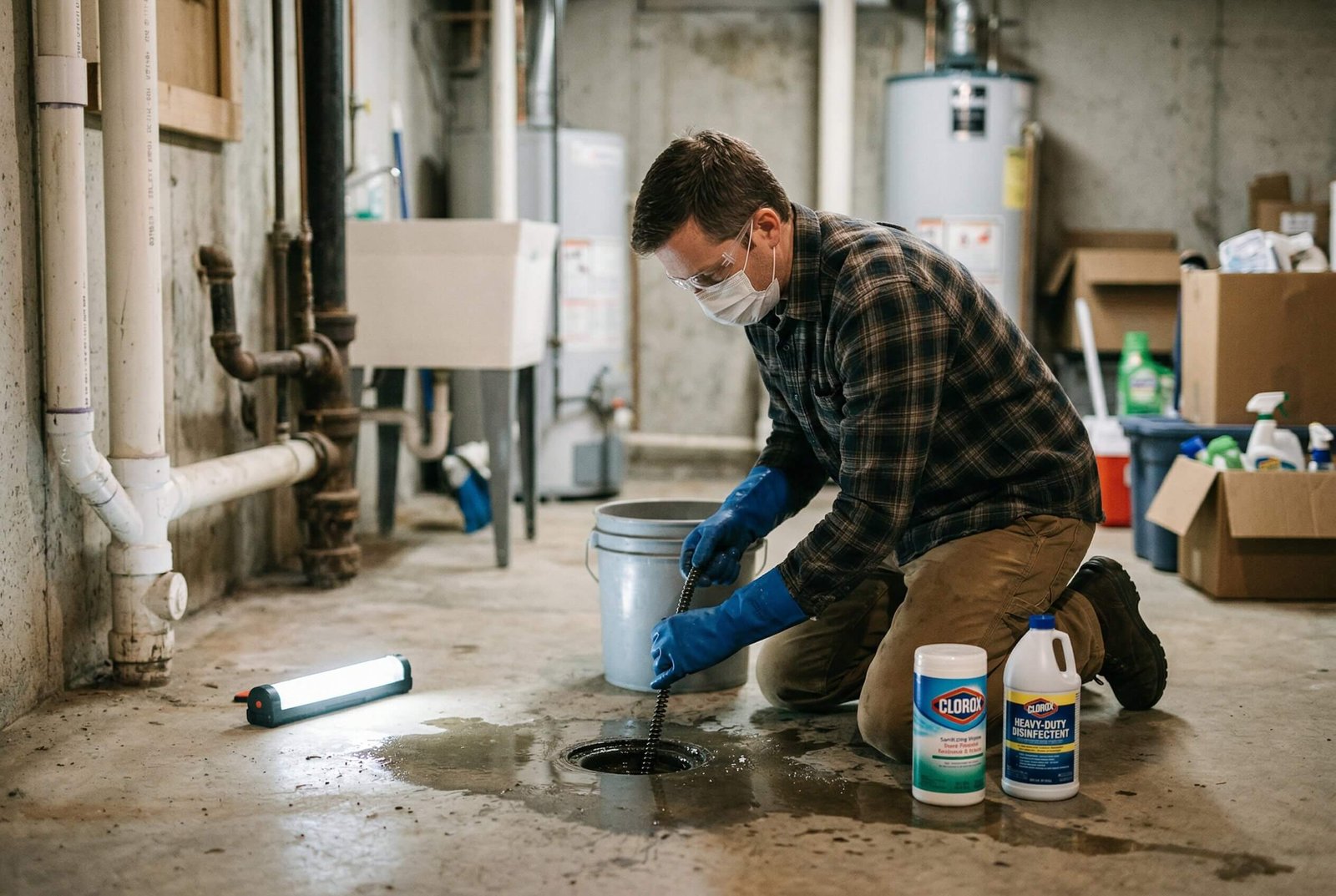
Sewage backing up into drains is one of the most serious plumbing problems a homeowner can face. Instead of wastewater flowing out of your home through the sewer line, it reverses direction and comes back up through your drains—often into toilets, bathtubs, showers, or basement floor drains. This is not just a clog; it’s a system-level failure that can quickly turn into a health hazard and cause expensive property damage if not handled correctly.
In most U.S. homes, this issue is directly connected to the main sewer line. When that line becomes blocked—whether by grease buildup, tree roots, debris, or pipe damage—there’s nowhere for wastewater to go. The pressure forces sewage back into the lowest points of your plumbing system, which is why basement drains and ground-level fixtures are usually the first to overflow.
The key to fixing this problem safely is understanding that not all backups are the same. A single clogged fixture can sometimes be handled with simple DIY methods, but sewage backing up into multiple drains often signals a deeper issue that requires more advanced tools or professional intervention. Acting too aggressively—or using the wrong method—can actually push the blockage further or damage your pipes.
In this guide, you’ll learn how to fix sewage backing up into drains step by step, starting with safe, low-risk methods and moving into more advanced solutions. You’ll also learn how to identify whether this is something you can handle yourself or when it’s time to call a professional plumber before the situation worsens.
What This Page Covers
ToggleIdentify the Type of Sewage Backup Before Fixing
Before you attempt any fix, you need to understand what kind of backup you’re dealing with. This step is critical because the wrong diagnosis can lead to wasted effort—or worse, pushing sewage deeper into your system or causing further damage. In real U.S. plumbing systems, sewage backups typically fall into two categories: localized clogs and main sewer line issues. Knowing the difference determines whether a simple fix will work or if you’re dealing with something more serious.
Single Fixture Backup vs Whole House Backup
Start by observing where the problem is happening. If sewage is backing up in only one fixture—like a single toilet or bathtub—the issue is likely a localized clog in that specific drain line. These are usually caused by hair, grease, paper buildup, or foreign objects and are often manageable with basic tools.
However, if multiple fixtures are affected at the same time, that’s a major red flag. For example:
- Toilet bubbles when you run the sink
- Water backs up in the bathtub when flushing the toilet
- Basement floor drain overflows when using upstairs plumbing
These signs almost always point to a blockage in the main sewer line, which requires more advanced methods to fix.
Main Sewer Line Backup vs Branch Line Issue
A branch line connects individual fixtures (like sinks and showers) to the main sewer line. If only one section of your home is affected—such as a bathroom group—it may be a branch line issue.
But if the backup is happening across different areas of the home, especially at the lowest drain, you’re likely dealing with a main sewer line blockage. This is the most common cause of sewage backing up into drains and often involves:
- Tree root intrusion
- Heavy grease buildup
- Collapsed or damaged pipes
- Foreign objects stuck in the line
Main line problems are more serious and often require professional-grade tools.
Temporary Backup vs Recurring Problem
Next, consider whether this is a one-time issue or something that keeps happening. A temporary backup may occur due to a sudden clog—like flushing too much waste at once or a short-term blockage.
But if sewage backup happens repeatedly, even after clearing the drain, it usually means there’s an underlying issue that hasn’t been fully resolved. Recurring backups are often caused by:
- Partial blockages that never fully clear
- Tree roots growing back into the pipe
- Pipe misalignment or structural damage
Recurring issues almost always require deeper inspection, often with a camera.
Warning Signs of Serious Sewer Problems
Some signs indicate that the problem goes beyond a simple clog and should not be handled with basic DIY methods. Pay attention to these warning signs:
- Multiple drains backing up at once
- Sewage coming out of basement or floor drains
- Strong sewage odors throughout the home
- Gurgling sounds in toilets or drains
- Water levels rising or falling unexpectedly in fixtures
These are clear indicators of a main sewer line blockage or failure, and attempting light fixes like plunging may not solve the problem.
Understanding the type of sewage backup you’re dealing with sets the foundation for choosing the right fix. Once you’ve identified whether it’s a minor clog or a main line issue, you can move forward safely without making the situation worse.
Quick Fixes You Can Try First (Low Risk)
Once you’ve identified the type of sewage backup, you can start with safe, low-risk methods. These are designed to either relieve minor pressure in the system or clear light obstructions without causing further damage. At this stage, the goal is not aggressive clearing—it’s to stabilize the situation and see if the issue is shallow enough to resolve without heavy tools.
Stop Using Water Immediately
Before doing anything else, stop all water usage in your home. This includes:
- Flushing toilets
- Running sinks
- Using washing machines or dishwashers
Every time water is used, more wastewater enters the system and increases pressure behind the blockage. This can force more sewage back into your drains, especially in lower areas like basements or ground-floor bathrooms.
If multiple people are in the house, make sure everyone is aware. This simple step alone can prevent a minor issue from turning into a major backup.
Check and Clear Visible Blockages
In some cases, the problem may be partially caused by debris sitting near the drain opening. Start by inspecting:
- Shower and bathtub drains for hair or soap buildup
- Floor drains for lint, dirt, or debris
- Toilet openings for visible obstructions
Use gloves and remove anything you can safely reach. Even if this doesn’t fully fix the issue, it can improve flow and reduce pressure in the system.
Hot Water Flush (Limited Use Case)
Hot water can sometimes help break down light grease or soap buildup, but it must be used carefully. This method is only appropriate if:
- The backup is minor and not actively overflowing
- You suspect grease or soft buildup
- The water is still draining slowly (not completely blocked)
Pour hot (not boiling) water slowly into the drain to avoid damaging pipes, especially PVC.
Do NOT use hot water if:
- Sewage is already backing up
- The drain is fully blocked
- You suspect a main sewer line issue
In those cases, adding water can make the backup worse.
Basic Plunger Method
A plunger can be effective for minor clogs in toilets, sinks, or tubs, but it must be used correctly to avoid pushing the blockage deeper.
Follow this approach:
- Use the correct plunger type (flange plunger for toilets, flat plunger for sinks/tubs)
- Ensure there is enough water to cover the plunger cup
- Create a tight seal over the drain
- Use steady, controlled plunges (not aggressive force)
Plunging works by creating pressure changes that can dislodge shallow blockages. However, if the issue is in the main sewer line, plunging will usually not resolve it and may even cause sewage to appear in other fixtures.
These quick fixes are meant to handle minor or early-stage problems safely. If you see no improvement—or if sewage continues to back up—it’s a sign that the blockage is deeper and requires more effective methods.
Intermediate Fix Methods (More Effective)
If quick fixes didn’t resolve the issue, the blockage is likely deeper or more compacted. At this stage, you can move to more effective methods that target the pipe interior rather than just the drain opening. These approaches are still DIY-friendly in certain situations, but they require more care and a better understanding of your plumbing layout—especially in U.S. homes where sewer cleanouts are commonly available.
Use a Drain Snake or Hand Auger
A drain snake (or hand auger) is one of the most effective tools for breaking up clogs that are beyond reach. It works by physically cutting through or pulling out debris inside the pipe.
Use it in these situations:
- Single fixture backup (toilet, sink, tub)
- Suspected soft blockage (paper, grease, hair)
- Slow drainage that didn’t respond to plunging
Basic steps:
- Insert the snake slowly into the drain or toilet
- Rotate the handle to push through resistance
- Break up or hook the clog
- Pull the snake out carefully
Avoid forcing the cable too aggressively, as it can damage older pipes or get stuck. If you feel solid resistance that doesn’t move, it may indicate a more serious blockage deeper in the system.
Open and Check the Sewer Cleanout
Most U.S. homes have a sewer cleanout, typically located:
- Outside near the foundation
- In the basement
- In the garage
This is a direct access point to the main sewer line and is one of the most important places to check during a sewage backup.
What to do:
- Slowly loosen the cleanout cap using a wrench
- Stand back—pressure may release sewage
- Observe whether water is standing in the pipe
If sewage comes out or the pipe is full, the blockage is likely in the main sewer line. If it’s empty, the issue may be inside the home’s branch lines.
Wet/Dry Vacuum Extraction
A wet/dry vacuum can help remove standing sewage or debris near the drain opening, especially in:
- Basement floor drains
- Shower or tub backups
- Utility sinks
This method doesn’t clear deep blockages but can reduce mess and improve access for further work.
Safety precautions:
- Use a vacuum rated for liquids
- Wear gloves and protective gear
- Disinfect equipment afterward
Check and Clean P-Traps (If Localized Issue)
If the backup is isolated to a sink or fixture, the clog may be trapped in the P-trap—the curved pipe under sinks.
Steps:
- Place a bucket underneath the trap
- Unscrew the fittings carefully
- Remove debris buildup (grease, sludge, small objects)
- Reassemble and test flow
Only attempt this if you are confident the issue is localized. If sewage is backing up from multiple drains, the problem is not in the P-trap.
These intermediate methods are often enough to clear moderate clogs and restore proper flow. However, if sewage is still backing up—especially across multiple fixtures—it strongly suggests a main sewer line blockage that requires more advanced solutions.
Advanced Fix Methods (Stronger Solutions)
If intermediate methods didn’t solve the problem, you’re likely dealing with a deeper or more stubborn blockage—often inside the main sewer line. At this stage, stronger solutions can help, but they also come with higher risk if used incorrectly. The goal here is to break down or clear heavy buildup without damaging your plumbing system.
Enzyme-Based Drain Cleaners
Enzyme cleaners are one of the safest advanced options, especially for organic waste buildup. Instead of using harsh chemicals, they rely on bacteria and enzymes to slowly break down:
- Grease and fats
- Organic sludge
- Soap residue
These are best used when:
- The backup is recurring but not fully blocked
- You suspect buildup rather than a solid obstruction
- You want a maintenance-friendly solution
Keep in mind, enzyme cleaners are not instant fixes. They work over several hours or overnight and are more effective for prevention or minor-to-moderate buildup rather than severe backups.
Chemical Drain Cleaners (Use With Caution)
Chemical cleaners can dissolve clogs quickly, but they are rarely recommended by professional plumbers for sewage backups. They generate heat and reactions that can:
- Damage PVC or older pipes
- Corrode metal pipes
- Create hazardous fumes
- Worsen the situation if the line is fully blocked
Only consider chemical cleaners if:
- The clog is minor and localized
- Other methods have failed
- The product is safe for your pipe type
Avoid using them entirely if:
- Sewage is actively backing up
- You suspect a main sewer line blockage
- The pipes are old or fragile
Deep Drain Snaking
A deeper snaking approach uses longer cables to reach further into the sewer line. While handheld augers may reach 15–25 feet, deeper blockages may require extended cables.
This method is useful for:
- Breaking through compacted debris
- Reaching clogs beyond fixture-level piping
- Attempting to clear partial main line blockages
However, DIY snakes have limitations. They may not fully clear:
- Tree roots
- Hardened grease
- Heavy sludge buildup
If resistance feels solid or the clog keeps returning, deeper issues are likely present.
High-Pressure Water Flushing
Some homeowners attempt to use high-pressure water (like a pressure washer with a sewer jet attachment) to push through clogs. This method can be effective for:
- Flushing loose debris
- Clearing grease buildup
- Restoring flow in partially blocked pipes
But it comes with real risks:
- Can push the clog further down the line
- May damage weak or older pipes
- Ineffective against roots or structural issues
Professional hydro jetting is far more controlled and powerful than DIY versions, which is why homeowners should use caution with this approach.
These advanced methods can sometimes resolve tough clogs, but they also signal that the problem may be beyond basic DIY. If sewage is still backing up—or if the issue returns shortly after clearing—it’s time to consider professional solutions that address the root cause, not just the symptoms.
Professional Drain Fix Methods
When sewage is backing up into drains and DIY methods haven’t worked, the issue is almost always in the main sewer line—and this is where professional tools and experience make a major difference. Licensed plumbers don’t just clear the blockage; they diagnose the exact cause and ensure the problem doesn’t return quickly. This is especially important in U.S. homes, where sewer systems can be affected by roots, aging pipes, or municipal line issues.
Hydro Jetting the Sewer Line
Hydro jetting is one of the most effective ways to fully clear a sewer line. It uses high-pressure water (often 3,000–4,000 PSI) to blast through the inside of the pipe, removing:
- Grease buildup
- Sludge and debris
- Tree roots (minor to moderate intrusion)
- Scale buildup along pipe walls
Unlike snaking, which punches a hole through the clog, hydro jetting cleans the entire pipe diameter, restoring proper flow.
This method is ideal when:
- There are recurring backups
- Grease or sludge has built up over time
- Previous snaking provided only temporary relief
However, plumbers will usually inspect the pipe first to ensure it can handle the pressure, especially in older systems.
Motorized Augers for Deep Blockages
Motorized augers (also called power snakes) are much stronger than manual drain snakes. These machines use rotating cables with cutting heads that can:
- Break through dense clogs
- Cut through tree roots
- Navigate long sewer lines
They are commonly used as the first step in professional clearing, especially when the blockage is solid or deeply embedded.
While effective, this method may not completely clean the pipe walls, which is why it’s sometimes followed by hydro jetting for long-term results.
Camera Inspection for Accurate Diagnosis
One of the biggest advantages of professional service is sewer camera inspection. A waterproof camera is inserted into the pipe to identify exactly what’s causing the blockage.
This helps detect:
- Tree root intrusion
- Pipe cracks or collapse
- Grease buildup locations
- Misaligned or sagging pipes (bellies)
Without a camera, clearing a drain is often guesswork. With it, plumbers can choose the most effective solution and avoid unnecessary work.
Sewer Line Repair or Replacement
If the backup is caused by structural damage, clearing the clog won’t solve the problem long-term. In these cases, repair or replacement may be required.
Common scenarios include:
- Collapsed or broken pipes
- Severe root intrusion
- Old clay or cast iron pipes deteriorating
Repair options:
- Spot repair for isolated damage
- Trenchless repair (pipe lining or bursting)
- Full replacement for severely damaged systems
While more expensive, these solutions permanently fix the root cause and prevent repeated sewage backups.
Professional methods are designed to solve the problem completely—not just temporarily relieve symptoms. If you’ve reached this stage, it’s a strong indication that the issue is beyond simple DIY fixes and requires proper equipment and diagnosis.
Tools Used to Fix Sewage Backup Issues
Fixing sewage backing up into drains requires the right tools for the severity of the problem. While some tools are suitable for basic homeowner use, others are specifically designed for professional plumbers handling deep sewer line blockages. Understanding which tools are used—and when—helps you make better decisions and avoid using the wrong approach.
Basic Tools (For Light, Localized Issues)
These are commonly available and safe for minor problems affecting a single fixture. They are best used when the backup is shallow and not part of a main sewer line issue.
- Plunger (flange type for toilets, flat for sinks/tubs)
- Rubber gloves and protective gear
- Bucket and towels for cleanup
- Flashlight for inspecting drain openings
These tools help with quick fixes and initial attempts but are limited in reach and effectiveness for deeper clogs.
Intermediate Tools (For Deeper or Moderate Blockages)
These tools allow you to reach further into the plumbing system and are useful when basic methods fail. They require more care but can be effective for branch line issues or partial blockages.
- Hand auger (manual drain snake)
- Closet auger (specifically for toilets)
- Wet/dry vacuum (for removing standing sewage)
- Pipe wrench (for opening cleanout plugs)
These tools are often enough for moderate clogs, especially when the issue is not in the main sewer line.
Professional Tools (For Main Sewer Line Problems)
When sewage is backing up into multiple drains, professional-grade tools are usually required. These are not typically available to homeowners and require experience to operate safely.
- Motorized auger (power snake with cutting heads)
- Hydro jetting machine (high-pressure water cleaning system)
- Sewer inspection camera (for diagnosing internal pipe issues)
- Root cutting attachments (for tree root intrusion)
These tools allow plumbers to not only clear the blockage but also fully diagnose and restore the pipe’s condition.
Using the correct tool for the situation is critical. A plunger or small snake won’t solve a main sewer line blockage, and attempting to force it can make things worse. On the other hand, jumping straight to aggressive tools without proper diagnosis can damage your plumbing system.
Cost to Fix Sewage Backing Up Into Drains (U.S.)
The cost to fix sewage backing up into drains can vary widely depending on the cause, severity, and how quickly the issue is addressed. Minor clogs can be resolved with inexpensive DIY methods, but main sewer line problems can become costly—especially if repairs or replacements are needed. Understanding the typical cost ranges helps you make better decisions and avoid delays that could increase damage.
DIY Cost Range
If the problem is minor and localized, you may be able to resolve it with basic tools and supplies.
Typical DIY costs:
- Plunger: $10 – $25
- Hand auger: $25 – $100
- Enzyme cleaner: $10 – $40
- Wet/dry vacuum (if not already owned): $50 – $150
Total typical DIY range: $10 – $150
DIY is only cost-effective when the issue is small and correctly diagnosed. If the blockage is in the main sewer line, these tools may not solve the problem and can delay proper repair.
Plumber Cost Range (Standard Service)
For most homeowners in the U.S., calling a plumber is the fastest and safest way to handle sewage backups.
Typical service costs:
- Basic drain cleaning: $150 – $300
- Main sewer line snaking: $300 – $800
- Hydro jetting service: $500 – $1,500
These costs usually include labor, equipment, and basic diagnosis. Emergency or after-hours service will increase pricing.
Major Repair Costs
If the backup is caused by pipe damage or structural issues, the cost increases significantly.
Typical repair costs:
- Spot repair (small pipe section): $1,500 – $5,000
- Trenchless pipe repair: $3,000 – $10,000
- Full sewer line replacement: $5,000 – $15,000+
Older homes with clay or cast iron pipes are more likely to require these repairs.
Factors Affecting Cost
Several factors influence how much you’ll pay:
- Location of the blockage (easy access vs deep underground)
- Severity of the clog or damage
- Type and age of piping material
- Length of sewer line affected
- Need for inspection (camera diagnostics)
- Emergency service timing (nights/weekends)
The longer you wait, the higher the risk of additional damage, which can significantly increase costs.
Emergency vs Scheduled Service Pricing
Emergency plumbing services typically cost more due to urgency and availability.
- Standard service: Base pricing applies
- Emergency service: 1.5x to 2x higher cost
If sewage is actively backing up, emergency service is often necessary—but if the situation is stable, scheduling during regular hours can save money.
Understanding these costs helps you decide when to attempt a fix yourself and when to call a professional. In many cases, addressing the issue early can prevent a minor blockage from turning into a major repair expense.
When NOT to Fix It Yourself
While some minor drain issues can be handled safely at home, sewage backing up into drains often signals a deeper and more serious problem. In many real U.S. plumbing situations, attempting DIY fixes at the wrong time can make the situation worse—spreading contamination, increasing repair costs, or even damaging the sewer line. Knowing when to stop and call a professional is just as important as knowing how to fix the issue.
Multiple Drains Backing Up
If more than one fixture is affected at the same time, this is a strong indication of a main sewer line blockage. For example:
- Toilet backs up when using the sink
- Bathtub fills when flushing
- Floor drain overflows when running water upstairs
This is not a localized clog. Using a plunger or small snake will not solve the problem and may push sewage into other fixtures. At this point, professional equipment is required.
Sewage Coming From Basement or Floor Drain
When sewage is backing up from the lowest drain in your home—usually a basement floor drain—it means wastewater has nowhere else to go. This is one of the clearest signs of a main line issue.
Attempting DIY fixes in this situation can:
- Increase backup volume
- Spread contaminated water further
- Delay proper repair
This scenario should be treated as urgent and handled with professional tools.
Recurring Sewage Backups
If you’ve cleared the drain before but the problem keeps coming back, there is likely an underlying issue that hasn’t been resolved.
Common causes include:
- Tree roots growing into the sewer line
- Pipe misalignment or sagging
- Partial blockages that never fully clear
Recurring problems almost always require a camera inspection and a more permanent solution.
Strong Odors or Health Risks
Sewage contains harmful bacteria and gases that can pose serious health risks. If you notice:
- Strong sewage smells throughout the home
- Visible contamination around drains
- Prolonged standing sewage
Avoid direct contact and limit exposure. DIY work without proper protective equipment can be unsafe, especially in enclosed areas like basements.
Risk of Pipe Damage or Structural Issues
If your home has older plumbing—such as clay, cast iron, or aging PVC pipes—aggressive DIY methods can cause more harm than good.
Avoid DIY if:
- You feel solid resistance when snaking
- Pipes are visibly corroded or fragile
- The clog doesn’t respond to moderate effort
Forcing tools into damaged pipes can lead to cracks, leaks, or complete pipe failure, turning a blockage into a major repair.
Recognizing these situations early can save you time, money, and serious damage. Sewage backups are not just inconvenient—they’re a warning sign of a larger issue that often requires professional diagnosis and repair.
How to Prevent Future Sewage Backups
Once you’ve managed to fix sewage backing up into drains, the next priority is making sure it doesn’t happen again. In real U.S. homes, most sewer backups are preventable with the right habits and periodic maintenance. Prevention is always easier—and far less expensive—than dealing with another emergency.
Proper Waste Disposal Habits
One of the biggest causes of sewer line blockages is improper waste disposal. What goes down your drains directly impacts how your plumbing system performs over time.
Avoid flushing or draining:
- Grease, fats, and oils (they solidify inside pipes)
- “Flushable” wipes (they do not break down properly)
- Paper towels or hygiene products
- Food scraps without proper disposal
Even small amounts of these materials can build up over time and lead to serious blockages in the main sewer line.
Regular Drain Maintenance
Routine maintenance helps keep your pipes clear and reduces the risk of buildup turning into a full blockage.
Simple maintenance steps:
- Use enzyme-based cleaners monthly to break down organic waste
- Flush drains with hot water occasionally (only when flowing properly)
- Inspect slow drains early before they worsen
Consistent maintenance can prevent grease and sludge from hardening inside the pipes.
Tree Root Management
Tree roots are one of the most common causes of main sewer line blockages in the U.S., especially in older neighborhoods with clay or aging pipes.
To reduce risk:
- Avoid planting trees near sewer lines
- Schedule periodic inspections if roots are known to be an issue
- Consider root barriers if trees are already nearby
If your home has had root-related clogs before, proactive maintenance becomes even more important.
Install a Backwater Valve
A backwater valve is a protective device that prevents sewage from flowing back into your home during a blockage or municipal sewer overload.
Benefits include:
- Stops reverse flow into basement drains
- Reduces risk during heavy rain or city sewer backups
- Adds an extra layer of protection for low-level fixtures
While installation requires a plumber, it can be a worthwhile investment—especially in areas prone to sewer backups.
Preventing sewage backups comes down to a combination of smart usage, regular maintenance, and addressing risks early. Small habits—like avoiding grease and monitoring slow drains—can make a significant difference in protecting your plumbing system long-term.
Final Thoughts
Sewage backing up into drains is a serious issue, but with the right approach, it can be handled effectively. The key is to start with proper diagnosis, use safe and appropriate methods, and avoid rushing into aggressive fixes that could worsen the problem.
For minor or localized clogs, simple tools and techniques may be enough to restore normal flow. But when multiple drains are involved or the problem keeps returning, it’s usually a sign of a deeper sewer line issue that requires professional attention.
Understanding when to act—and when to call a plumber—can save you from costly repairs and potential health risks. Just as importantly, taking preventive steps ensures that once the problem is fixed, it stays fixed.