
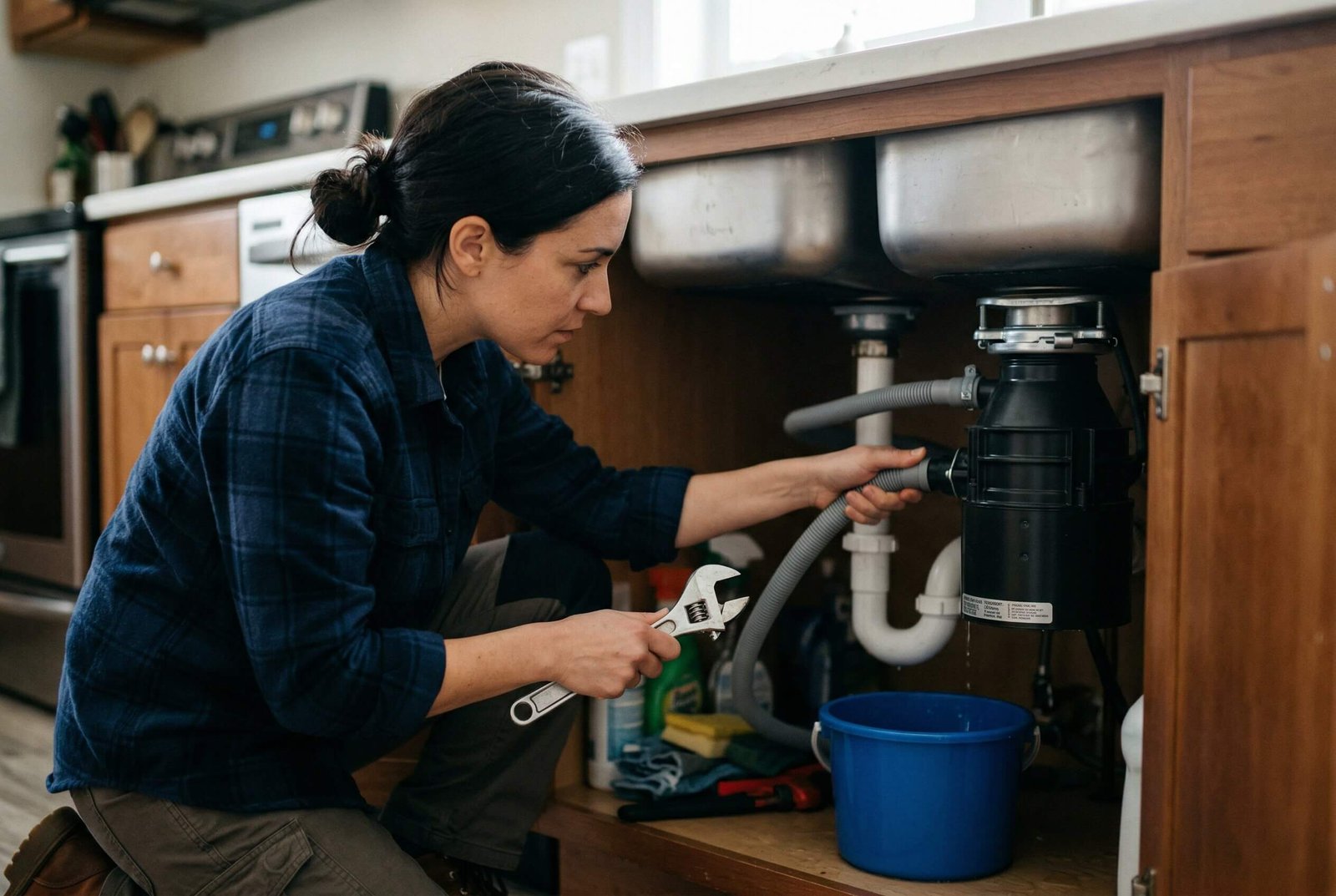
A kitchen sink backing up into the dishwasher is a clear sign of a shared drain line problem, and it’s more serious than a typical sink clog. In most U.S. homes, the dishwasher and kitchen sink are connected to the same drain system, usually through the garbage disposal or a branch pipe. When that shared line becomes blocked—often due to grease, food buildup, or debris—water has nowhere to go and starts flowing backward into the dishwasher.
This issue is not just inconvenient; it can also lead to hygiene problems and potential damage to your dishwasher if left unresolved. The key to fixing it properly is understanding that the problem is rarely inside the dishwasher itself—it’s almost always in the drain line connecting both systems. In this guide, you’ll learn how to fix a kitchen sink backing up into dishwasher using safe DIY methods, effective tools, and professional solutions when needed, so you can restore proper drainage and prevent it from happening again.
What This Page Covers
ToggleIdentify the Cause Before Fixing
Before you try to fix a kitchen sink backing up into dishwasher, it’s important to understand where the blockage is and why water is flowing in reverse. This issue almost always comes from a shared drain line problem, but the exact location of the clog determines which fix will actually work. Jumping into random methods without identifying the cause can make the situation worse or push the blockage deeper.
How Sink and Dishwasher Share the Same Drain Line
In most U.S. kitchens, the dishwasher drains into the same pipe as the kitchen sink. This connection is usually made through the garbage disposal or a branch line under the sink. When everything is working properly, wastewater flows from the sink and dishwasher into the main drain without any backflow.
However, when that shared line is blocked, water from the sink cannot pass through. Instead, it finds the easiest path back—which is often the dishwasher drain hose—causing dirty water to collect inside the dishwasher.
Clog Location: Disposal, Drain Hose, or Main Line
The blockage can occur in different parts of the system, and identifying the location helps you choose the right fix.
- Garbage disposal – Food waste or grease buildup inside the unit
- Dishwasher drain hose – Kinks, clogs, or improper installation
- P-trap or branch pipe – Common area for grease and debris accumulation
- Main drain line – Deeper blockage affecting multiple fixtures
If the clog is near the disposal or trap, it’s usually easier to fix. Deeper clogs require stronger methods.
Signs of Partial vs Severe Blockage
Understanding how the system behaves helps determine how serious the issue is.
A partial blockage may show:
- Slow draining sink
- Occasional water entering dishwasher
- Gurgling sounds during drainage
A severe blockage typically results in:
- Water quickly backing into the dishwasher
- Sink not draining at all
- Standing water in both sink and dishwasher
Warning Signs of Deeper Plumbing Issues
Some symptoms indicate that the problem goes beyond a simple kitchen drain clog.
Watch for these warning signs:
- Water enters dishwasher every time sink is used
- Multiple drains in the home are slow
- Strong odors coming from drains
- Recurring backups after cleaning
These signs suggest a deeper blockage in the main drain line, where basic DIY fixes may not be enough.
Identifying the exact cause helps you apply the right solution instead of guessing. Once you know where the blockage is, you can move forward with the most effective fix method.
Quick Fixes You Can Try First (Low Risk)
Once you’ve identified that the issue is likely in the shared drain line, start with simple, low-risk methods. These are safe for both your plumbing and your dishwasher, and in many cases, they are enough to fix a kitchen sink backing up into dishwasher—especially when the blockage is caused by grease or light debris.
Run Garbage Disposal to Clear Blockage
If your dishwasher drains through the garbage disposal, a minor blockage inside the disposal can cause water to back up.
Turn on the disposal and run cold water for 20–30 seconds. This helps push food debris through the system and clear minor obstructions. If the disposal is jammed or humming but not spinning, it may need to be reset or manually freed before it can function properly.
Hot Water Flush Through Sink
Grease buildup is one of the most common causes of shared drain line blockages. Hot water can help melt and loosen grease inside the pipes.
Boil a kettle of water and pour it slowly into the sink in stages. This allows the heat to work through the buildup instead of cooling too quickly. This method works best for early-stage grease accumulation.
Dish Soap + Hot Water Method
Dish soap helps break down oils and grease more effectively than hot water alone.
Pour a generous amount of dish soap into the drain and let it sit for 10–15 minutes. Then flush with hot water to push the loosened grease through the pipe. This is especially effective if your kitchen frequently handles oily or greasy dishes.
Check and Straighten Dishwasher Drain Hose
A blocked or kinked dishwasher drain hose can also cause water to back up into the appliance.
Inspect the hose under the sink:
- Ensure it is not bent or pinched
- Check for visible clogs or buildup
- Confirm it is properly connected and elevated (high loop)
Correcting a simple hose issue can sometimes resolve the problem without further effort.
These quick fixes often resolve minor blockages and restore proper drainage. If water continues to back up into the dishwasher, the clog is likely deeper in the system and requires more targeted methods.
Intermediate Fix Methods (More Effective)
If the quick fixes did not stop sink water from backing up into the dishwasher, the blockage is likely sitting deeper in the shared drain path. At this stage, you need methods that clean the actual connection points between the sink, garbage disposal, dishwasher drain hose, and main drain line. These solutions are still realistic for many homeowners, but they require more care and a better understanding of how the system is connected.
Clean the Dishwasher Air Gap (If Installed)
Many U.S. kitchens have an air gap mounted on the sink or countertop near the faucet. Its job is to prevent dirty water from flowing back into the dishwasher. When it gets clogged with grease or food debris, drainage problems can show up quickly.
To clean it safely:
- Remove the air gap cap
- Lift off the inner cover
- Clear out any visible debris
- Rinse the parts and reinstall them
- Run water and test drainage
If the air gap was blocked, this alone may solve the backup issue.
Baking Soda and Vinegar Method
This method helps loosen light organic buildup and grease inside the shared drain line. It is not strong enough for major blockages, but it can help break down residue that is slowing drainage and contributing to backflow.
Pour about half a cup of baking soda into the sink drain, then add one cup of vinegar. Let the mixture fizz and sit for 15–20 minutes. After that, flush with hot water. If your system includes a disposal connection, this can help clean the path just beyond that point.
Use a Drain Snake Through Sink
A drain snake is one of the most effective homeowner tools for this problem because it can reach past the sink opening and into the shared line where the blockage often sits.
Feed the snake into the sink drain slowly until you feel resistance. Rotate the handle to break through the clog or pull debris back out. Focus on clearing buildup in the pipe section shared by the sink and dishwasher.
This method is especially useful for:
- Grease-heavy buildup
- Food sludge in the branch line
- Compact debris near the wall pipe
Clean the P-Trap and Disposal Connection
The P-trap and disposal outlet are common blockage points in kitchens where sink water backs up into the dishwasher. Grease, food particles, and sludge often collect here first.
Follow this sequence:
- Place a bucket under the pipes
- Remove the P-trap carefully
- Clean out grease, sludge, and debris
- Check the disposal outlet connection for buildup
- Reinstall everything securely and test
This step often reveals the actual cause of the backup and can restore normal flow immediately.
These intermediate methods solve many shared-drain problems before professional service is needed. If the dishwasher still fills with sink water after trying them, the clog is likely deeper in the wall pipe or main branch line.
Advanced Fix Methods (Stronger Solutions)
If the dishwasher is still taking on sink water after intermediate fixes, the blockage is usually deeper in the shared drain line or more compact than a basic homeowner method can fully clear. At this stage, stronger solutions can help fix a kitchen sink backing up into dishwasher, but they should be used carefully. The goal is not just to move water temporarily, but to remove the buildup causing the reverse flow in the first place.
Enzyme Cleaners for Shared Drain Line
Enzyme-based drain cleaners are one of the safest advanced options for this kind of problem. They work by breaking down organic waste, grease, and sludge inside the pipe without exposing the plumbing system to the harsh effects of strong chemicals. This makes them a good option when the line is draining poorly but is not yet completely solidly blocked.
To use them effectively, pour the cleaner into the sink drain according to the product instructions and allow it to sit for the full recommended period, often overnight. This gives the enzymes enough time to digest buildup inside the shared sink-and-dishwasher drain path. These cleaners are not instant, but they are useful for recurring grease-related issues and for restoring better flow over time.
Chemical Cleaners (Use Carefully)
Chemical drain cleaners can sometimes break down grease and soft organic material, but this is where caution matters. When a kitchen sink and dishwasher share a drain, harsh chemicals can create extra risk because the line is connected to an appliance, disposal components, seals, and plastic hose parts that may not react well to repeated chemical exposure.
Important risks include:
- Damage to PVC pipes or older metal plumbing
- Harm to garbage disposal seals or internal parts
- Dangerous fumes in enclosed kitchen spaces
- More hazardous cleanup if you later open the trap or call a plumber
If used at all, chemical cleaners should be treated as a last-resort homeowner option, not a routine fix. Repeated use often creates more plumbing problems than it solves.
High-Pressure Flushing
High-pressure flushing can help clear grease and sludge coating the shared pipe walls, especially when the blockage is not fully solid but thick enough to slow flow and cause backflow into the dishwasher. This method is stronger than a simple hot water flush because it focuses on moving loosened buildup further down and out of the branch line.
This approach works best after softer material has already been loosened with dish soap, enzyme treatment, or manual cleaning. Controlled flushing through the sink can sometimes clear the section between the disposal or branch connection and the wall pipe. It is most useful for:
- Grease-heavy buildup
- Sludge lining the pipe interior
- Partial blockages causing repeated backup
If water cannot move at all, this method usually will not be enough by itself.
Deep Snaking Into Wall Pipe
When the clog is beyond the P-trap, disposal outlet, or nearby branch connection, deep snaking is often the next logical step. This means feeding a longer auger into the wall pipe to reach the shared line where the dishwasher and sink drainage combine. In many kitchens, this is the point where stubborn grease, food debris, and sludge collect and begin forcing water backward.
Feed the auger slowly until you feel resistance, then rotate it steadily to break through or grab the blockage. The process may need to be repeated several times to fully clear the line. This method is especially effective for:
- Deep grease plugs
- Compacted food debris
- Repeated sink-to-dishwasher backflow issues
These advanced methods are often enough to solve tougher shared-line drainage problems, especially when the backup is being caused by grease and heavy organic buildup. If water still backs up into the dishwasher after trying them, the issue usually requires professional drain equipment or inspection.
Professional Fix Methods
If stronger DIY methods still do not stop sink water from flowing back into the dishwasher, the problem is usually deeper in the shared drain system or tied to a plumbing configuration issue that needs professional diagnosis. At this point, the goal is no longer just to move water temporarily. A plumber will focus on fully clearing the blockage, confirming the exact location of the restriction, and checking whether the dishwasher connection, disposal outlet, or branch line is contributing to the problem.
Motorized Auger for Shared Drain Line
A motorized auger, often called a power snake, is one of the most common professional tools used for this type of problem. It allows a plumber to reach much deeper into the kitchen branch line than a standard homeowner drain snake. The rotating cable can cut through or break apart dense grease buildup, food sludge, and compact obstructions that sit past the wall connection.
This method is especially effective when the sink partially drains but repeatedly sends water back toward the dishwasher. In many homes, the clog is not in the dishwasher hose itself but in the shared drain section after both systems join. A motorized auger is often the fastest way to reopen that line.
Hydro Jetting for Full Line Cleaning
Hydro jetting is one of the most effective professional solutions when the drain line is coated with grease and sludge instead of being blocked by one single object. Rather than punching a narrow opening through the clog, hydro jetting uses high-pressure water to scrub the inside walls of the pipe and wash out the buildup throughout the line.
This is especially useful in kitchen plumbing because many recurring backup problems are caused by years of grease accumulation. Even if a line has been snaked before, the pipe walls may still be heavily coated. Hydro jetting removes that residue more completely and can restore the line much closer to full diameter, which helps reduce future sink-to-dishwasher backup problems.
Camera Inspection
When the problem keeps returning or the exact blockage point is unclear, plumbers often use a small drain inspection camera. This camera is fed through the drain line to show what is happening inside the pipe in real time. It helps remove guesswork and prevents repeated trial-and-error repairs.
A camera inspection can reveal:
- Heavy grease buildup further inside the branch line
- A clog near the wall pipe connection
- Pipe misalignment or poor slope
- Damage, narrowing, or other structural issues
This matters because recurring dishwasher backup is sometimes caused by more than just debris. If the pipe is improperly pitched or partially damaged, the system may continue backing up unless that underlying issue is corrected.
Repairing Faulty Drain Connections
In some kitchens, the backup problem is made worse by an improper dishwasher drain setup rather than just a simple clog. A missing high loop, a poorly installed air gap, a bad disposal connection, or a misrouted hose can all contribute to dirty sink water entering the dishwasher. If the plumbing layout is wrong, even a cleared drain line may still allow backflow under certain conditions.
A plumber may need to repair or adjust:
- The dishwasher drain hose routing
- The disposal connection point
- The air gap installation
- A damaged or leaking branch connection under the sink
Professional repair is usually the right move when the issue keeps returning, affects multiple fixtures, or creates sanitation concerns inside the dishwasher. It costs more than DIY, but it also addresses the actual cause instead of just treating the symptoms.
Tools Used to Fix Sink Backing Up Into Dishwasher
To properly fix a kitchen sink backing up into dishwasher, you need tools that match the type and location of the blockage. Some problems are caused by soft grease buildup near the sink or disposal, while others involve sludge, food debris, or deeper clogs inside the shared branch line. Using the right tool at the right stage makes the repair safer, faster, and more effective.
Basic Tools
These are the first tools homeowners usually use when the problem appears minor or has only started recently. They are best for early-stage clogs, light grease buildup, and simple maintenance checks.
- Plunger – Helps create pressure to loosen a blockage near the sink drain
- Bucket – Needed when removing the P-trap or cleaning under-sink connections
- Dish soap – Breaks down grease and oily residue inside the shared drain path
- Flashlight – Helps inspect the disposal connection, hose routing, and under-sink fittings
These tools are low-cost and often enough for simple blockage issues.
Intermediate Tools
When the backup continues after basic fixes, intermediate tools help reach further into the shared drain line and remove buildup more directly.
- Drain snake – Useful for breaking up or pulling out clogs deeper in the line
- Wet/dry vacuum – Can help extract loose debris or sludge from the sink drain
- Screwdriver or pliers – Helpful when opening air gaps, traps, or hose clamps
- Cleaning brush – Useful for clearing out air gap parts and smaller connections
These tools are commonly used when the problem is beyond a simple surface clog.
Professional Tools
For deeper or recurring issues, plumbers use equipment designed to fully clear the line and diagnose the cause accurately.
- Power auger – Breaks through deep, compact clogs in the shared drain line
- Hydro jet – Cleans grease and sludge from the full inside surface of the pipe
- Inspection camera – Locates the blockage and checks pipe condition
- Specialized diagnostic equipment – Helps confirm whether the issue is the clog, the layout, or both
The right tool depends on whether the blockage is light, deep, recurring, or caused by the drain configuration itself. Starting simple and moving up only when needed is the safest way to fix the problem without damaging the sink, disposal, or dishwasher.
Cost to Fix Sink Backing Up Into Dishwasher
The cost to fix a kitchen sink backing up into dishwasher depends on how severe the blockage is, where it’s located in the shared drain system, and whether the issue is purely a clog or also involves hose routing or disposal connection problems. Because this issue involves both plumbing and an appliance connection, costs can vary slightly more than a standard sink clog.
DIY Cost Range
If the problem is caught early and caused by light grease or minor blockage, DIY fixes are usually inexpensive. Most homeowners can attempt basic solutions using common household items and simple tools.
Typical DIY costs include:
- Dish soap, baking soda, vinegar: $5 – $20
- Plunger: $10 – $25
- Hand drain snake: $20 – $50
- Enzyme drain cleaner: $15 – $40
- Basic tools (bucket, gloves): minimal if already owned
In many cases, you can attempt a full DIY fix for under $50, especially if the clog is near the disposal or P-trap.
Plumber Cost in the U.S.
If DIY methods fail or the blockage is deeper in the shared drain line, hiring a plumber is the next step. For this type of issue, which involves both sink and dishwasher drainage, costs typically fall in the mid-range of standard drain services.
Typical plumber pricing:
- Basic drain clearing: $120 – $300
- Snaking shared drain line: $150 – $450
- Hydro jetting service: $300 – $900
- Camera inspection: $150 – $300
Most homeowners pay between $150 and $350 for a standard clog affecting both sink and dishwasher.
Factors Affecting Cost
Several factors influence how much you’ll pay to fix this problem:
- Location of the clog (disposal, P-trap, or deeper line)
- Severity of blockage (partial vs full backup)
- Grease buildup vs solid obstruction
- Dishwasher connection complexity
- Accessibility under the sink
Clogs deeper in the wall pipe or recurring issues requiring inspection will increase the cost.
Emergency Cost
If dirty water is actively backing up into the dishwasher and requires immediate service, emergency pricing applies.
Typical additional costs include:
- After-hours service fee: +$100 to $300
- Weekend or holiday rates: higher base charges
- Urgent hydro jetting or inspection: premium pricing
Emergency fixes can range from $300 to $1,000+ depending on severity and timing.
Starting with safe DIY methods can save money, but if the issue involves repeated backflow or a deeper shared-line blockage, calling a professional early can prevent more expensive repairs later.
When NOT to Fix It Yourself
While many homeowners can attempt to fix a kitchen sink backing up into dishwasher, there are clear situations where continuing DIY can make the problem worse or even damage your appliance. Because this issue involves a shared drain line and a connected dishwasher system, mistakes can lead to contamination, pipe damage, or costly repairs.
Water Continues Entering Dishwasher
If dirty water keeps collecting inside the dishwasher even after you try basic fixes, the issue is likely not resolved at the source. This usually means the clog is deeper in the shared drain line or the hose setup is incorrect.
Continuing to run the sink or dishwasher in this condition can worsen contamination and push debris further into the system. At this point, repeating DIY methods rarely works and often delays the proper fix.
Multiple Fixtures Backing Up
If you notice other drains in your home slowing down or backing up along with the kitchen sink, the blockage may be in the main drain line rather than just the kitchen branch.
Common signs include:
- Bathroom sinks draining slowly
- Gurgling sounds in multiple fixtures
- Water backup in other drains
This is a strong indication that the issue is beyond a simple under-sink clog and requires professional equipment.
Recurring Problem
If you fix the issue and it returns again within a short time, the root cause has not been fully removed. This is common with grease buildup lining the pipe or partial blockages deeper in the system.
Repeated DIY attempts may only open a small path through the clog without clearing it completely. Over time, this can make the blockage harder and more expensive to remove.
Risk of Appliance Damage
A dishwasher is not designed to handle dirty sink water entering from the drain line. Repeated backflow can lead to hygiene issues, foul odors, and potential damage to internal components.
There is also added risk when using strong chemicals in a system connected to an appliance, disposal, and plastic hose components. Improper use can damage seals, weaken pipes, or create hazardous conditions.
In these situations, it’s best to stop DIY efforts and call a professional plumber. Acting early can prevent further damage and ensure the problem is fixed correctly the first time.
How to Prevent Sink Water From Backing Into Dishwasher
Preventing this issue comes down to keeping the shared drain line clear and ensuring the dishwasher drain connection is set up correctly. In most U.S. kitchens, backflow happens either because of grease and debris buildup or because the drain hose is not properly routed. A combination of good habits and simple checks can prevent the problem completely.
Proper Use of Garbage Disposal
If your dishwasher drains through the garbage disposal, keeping the disposal clear is critical. Any blockage here directly affects both the sink and dishwasher.
Follow these habits:
- Run cold water while using the disposal
- Let the disposal run a few seconds after grinding
- Avoid overloading with large food waste
- Clear jams early before buildup forms
A properly functioning disposal keeps the shared drain path open.
Avoid Grease in Drain
Grease is the most common cause of this problem. It coats pipe walls and slowly restricts water flow, eventually forcing water back into the dishwasher.
To prevent this:
- Never pour oil or grease into the sink
- Wipe greasy pans before washing
- Dispose of cooking oil in a container
This single habit significantly reduces the risk of backflow.
Maintain Dishwasher Drain Hose
The dishwasher drain hose must be routed correctly to prevent backflow. A proper high loop (secured under the countertop) helps stop dirty water from returning into the dishwasher.
Check regularly:
- Hose is elevated properly
- No kinks or sharp bends
- Connections are secure
Incorrect hose setup is a common hidden cause of this issue.
Regular Drain Maintenance Routine
Basic maintenance keeps the system flowing properly and prevents buildup.
A simple routine:
- Flush the drain with hot water weekly
- Use dish soap occasionally for grease breakdown
- Watch for early signs like slow drainage or gurgling
Preventing sink water from backing into the dishwasher is mostly about consistency. Keeping the drain line clear and ensuring proper hose setup can eliminate this issue entirely.
Final Thoughts
A kitchen sink backing up into the dishwasher is one of those plumbing problems that should never be ignored, because it’s not just about drainage—it’s about contamination, system flow, and long-term pipe health. The key to properly fixing this issue is understanding that the dishwasher is rarely the problem. In most cases, the root cause lies in the shared drain line, garbage disposal connection, or improper hose setup.
The most effective approach is always step-by-step. Start with simple fixes like running the disposal, flushing grease buildup, and checking the drain hose. If the issue continues, move to deeper methods like cleaning the P-trap, snaking the line, or clearing the air gap. Avoid jumping straight to aggressive solutions, especially chemical cleaners, as they can damage pipes and connected components.
Equally important is knowing when to stop. If water keeps backing into the dishwasher, if multiple fixtures are affected, or if the issue keeps returning, it usually means the blockage is deeper than a basic clog. In those cases, professional tools like augers or hydro jetting are the right solution.
In the long run, prevention is what keeps this problem from coming back. Proper disposal use, avoiding grease, maintaining the drain line, and ensuring correct hose setup can eliminate most risks. Fixing the issue early not only saves money but also protects your dishwasher from unnecessary damage.