
A smelly drain in your home is more than just an unpleasant nuisance—it’s usually a sign that something inside your plumbing system needs attention. In most U.S. homes, these odors come from common sources like kitchen sink drains with grease buildup, bathroom drains clogged with hair and soap scum, or utility and laundry drains collecting lint and residue over time. Sometimes the smell is mild and occasional, but in other cases, it can be strong, persistent, and even resemble sewer gas.
The key to fixing a smelly drain is understanding what’s causing it and choosing the right solution. Some odors come from simple surface buildup that can be cleared with safe DIY methods, while others may indicate deeper blockages, biofilm inside pipes, or even issues with your sewer line or venting system. This is why professional plumbers don’t just “clean the drain”—they diagnose the source before fixing it.
In this guide, you’ll learn how to fix a smelly drain in your home step-by-step, starting with quick low-risk methods and moving toward more advanced and professional solutions. You’ll also understand when a DIY fix is enough and when it’s smarter to call a plumber before the problem gets worse or more expensive to repair.Why does my drain still smell after cleaning it?
What This Page Covers
ToggleIdentify the Cause of the Smell Before Fixing
Before you try to fix a smelly drain, the most important step is identifying where the odor is actually coming from. Many homeowners jump straight into cleaning methods, but without proper diagnosis, the smell often comes back. As a plumber, this is always the first step—because the solution depends entirely on the source of the problem.
A drain can smell for several different reasons, ranging from simple organic buildup near the surface to deeper sewer-related issues. Understanding the type of odor and how it behaves will help you choose the right fix and avoid wasting time on methods that won’t work.
Surface Odor vs Deep Drain Smell
Not all drain smells come from the same place. Some are easy to fix near the opening, while others originate deeper inside your plumbing system.
Surface-level odors usually come from buildup right around the drain opening. This includes food particles in kitchen sinks, soap scum in bathroom drains, or lint and residue in laundry sinks. These materials start to break down and create a sour or musty smell. In many cases, this type of odor can be removed with simple cleaning methods.
Deeper drain smells are more serious. These often come from inside the pipe walls, where grease, sludge, and biofilm accumulate over time. In some situations, the smell may even be caused by sewer gas entering your home due to venting issues or a dry P-trap. These problems require more than just surface cleaning and often need deeper drain treatment or professional tools.
Temporary Smell vs Persistent Odor
The frequency of the smell gives you a big clue about how serious the issue is.
A temporary smell that appears occasionally—such as after using the sink or after long periods of non-use—is usually caused by minor buildup or a partially dry P-trap. This type of issue is typically easy to fix with basic cleaning or by restoring proper water flow.
A persistent odor that lingers all day or keeps coming back after cleaning indicates a deeper problem. This could mean organic buildup inside the pipes, a clog forming deeper in the line, or even bacteria growth that standard cleaning methods can’t fully remove. Persistent smells should not be ignored, as they often worsen over time.
Warning Signs of a Serious Problem
Some drain odors are early warning signs of larger plumbing issues. If you notice any of the following, the problem may go beyond a simple DIY fix:
- Multiple drains in your home smell at the same time
- Gurgling sounds coming from pipes when water drains
- Slow drainage combined with a bad odor
- Strong sewer smell, especially from basement floor drains
- Smell gets worse when using water in other fixtures
These signs often point to deeper issues such as a main sewer line blockage, vent pipe problems, or significant buildup inside your plumbing system. In these cases, more advanced methods—or a professional plumber—may be required to fully fix the problem.
Once you understand the type of smell you’re dealing with, you can move forward with the right fix instead of guessing.
Quick Fixes You Can Try First (Low Risk)
Once you’ve identified that the smell is likely coming from minor buildup or a surface-level issue, it’s best to start with simple, low-risk fixes. These methods are safe for most residential plumbing systems in U.S. homes and are often enough to eliminate odors caused by grease, soap residue, food particles, or light organic buildup.
As a plumber, these are always the first steps before moving to stronger or more invasive solutions. They’re quick, inexpensive, and can solve the problem without needing tools or chemicals.
Hot Water Flush Method
A hot water flush is one of the simplest and most effective ways to break down early-stage buildup inside your drain. It works especially well in kitchen sinks and laundry drains where grease, detergent, and soap residue tend to collect.
Start by running hot tap water for a few minutes, then carefully pour a pot of hot (not boiling for PVC pipes) water directly into the drain. The heat helps loosen grease and soft buildup stuck along the pipe walls.
This method is most effective when:
- The smell is mild or recent
- The drain still flows normally
- The odor is coming from kitchen or utility sinks
If the smell improves after flushing, it confirms that the issue was likely surface-level residue.
Dish Soap and Warm Water Treatment
Dish soap is designed to cut through grease, which makes it highly effective for odor-causing buildup in kitchen drains. It also works well in garbage disposal systems where food residue is a common cause of smells.
Pour a generous amount of liquid dish soap into the drain, followed by hot water. Let it sit briefly before flushing again. This helps break down greasy films that trap odor-causing bacteria.
Use this method when:
- The smell is coming from a kitchen sink
- You suspect grease or food buildup
- The drain has a slightly sticky or oily residue
This is a safe and repeatable method that can be used regularly for maintenance as well.
Manual Cleaning of Drain Opening
Sometimes, the source of the smell is right at the top of the drain. Hair, food scraps, soap scum, and debris can collect just under the drain cover or stopper and begin to decompose.
Remove the drain cover or stopper and clean it thoroughly. You can also use a drain brush or a simple tool to pull out visible debris from the opening. Even a small amount of buildup can cause a strong odor.
Focus on:
- Bathroom sink stoppers with hair buildup
- Shower drains with soap and hair accumulation
- Kitchen drains with food particles near the surface
This step is often overlooked but can completely eliminate the smell if the issue hasn’t gone deeper into the pipes.
Plunger Method for Odor-Causing Blockages
If the smell is coming from trapped debris slightly deeper in the drain, using a plunger can help dislodge it. This method works by creating pressure that moves buildup through the pipe instead of letting it sit and decay.
Fill the sink or tub with enough water to cover the plunger, then create a tight seal and plunge several times. This can break up small clogs and release trapped organic material causing the odor.
Best used when:
- There is slight slow drainage along with smell
- The odor seems stronger after water use
- You suspect buildup just beyond the trap
Make sure to use a clean plunger dedicated to sinks or tubs—not one used for toilets.
These quick fixes solve a large percentage of smelly drain issues, especially when caught early. If the odor remains after trying these methods, it’s a sign that the problem is deeper and requires more effective solutions.
Intermediate Fix Methods (More Effective)
If quick fixes didn’t fully eliminate the odor, the problem is likely deeper inside the drain system. At this stage, you’re dealing with buildup that’s beyond the surface—things like sludge inside pipe walls, trapped hair and lint, or organic material sitting in the P-trap.
These methods are still safe for homeowners but are more effective because they target deeper sections of the drain line. As a plumber, this is typically the next step before moving to professional-grade solutions.
Baking Soda and Vinegar Treatment
This method is widely used because it helps break down organic buildup and neutralize odor-causing bacteria inside the drain.
Start by pouring baking soda into the drain, followed by vinegar. The reaction creates a fizzing action that loosens grime and helps clean the pipe interior. Let it sit for about 15–30 minutes, then flush with hot water.
This method works best when:
- The smell is caused by organic buildup
- There is no major blockage
- The odor keeps coming back after basic cleaning
While it’s not powerful enough for heavy clogs, it’s very effective for odor removal and routine maintenance.
Drain Snake or Hand Auger
A drain snake (or hand auger) is one of the most effective tools for removing material that’s stuck deeper in the pipe. This includes hair, soap buildup, lint, and sludge that can trap bacteria and cause strong odors.
Insert the snake into the drain and rotate it to grab or break up debris. Then pull it out carefully. This method physically removes the source of the smell rather than just treating it.
Use a drain snake when:
- The smell is persistent
- There is slight to moderate slow drainage
- You suspect buildup beyond the reach of surface cleaning
This is a common tool used by plumbers and is very effective for bathroom and utility drains.
Wet/Dry Vacuum Method
A wet/dry vacuum can be used to pull out debris from the drain line, especially in utility sinks and laundry drains where lint and residue collect.
Set the vacuum to liquid mode and create a tight seal over the drain opening. When activated, the vacuum can extract trapped debris that’s causing the smell.
This method is useful when:
- The clog is loose or not fully compacted
- The drain has visible debris deeper inside
- You want a non-invasive way to remove buildup
It’s not as precise as a snake, but it can be surprisingly effective in the right situation.
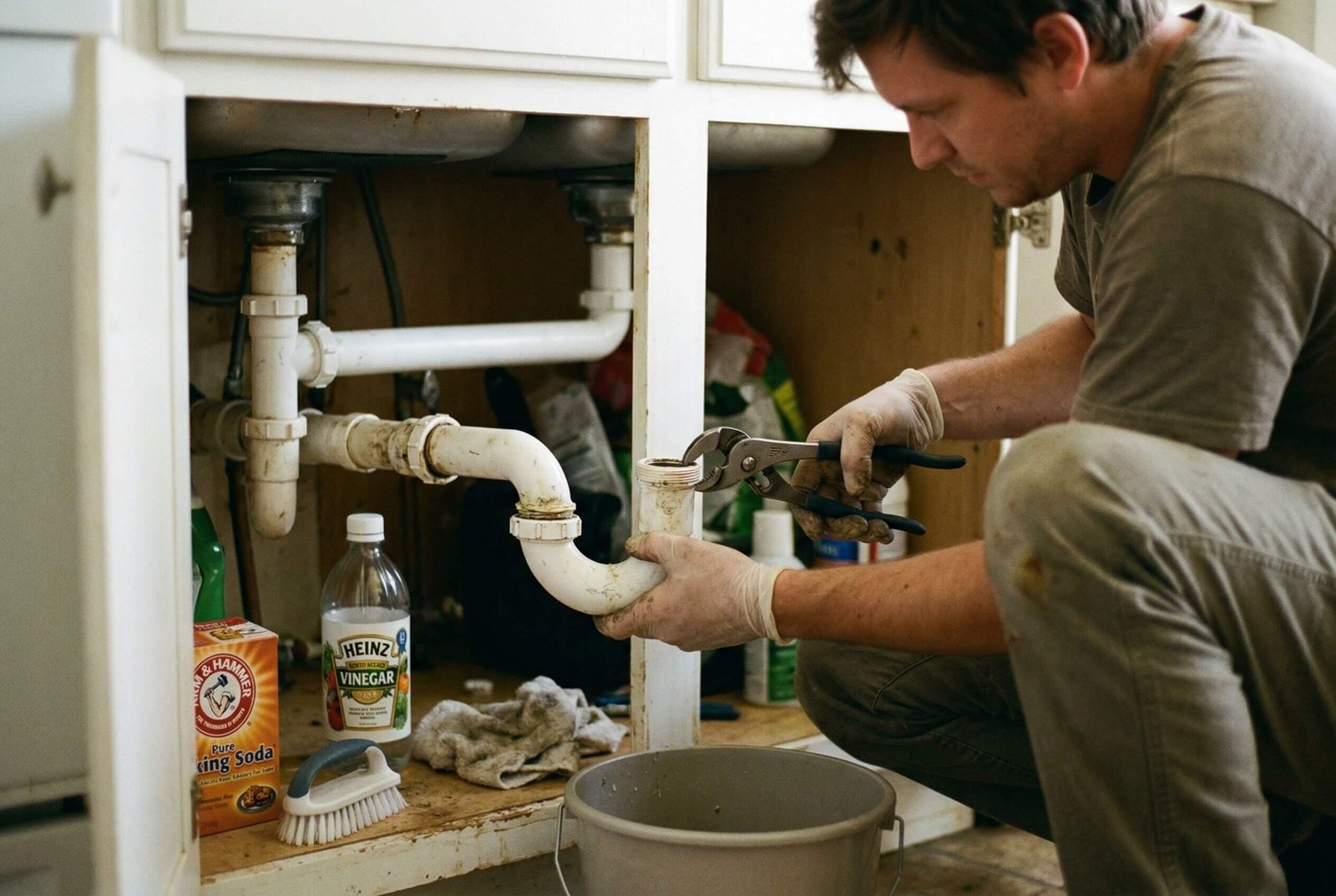
Cleaning the P-Trap
The P-trap is one of the most common places where odor-causing debris collects. It’s the curved pipe under your sink that holds water to block sewer gas—but it can also trap food particles, grease, and sludge.
Place a bucket underneath, then carefully remove the P-trap and clean out any buildup inside. Rinse it thoroughly before reinstalling.
This method is highly effective when:
- The smell is strongest near the sink
- Quick fixes didn’t work
- The drain hasn’t been cleaned in a long time
In many cases, cleaning the P-trap alone can completely eliminate a smelly drain.
These intermediate methods address the actual source of the odor, not just the symptoms. If the smell still persists after this stage, it usually indicates deeper buildup, bacterial growth, or a more serious plumbing issue that requires stronger solutions.
Advanced Fix Methods (Stronger Solutions)
If the smell is still present after intermediate fixes, the issue is likely deeper in the drain system or involves stubborn buildup that basic tools can’t fully remove. At this stage, you’re dealing with thick biofilm, grease layers, or deeper organic deposits inside the pipes.
These advanced methods are more powerful and should be used carefully. As a plumber, this is typically where we move when standard homeowner solutions aren’t enough—but before jumping into full professional service.
Enzyme-Based Drain Cleaners
Enzyme cleaners are one of the safest and most effective ways to treat persistent drain odors caused by organic material. Instead of using harsh chemicals, these products use natural bacteria and enzymes to break down grease, food particles, soap scum, and biofilm.
You pour the cleaner into the drain and let it sit for several hours (often overnight). During this time, it slowly digests the organic waste that’s causing the smell.
This method is ideal when:
- The smell keeps returning after cleaning
- The issue is caused by organic buildup
- You want a safe, pipe-friendly solution
Enzyme cleaners are commonly recommended by plumbers for long-term odor control and maintenance.
Chemical Drain Cleaners (Use With Caution)
Chemical cleaners are stronger and can break down tough buildup quickly, but they come with risks. These products generate heat and can damage older pipes, PVC, or connections if used incorrectly.
They should only be used when:
- Other methods have failed
- You suspect heavier buildup or partial blockage
- The pipes are in good condition
Important precautions:
- Avoid repeated use (can weaken pipes)
- Never mix with other cleaners
- Do not use if the drain is completely blocked
While effective in some cases, most plumbers use chemical cleaners as a last resort due to the potential for damage.
High-Pressure Flushing
High-pressure flushing uses strong water flow to clean the inside of your pipes and push out buildup. While not as powerful as professional hydro jetting, it can still help remove grease layers and loosen debris causing odor.
This can be done using:
- A hose attachment designed for drains
- Repeated hot water pressure cycles
It works best when:
- The odor is caused by buildup along pipe walls
- There is no solid blockage
- You want to clean beyond the P-trap
This method helps restore proper flow and remove odor-causing residue inside the pipe.
Deep Drain Snaking
If a standard hand auger didn’t fully solve the problem, a deeper or more aggressive snaking approach may be required. This involves feeding a longer or more robust auger further into the drain line to reach deeper buildup.
Deep snaking is effective for:
- Stubborn clogs located further down the pipe
- Thick organic sludge buildup
- Recurring odor issues linked to partial blockages
However, this requires more care. Pushing too hard or using the wrong tool can damage pipes, especially in older plumbing systems.
At this stage, if the smell still hasn’t been resolved, it’s often a sign that the issue goes beyond basic cleaning—possibly involving the main drain line, venting problems, or heavy internal buildup. That’s where professional plumbing methods become necessary.
Professional Drain Fix Methods
When a smelly drain doesn’t improve after advanced DIY methods, it’s usually a sign of deeper buildup, sewer line involvement, or structural plumbing issues. This is where professional plumbers step in with specialized tools and diagnostic techniques that go far beyond what’s available to homeowners.
In real U.S. residential plumbing, persistent drain odors are often caused by biofilm buildup deep in pipes, partial sewer line blockages, or venting problems—issues that require proper equipment and experience to fix safely and permanently.
Hydro Jetting
Hydro jetting is one of the most effective professional methods for completely eliminating drain odors. It uses high-pressure water (often up to 4,000 PSI) to clean the inside of pipes.
Unlike snaking, which only clears a path, hydro jetting scrubs the entire pipe wall, removing grease, sludge, soap scum, and bacteria buildup that cause odors.
This method is best when:
- The smell keeps returning after multiple cleanings
- There is heavy grease or sludge buildup
- Multiple drains are affected
Hydro jetting doesn’t just fix the smell—it restores the pipe close to its original condition. This is why plumbers often recommend it for long-term results.
Motorized Augers
Motorized augers (also called power snakes) are heavy-duty versions of hand augers. They are designed to break through tougher clogs located deeper in the plumbing system.
These machines use rotating cables with cutting heads that can:
- Break apart hardened buildup
- Cut through grease layers
- Remove compacted debris
Motorized augers are commonly used when:
- There is a stubborn blockage causing odor
- DIY snaking wasn’t effective
- The clog is located further down the drain line
This method clears the obstruction but may not fully clean pipe walls like hydro jetting.
Camera Inspection
One of the most important tools plumbers use is a drain inspection camera. This allows them to visually inspect the inside of your pipes and identify the exact cause of the smell.
A camera inspection can reveal:
- Thick biofilm buildup
- Hidden clogs
- Pipe damage or cracks
- Sewer gas entry points
- Improper pipe slope or venting issues
This step removes guesswork and ensures the correct fix is applied. It’s especially important for recurring or unexplained drain odors.
Pipe Repair or Replacement
In some cases, the smell isn’t caused by buildup at all—it’s due to a structural issue in the plumbing system.
This may include:
- Cracked or broken pipes
- Loose or leaking joints
- Improper venting
- Damaged sewer line connections
When this happens, cleaning alone won’t solve the problem. The affected section of pipe may need to be repaired or replaced to fully eliminate the odor.
Professional methods are designed to solve the root cause, not just mask the symptoms. While they come at a higher cost, they provide long-term reliability and prevent repeated issues.
Tools Used to Fix Smelly Drains
Fixing a smelly drain effectively often depends on using the right tools for the job. While some odors can be handled with simple household items, deeper or recurring issues require more specialized equipment. Professional plumbers rely on a combination of basic, intermediate, and advanced tools to locate and eliminate the exact source of the smell.
Understanding these tools helps you decide whether a DIY fix is realistic or if professional service is the better option.
Basic Tools
These are simple tools commonly found in most homes and are suitable for handling surface-level odor issues or minor buildup.
- Plunger
- Drain brush or cleaning tool
- Hot water (for flushing grease and residue)
These tools are best used when the smell is mild and caused by buildup near the drain opening. They’re safe, easy to use, and often the first step in any drain cleaning process.
Intermediate Tools
When the odor is coming from deeper inside the drain, intermediate tools provide more reach and effectiveness.
- Hand auger (drain snake)
- Wet/dry vacuum
- Bucket and wrench for P-trap removal
These tools allow you to physically remove debris from inside the pipe rather than just cleaning the surface. They’re commonly used for bathroom drains, utility sinks, and laundry drains where hair, lint, and sludge accumulate.
Professional Tools
For persistent odors or deeper plumbing issues, plumbers use advanced equipment designed to clean and inspect the entire drain system.
- Motorized auger (power snake)
- Hydro jetting machine
- Drain inspection camera
These tools are capable of:
- Reaching deep into the plumbing system
- Removing heavy buildup and blockages
- Identifying hidden issues like pipe damage or sewer gas leaks
Professional tools are essential when the problem goes beyond simple cleaning and requires a more thorough and permanent solution.
Choosing the right tool depends on how severe the smell is and where it’s coming from. Starting with basic tools and progressing as needed is the safest and most effective approach.
Cost to Fix a Smelly Drain in the U.S.
The cost to fix a smelly drain can vary widely depending on what’s causing the odor, how deep the issue is, and whether you handle it yourself or hire a plumber. In most U.S. homes, minor odor problems are inexpensive to fix, but deeper or recurring issues can require professional tools and higher costs.
Understanding the cost upfront helps you decide whether to continue with DIY methods or call a plumber before the problem worsens.
DIY Cost Range
If the smell is caused by surface buildup or light organic material, you can usually fix it at a very low cost using basic methods and tools.
Typical DIY expenses include:
- Hot water, dish soap, baking soda, vinegar
- Enzyme drain cleaners
- Basic tools like a plunger or hand auger
Estimated cost:
- $0 – $20 for simple cleaning methods
- $20 – $50 if buying tools or enzyme cleaners
DIY is ideal when the odor is mild, recent, and limited to a single drain.
Plumber Cost Range
If the smell persists or is caused by deeper buildup, professional service may be required. Plumbers charge based on the complexity of the job and the equipment needed.
Typical pricing in the U.S.:
- $100 – $300 → Basic drain cleaning or minor odor issue
- $300 – $600 → Deeper cleaning using augers or partial line clearing
- $500 – $1,000+ → Hydro jetting or more complex drain work
If a camera inspection is needed, it may cost an additional $100 – $300, depending on the service provider.
Factors Affecting Cost
Several factors influence how much you’ll pay to fix a smelly drain:
- Depth and severity of the clog or buildup
- Type of drain (kitchen, bathroom, sewer line, basement drain)
- Accessibility of the plumbing system
- Equipment required (basic tools vs hydro jetting)
- Age and condition of your pipes
More complex or hidden issues typically increase both labor time and equipment costs.
Emergency Plumbing Costs
If the smell is strong, sewage-related, or causing backups, you may need emergency service. This usually comes at a higher rate.
Emergency pricing considerations:
- After-hours or weekend service fees
- Urgent sewer line issues
- Immediate response requirements
Emergency services can increase costs by 25% to 100%, depending on timing and severity.
In many cases, starting with DIY methods can save money—but if the smell keeps returning or spreads to multiple drains, calling a plumber early can prevent more expensive repairs later.
When NOT to Fix It Yourself
While many smelly drain issues can be resolved with DIY methods, there are situations where trying to fix it yourself can actually make the problem worse. As a professional plumber, this is where experience matters—because certain warning signs indicate deeper issues that require proper tools, diagnosis, and safe handling.
If you ignore these signs or attempt aggressive fixes, you risk damaging pipes, spreading contamination, or turning a manageable issue into a costly repair.
Sewer Line Odors
If your drain smells like strong sewage—similar to rotten eggs or waste—it may indicate a problem in your main sewer line rather than a simple clog.
This could be caused by:
- Sewer gas escaping into the home
- A blockage in the main drain line
- A broken or leaking sewer pipe
DIY cleaning won’t fix this type of issue. In fact, using chemicals or pressure methods could push the problem further down the line or worsen pipe damage.
Multiple Drains Smelling
When more than one drain in your home starts to smell at the same time, it’s usually not a coincidence. This often points to a shared issue deeper in the plumbing system.
Common causes include:
- Main drain line blockage
- Venting problems in the plumbing system
- Sewer gas entering through multiple fixtures
This is a system-wide issue—not a single drain problem—and requires professional diagnosis.
Recurring Smell After Cleaning
If you’ve already cleaned the drain and the smell keeps coming back, it means the root cause hasn’t been fully addressed.
This could indicate:
- Thick biofilm buildup inside pipes
- Partial blockage further down the line
- Bacteria growth that basic cleaning can’t remove
Repeated DIY attempts may only provide temporary relief, while the underlying issue continues to worsen.
Risk of Pipe Damage
Using the wrong method or tool can damage your plumbing, especially in older homes or systems with PVC piping.
Be cautious if:
- You’re using chemical cleaners frequently
- You’re applying excessive force with a drain snake
- You’re unsure about the pipe condition
Damaged pipes can lead to leaks, structural issues, and much higher repair costs than the original odor problem.
Knowing when to stop and call a plumber is just as important as knowing how to fix the issue. It saves time, protects your plumbing system, and ensures the problem is handled correctly the first time.
How to Prevent Future Smelly Drains
Once you fix a smelly drain, the next step is making sure it doesn’t come back. In most U.S. homes, drain odors develop slowly due to everyday usage—grease, soap, hair, and organic residue building up over time. The good news is that with a few simple habits and routine maintenance, you can prevent most odor issues before they start.
As a plumber, prevention is always easier and far less expensive than repeated cleaning or repairs.
Proper Drain Usage Habits
What goes down your drain has a direct impact on whether odors develop. Many drain smells are caused by materials that shouldn’t be there in the first place.
Avoid putting the following into your drains:
- Grease, oil, and fatty food waste
- Coffee grounds and food scraps
- Hair and soap-heavy residue
- Lint from laundry drains
In kitchen sinks with garbage disposals, always run water while using the unit and avoid dumping large amounts of food waste at once. Proper usage reduces buildup that leads to odor-causing bacteria.
Regular Cleaning Routine
Routine cleaning helps prevent buildup before it turns into a smell problem. Even if your drain seems fine, light maintenance goes a long way.
A simple routine includes:
- Weekly hot water flush to clear grease and soap residue
- Monthly baking soda and vinegar treatment for odor control
- Occasional enzyme cleaner use for deeper maintenance
This keeps the inside of your pipes clean and reduces the chances of organic material accumulating.
Garbage Disposal Maintenance
Garbage disposals are a common source of kitchen drain odors because food particles can get trapped inside the unit and begin to decay.
To prevent this:
- Run cold water before and after using the disposal
- Clean the disposal regularly to remove trapped debris
- Avoid putting fibrous or greasy foods into the unit
If not maintained properly, the disposal can hold odor even if the drain itself is clear.
Keeping the P-Trap Functional
The P-trap plays a critical role in preventing sewer gas from entering your home. It holds a small amount of water that acts as a barrier.
Problems occur when:
- The trap dries out in unused drains
- Debris builds up inside the trap
To prevent this:
- Run water in rarely used drains (like basement or guest bathroom drains) at least once a week
- Clean the P-trap periodically if odors develop
A dry or dirty P-trap is one of the most overlooked causes of smelly drains.
Preventing drain odors is mostly about consistency. Small maintenance habits can eliminate the need for repeated fixes and keep your plumbing system running clean and odor-free.
Final Thoughts
A smelly drain is usually a warning sign—not just an inconvenience. In most homes, the issue starts small with organic buildup, grease, or trapped debris, but if ignored, it can develop into deeper blockages or even sewer-related problems. The key to fixing it effectively is taking the right approach from the beginning.
Start with simple, low-risk methods like hot water flushing and manual cleaning. If the smell persists, move into intermediate solutions that target buildup inside the pipes. For stronger or recurring odors, advanced methods or professional tools may be necessary to fully eliminate the source. Each step builds toward solving the root cause—not just masking the smell.
It’s also important to recognize when the problem is beyond DIY. Strong sewer odors, multiple affected drains, or recurring smells often point to deeper plumbing issues that require professional attention. Acting early in these cases can save you from more expensive repairs later.
By combining the right fix methods with good prevention habits, you can keep your drains clean, odor-free, and functioning properly long-term.