
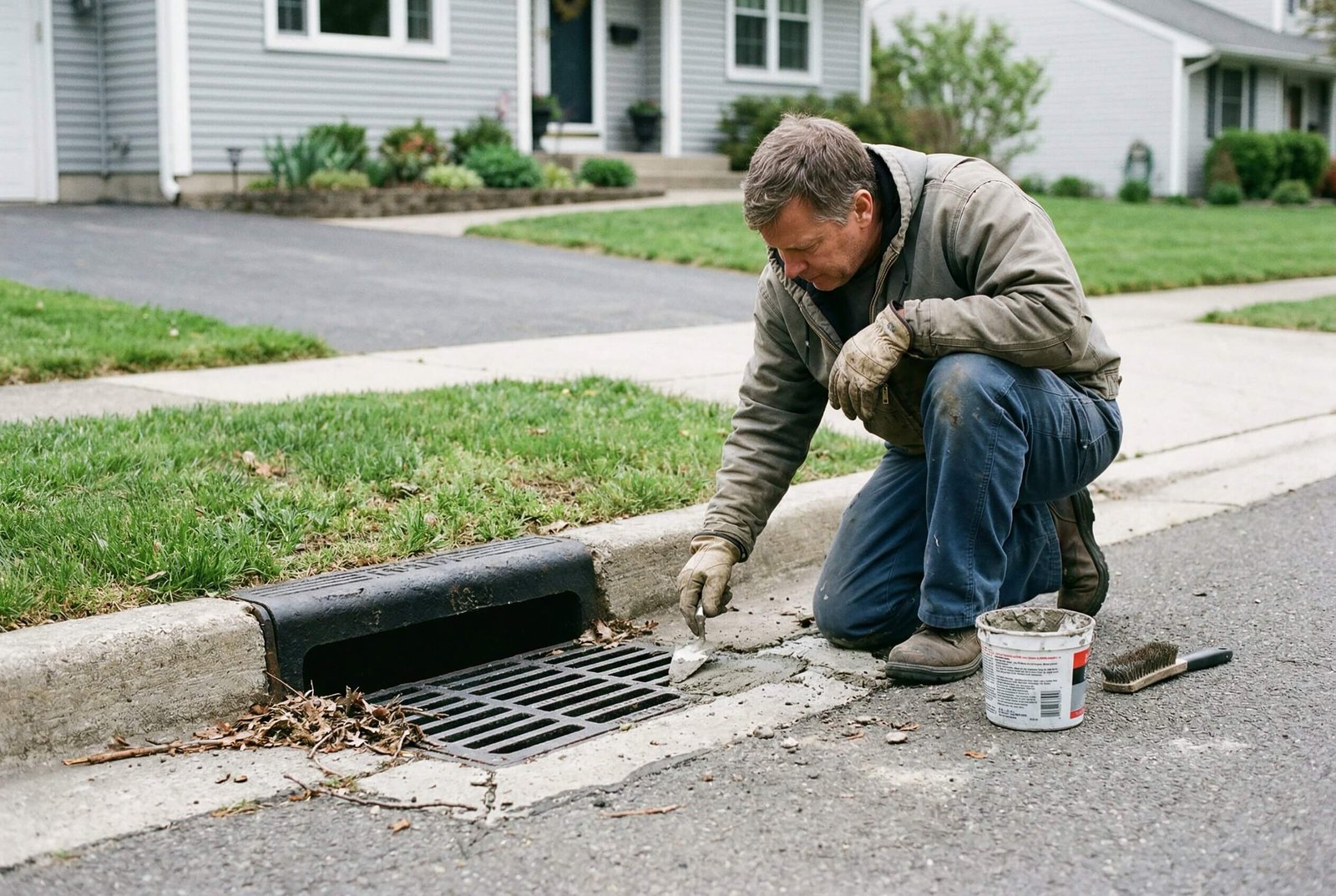
A storm drain near your house plays a critical role in protecting your property from water damage. These drains are designed to collect rainwater from your yard, driveway, roof runoff, and surrounding surfaces, then direct it safely away from your home. When they work properly, you rarely notice them. But when they clog or fail, water starts pooling exactly where you don’t want it—near your foundation, basement walls, or entry points.
In many U.S. homes, storm drains are connected to underground pipes, dry wells, or municipal stormwater systems. Over time, these drains collect leaves, dirt, roof debris, and sediment washed in during storms. This buildup can block the grate, fill the catch basin, or clog the pipe itself. In more serious cases, tree roots can invade the line, or the pipe can shift or collapse underground.
The risk of ignoring a clogged storm drain is much higher than with indoor drains. Water buildup near your home can lead to foundation cracks, basement leaks, soil erosion, and long-term structural damage. Even a partially blocked drain can cause overflow during heavy rain, putting your property at risk.
The good news is that many storm drain issues can be fixed with the right approach. Some clogs are simple and can be cleared with basic tools, while others require deeper cleaning or professional equipment. The key is to identify the problem early and use the correct method to fix it without causing further damage.
In this guide, you’ll learn how to fix a storm drain near your house step by step. We’ll walk through how to identify the type of problem, apply the right fix methods, and understand when DIY is enough versus when professional help is necessary.
What This Page Covers
ToggleIdentify the Type of Storm Drain Problem Before Fixing
Before you try to fix a storm drain near your house, you need to understand what kind of problem you’re dealing with. Storm drains can fail in multiple ways, and using the wrong fix method can either do nothing or make the issue worse—especially when the drain is located close to your foundation.
In most U.S. residential setups, storm drains include a surface grate, a catch basin (in many cases), and an underground pipe that carries water away. A blockage can occur at any of these points, so proper identification helps you choose the safest and most effective solution.
Surface Blockage vs Underground Pipe Clog
A surface blockage is the most common and easiest to fix. This happens when leaves, dirt, mulch, or debris collect around the grate or just below it. You’ll usually see visible buildup, and water won’t enter the drain properly.
An underground pipe clog is more serious. The drain opening may look clear, but water still pools or drains slowly. This means the blockage is further inside the pipe, often caused by compacted sediment, sludge, or root intrusion.
Quick way to identify:
- Debris visible at grate → surface blockage
- Clear grate but water not draining → deeper pipe clog
Water Pooling vs Slow Drainage
The way water behaves during or after rain gives you important clues.
Water pooling around the drain and not moving at all usually indicates a full blockage. This means the pipe is likely completely clogged or obstructed.
Slow drainage suggests a partial blockage. Water eventually drains, but not fast enough. This is often caused by buildup along the pipe walls or a narrowing inside the line.
What this means:
- Standing water → stronger fix methods needed
- Slow drainage → start with basic or intermediate solutions
Temporary Clog vs Recurring Issue
If your storm drain clogs after a heavy storm and then works fine after cleaning, it’s likely a temporary issue caused by debris overload.
But if the drain keeps clogging repeatedly, there’s usually an underlying problem that hasn’t been resolved.
Common causes of recurring storm drain problems:
- Tree roots entering the pipe
- Improper slope causing water stagnation
- Damaged or misaligned underground pipe
- Excessive debris from nearby trees or landscaping
Recurring clogs should not be treated as simple surface issues—they often require deeper cleaning or inspection.
Warning Signs of a Serious Drainage Problem
Some signs indicate that the problem goes beyond a basic clog and may affect your home’s structure.
Watch for these:
- Water collecting near your home’s foundation
- Basement dampness or water intrusion after rain
- Multiple drains or downspouts backing up
- Strong odors coming from the drain
- Sinkholes or soft ground near the drain line
These symptoms often point to deeper system issues such as pipe damage, major blockages, or drainage failure. In these cases, aggressive DIY fixes can make things worse, especially if the pipe is already compromised.
Understanding the exact type of storm drain problem allows you to apply the right fix method without risking damage to your drainage system or your home. It also helps you decide early whether the issue is manageable or requires professional help.
Quick Fixes You Can Try First (Low Risk)
If the storm drain near your house is clogged, the safest approach is to start with simple, low-risk fixes. In many U.S. homes, storm drain problems are caused by surface debris or light buildup that can be cleared without special tools. These methods are designed to restore flow without pushing the blockage deeper or damaging the pipe.
The goal here is to remove or loosen the clog gently before moving to stronger solutions.
Remove Leaves, Debris, and Sediment from the Grate
This is the most common cause of storm drain blockage. Leaves, dirt, roof runoff debris, and mulch collect around the grate and prevent water from entering.
Start by removing the grate if possible. Then clear out all visible material using gloves or a small scoop.
Focus on:
- Leaves and organic debris
- Mud and sediment buildup
- Roof runoff particles (shingle grit, dirt)
Make sure the opening is completely clear. Even a small layer of debris can restrict water flow during heavy rain.
Flush with a Garden Hose
Once the surface is clean, flushing the drain helps push out loose debris just inside the pipe.
Insert a garden hose into the drain and run water at steady pressure. Let it flow for a few minutes to move any remaining buildup.
Watch how the water behaves:
- Drains quickly → clog likely cleared
- Backs up → blockage is deeper
Avoid forcing the hose too far into the pipe if you feel resistance.
Hot Water + Detergent for Light Buildup
If the storm drain receives water from patios, driveways, or outdoor kitchens, there may be light grease or organic residue inside the pipe.
Pour a mixture of hot water and mild dish detergent into the drain. Follow it with more hot water to help break down buildup along the pipe walls.
This method works best for:
- Light organic residue
- Early-stage buildup
- Slightly slow drains
It won’t clear heavy clogs but can improve flow.
Basic Plunging for Shallow Clogs
A plunger can be effective if there’s standing water around the drain and the clog is just below the surface.
Place the plunger over the drain opening and create a tight seal. Use steady, controlled plunging to generate pressure and suction.
For best results:
- Ensure enough water to cover the plunger
- Use consistent strokes, not excessive force
- Check flow after a few attempts
This method can loosen shallow blockages without pushing them deeper into the system.
These quick fixes resolve a large percentage of storm drain clogs, especially those caused by recent debris buildup. If the drain still isn’t functioning properly after trying these methods, it’s a sign that the blockage is deeper or more compact.
Intermediate Fix Methods (More Effective)
If the basic methods didn’t fully fix the storm drain near your house, the blockage is likely deeper inside the system or more compacted. At this stage, you need methods that can either break apart the clog or physically remove it from the pipe. These approaches are still DIY-friendly but require a bit more effort and the right tools.
In most U.S. residential storm drainage setups, this is where many persistent clogs get resolved—especially those caused by sediment buildup, organic sludge, or debris that has moved beyond the surface.
Baking Soda and Vinegar Flush (Organic Buildup)
This method is useful when the clog is caused by organic material such as dirt, leaves, or sludge lining the pipe.
Pour baking soda into the drain, followed by vinegar. The chemical reaction creates bubbling action that helps loosen debris stuck along the pipe walls. Let it sit for about 15–20 minutes, then flush with hot water.
This method works best for:
- Light to moderate organic buildup
- Sludge forming inside the pipe
- Drains that are slow but not fully blocked
It won’t clear heavy obstructions but can improve flow and prepare the pipe for other methods.
Drain Snake or Hand Auger
A hand auger is one of the most effective tools for clearing a deeper clog without professional equipment.
Insert the snake into the storm drain and slowly feed it into the pipe. When you hit resistance, rotate the handle to break up or latch onto the clog. Then pull it back out to remove debris.
Key points:
- Move slowly to avoid damaging the pipe
- Expect mud, roots, or debris to come out
- Repeat the process to fully clear the blockage
This is ideal for:
- Deeper clogs
- Compacted debris
- Minor root intrusion
Wet/Dry Vacuum Extraction
A wet/dry vacuum can remove debris without pushing it further into the system.
Place the vacuum hose over the drain opening and create as tight a seal as possible. Turn it on to pull out water, mud, leaves, and loose material.
This works well for:
- Catch basins filled with debris
- Shallow to mid-level blockages
- Loose organic material
It’s especially useful for storm drains with a basin or pit that collects debris before the pipe.
Cleaning the Catch Basin and Drain Pit
Many storm drains near homes include a catch basin designed to trap debris before it enters the main pipe. If this basin fills up, it can completely block water flow.
Remove the grate and inspect the basin. Scoop out all debris, including mud, leaves, and sediment. Then rinse it with a hose to clear remaining residue.
Make sure:
- The basin is fully emptied
- The pipe opening inside the basin is clear
- Water flows freely after cleaning
At this stage, you’ve used more effective tools and methods to fix the storm drain. If water is still not draining properly, the clog is likely more severe—such as deep pipe blockage, heavy buildup, or structural issues.
Advanced Fix Methods (Stronger Solutions)
If intermediate methods didn’t fully fix the storm drain near your house, the blockage is likely deeper, denser, or more widespread inside the pipe. At this stage, you’re dealing with tougher conditions—compacted sediment, heavy organic sludge, or early root intrusion—and you’ll need stronger methods to restore proper flow.
These solutions are still possible for experienced DIY homeowners, but they must be used carefully, especially since storm drains are often located close to your home’s foundation. The goal is to break down or dislodge the clog without damaging the pipe or forcing debris further into the system.
Enzyme-Based Drain Cleaners (Safer for Organic Sludge)
Enzyme cleaners are designed to break down organic matter inside the drain using natural bacteria. They are a safer alternative to chemical cleaners and work well for gradual buildup.
Pour the cleaner into the storm drain and allow it to sit for several hours or overnight. Afterward, flush the system with water to move the loosened material through the pipe.
Best used for:
- Organic sludge buildup
- Dirt and decomposed debris
- Preventing future clogs after partial clearing
These are not instant fixes, but they are safe for pipes and effective over time.
Chemical Drain Cleaners (Use with Caution)
Chemical cleaners can dissolve tough clogs, but they come with risks—especially in outdoor drainage systems where pipe materials and conditions may vary.
Only use them if:
- Other methods have failed
- The clog is organic (not roots or solid debris)
- You follow safety instructions carefully
Important precautions:
- Do not use repeatedly, as it can weaken pipes
- Never mix different chemical products
- Wear gloves and eye protection
They can be effective for:
- Greasy or organic buildup
- Moderate clogs that haven’t hardened completely
They are not effective for root intrusion or structural problems.
High-Pressure Water Flushing (Basic Jetting)
Using higher water pressure can help break apart and flush out stubborn clogs inside the pipe.
You can use a strong garden hose or a jetting attachment designed for drains. Insert it into the pipe and apply steady pressure to dislodge debris.
Effective for:
- Compacted mud and sediment
- Sludge buildup along pipe walls
- Partial blockages deeper in the system
Be cautious with older pipes or systems near your foundation—too much pressure can cause damage.
Deep Drain Snaking (Extended Reach)
If a standard hand auger didn’t reach the clog, a longer or more flexible snake can go deeper into the storm drain line.
Feed the auger further into the pipe until you reach resistance. Use controlled rotation to break apart or hook the clog. Multiple passes may be required to fully clear the line.
This method is useful for:
- Deep clogs beyond surface reach
- Dense debris buildup
- Early-stage root intrusion
At this point, you’ve applied strong DIY methods to try to fix the storm drain. If the drain still isn’t functioning properly, the issue is likely beyond standard homeowner solutions. Deeper problems such as root intrusion, pipe damage, or major blockages require professional tools and inspection.
Professional Storm Drain Fix Methods
If advanced DIY methods haven’t fixed the storm drain near your house, the problem is likely deeper or more complex than a standard clog. In many U.S. homes, storm drains connect to long underground pipes, dry wells, or municipal systems. When these systems develop issues like root intrusion, heavy sediment buildup, or pipe damage, professional equipment is required to fix the problem safely and completely.
At this stage, the focus shifts from just clearing the clog to identifying and solving the root cause.
Hydro Jetting for Heavy Blockages
Hydro jetting is one of the most effective professional methods for clearing storm drain lines. It uses high-pressure water to break apart and flush out debris, sludge, grease, and sediment buildup inside the pipe.
Unlike basic flushing, hydro jetting cleans the entire pipe interior, not just a single section.
Best for:
- Thick sediment and sludge buildup
- Long sections of partially clogged pipe
- Recurring clogs that return after cleaning
This method restores full flow and helps prevent future blockages.
Motorized Auger for Root Intrusion
If tree roots have entered the storm drain pipe, plumbers use motorized augers equipped with cutting heads to remove them.
These machines can:
- Cut through roots inside the pipe
- Break apart dense, compact clogs
- Clear long sections of underground piping
This is a common solution for drains located near trees or landscaped areas. However, root removal is often temporary unless the pipe is repaired or treated to prevent regrowth.
Drain Camera Inspection for Accurate Diagnosis
When a clog is persistent or the cause is unclear, plumbers use a drain camera to inspect the inside of the pipe.
This allows them to identify:
- Root intrusion
- Pipe cracks or collapses
- Misaligned joints
- Heavy buildup or obstructions
A camera inspection is especially important for storm drains near your house, where hidden issues can affect your foundation and surrounding soil.
Pipe Repair or Replacement Near Foundation
If the storm drain pipe is damaged, cleaning alone won’t solve the problem. Cracked, collapsed, or misaligned pipes need to be repaired or replaced to restore proper drainage.
Common solutions include:
- Spot repairs for localized damage
- Pipe relining (in certain systems)
- Full pipe replacement for severe issues
When the drain is close to your foundation, timely repair is critical to prevent water damage and structural problems.
Professional methods are designed not just to fix the current clog, but to ensure the entire drainage system works properly long term. If your storm drain continues to fail despite repeated cleaning, investing in professional inspection and repair can prevent costly damage to your home.
Tools Used to Fix a Storm Drain Near Your House
Using the right tools is essential when you’re trying to fix a storm drain near your house. Storm drains are larger and often connected to underground systems, so the tools must match the type and depth of the clog. In real U.S. residential setups, plumbers always choose tools based on the blockage—not force a tool that isn’t suitable.
As a homeowner, you can handle many issues with basic and intermediate tools. But for deeper or recurring problems, professional equipment becomes necessary to avoid damaging the pipe or making the situation worse.
Basic Homeowner Tools
These tools are ideal for surface-level clogs and light debris buildup. They are easy to use and should be your starting point.
- Gloves, scoop, and bucket for removing leaves, dirt, and sediment
- Garden hose for flushing out loose debris
- Plunger for loosening shallow clogs near the drain opening
Best used for:
- Surface blockages
- Recently formed clogs
- Routine maintenance
These tools are low-risk and often solve simple drainage problems quickly.
Intermediate Tools
When the clog is deeper or more compact, intermediate tools allow you to reach inside the pipe and actively remove or break apart the blockage.
- Hand auger (drain snake) for pulling out debris or breaking clogs
- Wet/dry vacuum for extracting water, sludge, and loose material
Best used for:
- Moderate clogs inside the pipe
- Organic buildup and sediment
- Catch basin cleaning
These tools give you more control and are effective for most non-severe storm drain issues.
Professional Tools
For serious clogs or system-level problems, professional-grade equipment is required. These tools are designed for deep cleaning, cutting through roots, and inspecting the pipe condition.
- Power auger for cutting roots and clearing dense blockages
- Hydro jet for high-pressure cleaning of the entire pipe
- Inspection camera for identifying hidden issues
Best used for:
- Deep underground clogs
- Root intrusion
- Recurring drainage problems
- Structural pipe issues
Choosing the right tool helps you fix the storm drain efficiently while avoiding unnecessary damage. Using a tool that’s too weak won’t solve the problem, while using one that’s too aggressive can harm the pipe—especially near your home’s foundation.
Cost to Fix a Storm Drain Near Your House
The cost to fix a storm drain near your house in the U.S. depends on how severe the problem is and what method is required to resolve it. Some clogs can be cleared with simple tools at minimal cost, while deeper or structural issues can require professional equipment and higher investment.
Understanding the cost ranges helps you decide when to try DIY fixes and when it’s more practical to call a professional early—especially when your home’s foundation is at risk.
DIY Cost Range
If the clog is minor and you handle it yourself, the cost is usually low.
Typical DIY expenses include:
- Basic tools (gloves, scoop, plunger): $10–$40
- Garden hose (if needed): $20–$60
- Hand auger (drain snake): $25–$100
- Wet/dry vacuum (if not already owned): $80–$200
- Enzyme cleaners: $15–$40
- Chemical cleaners: $10–$30
Most homeowners can fix a storm drain clog for under $100 if the issue is simple to moderate.
Professional Cost Range (U.S.)
When the clog is deeper or requires specialized equipment, professional service becomes necessary.
Typical pricing:
- Basic drain cleaning: $100–$300
- Motorized auger service: $150–$400
- Hydro jetting: $300–$800
- Camera inspection: $150–$400 (sometimes included with service)
For most standard storm drain issues, homeowners spend between $150 and $600.
Factors Affecting Cost
Several factors influence the total cost:
- Depth of the clog: Deeper blockages require more time and equipment
- Location near foundation: Adds complexity and care during repair
- Pipe condition: Cracked or collapsed pipes increase costs
- Root intrusion: Requires specialized cutting tools and possible repeat service
- Accessibility: Hard-to-reach drains or buried systems take longer
These factors can significantly increase the final price if the issue is complex.
Emergency Cost Considerations
If the storm drain failure is causing flooding near your home or water intrusion into your basement, emergency service may be required.
Typical emergency costs include:
- After-hours service fee: $100–$300 extra
- Total emergency visit cost: $300–$1,000+ depending on severity
While emergency services are more expensive, they can prevent major structural damage and costly repairs.
The best approach is to start with low-cost DIY solutions and escalate only if needed. However, if you notice signs of deeper issues—especially near your foundation—it’s often more cost-effective to bring in a professional early rather than risk bigger damage.
When NOT to Fix It Yourself
While many storm drain clogs can be handled with DIY methods, there are situations where trying to fix the problem yourself can lead to serious damage—especially when the drain is located near your house. Storm drains play a direct role in protecting your foundation, and mistakes here can quickly turn into costly repairs.
Knowing when to stop and call a professional is critical.
Water Pooling Near Your Foundation
If water is collecting near your home instead of draining away, this is a major warning sign. Storm drains are designed to move water away from your foundation. When they fail, water can seep into the soil around your home and weaken the structure.
Avoid forcing water or tools into the drain in this situation. Aggressive DIY attempts can redirect water toward your home or worsen the blockage.
Basement Flooding Risk
If your basement shows signs of dampness, leaks, or water intrusion after rain, the storm drain system may not be functioning properly.
This indicates:
- Poor drainage flow
- Blocked or damaged underground pipes
- Water not being diverted correctly
This is not a surface-level issue and requires professional inspection.
Multiple Drains or Downspouts Backing Up
When more than one drain or downspout is backing up, the issue is likely in the main drainage line rather than a single drain.
Common causes include:
- Main line blockage
- Heavy sediment buildup
- Pipe collapse or misalignment
DIY methods are unlikely to fix this type of problem effectively.
Recurring or Worsening Clogs
If you’ve already cleared the drain and the clog keeps coming back, there is likely a deeper issue inside the system.
Recurring problems often indicate:
- Root intrusion
- Pipe damage
- Partial blockages further down the line
Continuing DIY fixes in this case can push debris deeper or delay proper repair.
Structural Pipe Damage Near the House
Storm drain pipes near your home can become damaged due to soil movement, age, or root pressure. Using excessive force, high-pressure water, or aggressive tools can make the damage worse.
Be cautious if:
- The drain area shows sinking or shifting soil
- You’re unsure of pipe condition
- The system is older or has never been inspected
In these situations, calling a professional plumber is the safest and most effective option. Proper diagnosis and repair can prevent long-term damage to your home and ensure the storm drain system functions correctly.
How to Prevent Storm Drain Problems Near Your House
Preventing storm drain issues is far easier—and cheaper—than fixing them after water starts pooling near your home. In most U.S. residential setups, storm drain problems develop gradually due to debris buildup, poor maintenance, or landscaping factors. With a few consistent habits, you can keep your system working properly and avoid costly repairs.
The goal is to reduce how much debris enters the drain and ensure water flows freely away from your house.
Regular Debris Removal
Storm drains collect everything that rainwater carries—leaves, dirt, roof debris, and sediment. If this material isn’t cleared regularly, it builds up and eventually blocks the system.
Make it a routine to:
- Remove leaves and debris from the grate weekly
- Check drains after storms or heavy rain
- Clear nearby areas where debris tends to accumulate
Consistent cleaning prevents most surface-level clogs before they form.
Gutter and Downspout Maintenance
Storm drains near your house often receive water from gutters and downspouts. If these systems are clogged, they send excess debris directly into the drain.
Keep your system clean by:
- Cleaning gutters regularly
- Installing gutter guards
- Ensuring downspouts are properly aligned and not dumping debris
A clean gutter system reduces the load on your storm drain significantly.
Installing Drain Guards and Covers
Drain guards act as a filter to stop large debris from entering the pipe.
Consider:
- Grates with smaller openings
- Leaf guards for yard and driveway drains
- Catch basin filters for systems with basins
These simple upgrades reduce maintenance and protect the pipe from buildup.
Proper Yard Grading and Slope
Water should naturally flow away from your house and toward the storm drain. If your yard is improperly graded, water may pool near your foundation instead of reaching the drain.
Ensure:
- The ground slopes away from your home
- There are no low spots near the foundation
- Water is directed efficiently toward the drain
Proper grading reduces pressure on your drainage system.
Managing Trees and Landscaping
Trees and plants near storm drain lines can cause long-term problems. Roots grow toward moisture and can enter pipes, leading to serious blockages.
To reduce risk:
- Avoid planting trees close to drain lines
- Trim roots and vegetation regularly
- Be mindful of mulch and soil washing into drains
Root intrusion is one of the most expensive issues to fix, so prevention is critical.
Final Thoughts
Fixing a storm drain near your house is not just about clearing a blockage—it’s about protecting your home from serious water damage. Storm drains are your first line of defense against rainwater buildup, and when they fail, the consequences can quickly escalate into foundation issues, basement leaks, and long-term structural problems.
The right approach is always step-by-step. Start with simple, low-risk fixes like removing debris and flushing the system. In many cases, these basic methods are enough to restore proper drainage. If the problem persists, move to more effective tools and techniques like snaking or deeper cleaning. And when the issue goes beyond a standard clog—such as root intrusion or pipe damage—professional solutions become necessary.
One of the most important decisions is knowing when to stop DIY efforts. Forcing a fix on a serious problem can lead to pipe damage or worsen water flow around your foundation. Recognizing warning signs early and acting accordingly can save you from much larger repair costs.
Long-term, prevention is what keeps your system working. Regular cleaning, proper gutter maintenance, and smart landscaping all play a role in keeping your storm drain clear. A well-maintained system not only prevents clogs but also ensures your home stays protected during heavy rain.
If you approach the problem with the right mindset—start simple, escalate when needed, and prioritize prevention—you can effectively manage storm drain issues and avoid costly damage in the future.