
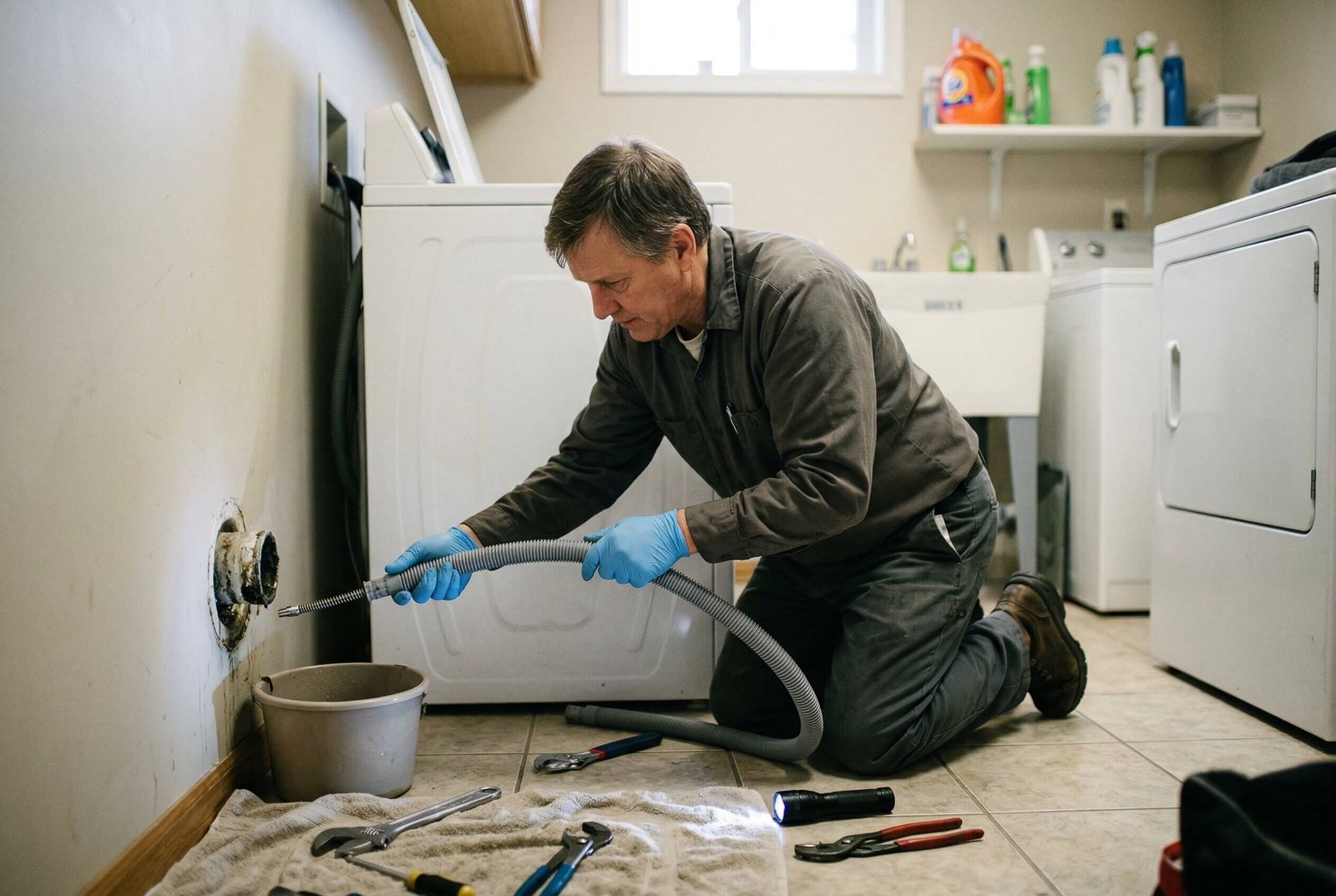
A clogged washing machine drain is a common issue in U.S. homes, and it usually shows up at the worst possible time—right in the middle of a wash cycle. You may notice water backing up out of the standpipe, slow drainage, or even overflow onto the laundry room floor. In most cases, this problem develops gradually due to buildup rather than a sudden failure.
Washing machine drains handle a unique type of waste compared to other fixtures. Every load pushes lint, detergent residue, dirt, and fabric fibers into the drain system. Over time, this material sticks to the inside of the pipes, especially in the standpipe and nearby drain lines. As the buildup thickens, it restricts water flow and eventually leads to a clog.
The challenge with laundry drains is that the blockage isn’t always visible. Sometimes it’s near the top of the pipe and easy to remove, but in many cases, it forms deeper in the line. That’s why it’s important to approach the problem methodically—starting with simple, low-risk fixes before moving to more advanced solutions.
The good news is that many homeowners can fix a clogged washing machine drain using safe DIY methods. However, some situations—like recurring backups or multiple drains being affected—can indicate a larger plumbing issue that requires professional attention.
In this guide, you’ll learn how to fix a clogged washing machine drain step by step. We’ll cover everything from quick fixes to advanced methods, including the tools plumbers use and what you can expect in terms of cost. Most importantly, you’ll understand how to choose the right approach without causing damage to your plumbing system.
What This Page Covers
ToggleIdentify the Type of Clog Before Fixing
Before you start trying different methods to fix a clogged washing machine drain, it’s important to understand what kind of clog you’re dealing with. This step is often skipped by homeowners, but it’s exactly what professional plumbers focus on first. The wrong approach can waste time—or worse, push the blockage deeper into the pipe.
A proper diagnosis helps you choose the right fix method, avoid unnecessary tools, and prevent damage to your drain system.
Surface vs Deep Drain Clog
The first thing to determine is where the clog is located.
A surface-level clog is usually found near the top of the standpipe (the vertical pipe where the washing machine drains). This type of blockage is often caused by visible lint, fabric debris, or sludge buildup right at the opening. You may even be able to see or reach it.
A deep clog, on the other hand, is located further inside the drain line—either in the horizontal pipe behind the wall or deeper in the system. These clogs are typically caused by compacted lint, hardened detergent residue, or accumulated debris over time.
You can often tell the difference by how the drain behaves:
- Water backs up immediately → likely a surface clog
- Water drains slowly, then backs up → likely a deeper clog
- Drain works for small loads but overflows on heavy cycles → partial blockage deeper in the line
Temporary vs Recurring Drain Problem
Next, determine whether this is a one-time issue or an ongoing problem.
A temporary clog usually happens due to a sudden buildup—like washing heavily soiled clothes, excess lint, or too much detergent. Once cleared, the drain returns to normal and stays that way.
A recurring clog is a warning sign of a bigger issue. If your washing machine drain backs up every few weeks or months, it usually means there is buildup inside the pipe that hasn’t been fully removed. In some cases, it can also indicate improper drain slope, partial blockages further down the system, or early signs of a main line issue.
Recurring problems require a more thorough cleaning method, not just a quick fix.
Warning Signs of Serious Drain Issues
Some symptoms indicate that the problem goes beyond a simple washing machine drain clog. In these cases, DIY methods may not be enough.
Watch for these warning signs:
- Water backing up into other fixtures (like sinks or tubs)
- Gurgling sounds coming from nearby drains
- Strong sewage odors in the laundry area
- Multiple drains in the home draining slowly
- Water coming up from a floor drain when the washer runs
These are often signs of a blockage in the main drain line rather than just the washing machine pipe. Attempting basic fixes in these situations may not solve the problem and can delay necessary repairs.
Once you’ve identified the type of clog, you can move forward with the right fix method—starting with the safest and simplest options first.
Quick Fixes You Can Try First (Low Risk)
Once you’ve identified the type of clog, the safest approach is to start with simple, low-risk methods. These are the same initial steps many plumbers use before moving to tools or more aggressive techniques. In many cases, especially with partial or surface-level clogs, these quick fixes are enough to restore proper drainage.
The goal here is to loosen or remove buildup without pushing it deeper into the pipe or damaging your plumbing.
Hot Water Flush Method
Hot water is one of the easiest and most effective ways to break down detergent residue and light lint buildup inside a washing machine drain.
Over time, soap and fabric softener can create a sticky layer inside the pipe that traps lint and debris. Hot water helps soften and loosen this material so it can flow through the system more easily.
How to do it:
- Boil a large pot of water (or use very hot tap water if available).
- Carefully pour the water directly into the standpipe.
- Do this in stages rather than all at once to allow it to work through the buildup.
- Wait a few minutes, then run a short rinse cycle to test drainage.
This method works best for slow-draining pipes rather than fully blocked ones. It’s also a good first step before trying other methods.
Dish Soap Breakdown Technique
If the clog includes greasy residue or thick detergent buildup, dish soap can help break it down.
Dish soap acts as a lubricant and helps loosen sticky materials that trap lint inside the pipe. This method is especially useful if you use heavy detergent or fabric softener regularly.
Steps to follow:
- Pour a generous amount of liquid dish soap into the standpipe.
- Follow it with hot water to push it through the pipe.
- Let it sit for 10–15 minutes.
- Flush again with hot water or run the washer briefly.
This method works well when combined with the hot water flush for better results.
Manual Lint and Debris Removal
In many laundry drain clogs, the blockage is right at the top of the standpipe and can be removed manually.
Lint, small fabric pieces, and sludge can collect near the opening and restrict water flow. Removing this buildup early can prevent deeper clogs.
What to do:
- Look inside the standpipe using a flashlight
- Use gloves to pull out visible lint or debris
- Use a simple grab tool or bent wire if needed
Be careful not to push debris further down the pipe while doing this.
Using a Plunger on Laundry Drain
A plunger can be surprisingly effective for washing machine drain clogs when used correctly.
The idea is to create pressure that loosens the blockage and allows it to move through the pipe. However, the technique is slightly different compared to sinks or toilets because of the standpipe design.
How to use it properly:
- Choose a standard cup plunger (not a toilet flange plunger).
- Place it over the standpipe opening to create a seal.
- Add a small amount of water if needed to improve suction.
- Push and pull firmly several times to create pressure.
- Remove and check if the water drains properly.
You may need to repeat this process a few times. If the clog is not too deep, this method can clear it quickly.
These quick fixes are ideal for early-stage or mild clogs and should always be your starting point. If the drain is still slow or backing up after trying these methods, it’s time to move on to more effective intermediate solutions.
Intermediate Fix Methods (More Effective)
If the quick fixes didn’t fully clear the clog, it usually means the blockage is deeper in the drain line or more compacted. At this stage, you need methods that can physically break up or extract the debris rather than just loosening it.
These intermediate techniques are still safe for homeowners but are more effective because they target buildup further inside the pipe.
Baking Soda and Vinegar Flush
This method creates a mild chemical reaction that helps loosen buildup inside the drain. It’s especially useful for breaking down soap residue and light organic material stuck to the pipe walls.
While it’s not strong enough for heavy blockages, it can improve flow when combined with other methods.
Steps to follow:
- Pour about 1 cup of baking soda into the standpipe.
- Slowly add 1–2 cups of white vinegar.
- Allow the mixture to fizz and react for 15–30 minutes.
- Flush with hot water to wash away loosened debris.
This method works best as a follow-up after hot water or before using a drain snake.
Using a Drain Snake or Hand Auger
A hand auger (also called a drain snake) is one of the most effective tools for clearing washing machine drain clogs. This is the point where you start physically reaching into the pipe to break up or pull out the blockage.
Most laundry drain clogs—especially lint buildup—respond very well to snaking.
How it works:
- Insert the auger cable slowly into the standpipe.
- Feed it down until you feel resistance.
- Rotate the handle to break through or hook the clog.
- Pull the cable back carefully to remove debris.
- Repeat if necessary until the pipe feels clear.
Important tips:
- Don’t force the cable—this can damage pipes
- Rotate steadily rather than pushing aggressively
- Clean the cable after each pass
This method is ideal for deep clogs that plunging cannot reach.
Wet/Dry Vacuum Extraction Method
A wet/dry vacuum can be used to pull clogs out instead of pushing them further down. This method is especially effective for loose lint and debris near the top or mid-section of the pipe.
It’s a less commonly used method by homeowners but very effective when done correctly.
Steps to follow:
- Set the vacuum to wet mode.
- Create a tight seal around the standpipe opening (use a towel if needed).
- Turn on the vacuum and let it run for a few minutes.
- Check the vacuum container for debris.
This method works best for partial clogs and can be combined with other techniques like snaking.
Cleaning the Drain Trap or P-Trap
In some laundry setups, especially where the washing machine drains into a utility sink, the clog may be located in the P-trap rather than the main pipe.
The P-trap is designed to catch debris, which makes it a common clog point.
What to do:
- Place a bucket under the trap
- Carefully loosen the fittings
- Remove and clean out any debris inside
- Reassemble and test drainage
Common materials found in traps:
- Lint buildup
- Sludge from detergent
- Small debris or particles
Cleaning the trap can immediately restore flow if the blockage is localized there.
At this stage, most typical washing machine drain clogs can be cleared. However, if the drain is still slow or backing up, the problem is likely more severe or deeper in the system.
Advanced Fix Methods (Stronger Solutions)
If intermediate methods didn’t solve the problem, the clog is likely more compacted, deeper in the line, or built up along a longer section of pipe. At this stage, stronger solutions are needed to break down or force out the blockage.
These methods are still possible for homeowners in some cases, but they require more caution. Using the wrong approach here can damage pipes or make the clog worse, so it’s important to proceed carefully.
Enzyme-Based Drain Cleaners
Enzyme cleaners are a safer alternative to chemical drain cleaners. Instead of using harsh chemicals, they use natural bacteria and enzymes to break down organic material like lint, soap residue, and fabric fibers.
They don’t work instantly but are effective over time for buildup-related clogs.
When to use:
- Recurring slow drains
- Organic buildup (lint, soap, residue)
- Preventive maintenance after clearing a clog
How to use:
- Pour the recommended amount into the standpipe.
- Let it sit for several hours (often overnight).
- Flush with warm water the next day.
These are best used after partial clearing to clean the pipe walls rather than remove a solid blockage.
Chemical Drain Cleaners (With Risks)
Chemical cleaners are designed to dissolve tough clogs quickly, but they come with risks—especially in washing machine drains.
They can break down grease and organic material, but they may also damage certain types of pipes, especially older PVC or metal plumbing.
Use only if:
- Other methods have failed
- The clog is likely organic (not solid debris)
- You follow instructions exactly
Risks to consider:
- Pipe corrosion over time
- Heat buildup inside pipes
- Harmful fumes in enclosed spaces
- Ineffective against lint-heavy clogs
Because washing machine clogs are often made of lint and fibers, chemical cleaners are not always the best solution and should be used cautiously.
High-Pressure Water Flushing
High-pressure flushing uses strong water force to push out stubborn buildup inside the pipe. This can be done using specialized hose attachments or pressure devices.
This method works well for clearing long sections of pipe where residue has built up along the walls.
Key points:
- More effective than standard flushing
- Can clear semi-solid buildup
- Requires controlled pressure to avoid damage
If too much pressure is used, it can loosen pipe joints or cause leaks, so it must be handled carefully.
Deep Drain Snaking Techniques
If a standard hand auger didn’t fully clear the clog, deeper snaking may be required. This involves feeding a longer cable further into the drain system to reach blockages beyond the immediate laundry area.
At this level, the clog may be:
- Several feet down the pipe
- Located in a horizontal drain line
- More compacted and harder to break apart
What to keep in mind:
- Longer cables provide better reach
- Resistance usually indicates the clog location
- Multiple passes may be required to fully clear the line
If the clog keeps returning even after deep snaking, it may indicate a larger issue in the main drain line.
Advanced methods can resolve most stubborn washing machine drain clogs, but they also come with higher risk. If you’re unsure or the problem persists after trying these techniques, it’s time to consider professional solutions.
Professional Drain Fix Methods
When a washing machine drain clog doesn’t respond to DIY or advanced methods, professional intervention becomes necessary. At this stage, the issue is usually deeper in the system, more compacted, or related to a larger drainage problem affecting multiple parts of the home.
Licensed plumbers use specialized equipment and diagnostic tools that go far beyond what’s available to homeowners. More importantly, they focus on identifying the exact cause of the clog—not just clearing it temporarily—so the problem doesn’t come back.
Hydro Jetting for Laundry Drains
Hydro jetting is one of the most powerful and effective ways to completely clear a clogged washing machine drain. It uses high-pressure water (often 1,500–4,000 PSI) to clean the inside of pipes.
Instead of just punching a hole through the clog, hydro jetting removes:
- Lint buildup stuck to pipe walls
- Detergent and soap residue layers
- Grease or sludge accumulation
- Minor root intrusion (in some cases)
This method essentially restores the pipe to near-original condition.
When plumbers use it:
- Recurring clogs that keep coming back
- Heavy buildup throughout the pipe
- Slow drainage across multiple fixtures
Hydro jetting is highly effective but must be done carefully to avoid damaging older or weakened pipes.
Motorized Auger Clearing
A motorized auger (also called a power snake) is a stronger, more advanced version of a hand auger. It uses a rotating cable powered by a machine to break through tough or compacted clogs.
This tool is commonly used when:
- The clog is too hard for manual snaking
- The blockage is deep in the drain line
- There’s a dense lint or debris mass
Advantages:
- Strong cutting and breaking power
- Reaches deeper into the system
- Effective for stubborn obstructions
Unlike DIY tools, professional augers can handle larger pipes and more severe blockages without excessive strain.
Camera Inspection for Drain Diagnosis
One of the biggest advantages of hiring a plumber is the ability to inspect the inside of your drain using a specialized camera.
A small waterproof camera is inserted into the pipe, allowing the plumber to see:
- Exact location of the clog
- Type of blockage (lint, sludge, roots, etc.)
- Pipe condition (cracks, corrosion, misalignment)
This eliminates guesswork and ensures the right fix is applied.
When this is used:
- Recurring or unexplained clogs
- Suspected damage inside the pipe
- Before major cleaning or repair work
Camera inspections are especially valuable when the issue might extend beyond the laundry drain into the main sewer line.
Pipe Repair or Replacement
In some cases, the clog is not the main issue—the pipe itself is the problem.
Common structural issues include:
- Cracked or collapsed pipes
- Poor installation or incorrect slope
- Severe corrosion in older plumbing systems
- Tree root intrusion (in outdoor or main lines)
If these problems are present, simply clearing the clog won’t solve the issue permanently.
Professional solutions may include:
- Sectional pipe replacement
- Pipe relining (in some systems)
- Correcting slope or alignment issues
This is typically the most advanced and costly solution but is necessary for long-term reliability.
Professional methods are designed not just to fix the immediate problem, but to prevent it from happening again. If your washing machine drain has repeated issues or shows signs of deeper blockage, calling a plumber early can save time, money, and potential damage.
Tools Used to Fix Washing Machine Drain Clogs
Fixing a clogged washing machine drain becomes much easier when you use the right tools. Professional plumbers rely on specific equipment depending on the severity and location of the clog, but many of these tools are also available to homeowners.
Understanding what each tool does helps you choose the correct method instead of guessing—and prevents you from making the clog worse.
Plunger
A plunger is often the first tool used for clearing a washing machine drain clog. It works by creating pressure that loosens the blockage and helps move it through the pipe.
For laundry drains, a standard cup plunger works best because it can create a seal over the standpipe opening.
Best used for:
- Surface-level clogs
- Partial blockages
- Early-stage drainage issues
Limitations:
- Not effective for deep clogs
- Requires proper sealing to work
Hand Auger (Manual Snake)
A hand auger is one of the most effective tools for clearing deeper washing machine drain clogs. It uses a flexible cable that you feed into the pipe to break apart or pull out debris.
This is the go-to tool for most homeowners dealing with stubborn clogs.
Best used for:
- Lint buildup deep in the pipe
- Compact clogs that plunging can’t fix
- Reaching beyond the standpipe
Key advantages:
- Affordable and widely available
- Provides direct contact with the clog
- Effective for most residential drain issues
Power Auger
A power auger is a motorized version of the hand auger and is typically used by professionals. It has much more force and can break through tough or dense blockages.
Best used for:
- Severe or compacted clogs
- Long or deep drain lines
- Situations where manual snaking fails
Important note:
This tool requires experience. Improper use can damage pipes, especially in older plumbing systems.
Wet/Dry Vacuum
A wet/dry vacuum can be used to pull debris out of the drain rather than pushing it deeper. It’s especially useful for removing loose lint and sludge from the standpipe.
Best used for:
- Loose or partially blocked clogs
- Early-stage buildup
- Situations where debris can be extracted
Advantages:
- Non-invasive method
- Reduces risk of pushing clog further down
Hydro Jet Equipment
Hydro jetting equipment is used by professionals to clean the entire pipe using high-pressure water. It doesn’t just remove the clog—it clears buildup along the pipe walls.
Best used for:
- Recurring clogs
- Heavy buildup inside pipes
- Full pipe cleaning
This is one of the most effective tools available but is not typically used by homeowners due to cost and complexity.
Inspection Camera
An inspection camera allows plumbers to see inside the drain and identify the exact cause of the problem. It removes guesswork and ensures the correct solution is applied.
Used for:
- Diagnosing recurring clogs
- Identifying pipe damage
- Locating deep blockages
This tool is especially important when the issue is not obvious or keeps returning.
Using the right tool at the right time is what separates a quick fix from a long-term solution. Most washing machine drain clogs can be handled with basic tools, but more serious issues require professional equipment.
Cost to Fix a Washing Machine Drain Clog
Understanding the cost to fix a clogged washing machine drain helps you decide whether to handle the problem yourself or call a plumber. In the U.S., costs can vary widely depending on how severe the clog is, how deep it is in the system, and what method is required to fix it.
In many cases, simple clogs can be resolved with low-cost DIY methods, while more complex issues—especially those involving the main drain line—can become significantly more expensive.
DIY Cost Range
If you’re fixing the problem yourself, the cost is usually minimal and mostly involves tools or basic cleaning materials.
Typical DIY costs:
- Plunger: $10 – $25
- Hand auger (drain snake): $25 – $80
- Enzyme cleaner: $10 – $30
- Baking soda and vinegar: $5 – $15
- Wet/dry vacuum (if not already owned): $50 – $150
Most homeowners can fix a clogged washing machine drain for under $100 if they already have basic tools. Even purchasing a hand auger is usually cheaper than calling a plumber for a simple clog.
Plumber Cost in the U.S.
If DIY methods don’t work, hiring a professional is the next step. Plumbers typically charge based on the type of service, the time required, and the equipment used.
Typical plumber pricing:
- Basic drain cleaning: $100 – $250
- Snaking a laundry drain: $150 – $350
- Hydro jetting service: $300 – $600
- Camera inspection: $150 – $400
Emergency service pricing:
- After-hours or weekend calls can increase costs to $300 – $800+ depending on urgency
Prices can vary by location, but these ranges are common across most U.S. residential plumbing services.
Factors That Affect Cost
Not all clogs cost the same to fix. Several factors influence how much you’ll end up paying.
Key cost factors:
- Depth of the clog (surface vs deep in line)
- Severity and type of blockage (lint vs compacted debris)
- Accessibility of the drain system
- Type of equipment required
- Condition of the pipes (older pipes may need extra care)
- Whether additional diagnostics (like camera inspection) are needed
A simple clog near the standpipe is much cheaper to fix than a blockage in the main drain line.
When Costs Increase Significantly
Costs can rise quickly if the issue goes beyond a standard clog.
You may face higher expenses if:
- The clog is in the main sewer line
- There is pipe damage or collapse
- Tree roots have entered the drain system
- Repeated clogs require full pipe cleaning (hydro jetting)
- Repairs or pipe replacement are needed
In these cases, costs can range from several hundred to several thousand dollars depending on the extent of the problem.
Knowing these cost ranges helps you make a smarter decision—whether to attempt another fix yourself or bring in a professional before the issue gets worse.
When NOT to Fix It Yourself
While many washing machine drain clogs can be fixed with DIY methods, there are situations where trying to fix it yourself can make the problem worse. Professional plumbers don’t just bring better tools—they bring experience in diagnosing deeper issues that aren’t obvious from the surface.
If you notice certain warning signs, it’s better to stop DIY attempts and call a professional before causing further damage to your plumbing system.
Signs of Sewer Line Blockage
If the clog is not limited to your washing machine drain, the issue may be in the main sewer line. This is a serious problem that cannot be resolved with basic tools like plungers or hand augers.
Common signs include:
- Water backing up from multiple drains
- Sewage smell coming from drains
- Water rising in a floor drain when the washer runs
- Slow drainage across sinks, tubs, and toilets
These symptoms indicate that the blockage is deeper in the system, and DIY fixes will only provide temporary relief or no improvement at all.
Multiple Drain Backups in the Home
When more than one fixture is affected, the problem is no longer isolated to the washing machine drain.
For example:
- The washing machine backs up and the bathroom sink drains slowly
- The laundry drain overflows and the bathtub gurgles
- Water appears in unexpected places when running appliances
This type of behavior usually points to a shared drain line issue. Attempting to fix just the washing machine drain will not solve the root problem.
Recurring Laundry Drain Clogs
If your washing machine drain keeps clogging every few weeks or months, it’s a sign that the blockage is not being fully cleared.
Recurring clogs often mean:
- Buildup along the entire pipe
- Partial blockage deeper in the line
- Improper pipe slope or installation issue
Repeated DIY attempts may temporarily restore flow, but the problem will keep coming back until the underlying cause is addressed properly.
Risk of Pipe Damage or Overflow
Some DIY methods—especially advanced ones—can cause damage if used incorrectly.
Risks include:
- Forcing a drain snake too aggressively and damaging pipes
- Using harsh chemical cleaners that weaken pipe material
- Applying excessive pressure during flushing
- Causing water to overflow and damage flooring or walls
If you’re unsure about the condition of your pipes or the severity of the clog, it’s safer to stop and get professional help.
Knowing when not to fix the problem yourself is just as important as knowing how to fix it. Acting early in these situations can prevent costly repairs and protect your home from water damage.
How to Prevent Future Washing Machine Drain Clogs
Once you’ve cleared a clogged washing machine drain, the next step is making sure it doesn’t happen again. Most laundry drain clogs develop slowly over time due to repeated buildup, so a few simple habits can significantly reduce the risk of future blockages.
Professional plumbers often emphasize prevention because it’s far easier—and cheaper—than dealing with recurring clogs or emergency overflows.
Proper Lint Management
Lint is the number one cause of washing machine drain clogs. Even though modern machines have filters, a large amount of lint still makes its way into the drain system.
To reduce buildup:
- Use an external lint trap on the discharge hose
- Clean the washing machine’s internal lint filter regularly
- Avoid washing heavily lint-producing items (like rugs or blankets) without proper filtration
Installing a simple lint trap is one of the most effective ways to prevent clogs before they even start forming.
Avoiding Excess Detergent Use
Using too much detergent is a common mistake that contributes to drain blockages. Excess soap doesn’t fully dissolve and leaves behind residue that sticks to pipe walls, trapping lint and debris.
Best practices:
- Follow manufacturer-recommended detergent amounts
- Use high-efficiency (HE) detergent if your machine requires it
- Avoid frequent use of fabric softeners that leave residue
Less detergent often results in cleaner pipes and better drainage over time.
Regular Drain Maintenance Habits
Routine maintenance can prevent buildup from turning into a full clog. A simple monthly cleaning routine can keep your drain flowing properly.
Recommended maintenance:
- Flush the drain with hot water once a month
- Use an enzyme cleaner periodically to break down residue
- Inspect the standpipe opening for visible lint buildup
These small steps help remove early-stage buildup before it becomes a serious blockage.
Proper Installation and Drain Setup
In some homes, recurring clogs are caused by improper drain setup rather than just usage habits.
Important factors include:
- Correct standpipe height
- Proper venting to allow smooth drainage
- Adequate pipe diameter for washing machine discharge
- Proper slope of the drain line
If your washing machine drain has frequent issues despite regular cleaning, it may be worth having a plumber check the installation.
Preventing washing machine drain clogs comes down to reducing what enters the pipe and maintaining flow over time. With the right habits, most homeowners can avoid repeated problems and keep their laundry system working efficiently.
Final Thoughts
Fixing a clogged washing machine drain is all about taking the right approach at the right time. What starts as a slow drain or minor backup can quickly turn into a messy overflow if ignored, but in most cases, the problem can be resolved with a structured, step-by-step method.
The key is to begin with simple, low-risk solutions and only move to more advanced methods if needed. Many clogs—especially those caused by lint and detergent buildup—can be cleared using basic techniques like hot water flushing, plunging, or a hand auger. These methods are not only effective but also safe for your plumbing when used correctly.
At the same time, it’s important to recognize when the issue goes beyond a basic clog. Recurring backups, multiple drain problems, or signs of sewer line blockage are clear indicators that professional tools and expertise are required. Trying to force a solution in these cases can lead to pipe damage, higher repair costs, and more serious plumbing issues.
Cost also plays a role in decision-making. While DIY fixes are usually inexpensive, delaying a professional repair for a deeper issue can make the problem more costly over time. Knowing when to stop and call a plumber can save both time and money.
Ultimately, the most effective approach combines proper diagnosis, the right tools, and consistent prevention. By managing lint, using detergent correctly, and maintaining your drain regularly, you can significantly reduce the chances of future clogs.
A washing machine drain clog is a common problem—but with the right knowledge, it’s one you can handle confidently and prevent from coming back.