
Most drain problems don’t start as emergencies—they build slowly over time. A kitchen sink begins draining a little slower, a shower holds water slightly longer than usual, or a toilet doesn’t flush as cleanly as it once did. At first, these feel like minor inconveniences, and in many homes, they’re handled with basic tools or temporary fixes. But what’s often happening beneath the surface is a gradual buildup along the inside of the pipes—grease, soap residue, debris, and other materials narrowing the flow without fully blocking it.
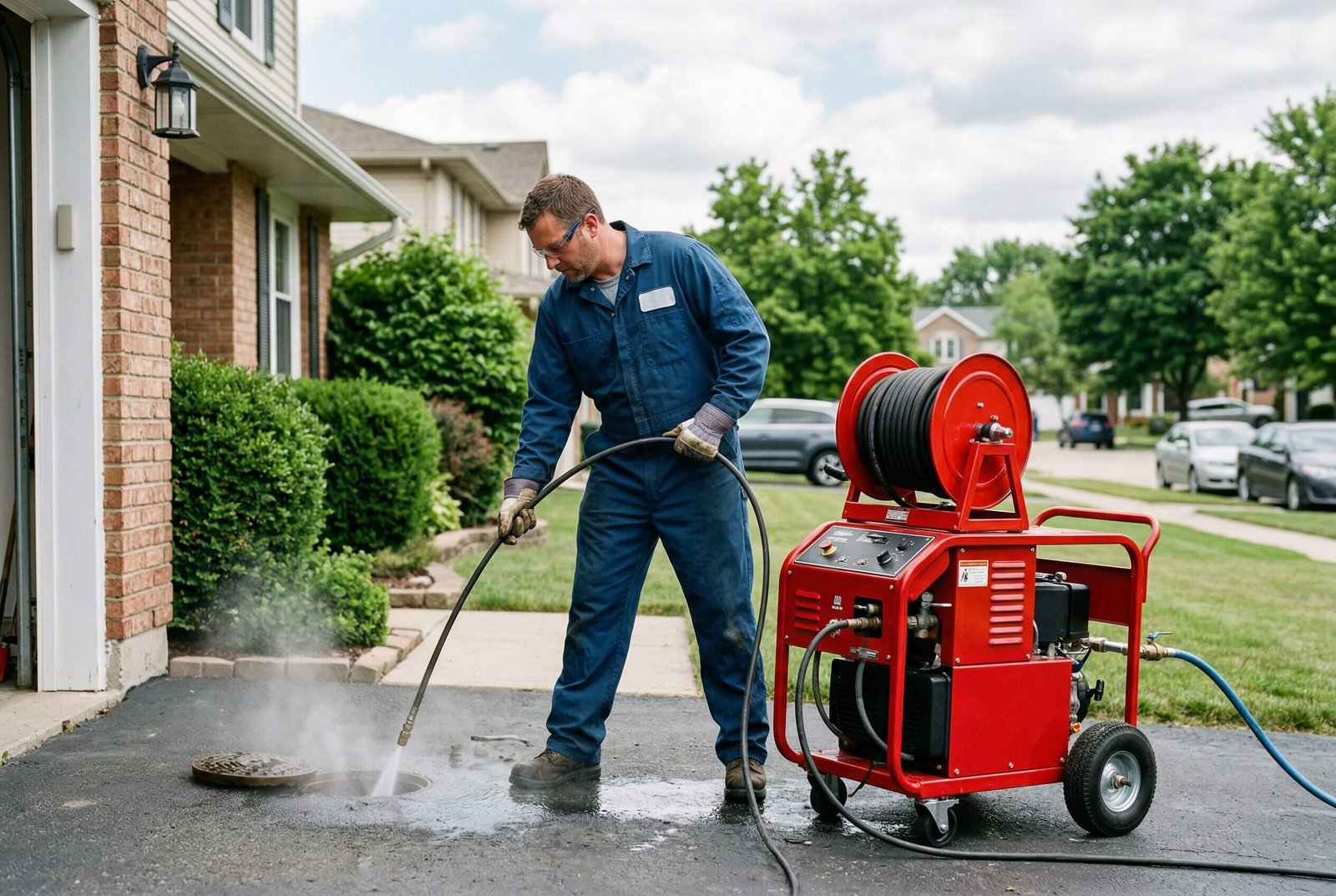
This is where hydro jetting becomes relevant. Unlike standard drain cleaning that focuses on clearing a blockage, hydro jetting is designed to clean the entire pipe from the inside. It uses high-pressure water to remove buildup along the pipe walls, not just open a path through it. In real situations, this is often the difference between a drain that works for a few days and one that continues to function properly over time. When buildup has been developing for months or years, a deeper cleaning approach is often the only way to fully restore flow.
Hydro jetting is typically used when regular methods don’t provide lasting results, especially in cases of recurring clogs or heavy buildup. It’s also commonly applied to main sewer lines where multiple fixtures are affected. Understanding what this service actually does—and when it’s truly needed—helps you avoid repeated short-term fixes and address the root of the problem more effectively.
What This Page Covers
ToggleWhat Hydro Jetting Service Actually Means
Hydro jetting is a method of cleaning pipes using highly pressurized water to remove buildup from the inside. Unlike basic drain clearing, which focuses on opening a blocked path, hydro jetting is designed to clean the entire interior surface of the pipe. In real homes, this matters because most clogs aren’t just single obstructions—they’re the result of gradual accumulation along the pipe walls that restricts flow over time.
Instead of pushing through a blockage or pulling out part of it, hydro jetting breaks apart and flushes away grease, sludge, debris, and other materials that stick inside the pipe. The goal is to restore the pipe close to its original internal diameter so water can move freely again. This is why it’s often used in situations where clogs keep coming back, or where standard cleaning methods haven’t solved the problem completely.
What Hydro Jetting Actually Does Inside the Pipe
Inside the pipe, hydro jetting works by directing high-pressure water through a specialized nozzle that sprays in multiple directions. This allows it to hit not just the blockage ahead, but also the sides of the pipe where buildup tends to accumulate.
In real conditions, this process:
- Breaks apart grease and sludge stuck to pipe walls
- Dislodges debris that has settled over time
- Flushes material out of the system instead of leaving residue behind
The result is a more complete cleaning compared to methods that only open a narrow path through the clog.
How It Differs From Basic Drain Cleaning
Basic drain cleaning methods—like snaking—are effective for certain situations, but they usually focus on clearing a blockage rather than cleaning the entire pipe. They create an opening so water can pass, but often leave behind buildup that continues to restrict flow.
Hydro jetting, on the other hand, is used when:
- The clog is caused by widespread buildup, not just a single obstruction
- Previous cleaning provided only temporary relief
- The pipe needs a more thorough restoration of flow
This difference is why hydro jetting is often considered a deeper, more complete cleaning approach.
Deep Cleaning vs Temporary Clearing
One of the most important distinctions is between temporary clearing and full cleaning. A pipe can appear to be “fixed” when water starts draining again, but if buildup remains along the walls, the problem often returns.
Hydro jetting addresses this by:
- Removing residue across the full diameter of the pipe
- Reducing the chance of quick re-clogging
- Improving long-term flow rather than short-term relief
This is especially important in pipes that have been accumulating buildup for an extended period.
Where Hydro Jetting Is Typically Used
Hydro jetting can be used in different parts of a plumbing system, depending on the severity and location of the problem. It’s commonly applied in situations where standard unclogging methods are not enough.
Typical applications include:
- Kitchen drain lines with heavy grease buildup
- Bathroom drains with long-term residue accumulation
- Main sewer lines affecting multiple fixtures
- Systems with recurring clog issues
Because it cleans more thoroughly, it’s often used when the goal is not just to fix the current problem, but to prevent it from returning quickly.
When You Actually Need Hydro Jetting
Hydro jetting isn’t something used for every clog—it’s typically needed when the problem goes beyond a simple blockage and starts affecting how the pipe functions overall. In many homes, this becomes clear when standard cleaning methods no longer provide lasting results. You might clear the drain, see improvement for a short time, and then notice the same issue returning again. That pattern usually indicates buildup along the pipe walls rather than a single obstruction.
In real situations, hydro jetting becomes relevant when the system shows signs of deeper restriction. It’s not just about whether water is draining—it’s about how consistently and reliably it drains over time. When multiple symptoms appear together or keep repeating, it’s often a sign that the pipe needs a more complete cleaning rather than another temporary fix.
Recurring Clogs That Keep Coming Back
One of the clearest indicators is when clogs return repeatedly after being cleared. You might notice that the drain works fine for a few days or weeks, but then slows down again without any obvious new cause.
This usually means that:
- Only part of the blockage was removed
- Residue is still coating the pipe walls
- New debris is sticking to existing buildup
In these cases, hydro jetting is used to remove that underlying layer so the problem doesn’t keep repeating.
Heavy Grease or Sludge Buildup
In kitchens especially, grease and oils can accumulate inside pipes over time. Even when washed with hot water, they often stick to the pipe walls and gradually harden.
Signs of heavy buildup include:
- Persistent slow drainage
- Drains that worsen gradually over time
- Repeated clogs in the same fixture
Hydro jetting is effective here because it doesn’t just break through the blockage—it washes away the buildup along the entire pipe surface.
Slow Drains Across Multiple Fixtures
When more than one drain in the home starts slowing down at the same time, the issue is often deeper in the system. This can indicate buildup in a shared line or the beginning of a larger restriction.
Common patterns include:
- Kitchen and bathroom drains slowing together
- Toilets flushing differently while sinks drain slowly
- Water taking longer to clear across multiple areas
These situations often require a deeper cleaning approach rather than individual drain clearing.
Sewer Line Blockages
Hydro jetting is frequently used in main sewer lines where buildup affects the entire system. When wastewater flow is restricted at this level, the symptoms become more widespread and harder to manage with basic methods.
It may be needed when:
- Water backs up into lower fixtures
- Multiple drains are affected at once
- Previous cleaning methods haven’t resolved the issue
In these cases, restoring full flow through the line becomes the priority.
After Snaking Fails to Provide Long-Term Relief
Snaking can be effective for opening a path through a blockage, but it often leaves residue behind. If the same issue returns after snaking, it’s a sign that the pipe wasn’t fully cleaned.
Hydro jetting is typically considered when:
- Snaking has been done multiple times
- The clog returns in the same location
- Drain performance doesn’t fully improve
This helps move from a temporary fix to a more complete solution.
Early vs Advanced Situations
Hydro jetting can be used at different stages, but it’s most commonly applied when the problem has progressed beyond early signs. In some homes, it’s used proactively when buildup is known to develop regularly.
In early situations, it may prevent larger issues. In more advanced cases, it becomes necessary to restore proper flow. The decision usually depends on how persistent and widespread the problem has become.
How Hydro Jetting Is Performed (Step-by-Step)
Hydro jetting isn’t just about inserting a hose and spraying water—it’s a controlled process that depends heavily on inspection, pressure control, and understanding the condition of the pipe. In real situations, skipping steps can lead to ineffective cleaning or even damage, which is why the process is structured carefully from start to finish.
The goal is not only to remove the blockage but to clean the pipe thoroughly while making sure the system can safely handle the pressure being used. Each step builds on the previous one to ensure the cleaning is both effective and appropriate for the pipe’s condition.
Initial Inspection and Assessment
The process usually starts with understanding what’s happening in the system. This includes identifying symptoms like slow drains, recurring clogs, or backups, and determining whether the issue is isolated or affecting a larger section of the plumbing.
At this stage, the focus is on:
- Understanding how long the issue has been present
- Identifying which fixtures are affected
- Determining whether previous cleaning attempts were made
This helps guide whether hydro jetting is likely to be the right approach.
Camera Inspection of Pipes
Before any high-pressure cleaning begins, a camera inspection is often performed. A small camera is inserted into the pipe to see what’s inside and assess both the blockage and the condition of the pipe.
This step helps identify:
- Type of buildup (grease, sludge, debris)
- Presence of roots or solid obstructions
- Pipe condition (cracks, corrosion, weak points)
Without this inspection, using high pressure would involve unnecessary risk.
Evaluating Pipe Condition (Critical Step)
Not all pipes are suitable for hydro jetting. Older pipes or those that are already damaged may not handle high-pressure water safely.
This evaluation ensures:
- The pipe can withstand the pressure
- There are no structural weaknesses
- Hydro jetting won’t cause further damage
If the pipe condition isn’t suitable, a different cleaning method is usually chosen.
Selecting the Appropriate Pressure Level
Hydro jetting equipment allows for pressure adjustment, which is important because different situations require different levels of force. Using too little pressure may not clean effectively, while too much can stress the pipe.
The pressure is selected based on:
- Type and severity of buildup
- Diameter of the pipe
- Material and condition of the plumbing
This balance ensures effective cleaning without unnecessary risk.
Performing High-Pressure Cleaning
Once everything is prepared, the actual jetting begins. A specialized nozzle is inserted into the pipe, and high-pressure water is released in controlled directions.
During this step:
- Water jets break apart buildup along the pipe walls
- Debris is dislodged and pushed toward the exit
- The entire pipe interior is cleaned, not just the blockage point
This is what makes hydro jetting more thorough than basic methods.
Flushing Debris Out of the System
After the buildup is broken apart, the debris needs to be flushed out completely. This ensures that loosened material doesn’t settle again elsewhere in the pipe.
Proper flushing:
- Carries debris out of the system
- Prevents re-clogging from leftover material
- Restores smooth water flow
This step is essential for achieving a lasting result.
Final Inspection and Testing
Once cleaning is complete, the system is tested to confirm that everything is functioning properly. Water is run through multiple fixtures to check drainage performance.
In many cases, a follow-up camera inspection is done to:
- Confirm the pipe is clean
- Ensure no major issues remain
- Verify that flow has been fully restored
This final step provides confidence that the cleaning was thorough and effective.
Methods and Equipment Used in Hydro Jetting
Hydro jetting relies on specialized equipment designed to deliver controlled, high-pressure water through plumbing systems without damaging them. It’s not just about power—the effectiveness of the process comes from how that pressure is directed, adjusted, and applied based on the condition of the pipe. In real situations, the equipment and setup play a major role in how thoroughly the pipe is cleaned and how safely the process is carried out.
Different tools are used together during hydro jetting, each serving a specific purpose. From pressure control to nozzle selection, every component is chosen based on what’s inside the pipe and how the cleaning needs to be performed.
High-Pressure Water Jet Machine
At the center of the process is the hydro jetting machine itself. This equipment generates a strong stream of water, often at pressures high enough to break apart hardened buildup inside pipes.
The machine is designed to:
- Deliver consistent water pressure
- Allow adjustment based on pipe condition
- Maintain controlled flow during cleaning
In real use, it’s not about using maximum pressure at all times—it’s about using the right level of pressure for the specific situation.
Nozzle Types and Their Role
The nozzle attached to the hose determines how water is directed inside the pipe. Different nozzles are used depending on the type of blockage and the cleaning objective.
Common nozzle functions include:
- Forward-facing jets to break through blockages
- Rear-facing jets to push debris out of the pipe
- Rotating jets to clean pipe walls evenly
This combination allows the cleaning to be both targeted and thorough, addressing both the blockage and the surrounding buildup.
Pressure Control Based on Pipe Condition
Pressure control is one of the most important aspects of hydro jetting. Pipes vary in age, material, and condition, so the pressure must be adjusted carefully.
This ensures:
- Effective removal of buildup without over-stressing the pipe
- Safe operation in older or more delicate plumbing systems
- Proper cleaning without causing unnecessary wear
In practice, this step is what balances cleaning performance with system safety.
Camera Inspection Tools
Camera inspection tools are used alongside hydro jetting to guide the process. They provide a clear view inside the pipe before and after cleaning.
These tools help:
- Identify the type and location of buildup
- Assess pipe condition before applying pressure
- Confirm that the cleaning was complete
This visual confirmation removes guesswork and ensures the process is based on actual conditions inside the pipe.
When Hydro Jetting Is Combined With Other Methods
In some cases, hydro jetting is used alongside other cleaning methods rather than on its own. This happens when the blockage is particularly dense or requires initial clearing before full cleaning can begin.
For example:
- A mechanical tool may first break through a solid obstruction
- Hydro jetting then follows to clean the remaining buildup
This combination approach allows for both immediate clearing and thorough cleaning, depending on what the situation requires.
Hydro Jetting vs Snaking (Decision Section)
When dealing with clogged drains or sewer lines, two methods are commonly used—snaking and hydro jetting. Both can restore flow, but they work very differently, and the results they provide are not the same. In real situations, choosing between them isn’t just about cost or availability—it’s about understanding what kind of problem you’re dealing with and how thoroughly it needs to be addressed.
Snaking is often the first step because it’s quick and effective for opening a blockage. Hydro jetting, on the other hand, is used when the goal is to clean the pipe more completely. Knowing the difference helps you avoid repeated fixes and choose the approach that actually solves the problem long term.
How Snaking Works
Snaking uses a flexible metal cable that moves through the pipe to break apart or pull out a blockage. It’s designed to create an opening so water can pass through again.
In practical use:
- The cable pushes through the clog
- It breaks or loosens the obstruction
- It restores immediate drainage
This method is effective for localized clogs, especially when the blockage is compact and close to the surface.
How Hydro Jetting Works Differently
Hydro jetting uses high-pressure water to clean the entire interior of the pipe. Instead of focusing only on the blockage, it targets the buildup along the pipe walls.
In real conditions:
- It removes grease, sludge, and residue
- It clears the full diameter of the pipe
- It flushes debris completely out of the system
This results in a more complete cleaning, especially in pipes that have accumulated buildup over time.
When Snaking Is Enough
Snaking is often sufficient when the problem is simple and isolated. It’s commonly used as the first approach because it can quickly restore flow without requiring more intensive cleaning.
It works well when:
- The clog is recent and localized
- The pipe doesn’t have heavy buildup
- There’s no history of recurring issues
In these cases, snaking provides an efficient and practical solution.
When Hydro Jetting Becomes Necessary
Hydro jetting is usually considered when the problem goes beyond a single blockage. It’s used when buildup is widespread or when previous cleaning hasn’t lasted.
It becomes necessary when:
- Clogs keep returning after snaking
- There is heavy grease or sludge buildup
- Multiple drains are affected
- The pipe needs a more thorough cleaning
This approach addresses the root cause rather than just the immediate blockage.
Temporary Relief vs Long-Term Solution
One of the main differences between the two methods is how long the results last. Snaking often provides immediate relief, but if buildup remains, the problem can return.
Hydro jetting focuses on:
- Removing residue that leads to future clogs
- Restoring consistent flow
- Reducing how often cleaning is needed
This makes it more effective for long-term performance, especially in systems with recurring issues.
Cost vs Long-Term Value
Snaking typically costs less upfront because it’s quicker and requires less equipment. Hydro jetting costs more due to the equipment, inspection, and time involved.
However, in real situations:
- Repeated snaking can add up over time
- Hydro jetting may reduce the need for frequent service
- The overall cost depends on how often the issue returns
Choosing between them isn’t just about immediate cost—it’s about how often the problem needs to be addressed in the future.
Cost of Hydro Jetting in the U.S.
The cost of hydro jetting varies depending on how extensive the cleaning needs to be and the condition of the pipes. Unlike basic drain clearing, this method involves specialized equipment, inspection, and controlled high-pressure cleaning, which is why it sits on the higher end of drain service pricing. In real situations, the cost reflects not just the cleaning itself, but the level of thoroughness involved in restoring the pipe.
It’s also important to understand that hydro jetting is often chosen when other methods haven’t worked or haven’t lasted. While the upfront cost may be higher, it can reduce the need for repeated service calls, especially in systems with recurring buildup.
Typical Residential Hydro Jetting Cost Range
For most residential properties, hydro jetting falls within a moderate to higher price range depending on the scope of work.
Typical pricing includes:
- $300 to $800 for standard residential drain cleaning
- Costs may increase for longer or more complex pipe systems
These jobs usually involve moderate buildup where a full pipe cleaning is needed rather than simple unclogging.
Sewer Line Hydro Jetting Cost
When hydro jetting is performed on the main sewer line, the cost is typically higher due to the length of the pipe and the complexity of the job.
Typical sewer line hydro jetting costs:
- $500 to $1,200+ depending on severity and access
This type of cleaning often involves deeper inspection and more extensive work to restore proper flow through the entire system.
Emergency Hydro Jetting Pricing
If hydro jetting is required urgently—such as during a backup or severe blockage—the service is considered an emergency. This increases the cost due to immediate response and scheduling outside regular hours.
Emergency pricing may range from:
- $600 to $1,500+ depending on timing and severity
The urgency and potential damage involved are what drive the higher cost in these cases.
Factors That Affect Hydro Jetting Cost
Several real-world factors influence how much the service will cost. These are based on what’s happening inside the pipe and how difficult the cleaning is.
Key factors include:
- Pipe length → Longer lines require more time and effort
- Severity of buildup → Light residue vs heavy grease or sludge
- Access point → Easy access vs limited or hard-to-reach entry
- Equipment and time required → More complex setups increase cost
- Inspection requirement → Camera inspection before/after cleaning
These factors explain why two similar-looking problems can have very different pricing.
Risks and Limitations of Hydro Jetting
Hydro jetting is a powerful and effective cleaning method, but it’s not the right solution for every situation. Because it uses high-pressure water, the condition of the pipe becomes an important factor. In real homes, applying the wrong method to the wrong system can lead to unnecessary complications, which is why hydro jetting is usually preceded by inspection and careful evaluation.
Understanding its limitations helps avoid misuse and ensures that the cleaning method matches the actual condition of the plumbing system, rather than just the symptoms being experienced.
Not Suitable for Damaged or Fragile Pipes
Hydro jetting relies on pressure to clean the inside of pipes, which means the pipe itself needs to be strong enough to handle that force. In systems where the pipe is already weakened—due to age, corrosion, or existing cracks—high-pressure water may cause further damage instead of solving the problem.
This is especially relevant in older homes where plumbing materials may have deteriorated over time. In these cases, a less aggressive method is often safer and more appropriate.
Risk in Older Plumbing Systems
Older plumbing systems tend to have more wear, even if no visible damage is present. Pipes may have thin walls, small fractures, or weak joints that aren’t obvious without inspection.
Using hydro jetting in these conditions can:
- Expose hidden weaknesses in the pipe
- Increase the risk of leaks or breaks
- Lead to additional repairs if the pipe cannot handle the pressure
That’s why evaluating pipe condition is a critical step before proceeding.
Importance of Inspection Before Use
Hydro jetting is most effective when it’s based on a clear understanding of what’s inside the pipe. Without inspection, it’s difficult to know whether the blockage is suitable for this method or whether the pipe can safely handle it.
Inspection helps determine:
- Type and severity of buildup
- Presence of roots or solid obstructions
- Overall pipe condition
This ensures the method is used appropriately rather than applied blindly.
When Hydro Jetting Is Not the Right Solution
There are situations where hydro jetting isn’t the best approach, even if a blockage is present. If the pipe is structurally compromised, or if the issue involves collapse or severe damage, cleaning alone won’t resolve the problem.
Hydro jetting may not be suitable when:
- The pipe is cracked or partially collapsed
- There are significant structural issues
- The blockage is caused by something that requires removal or repair rather than cleaning
In these cases, a different solution—such as repair or replacement—may be needed instead of high-pressure cleaning.
Where Hydro Jetting Is Commonly Used
Hydro jetting is not limited to one type of drain or pipe—it’s used in areas where buildup tends to develop over time and where standard cleaning methods don’t provide lasting results. In real homes, this usually means parts of the plumbing system that handle heavy usage or materials that easily stick to pipe walls. Understanding where hydro jetting is most commonly applied helps you recognize when this level of cleaning is actually needed.
Because it cleans the pipe more thoroughly, it’s often used in situations where recurring issues have already been experienced or where buildup is known to accumulate consistently.
Kitchen Grease Lines
Kitchen drains are one of the most common areas where hydro jetting is used. Over time, grease, oil, and food residue don’t fully wash away—they stick to the inside of the pipe and gradually build up into a thick layer.
In real situations, this buildup:
- Narrows the pipe and slows water flow
- Traps additional debris passing through
- Leads to recurring clogs even after basic cleaning
Hydro jetting is effective here because it removes that grease layer from the pipe walls rather than just opening a path through it.
Main Sewer Lines
Hydro jetting is frequently used in main sewer lines, especially when multiple fixtures in the home are affected. Since all drains connect to this line, any buildup or blockage here has a wider impact.
Common reasons for using hydro jetting in sewer lines include:
- Heavy accumulation of debris over time
- Recurring blockages that affect multiple areas
- Need for a more complete system-level cleaning
Because the line is longer and handles more waste, thorough cleaning becomes more important.
Commercial vs Residential Use
While hydro jetting is used in residential homes, it’s even more common in commercial settings where plumbing systems experience heavier usage. Restaurants, for example, deal with large amounts of grease that can quickly build up inside pipes.
In residential use, it’s typically applied when:
- There is noticeable buildup over time
- Clogs keep returning
- Standard cleaning hasn’t provided lasting results
The difference is mainly in frequency—commercial systems may require it more regularly due to higher usage.
High-Usage Homes
In some homes, plumbing systems are used more heavily than average. Larger households or properties with frequent water usage tend to experience faster buildup inside pipes.
In these situations:
- Grease, soap, and debris accumulate more quickly
- Drains may require deeper cleaning sooner
- Recurring issues are more likely if buildup isn’t fully removed
Hydro jetting helps reset the system by clearing accumulated residue, especially when usage patterns contribute to repeated clogging.
Finding Hydro Jetting Service Locally
When hydro jetting becomes necessary, most homeowners are already dealing with a recurring or worsening problem. At that stage, it’s not just about finding someone to “clear the drain”—it’s about finding a service that can properly inspect the system and perform a deeper level of cleaning. Because hydro jetting requires specialized equipment and experience, not every plumbing service offers it or uses it appropriately.
In real situations, choosing the right help here makes a noticeable difference. A quick fix might restore flow temporarily, but if the underlying buildup isn’t addressed, the problem often returns. Knowing what to look for helps you avoid repeated service calls and ensures the issue is handled thoroughly.
When Homeowners Start Looking for Hydro Jetting
Most people don’t search for hydro jetting as a first step—it usually comes after other methods haven’t worked or haven’t lasted. The need often becomes clear when problems keep coming back despite previous cleaning.
Common situations that lead to this search include:
- Recurring clogs after snaking or basic cleaning
- Persistent slow drains that don’t improve
- Multiple fixtures showing similar issues
- Sewer line problems affecting the whole house
At this point, the focus shifts from quick fixes to more complete cleaning.
Importance of Specialized Equipment
Hydro jetting requires equipment that goes beyond standard drain tools. High-pressure machines, specialized nozzles, and inspection tools are all part of the process.
Because of this:
- Not all plumbers offer hydro jetting
- The quality of equipment can affect results
- Proper use depends on experience with the method
Choosing a service with the right setup ensures the cleaning is done effectively and safely.
Local Availability and Service Capability
Availability can vary depending on location. In some areas, hydro jetting is a common service, while in others it may be limited to specific providers.
When looking locally, it helps to consider:
- Whether the service regularly handles hydro jetting jobs
- Experience with similar plumbing systems
- Ability to inspect and assess the pipe before cleaning
This helps ensure the method is used appropriately rather than applied as a one-size-fits-all solution.
Why Response Time Matters in Severe Cases
In cases where the blockage is affecting daily use or causing backups, response time becomes more important. While hydro jetting is not always the immediate first step in emergencies, it may be needed quickly if other methods have failed.
Faster response can help when:
- The system is heavily restricted
- Multiple drains are not functioning properly
- The problem is worsening over time
Timely service helps prevent further buildup and reduces the risk of more serious issues developing.
How to Choose the Right Hydro Jetting Provider
Choosing the right provider for hydro jetting is less about finding the fastest option and more about finding someone who understands when and how to use the method correctly. Because hydro jetting involves high-pressure cleaning, the process depends heavily on proper inspection, pressure control, and experience with different pipe conditions. In real situations, the quality of the work is determined as much by the decision-making before the cleaning as by the cleaning itself.
A thoughtful approach ensures that the pipe is cleaned thoroughly without unnecessary risk, and that the method is actually suited to the problem being addressed. This is what separates a one-time fix from a solution that holds up over time.
Experience With High-Pressure Cleaning
Hydro jetting requires a different level of experience compared to basic drain cleaning. It’s not just about operating equipment—it’s about understanding how different types of buildup respond to pressure and how different pipes handle it.
Experience helps in:
- Adjusting pressure based on pipe condition
- Recognizing when hydro jetting is appropriate
- Avoiding unnecessary stress on the plumbing system
This becomes especially important in older homes or systems with previous issues.
Proper Inspection Before Cleaning
A reliable approach always includes inspection before using hydro jetting. This step determines whether the pipe can safely handle high-pressure water and what type of blockage is present.
Inspection should help identify:
- Pipe condition (age, wear, or damage)
- Type and location of buildup
- Any issues that may require a different approach
Skipping this step often leads to incomplete cleaning or avoidable risks.
Equipment Capability and Setup
The quality and range of equipment used can influence how effective the cleaning will be. Hydro jetting involves more than just a pressure machine—it requires the right tools for different situations.
It helps when the provider has:
- Adjustable pressure systems
- Multiple nozzle types for different cleaning needs
- Tools for inspection and verification
This allows the cleaning to be tailored rather than applied uniformly.
Clear Explanation of Process and Expectations
Before the work begins, you should have a clear understanding of what will be done and why. This includes how the cleaning will be performed and what kind of result to expect.
A clear explanation typically covers:
- Why hydro jetting is being used
- What condition the pipe is in
- How the process will improve flow
- Whether any limitations or risks exist
This clarity helps ensure the approach matches the actual problem.
Common Mistakes Homeowners Make
When dealing with recurring drain issues, it’s easy to focus on immediate relief rather than long-term results. This often leads to decisions that solve the problem temporarily but not completely.
Common mistakes include:
- Repeating basic cleaning methods despite recurring issues
- Choosing based only on lower upfront cost
- Skipping inspection before deeper cleaning
- Assuming all clogs require the same solution
These can delay proper resolution and increase overall effort over time.
Red Flags to Watch For
There are also signs that hydro jetting may not be approached correctly.
Watch for situations where:
- High-pressure cleaning is suggested without inspection
- The pipe condition isn’t considered
- The method is presented as a universal solution
- No explanation is given for why it’s needed
These can indicate that the process is being applied without fully understanding the situation.
Final Thoughts
Hydro jetting is not a routine solution for every drain issue—it’s a method used when buildup has reached a point where basic cleaning no longer provides lasting results. In many homes, this becomes clear after repeated clogs, slow drainage across fixtures, or sewer line problems that keep returning despite previous attempts to clear them. At that stage, the focus shifts from temporary relief to restoring the pipe more completely.
When used appropriately, hydro jetting does more than just remove a blockage—it cleans the inside of the pipe in a way that improves overall flow and reduces how quickly problems return. At the same time, it’s important to recognize that it’s not always the right solution, especially in systems where the pipe condition doesn’t support high-pressure cleaning. Understanding both its benefits and its limitations helps you approach the problem with clarity and choose the method that fits the situation rather than relying on repeated short-term fixes.