
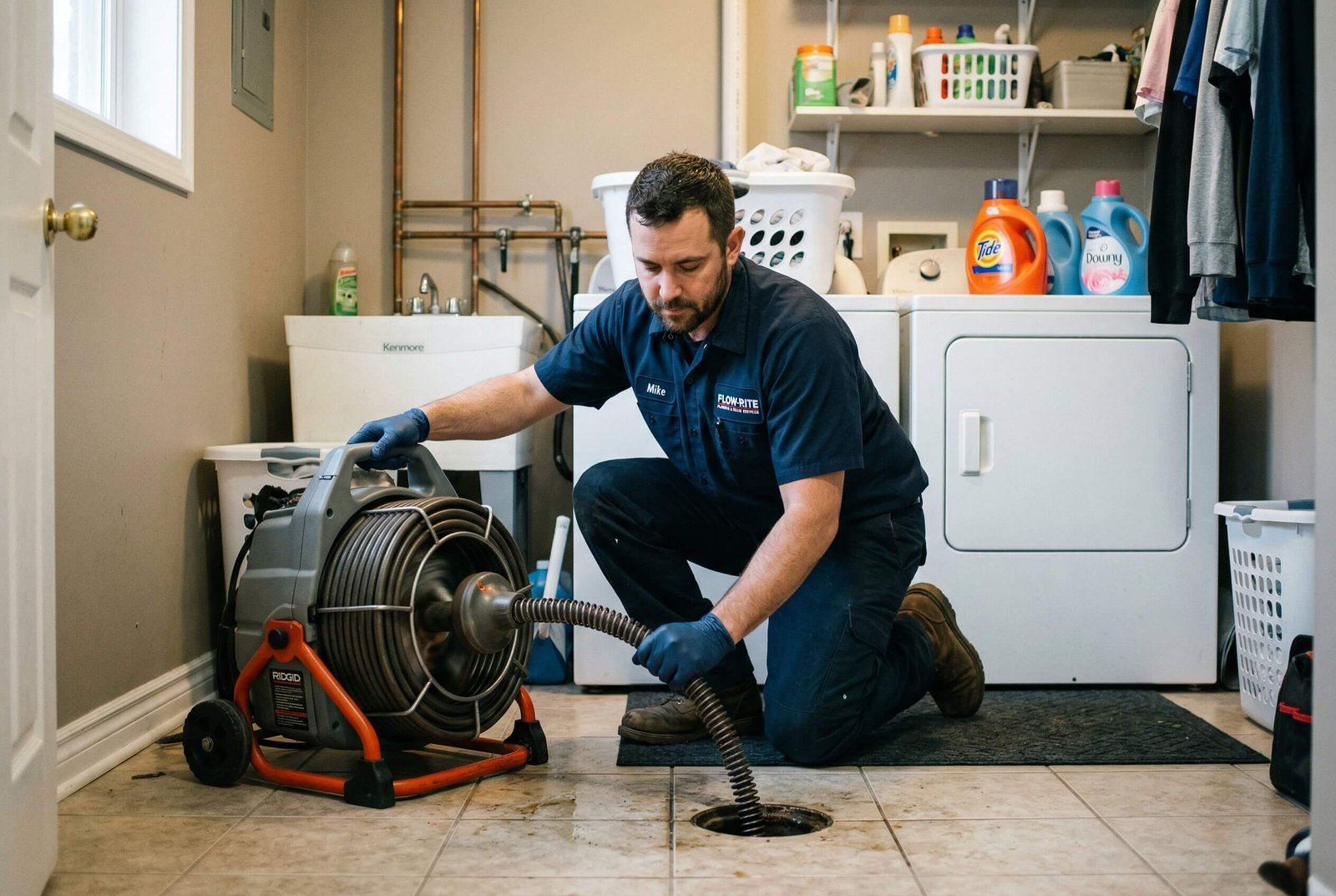
Laundry room drain problems usually show up at the worst time—right in the middle of a wash cycle. It often starts with water rising in the standpipe behind the washing machine or draining slower than usual. At first, it may seem like a one-time issue, but then it happens again, and eventually, water begins to back up or overflow onto the floor.
Laundry drains handle a unique type of waste compared to other parts of the home. Every wash cycle sends out lint, fabric fibers, detergent residue, and small particles that don’t fully dissolve. Over time, this material builds up inside the pipe, forming a soft but dense layer that gradually restricts water flow. Because washing machines discharge water quickly, even a partial blockage can cause noticeable backup.
When this drain stops working properly, the issue isn’t just inconvenience—it can lead to repeated overflows, water damage, and ongoing moisture problems in the laundry area. What begins as a slow drain can quickly turn into a full blockage if the buildup continues unchecked.
What This Page Covers
ToggleWhat This Service Actually Means
A laundry room drain cleaning service focuses on clearing buildup that forms inside the pipe beyond what you can see at the standpipe. In most homes, the washing machine drains into a vertical pipe (standpipe) that connects to a horizontal drain line and then into the main drainage system. When a clog forms, it’s usually not right at the opening—it sits further down where lint and detergent residue have had time to accumulate.
The type of buildup in laundry drains is different from typical kitchen or bathroom clogs. It’s a combination of lint, fabric fibers, soap residue, and detergent that sticks to the inner walls of the pipe. Over time, this mixture forms a thick layer that narrows the pipe and slows down water flow. Because washing machines release water quickly, even a partial restriction can cause water to back up almost immediately.
This is why simple fixes like flushing with water or using basic tools don’t solve the problem for long. They may open a temporary path, but the residue along the pipe walls remains. As more wash cycles run, that buildup continues to grow until the drain can no longer handle the flow.
A proper cleaning service goes deeper. It removes the accumulated lint and detergent buildup from inside the pipe and restores full flow capacity. It also involves checking whether the issue is isolated to the laundry drain or connected to a larger drain cleaning problem in the system. In some cases, especially with recurring backups, the clog may extend further into the main line and require a more thorough approach to prevent it from returning.
When You Actually Need This Service
Laundry room drain problems don’t usually happen all at once—they build gradually with every wash cycle. Each load sends lint, detergent, and small particles into the drain, and over time, that material starts sticking to the inside of the pipe. Because the change is slow, most homeowners don’t notice anything until the drain can no longer handle the volume of water being discharged.
Knowing when to act can prevent repeated overflows and more serious drainage issues. Early signs are often subtle, but once the blockage reaches a certain point, the symptoms become much more obvious. Recognizing that progression helps you deal with the problem before it disrupts the entire system.
Early Warning Signs Most Homeowners Ignore
In the early stage, the drain still works, but not as efficiently. You might notice that water in the standpipe rises slightly during the wash cycle before going down. There may also be occasional gurgling sounds as air struggles to move through the partially restricted pipe.
These signs indicate that lint and detergent residue are starting to build up inside the line. At this point, the issue is easier to resolve, but it’s often ignored because the system hasn’t failed yet. That delay allows the buildup to continue growing.
Clear Signs the Drain Is Already Clogged
As the blockage becomes more significant, the symptoms become harder to ignore. Water may rise quickly in the standpipe during a wash cycle and take longer to drain—or it may overflow onto the floor. You might also notice visible lint or sludge around the drain opening.
This stage indicates that the pipe is no longer able to handle normal flow. The clog is no longer partial—it’s restricting enough space that the discharge from the washing machine overwhelms the system.
Serious Warning Signs of Deeper Drain Issues
If the problem continues or starts affecting other fixtures, it may not be limited to the laundry drain. For example, nearby sinks or drains may start to slow down, or backups may happen more quickly and frequently.
In these cases, the issue may extend beyond the immediate pipe and involve a deeper section of the drainage system. At this stage, proper drain cleaning is needed not just to restore flow, but to identify whether the blockage is part of a larger problem that requires more thorough attention.
How the Service Is Performed (Step-by-Step)
Laundry drain cleaning isn’t just about clearing what’s visible at the standpipe. In most cases, the blockage sits deeper in the line where lint and detergent residue have built up over time. Because washing machines discharge water quickly, even a partial restriction can cause immediate backup, so the cleaning process needs to be thorough—not just a quick fix.
A proper step-by-step approach ensures the entire affected section of the pipe is cleared. This helps restore full flow and reduces the chances of the same issue coming back after a few wash cycles.
Initial Inspection and Access Check
The first step is assessing how the laundry drain is set up. The plumber will check the standpipe, look for signs of overflow, and determine whether there’s a nearby cleanout that provides better access to the pipe.
This inspection helps identify whether the clog is close to the opening or further down the line. It also determines the best entry point for cleaning, which is important for making the process more effective.
Diagnosis of Blockage Type
Once access is confirmed, the next step is understanding what’s causing the blockage. Laundry drains typically clog due to lint, fabric fibers, and detergent residue that combine to form a sticky layer inside the pipe.
The plumber may test the flow or insert tools into the line to locate resistance. In cases where the problem keeps recurring, a camera inspection may be used to confirm how far the buildup extends and whether there are any additional issues deeper in the system.
Choosing the Right Cleaning Method
After identifying the type of clog, the appropriate cleaning method is selected. For lighter buildup, a drain snake may be enough to break through the blockage. For more stubborn or recurring clogs, a deeper cleaning method like hydro jetting may be needed to remove residue from the pipe walls.
Choosing the right method is key. If the cleaning is too basic, leftover buildup can cause the problem to return quickly. The goal is to match the method to the condition of the drain so the cleaning is complete.
Executing the Cleaning Process
The cleaning process involves feeding equipment into the pipe and working through the blockage. Snaking helps break apart compacted lint, while hydro jetting flushes out residue and clears the inner walls of the pipe.
Because laundry drain buildup can extend along a longer section of pipe, this step often goes beyond just clearing a single point. The process continues until the line is properly opened and flow is restored.
Final Testing and Flow Check
After cleaning, the system is tested to make sure it’s working properly. This often involves running water through the drain or simulating a wash cycle to confirm that the pipe can handle normal discharge without backing up.
This final step ensures that the clog has been fully removed and that there are no remaining restrictions. If any issues are still detected, further cleaning or inspection may be needed to prevent the problem from returning.
Methods Used for Laundry Room Drain Cleaning
Laundry drains require specific cleaning methods because the type of buildup inside them is different from most other drains. Lint, fabric fibers, and detergent residue don’t just float through the pipe—they stick to the walls and gradually form a thick layer. Over time, this layer narrows the pipe and restricts flow, which is why simple flushing doesn’t solve the issue.
The method used depends on how severe the buildup is and whether the clog is localized or spread along the pipe. In many cases, restoring proper flow requires more than one approach to fully remove both the blockage and the residue behind it.
Drain Snaking (Augering)
Drain snaking is commonly used to break through lint clogs that have formed inside the pipe. A flexible cable is inserted into the drain and rotated to cut through or loosen the blockage. This method works well when the clog is concentrated in one area and needs to be opened quickly.
However, snaking mainly creates a path for water to pass through. It doesn’t remove the layer of detergent and lint buildup stuck to the pipe walls. Because of that, it’s often a starting point rather than a complete solution for recurring laundry drain issues.
Hydro Jetting for Soap and Lint Build-Up
Hydro jetting is used when there is heavy or widespread buildup inside the pipe. It uses high-pressure water to clean the entire interior surface, removing lint, detergent residue, and any sludge that has formed over time.
This method is especially effective for laundry drains because it clears the buildup that causes recurring clogs. Instead of just opening a path, it restores the pipe closer to its original condition, allowing water to flow more freely and reducing the chances of future blockages.
Manual Cleaning and Trap Clearing
In some cases, manual cleaning is done at the surface level. This includes removing visible lint and debris from the standpipe and clearing any accessible trap areas. While this doesn’t address deeper clogs, it helps remove immediate obstructions and improves overall flow.
This step is usually combined with other methods to ensure the entire system is cleaned, not just the visible portion of the drain.
Camera Inspection for Recurring Issues
When the drain continues to clog or the cause isn’t clear, a camera inspection is used to look inside the pipe. This allows the plumber to see the extent of the buildup and identify whether the issue is limited to lint accumulation or part of a deeper drainage problem.
This approach removes guesswork and ensures the correct cleaning method is used. It also helps confirm that the pipe has been fully cleared after the service is completed.
DIY vs Professional (Decision Section)
Laundry drain clogs are one of the most common issues homeowners try to fix themselves, mainly because the problem appears right at the standpipe. But what’s visible at the top is usually only part of the issue. Most of the buildup sits deeper in the pipe, where lint and detergent residue have been collecting over time.
Understanding when a basic fix is enough—and when it isn’t—helps avoid repeated overflows and unnecessary frustration. The goal isn’t to avoid professional help, but to recognize when the situation goes beyond what simple tools can handle.
When DIY Cleaning Might Work
If the drain is only slightly slow and there’s no overflow, basic cleaning can sometimes improve the situation. Removing visible lint from the standpipe and flushing the drain with hot water may help clear light buildup near the surface.
This works best in early-stage clogs where the buildup hasn’t fully compacted. In these cases, improving flow is possible because the restriction is still loose and hasn’t spread along the pipe walls.
Where DIY Fails in Laundry Drains
DIY methods become less effective once the clog extends deeper into the line. Laundry drains often develop a layer of lint and detergent residue that sticks to the pipe walls, which basic tools can’t fully remove.
Even if water starts draining again, the underlying buildup remains. This is why many homeowners experience the same issue again after a few wash cycles. The problem wasn’t fully cleared—it was just temporarily opened.
When DIY Becomes Risky
There’s also a point where trying to fix the problem yourself can make it worse. Forcing tools into the drain can push the blockage further down the line, making it harder to remove later. Chemical cleaners are also risky in laundry drains—they often don’t break down lint effectively and can affect pipe material over time.
If the drain starts overflowing or backing up quickly, the situation moves beyond a simple clog. At that stage, professional cleaning is usually the safer and more reliable way to fully resolve the issue and prevent it from returning.
Cost of Laundry Room Drain Cleaning in the U.S.
Laundry drain cleaning costs can vary depending on how much lint and residue has built up inside the pipe and how far the blockage extends. Because washing machines discharge water quickly, even a partial clog can cause noticeable backup, but the actual cleaning required may range from simple to more involved depending on the condition of the line.
In many cases, the job starts as a basic cleaning, but if the buildup is deeper or more compact, additional time and equipment may be needed. Understanding typical price ranges helps set expectations and identify when the issue may be more than just a minor clog.
Typical Price Range
For a basic laundry drain cleaning where the clog is near the standpipe and easily accessible, the cost usually falls between $100 to $250. This typically involves standard snaking and minimal time on-site.
If the blockage is deeper or involves heavier buildup of lint and detergent residue, the cost can range from $250 to $500. These situations often require more thorough cleaning and possibly accessing the line through a cleanout.
For more severe clogs—especially recurring ones or those affecting multiple fixtures—the cost can go from $500 to $800 or more. These cases may require advanced methods like hydro jetting to fully clean the pipe.
Emergency Drain Cleaning Costs
When the drain overflows during a wash cycle and water starts spilling onto the floor, it often becomes an urgent situation. Emergency drain cleaning services typically come with higher costs due to immediate response and after-hours availability.
Emergency pricing usually ranges from $300 to $900+, depending on the severity of the blockage and how quickly the issue needs to be handled. The urgency and potential for water damage are what increase the cost in these cases.
Factors That Affect Pricing
Several factors influence the final cost of laundry drain cleaning:
- Severity of lint buildup – More compact buildup requires more effort
- Depth of clog – Deeper blockages take longer to reach and clear
- Access to the pipe – Easy access reduces complexity
- Type of equipment used – Hydro jetting costs more than basic snaking
- Extent of the issue – Whether it’s isolated or part of a larger drain problem
In some cases, what appears to be a simple laundry drain clog can reveal a deeper issue in the drainage system. That’s why pricing can vary based on what’s actually found during the cleaning process.
Risks of Delaying Laundry Drain Cleaning
Laundry drain problems rarely stay the same—they get worse with every wash cycle. Each load adds more lint, detergent residue, and fabric fibers into a pipe that may already be partially restricted. Because the system still drains for a while, it’s easy to delay action. But that delay allows the buildup to thicken and spread further down the line, making the blockage harder to remove.
The bigger issue is that washing machines release a large volume of water quickly. When the pipe can’t handle that flow, the problem shows up suddenly as an overflow. What seemed like a minor slow drain can quickly turn into a situation where water spills onto the floor.
Water Overflow and Floor Damage
One of the most immediate risks is overflow during a wash cycle. When the drain is restricted, the standpipe fills faster than it can empty, causing water to rise and spill out.
Repeated overflows can damage flooring, nearby walls, and anything stored in the laundry area. Even small amounts of water, if repeated over time, can lead to noticeable wear and long-term issues.
Mold and Moisture Issues
Moisture that isn’t properly drained creates the right conditions for mold and mildew. Laundry areas are already exposed to humidity, and standing water or repeated dampness adds to that environment.
The problem is often hidden. Moisture can settle behind appliances, under flooring, or along baseboards, making it harder to detect until it becomes more widespread.
Pipe Blockage Worsening Over Time
As lint and detergent residue continue to build up, the pipe becomes more restricted. What starts as a soft buildup gradually compacts into a thicker layer that is harder to break apart.
The longer this process continues, the more difficult the cleaning becomes. In some cases, a simple clog can develop into a deeper drain cleaning issue that requires more time and effort to fully resolve.
Appliance Stress and Inefficiency
A restricted drain doesn’t just affect the pipe—it also impacts the washing machine. When water can’t drain properly, the machine may take longer to complete cycles or struggle to discharge water efficiently.
Over time, this can put extra strain on the appliance and affect its performance. Addressing the drain issue early helps keep both the drainage system and the washing machine functioning as they should.
Where This Happens in Homes
Laundry drain issues don’t occur randomly—they are closely tied to how the laundry system is set up and how often it’s used. Every wash cycle introduces lint, detergent, and fabric particles into the drain, and certain areas in the system naturally collect more of this buildup over time. That’s why clogs tend to form in specific locations rather than evenly throughout the pipe.
Understanding where these problems typically develop helps you recognize the source of the issue and why it keeps coming back in some homes.
Standpipe Behind Washing Machine
The most common location for laundry drain clogs is the standpipe—the vertical pipe where the washing machine discharges water. This is the first point where lint and detergent enter the system, so it’s where buildup often begins.
Because water flows rapidly into this pipe, even a partial restriction can cause immediate backup. Over time, lint and residue stick to the inner walls, narrowing the pipe and slowing drainage.
Laundry Sinks and Shared Drains
In many homes, the laundry drain shares a connection with a utility sink. This combined system handles not only lint from the washing machine but also debris, soap, and other materials from the sink.
This shared usage increases the amount of buildup entering the pipe, making clogs more likely and sometimes more complex. The issue may appear at one fixture but actually be caused by buildup further down the shared line.
Basement Laundry Areas
Laundry setups located in basements can experience additional drainage challenges. Because the system sits at a lower level, any restriction in the line can cause water to back up more quickly.
These setups are also more likely to be connected to longer pipe runs or the main line, which means clogs can develop deeper in the system. When issues occur here, they often require more thorough cleaning.
Older Plumbing Systems
In older homes, the condition of the pipes plays a significant role. Pipes may have rough interiors due to wear, corrosion, or scaling, which makes it easier for lint and residue to stick and accumulate.
Even small amounts of buildup can become a problem in these conditions because the pipe is already partially restricted. This is why older systems often experience recurring laundry drain issues if not properly cleaned.
Finding Help Locally
Laundry drain problems tend to become urgent quickly, especially when water starts backing up during a wash cycle. Because washing machines release a large volume of water in a short time, even a partially clogged drain can lead to overflow within minutes. That’s why most homeowners look for help locally—someone who can respond quickly and handle the issue before it causes further damage.
Local plumbers are often more familiar with how laundry drainage systems are set up in nearby homes. They understand common issues like lint buildup, standpipe overflow, and shared drain lines. This familiarity helps them diagnose the problem faster and choose the right approach instead of relying on trial and error.
Another key factor is response time. When water is already backing up, delays can lead to more damage to flooring and surrounding areas. A nearby provider can usually reach the home sooner, which helps contain the situation and restore proper drainage before the next wash cycle creates the same problem again.
Many homeowners start by checking local listings or city-based service pages to find providers who regularly handle drain problems. Laundry drain cleaning requires an understanding of how fast water flows through the system and how lint buildup behaves. Choosing someone experienced with these specific issues helps ensure the problem is properly addressed rather than temporarily fixed.
How to Choose the Right Provider
Choosing the right person for a laundry drain issue isn’t just about getting it cleared quickly—it’s about making sure the clog is actually removed, not just pushed aside. Laundry drains are known for recurring problems because lint and detergent residue stick to the pipe walls. If the cleaning isn’t thorough, the same issue comes back within a few wash cycles.
A reliable provider focuses on identifying the cause before starting the work. The goal is not just to restore flow temporarily, but to make sure the pipe can handle regular washing machine discharge without backing up again.
What Experience Actually Matters
Laundry drain systems behave differently from other drains because of the type of buildup involved. Experience with lint-based clogs and high-flow discharge systems is important. Someone who has handled these situations before will understand how quickly these drains can back up and where blockages typically form.
This kind of experience helps in identifying whether the problem is limited to the standpipe or extends further into the drainage system. Without that understanding, the cleaning may only address part of the issue.
Equipment That Makes a Difference
The type of equipment used can determine how effective the cleaning will be. Basic tools may break through the clog, but they don’t always remove the buildup along the pipe walls. For recurring laundry drain issues, methods like hydro jetting or deeper cleaning tools are often needed.
Having access to proper equipment allows the cleaning to be more complete. It reduces the chances of leftover residue causing another blockage shortly after the service.
Transparency in Diagnosis and Pricing
A trustworthy provider will explain what’s causing the clog and how they plan to fix it. Laundry drain problems can vary, so understanding whether it’s a simple blockage or part of a larger drain issue helps set the right expectations.
Clear pricing is also important. If the explanation is vague or the process isn’t clearly outlined, it often means the problem hasn’t been fully assessed. A proper approach includes both a clear diagnosis and a reasonable explanation of the cost involved.
Red Flags to Watch Out For
Some warning signs indicate that the service may not be thorough. Starting work without inspecting the drain, offering a quick fix without explaining the cause, or treating the issue as a simple surface clog are all signs to be cautious.
Another red flag is when the solution doesn’t match the symptoms. If the drain has been clogging repeatedly but only basic cleaning is suggested, the underlying buildup is likely not being addressed. Recognizing these signs helps avoid repeat issues and ensures the drain is properly cleaned.
Final Thoughts
Laundry room drain problems often seem small at first, but they follow a clear pattern. Lint and detergent buildup slowly collect inside the pipe, the flow becomes restricted, and eventually the drain can’t keep up with the volume of water from the washing machine. By the time overflow happens, the issue has usually been developing for a while.
Understanding how these clogs form helps you respond at the right time. Early signs like slow drainage or rising water in the standpipe are often the best opportunity to address the problem before it turns into repeated backups or floor damage. Waiting too long allows the buildup to become more compact and harder to remove.
In most cases, the goal isn’t just to clear the drain once—it’s to restore proper flow so the system can handle regular use without issues. A thorough approach prevents the same problem from returning and keeps both the drain and the washing machine working the way they should.