
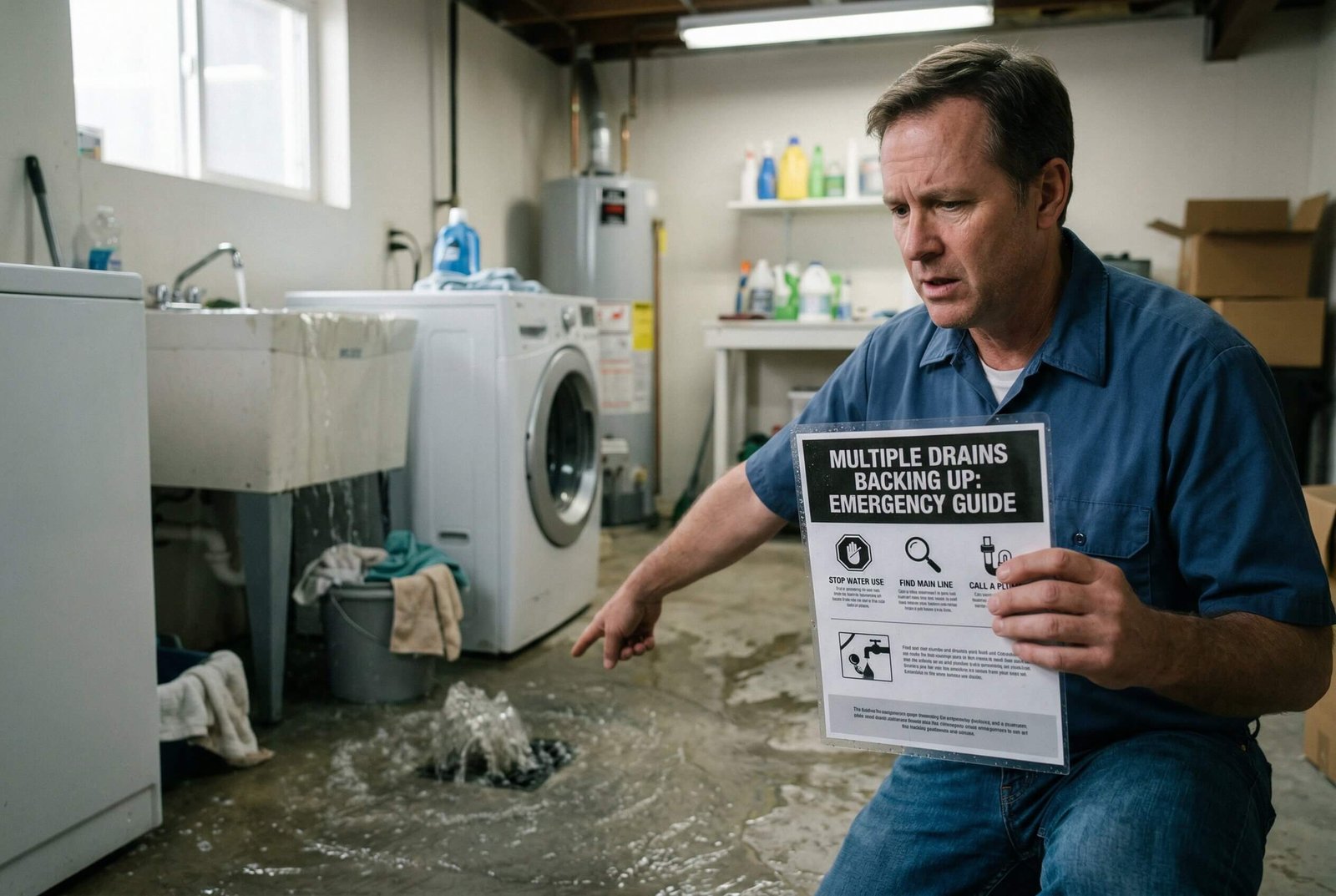
When multiple drains in your house start backing up at the same time, it is no longer a simple clog—it is a system-wide warning sign. Unlike a single slow sink or blocked shower, this type of situation indicates that water cannot move properly through the main drainage system. Instead of flowing out of the home, it begins to reverse direction and appear in multiple fixtures.
This is what makes multi-drain backups serious. The problem is not at the surface level—it is deeper in the system, often in the main sewer line that connects your entire house. When that line becomes restricted or blocked, every fixture in the home is affected. Sinks, toilets, tubs, and basement drains can all start reacting together, sometimes within minutes.
What often catches homeowners off guard is how quickly the situation escalates. You may notice a slow drain or a gurgling sound, and then suddenly water begins backing up in another fixture. In some cases, using water in one area—like flushing a toilet—causes water to rise in a completely different part of the house. This behavior is a clear signal that the system is under pressure and no longer functioning normally.
The biggest mistake during this type of drain emergency is treating it like a minor clog. Running more water, using chemical cleaners, or attempting quick fixes can increase pressure in the system and make the backup worse. What matters most is recognizing the seriousness early and responding in a controlled, structured way.
The goal is not to fix everything immediately. It is to stop the conditions causing the backup, contain any overflow, and prevent the situation from spreading further. Once the system is stabilized, the next steps—whether simple resolution or professional intervention—become much clearer.
What This Page Covers
ToggleWhat Counts as a Multiple Drain Backup Emergency
Not every slow or clogged drain is an emergency. But when more than one drain starts reacting at the same time, the situation changes completely. At that point, you are no longer dealing with a localized blockage—you are dealing with a system that cannot move water out of the house properly.
Understanding when a multi-drain issue becomes an actual emergency helps you act at the right time and avoid making the situation worse.
Single Fixture vs Multiple Fixture Behavior
A single clogged drain usually affects only one fixture. For example, a kitchen sink may drain slowly or stop completely, but the toilet, shower, and other sinks continue to work normally. This type of issue is isolated and often caused by buildup close to that specific drain.
When multiple fixtures are involved, the behavior is different. You may see water backing up in more than one location, or activity in one fixture affecting another. For example, flushing a toilet may cause water to rise in a bathtub or sink. This is a sign that the main drainage system is under pressure and cannot carry water away effectively.
Signs of a True Multi-Drain Backup
There are clear indicators that confirm you are dealing with a multiple drain backup and not separate minor issues.
- Two or more drains are backing up at the same time
- Water appears in one fixture when another is used
- Toilets, sinks, and tubs react together instead of independently
- Gurgling sounds are heard across different drains
- Water drains slowly everywhere, not just in one place
These signs show that the problem is affecting the entire system, not just one section of it.
When It Becomes an Emergency
A multi-drain backup becomes an emergency when water starts reversing direction instead of draining away, or when there is a risk of overflow and contamination. At this stage, the system is no longer functioning normally and requires immediate attention.
Situations that indicate an emergency include:
- Water backing up instead of draining in multiple fixtures
- Overflow beginning in sinks, tubs, or toilets
- Presence of dirty or sewage-smelling water
- Rapid worsening after using any plumbing fixture
- Water appearing in the lowest drains, such as basement or floor drains
Once these conditions appear, the focus must shift from observation to action. Continuing to use water or delaying response can quickly turn a manageable issue into widespread flooding.
The defining factor of a multiple drain backup emergency is loss of normal flow across the system. When drains stop working independently and begin reacting together, the issue is no longer minor. Recognizing this early allows you to act quickly, reduce damage, and avoid decisions that increase pressure in the system.
Most Common Causes of Multiple Drains Backing Up
When multiple drains in a house start backing up, the cause is almost never random. It usually points to a restriction or failure in the main drainage path that affects the entire system. Understanding the most common causes helps you quickly recognize what kind of problem you’re dealing with and how serious it is.
Main Sewer Line Blockage
The most common cause of multiple drains backing up is a blockage in the main sewer line. This is the pipe that carries wastewater from your entire home out to the municipal system or septic tank. When this line becomes blocked, water from every fixture has nowhere to go.
As more water is used, pressure builds in the system and forces water back into the house. This is why multiple drains start reacting at once. You may see water rising in a bathtub when a toilet is flushed, or backing up into a sink when the washing machine runs. This type of issue almost always requires immediate attention because it affects the entire plumbing system.
Heavy Buildup Inside Pipes
Over time, materials like grease, soap residue, food waste, and debris can accumulate inside pipes. This buildup narrows the space available for water to flow. While the system may still function at first, it becomes increasingly restricted.
Eventually, the flow becomes too limited to handle normal water usage. When multiple fixtures are used, the system cannot keep up, and water begins to back up into different drains. This type of problem often develops gradually but becomes noticeable suddenly once the system reaches its limit.
Tree Root Intrusion
Tree roots are a common external cause of sewer line problems, especially in older systems. Roots naturally seek out moisture and can enter small cracks or joints in underground pipes. Once inside, they grow and expand, creating blockages that restrict water flow.
This type of blockage can be unpredictable because it may partially restrict flow at first and then worsen over time. Eventually, the roots can cause enough obstruction to affect multiple drains simultaneously, leading to system-wide backup.
Collapsed or Damaged Pipe
In some cases, the issue is not buildup but structural damage. Pipes can shift, crack, or collapse due to age, ground movement, or external pressure. When this happens, the flow of water is physically restricted or completely blocked.
This type of problem often leads to recurring backups because the structure of the pipe itself is compromised. Even if water temporarily drains, the underlying issue remains, and the system continues to fail under normal use.
Municipal or External System Backup
Not all multi-drain backups originate within the home. In some situations, the municipal sewer system becomes overloaded—often during heavy rainfall or high usage periods. When this happens, pressure can build in the external system and push water back into connected homes.
This type of backup may occur even if your internal pipes are functioning properly. It often appears suddenly and may affect multiple homes in the area. While less common than internal causes, it is still a serious situation that requires immediate attention.
Each of these causes leads to the same result—water cannot leave the home as it should. When that happens, it begins to return through multiple drains. Recognizing the underlying cause helps you understand whether the issue is internal, external, temporary, or part of a larger system problem.
Warning Signs Before Multiple Drains Back Up
Multiple drain backups almost never happen without warning. In most homes, the drainage system gives clear early signals that pressure is building or flow is being restricted. These signs are often ignored because they don’t feel urgent, but they are the only window you have to act before the problem turns into a system-wide backup.
Recognizing these warning signs early allows you to prevent the situation from escalating into a full drain emergency.
Early Indicators
In the early stage, the system is still working, but not efficiently. Water drains, but more slowly than normal, and performance may vary depending on usage.
You may notice:
- Slow drainage in more than one fixture
- Water taking longer to clear in sinks, tubs, or showers
- Occasional minor backups that resolve on their own
At this stage, the system is under strain, but it has not yet failed. These signs are often dismissed as minor issues, but they indicate that buildup or restriction is developing inside the pipes.
Escalation Signs
As the condition worsens, the system begins to behave more noticeably. These signs indicate that airflow and water movement inside the pipes are being disrupted.
Common escalation signs include:
- Gurgling sounds in sinks, toilets, or drains
- Bubbling water in toilets or tubs
- Sewer or musty odors coming from drains
These symptoms often appear across multiple fixtures, not just one. When this happens, the system is no longer functioning normally and is moving closer to a full backup.
System Behavior Patterns
One of the most important warning signs is how different fixtures react to each other. In a healthy system, each drain operates independently. When the system is under pressure, this independence disappears.
Watch for patterns such as:
- Flushing a toilet causes water to rise in a bathtub or sink
- Using a washing machine leads to backup in another drain
- Water levels change in one fixture when another is used
These patterns are strong indicators of a main-line issue. They show that the system is struggling to handle normal flow and is beginning to redirect water internally.
Multiple drain backups are usually the final stage of a problem that has been building over time. The earlier you recognize these warning signs, the more control you have over the outcome. Acting during this stage can prevent widespread backup and reduce both damage and repair costs.
What to Do Immediately When Multiple Drains Back Up
When multiple drains in your home start backing up, the situation can escalate quickly because the entire system is under pressure. The first few actions you take will determine whether the problem stays contained or spreads into multiple areas of the house.
The goal is simple: stop adding pressure, prevent overflow, and stabilize the system before it gets worse.
Step 1: Stop All Water Usage
The most important step is to immediately stop using all water in the house. This includes sinks, toilets, showers, washing machines, and dishwashers. When the main drainage system is restricted, every bit of water you use adds pressure and forces more water back into the home.
Make sure everyone in the household understands this right away. Even small actions—like flushing a toilet—can quickly worsen the backup and cause additional overflow.
Step 2: Do Not Flush Toilets
Toilets are one of the fastest ways to add large amounts of water into the system. Flushing during a multi-drain backup can cause immediate overflow, especially if the blockage is severe.
Even if the toilet appears normal at first, it may not be draining properly. Avoid flushing until you are certain the system is functioning again. This prevents sudden, uncontrolled overflow that can spread contamination quickly.
Step 3: Identify the Lowest Affected Drain
Water from a backup usually appears first at the lowest point in the system, such as a basement drain, bathtub, or ground-level shower. Identifying this location helps you understand where overflow is most likely to occur.
Once you know the lowest point, you can monitor it closely and focus your efforts on containing water in that area. This reduces the risk of water spreading to multiple parts of the home.
Step 4: Contain Any Overflow
If water is already backing up or starting to spread, focus on keeping it contained. Use towels, cloths, or barriers to limit how far the water travels. Redirect it away from walls, furniture, or stored items that can be damaged.
This step is about control, not removal. Trying to eliminate all water immediately is less effective than preventing it from spreading further.
Step 5: Keep People Away from Affected Areas
Water from multiple drain backups may be contaminated, especially if it involves sewage. Limiting access to affected areas reduces exposure and prevents contamination from being carried into clean parts of the home.
Keep movement to a minimum and avoid unnecessary contact with the water. This helps maintain a controlled environment while you assess the situation.
In a multi-drain backup emergency, the right response is not complicated—but it must be immediate and structured. Stopping water use, avoiding actions that increase pressure, and containing the spread are what keep the situation manageable.
Safe Emergency Actions Homeowners Can Take
Once water use has been stopped and the system is no longer actively worsening, there is a short window where homeowners can take controlled, low-risk actions to limit damage. At this stage, the goal is not to fix the underlying blockage, but to manage the environment and prevent the situation from spreading.
The key is to stay within safe limits. Actions should focus on containment, protection, and observation—not repair.
Surface-Level Containment
If water is present but not rapidly rising, you can begin controlling how it spreads. The priority is to keep the affected area as small as possible and prevent water from reaching other parts of the home.
Use absorbent materials like towels or cloths to slow and redirect the flow. Guide water toward one area instead of allowing it to spread across multiple rooms or surfaces. This makes cleanup easier and reduces the chance of damage to flooring, walls, and belongings.
Work carefully and avoid splashing or pushing water further than necessary. Controlled movement is more effective than trying to remove everything at once.
Monitoring System Behavior
After stopping water usage, observe how the system responds. This helps you understand whether the situation is stabilizing or still under pressure.
Pay attention to:
- Whether water levels stop rising
- If drains begin to slowly clear or remain stagnant
- Any continued sounds like gurgling or bubbling
These observations provide valuable information about the severity of the blockage. A stable system may allow for limited cleanup, while continued pressure indicates a deeper issue that requires professional attention.
Moving Vulnerable Items
If it is safe to do so, move items away from affected areas to prevent damage. Basement storage, bathroom items, and floor-level belongings are especially at risk during multi-drain backups.
Focus on lifting items rather than carrying them far distances. Move them to higher surfaces or dry areas within the same space. Prioritize materials that absorb water easily, such as cardboard, fabric, and wood-based items.
This step can significantly reduce loss with minimal effort if done early.
Using Protective Measures
Even when taking basic actions, safety should remain a priority. Water from multiple drain backups may contain contaminants, especially if sewage is involved.
Wear protective gloves and avoid direct skin contact with the water. Move carefully to prevent slipping, and limit the amount of time spent in affected areas. These precautions help you manage the situation without increasing personal risk.
Safe homeowner actions during a multi-drain backup are about control and awareness, not repair. Managing water movement, protecting belongings, and observing system behavior can limit damage while keeping the situation safe until it is fully resolved.
Actions to Avoid During Multi-Drain Backup
When multiple drains are backing up, the system is already under pressure and not functioning normally. At this stage, certain actions—especially quick “fix attempts”—can make the situation worse in minutes. Knowing what not to do helps you avoid turning a contained issue into widespread overflow or contamination.
The safest approach during a multi-drain backup is controlled restraint. Avoid actions that add pressure, disturb the system, or introduce new risks.
Do Not Run Water to Test Drains
A common mistake is running water to see if the drains are “clearing.” In a multi-drain backup, this is one of the fastest ways to worsen the situation.
When the main line is restricted, any additional water you introduce has nowhere to go. It increases internal pressure and forces more water back into the home. Even a short test—like turning on a faucet or flushing a toilet—can trigger overflow in another fixture.
Once a system-wide backup is suspected, all water use should remain stopped until the issue is clearly resolved.
Avoid Chemical Drain Cleaners
Chemical drain cleaners are designed for localized clogs, not system-wide backups. In a multi-drain situation, the blockage is typically deeper in the main line, where these products cannot reach effectively.
Using chemicals in this condition can introduce additional problems. The chemicals may sit in the pipes without clearing the blockage, creating a harsh environment inside the system. This can complicate future work and increase risk if pipes are already under stress.
More importantly, relying on chemicals delays proper action while the system continues to remain under pressure.
Do Not Attempt Aggressive Snaking
Attempting to clear a main-line blockage with basic tools is risky, especially without knowing the exact location or nature of the obstruction. Aggressive snaking can push the blockage further, damage the pipe, or create a sudden release of backed-up water.
In a system that is already under pressure, disturbing the blockage without proper control can make the situation worse instead of better. Without visibility inside the pipe, it’s difficult to apply the right amount of force or direction safely.
Do Not Ignore Early Overflow
Small amounts of water appearing in one fixture may seem manageable, but in a multi-drain backup, this is often the beginning of a larger problem. Ignoring early signs allows pressure to continue building until multiple areas are affected.
Once overflow begins, it rarely stays limited to one location. Acting early—by stopping water use and containing the situation—prevents the backup from spreading to additional fixtures or areas of the home.
Avoiding these actions is what keeps a multi-drain backup from escalating rapidly. In these situations, doing less—but doing it correctly—is often the safest and most effective response.
How to Confirm It’s a Main Sewer Line Problem
When multiple drains are backing up, the most important question is whether the issue is in the main sewer line or somewhere smaller within the system. This distinction matters because a main-line problem affects the entire house and requires a different response than a localized clog.
You don’t need specialized tools to start identifying this. The plumbing system itself gives clear signals through how different fixtures behave together.
Multiple Fixtures Reacting Together
One of the strongest indicators of a main sewer line problem is when multiple fixtures respond at the same time. In a properly functioning system, each drain operates independently. When the main line is restricted, that independence disappears.
You may notice that flushing a toilet causes water to rise in a bathtub, or using a sink affects another drain elsewhere in the house. This shared behavior means that all fixtures are connected to a single point of restriction. When that point becomes blocked, the entire system reacts together.
Lowest Drain Backing Up First
Water from a backup will always look for the easiest path to escape, which is usually the lowest point in the system. In many homes, this is a basement floor drain, a ground-level shower, or a low-positioned bathtub.
If water appears in these lower drains first—especially when water is used upstairs—it strongly suggests a main-line issue. The system is unable to push water out, so it redirects it to the lowest available outlet.
Immediate Reaction to Water Usage
Another key pattern is how quickly the system reacts when water is used. In a main sewer line problem, the response is often immediate. Running a faucet, flushing a toilet, or using an appliance may cause water levels to rise in another drain within seconds.
This direct cause-and-effect relationship indicates that the system is already under pressure. It cannot handle additional flow, so any new water forces a visible backup elsewhere in the home.
Confirming a main sewer line problem is about observing system-wide behavior, not isolated symptoms. When multiple drains react together, lower drains back up first, and water usage triggers immediate responses, the issue is almost always in the main line.
Recognizing this early helps you avoid ineffective fixes and focus on the right next steps to control the situation.
When DIY Is No Longer Safe or Effective
There is a point in a multiple drain backup where homeowner action should stop. Early steps like stopping water use and containing overflow are helpful, but once the problem reaches a system-wide level, trying to fix it yourself often leads to more damage or risk.
The key is recognizing when the situation has moved beyond surface control and requires proper diagnosis and equipment.
Multiple Fixtures Already Backing Up
If two or more fixtures are backing up at the same time, the issue is no longer isolated. This indicates a blockage or failure in the main drainage system. At this stage, basic tools and methods are unlikely to reach or resolve the problem.
Trying to force a solution without knowing the location of the blockage can make things worse. It may push debris further into the system or increase pressure, leading to additional overflow. When the system is reacting across multiple fixtures, the problem has already moved beyond safe DIY limits.
Sewage Presence or Strong Odor
If the water involved is dirty, has a strong sewer smell, or contains visible waste, it should be treated as contaminated. This changes the situation from a simple plumbing issue to a health and safety concern.
Handling contaminated water without proper protection or equipment increases exposure risk and can spread contamination throughout the home. At this point, limiting contact and focusing on containment is more important than attempting to resolve the blockage.
Repeated Backup Events
If multiple drain backups have occurred more than once, especially within a short period, the issue is unlikely to be temporary. Recurring problems usually indicate a deeper cause such as buildup, root intrusion, or structural damage in the main line.
Temporary fixes may provide short-term relief, but they do not address the underlying condition. Continuing to rely on those methods often results in repeated emergencies that become more severe over time.
Knowing when to stop is part of handling a drain emergency correctly. DIY actions are useful for early control, but they are not designed to resolve complex or system-wide problems. Recognizing the limits of safe action protects both your home and your safety while allowing the issue to be addressed properly.
What a Plumber Does in a Multi-Drain Emergency
When multiple drains are backing up, a plumber’s job is not just to clear water—it’s to identify exactly where the system is failing and restore proper flow without causing further damage. Unlike trial-and-error DIY attempts, a professional approach follows a clear sequence: diagnosis, targeted action, and verification.
Diagnosis of System Behavior
The first step is understanding how the system is reacting. A plumber will ask what happened, which fixtures were affected, and what triggered the backup. This information helps narrow down whether the issue is in the main line, a specific branch, or influenced by external conditions.
They will also observe how different drains respond when water is used (if safe to test). The goal is to confirm patterns—such as multiple fixtures reacting together or water rising in lower drains—that point to the location of the blockage. This step avoids guesswork and ensures the right solution is applied.
Clearing the Main Line
Once the blockage location is identified, the plumber uses the appropriate method to clear it. The approach depends on the type of obstruction and how severe it is.
Common methods include:
- Using a drain snake or auger to break through and remove blockages
- Performing a camera inspection to locate and assess the exact issue
- Applying high-pressure cleaning to remove buildup along pipe walls
Each method is chosen based on what the system requires. For example, a simple clog may be cleared quickly, while deeper or more complex issues require inspection before clearing to avoid damaging the pipe.
Verifying Full System Flow
After the blockage is cleared, the plumber tests the system to ensure it is functioning properly again. This involves running water through multiple fixtures and checking that all drains operate independently without signs of backup or pressure.
They will also assess whether the issue is likely to return. If there are signs of buildup, damage, or recurring patterns, recommendations may be made to prevent future backups. This step ensures the solution is not temporary but restores confidence in the system’s performance.
A professional response to a multi-drain backup focuses on precision and completeness. By diagnosing the issue correctly, applying the right method, and verifying the results, the plumber not only resolves the immediate problem but also reduces the risk of it happening again.
Health and Safety Risks of Multi-Drain Backups
When multiple drains are backing up, the situation is not just a plumbing issue—it creates health, safety, and environmental risks inside the home. Because the problem affects more than one fixture, contaminated water can spread across multiple areas, increasing exposure and making the situation harder to control.
Understanding these risks helps you respond carefully and avoid actions that may seem helpful but actually increase danger.
Sewage Exposure and Contamination
In many multi-drain backups, the water involved is not clean. It may contain waste or residue from the sewer line, even if it looks relatively clear at first. This means that any surface the water touches—floors, fixtures, or nearby objects—can become contaminated.
Direct contact should be avoided as much as possible. Walking through affected areas or handling items without protection can spread contamination to other parts of the home. Treating the water as unsafe from the beginning helps prevent unnecessary exposure and reduces the effort required during cleanup.
Spread of Contaminated Water
One of the biggest risks in multi-drain backups is how easily water spreads between areas. Because multiple fixtures are involved, water can appear in bathrooms, kitchens, and basements at the same time. Movement between these areas can carry contamination with it.
Limiting access and keeping the affected areas contained helps prevent cross-contamination. The more controlled the environment remains, the easier it is to manage both the immediate situation and the cleanup afterward.
Slip and Fall Hazards
Water on floors—especially when it appears unexpectedly—creates a significant slip risk. In multi-drain backups, surfaces may become wet in multiple locations, increasing the chance of accidents.
This is especially important in areas like bathrooms, kitchens, and basements where flooring may already be smooth. Moving carefully, reducing unnecessary movement, and keeping others away from affected areas helps lower the risk of injury during the emergency.
Electrical Risks in Affected Areas
When water spreads into areas with electrical outlets, appliances, or wiring, the situation becomes more dangerous. Multi-drain backups can affect multiple rooms, increasing the likelihood that water reaches areas with electrical components.
Avoid using or approaching electrical devices in wet areas. Even if the water level seems low, the risk is still present. Maintaining distance from these areas until conditions are clearly safe is the best way to reduce electrical hazards.
Multi-drain backups create a combination of risks that extend beyond the plumbing system. Managing contamination, limiting movement, and staying aware of your surroundings are what keep the situation safe while it is being resolved.
Tools and Supplies for Multi-Drain Emergency Preparedness
When multiple drains start backing up, the situation can affect several areas of the home at once. Having the right tools ready allows you to respond quickly without confusion. The goal is not to fix the blockage, but to contain water, protect yourself, and manage the environment safely until the issue is resolved.
Preparation reduces hesitation. When supplies are already available, you can act immediately instead of searching for what you need while the problem spreads.
Basic Emergency Kit
A simple, dedicated set of items can make a significant difference during the early stage of a multi-drain backup. These are everyday tools, but they become critical when used at the right time.
- Thick waterproof gloves to avoid direct contact
- Old towels or absorbent cloths to control water spread
- A bucket to collect or redirect water
- Waterproof or washable footwear for safe movement
Keeping these items together in one place ensures that you can respond quickly and maintain control as the situation develops.
Cleanup and Disinfection Supplies
After the immediate backup is stabilized, proper cleanup becomes essential. Even if the water appears clean, it should be treated cautiously to avoid lingering contamination.
- Disinfecting solutions for surfaces
- Cleaning cloths or disposable wipes
- Trash bags for removing damaged or contaminated materials
These supplies help restore affected areas safely and reduce the chance of odor, residue, or bacteria remaining after the water is removed.
Monitoring and Visibility Tools
Multi-drain backups can affect different parts of the house, sometimes simultaneously. Being able to monitor these areas clearly helps you stay aware of how the situation is evolving.
- A flashlight to check low-light areas like basements or under fixtures
- Basic tools to inspect visible drain openings
- Items that help you track water levels and spread
These tools are not for repair—they help you understand what is happening so you can respond appropriately without guesswork.
Preparedness during a multi-drain backup is about control and awareness, not complexity. With a few simple supplies ready, you can manage the early stages more effectively, reduce damage, and maintain a safer environment until the system is properly restored.
Cost of Fixing Multiple Drain Backups
When multiple drains are backing up, the cost is not just about clearing a clog—it reflects how deep the problem is in the system and how much impact it has caused inside the home. These situations often involve the main sewer line, which makes them more complex than a single drain issue.
Understanding the typical cost structure helps you make faster decisions during the emergency instead of delaying and increasing damage.
Typical Cost Ranges
Costs usually depend on how the blockage is cleared and whether additional diagnosis is required.
- Main sewer line cleaning: $200–$800
- Advanced clearing (heavy buildup or difficult blockage): $300–$1,000+
- Camera inspection for diagnosis: $100–$500
- High-pressure cleaning for deeper issues: $250–$800+
If the issue is resolved at the blockage stage, these costs typically cover the repair. However, if the backup has caused water damage inside the home, additional cleanup and restoration costs may apply.
Factors That Affect Cost
The total cost varies based on how severe and complex the situation is. The key factors include:
- Location of the blockage (deep main line vs accessible area)
- Type of obstruction (buildup, roots, or structural damage)
- Accessibility of the plumbing system
- Number of fixtures affected and extent of backup
For example, a simple blockage near an access point is much easier and less expensive to fix than a deep main-line issue requiring inspection and advanced equipment.
Emergency and After-Hours Pricing
Multi-drain backups often require urgent attention, especially if water is backing up into living spaces. Emergency service outside normal working hours can increase costs.
You may encounter:
- Emergency service call fees
- Higher hourly labor rates
- Additional charges for urgent or priority response
While these costs may seem higher, they reflect the need for immediate service and availability.
Why Acting Early Reduces Cost
One of the biggest cost drivers is how long the system remains under pressure or actively backing up. The longer the issue continues, the more likely it is to cause damage beyond the plumbing itself.
If addressed early:
- Costs are typically limited to clearing the blockage
If delayed:
- Costs may include cleanup, repairs, and restoration
Acting quickly helps contain the problem and prevents it from expanding into a more expensive situation. In most cases, early intervention is significantly more cost-effective than waiting.
Multiple drain backups can vary in cost, but the pattern is consistent:
faster response leads to lower total damage and lower overall expense.
What to Do After the Backup Is Resolved
Once multiple drains stop backing up and water begins to flow normally again, it may feel like the problem is over. In reality, this is the stage where you determine whether the issue is fully resolved or likely to return. Proper cleanup, observation, and follow-up steps are what prevent hidden damage and recurring emergencies.
The focus now shifts from stopping the backup to restoring the environment and confirming system stability.
Cleaning and Disinfection
Any area affected by backup water should be cleaned thoroughly, even if the water appeared relatively clean. Multi-drain backups often involve water that has passed through the drainage system, which means surfaces may carry residue or contaminants.
Start by removing any remaining debris, then clean all affected surfaces using appropriate disinfecting solutions. Pay attention to floors, fixtures, and nearby items that may have been splashed or exposed. The goal is not just to remove visible water, but to ensure the area is safe and free from lingering contamination.
Taking time to clean properly reduces the risk of odor, residue buildup, and future hygiene concerns.
Monitoring System Behavior
After the system is restored, it’s important to observe how it behaves during normal use. Many multi-drain backups are caused by issues that are not completely resolved in a single clearing.
Watch for:
- Slow drainage returning in multiple fixtures
- Gurgling sounds after using water
- Changes in toilet water levels
- Any signs of water appearing where it shouldn’t
If these symptoms reappear, it may indicate that the blockage was only partially cleared or that the system is still under stress. Early detection at this stage helps prevent another full backup.
Follow-Up Inspection
In situations where multiple drains were involved, a follow-up inspection is often a practical step. Even if the system appears normal, underlying causes such as buildup, root intrusion, or pipe damage may still exist.
A proper inspection can confirm whether the line is fully clear and identify any conditions that could lead to future backups. Addressing these issues early helps avoid repeated emergencies and reduces long-term repair costs.
What you do after the backup is resolved determines whether the problem is truly finished or just temporarily controlled. Cleaning, monitoring, and follow-up action ensure that your system returns to stable operation and stays that way.
How to Prevent Multiple Drain Backups
Multiple drain backups are usually the result of gradual system stress, not sudden failure. The plumbing system can handle normal use for a long time, but when buildup increases or flow becomes restricted, it eventually reaches a point where it can no longer function properly. Prevention is about reducing that stress and responding early when warning signs appear.
The focus should be on consistent habits and awareness, not complex maintenance routines.
Proper Drain Usage
What goes into your drains every day directly affects how your system performs over time. Materials that seem harmless in small amounts can accumulate and restrict flow inside the pipes.
To reduce this risk:
- Avoid pouring grease, oil, or fat down kitchen drains
- Do not flush wipes, paper towels, or hygiene products
- Limit food waste entering sinks, even with disposals
- Be mindful of heavy soap or product buildup in bathroom drains
These habits prevent gradual buildup that narrows the pipe and increases pressure within the system.
Monitoring Early Warning Signs
The plumbing system often provides early signals before a multi-drain backup occurs. These signs may seem minor, but they indicate that the system is no longer operating at full capacity.
Pay attention to:
- Slow drainage across multiple fixtures
- Gurgling sounds in sinks or toilets
- Occasional odors coming from drains
- Small water level changes in toilets
Responding to these signs early helps prevent pressure from building to the point where water reverses direction.
Maintenance and Inspection
In homes with a history of drainage issues or older plumbing systems, periodic maintenance can help keep the system functioning properly. This is especially important if there are external factors such as nearby trees or previous blockages.
Occasional inspection or cleaning of the main line can remove buildup before it becomes a blockage. This proactive approach reduces the likelihood of sudden backups and keeps the system operating smoothly.
Preventing multiple drain backups comes down to reducing strain on the system and acting early when signs appear. Small, consistent actions—combined with attention to how your drains behave—are what keep water flowing out of your home instead of back into it.
Long-Term Prevention Strategy
Preventing multiple drains from backing up over the long term is not about reacting to emergencies—it’s about understanding your plumbing system and staying ahead of stress buildup. Most system-wide backups happen after a series of small warning signs are ignored. A long-term strategy focuses on recognizing those patterns early and acting before the system fails.
Understanding Your Plumbing System
Every home has a central drainage path that connects all fixtures to the main sewer line. When multiple drains back up, it means this central path is restricted. Knowing how your system is laid out—where the main line runs, which drains are lowest, and how different fixtures connect—helps you understand where problems are likely to appear first.
If your home has experienced slow drains, gurgling sounds, or past backups, those are not isolated incidents. They are indicators of how your system behaves under pressure. Recognizing these patterns allows you to anticipate problems instead of reacting to them.
Routine Inspection Planning
The main sewer line is one of the most important parts of your plumbing system, but it is also one of the least visible. Over time, buildup, minor obstructions, or structural wear can develop without obvious signs.
Periodic inspection—especially after warning signs or previous backups—can identify these issues early. In older homes or properties with recurring problems, inspections become even more valuable. Addressing small issues before they grow reduces the risk of sudden system-wide failure.
Acting Early on Small Changes
The most effective long-term prevention step is responding to small changes in how your drains behave. Slightly slower drainage, occasional odors, or minor backup behavior are often the first signs of a developing issue.
Taking action at this stage—whether through basic maintenance or professional evaluation—prevents pressure from building in the system. Waiting until multiple drains are affected removes that opportunity and turns a manageable issue into an emergency.
A long-term prevention strategy is built on awareness and timing, not complexity. Understanding your system, monitoring its behavior, and acting early on small warning signs are what keep your drains functioning properly and prevent system-wide backups.
Final Thoughts
When multiple drains in your house start backing up, the situation may feel sudden, but it is almost always the result of a system that has been under stress for some time. The key difference between a minor issue and a disruptive emergency is how early those warning signs are recognized and how correctly the situation is handled once it begins.
The most important takeaway is that multi-drain backups are system problems, not individual fixture problems. Treating them like isolated clogs—by running water, using chemicals, or attempting quick fixes—usually makes the situation worse. What actually helps is a structured response: stopping water use, containing the spread, and avoiding actions that increase pressure in the system.
It’s also important to understand that control comes from calm decision-making, not rushing into action. The first few steps you take determine whether the issue stays contained or spreads into multiple areas of the home. Focusing on safety, limiting contamination, and stabilizing the system creates a clear path forward.
Over time, prevention becomes less about effort and more about awareness. Slow drains, gurgling sounds, and small irregularities are not minor inconveniences—they are early signals. Acting on them early prevents the kind of pressure buildup that leads to multiple drains backing up at once.
Multiple drain backups are serious, but they are manageable when approached correctly. The goal is not to fix everything yourself—it is to respond safely, limit damage, and make informed decisions at the right time.