
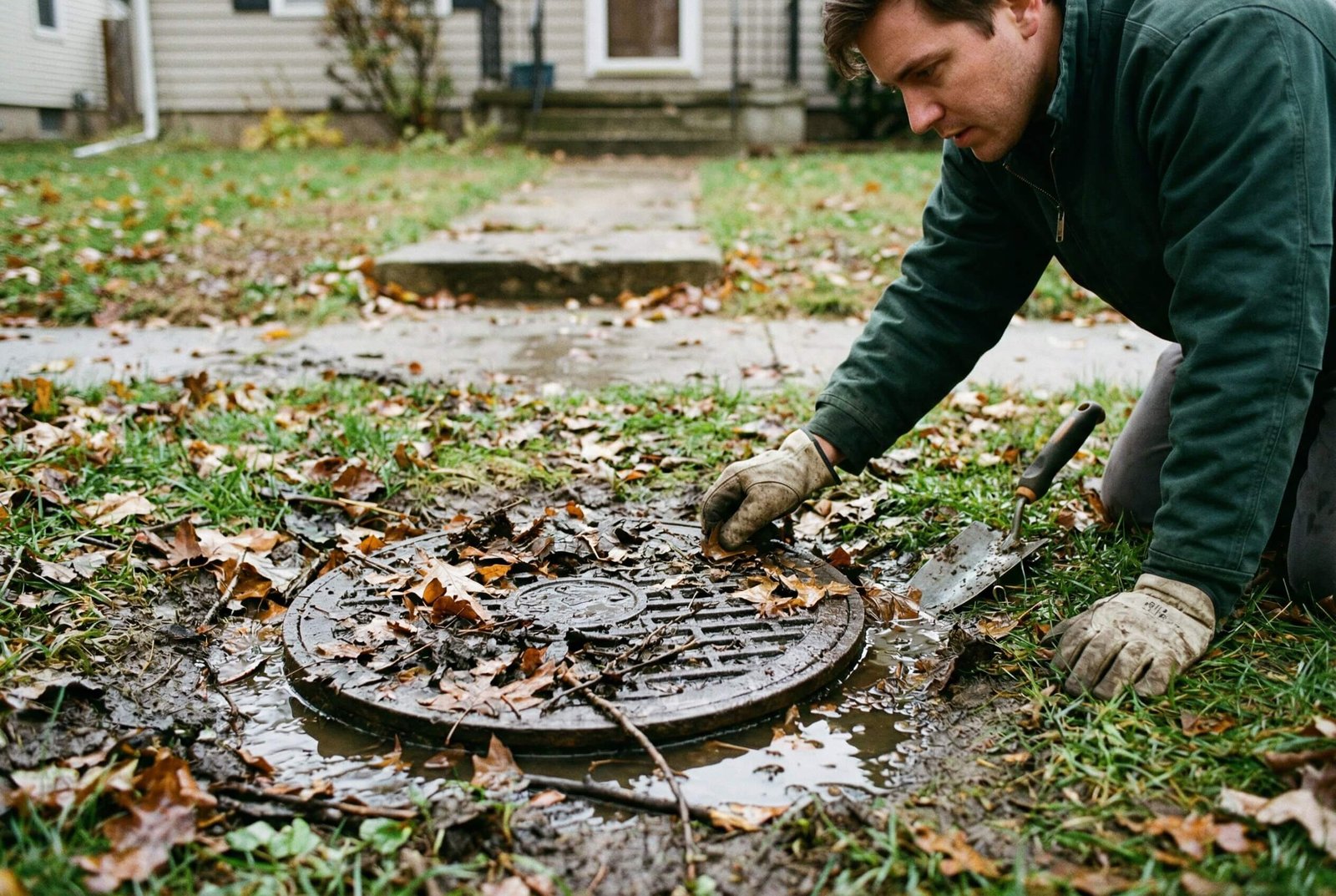
An outside drain clogged in the yard is one of the most common drainage problems homeowners face, especially after heavy rain or seasonal debris buildup. At first, it may look like a minor issue—just a little standing water near a drain grate—but in reality, it often signals a deeper problem somewhere in your outdoor drainage system. What starts as slow drainage can quickly turn into a flooded yard, water pooling near your foundation, or even moisture entering your basement or crawl space.
Outdoor drains in U.S. homes are designed to move large volumes of rainwater away from the property efficiently. These systems rely heavily on gravity, proper slope, and clear underground piping. When any part of that system becomes restricted—whether at the surface or deep underground—the entire flow is disrupted. Unlike indoor drains, where clogs are usually localized, yard drain issues often involve multiple factors like soil, roots, debris, and pipe conditions.
In this guide, we’ll break down exactly why outside drains get clogged in the yard, what symptoms to watch for, where the blockage is most likely occurring, and how professional plumbers diagnose the issue. By understanding how your outdoor drainage system behaves, you can identify problems early and prevent serious damage to your property.
What This Page Covers
ToggleWhat Is an Outside Yard Drain and How It Works
Outdoor drainage systems in U.S. homes are designed to manage excess water from rain, irrigation, and runoff. Unlike indoor plumbing, which deals with wastewater under pressure, yard drains rely almost entirely on gravity and proper design to move water away from your home. When everything is working correctly, water flows quickly through the system and exits safely away from your property. But when any part of this system is blocked or compromised, water has nowhere to go—and that’s when you start seeing pooling, flooding, or slow drainage in your yard.
Understanding how these systems work is the first step in diagnosing why an outside drain gets clogged. Most homeowners only see the drain grate on the surface, but the real system is underground, and that’s where many problems develop.
Types of Outdoor Drains in U.S. Homes
Different homes use different types of yard drains depending on landscape design, rainfall patterns, and property layout. The most common ones include:
-
Yard catch basins
These are the most visible outdoor drains, typically covered with a grate. They collect surface water and direct it into underground pipes. -
French drains
A perforated pipe surrounded by gravel, designed to collect and redirect groundwater rather than surface water. -
Channel drains
Long, narrow drains often installed along driveways, patios, or garage entrances to capture runoff. -
Downspout drains
These connect your roof gutters to underground pipes, carrying rainwater away from your home. -
Stormwater drains
Larger systems that may connect to municipal storm drains or a discharge point like a dry well or street outlet.
Each of these drains serves a specific purpose, but they often connect into the same underground drainage network. That means a clog in one area can affect the entire system.
How Water Flows Through a Yard Drain System
Outdoor drainage systems are simple in concept but very sensitive to disruption. Here’s how water typically moves through the system:
-
Surface water enters the drain
Rainwater or irrigation runoff flows into a drain grate or catch basin. -
Water moves into underground pipes
From the drain, water enters a network of pipes buried beneath your yard. -
Gravity drives the flow
These pipes are installed at a slight slope so water naturally flows downhill without pumps. -
Water exits the property
The system discharges water to a safe location, such as:-
The street curb
-
A storm sewer system
-
A dry well or drainage field
-
If any part of this flow is interrupted—whether at the entry point, inside the pipe, or near the exit—the system slows down or completely backs up.
Why Outdoor Drains Are Critical for Your Property
Many homeowners underestimate how important yard drains are until a problem appears. These systems play a major role in protecting both your home and landscape.
-
Prevents yard flooding
Without proper drainage, even moderate rain can lead to standing water across your lawn. -
Protects your home’s foundation
Excess water near the foundation can seep into basements or weaken structural integrity over time. -
Reduces soil erosion
Controlled drainage prevents water from washing away soil and damaging landscaping. -
Keeps outdoor areas usable
Proper drainage ensures your yard, driveway, and walkways remain dry and functional.
When an outside drain becomes clogged, all of these protections start to fail. That’s why even small signs of drainage issues should be taken seriously—they often point to a larger problem developing underground.
Common Symptoms of a Clogged Outside Drain in Yard
When an outside drain starts to clog, the signs usually appear gradually before turning into a more serious drainage issue. Unlike indoor clogs that cause immediate backups, yard drain problems often develop over time as debris, soil, or roots restrict water flow. Recognizing these early symptoms can help you understand what’s happening inside your drainage system before it leads to flooding or structural damage.
Visible Signs Homeowners Notice
The most obvious symptoms are seen directly in your yard, especially after rainfall or watering.
-
Standing water in the yard
Puddles that remain for hours—or even days—after rain are a strong indication that water isn’t draining properly. -
Water pooling around the drain
Instead of flowing into the drain, water collects around the grate, suggesting a blockage right at the surface or just below it. -
Slow drainage after rain or irrigation
Water eventually drains, but much slower than it should. This often means a partial blockage inside the pipe. -
Water collecting in low spots
Certain areas of your yard may consistently stay wet, indicating uneven drainage or a failing system.
Drain-Specific Warning Signs
Some symptoms are directly related to how the drain itself behaves, giving clues about where the issue might be.
-
Overflowing drain grates or catch basins
When water rises above the grate level, it usually means the system cannot handle incoming flow due to a blockage downstream. -
Water backing up toward the house
Instead of moving away, water starts flowing back toward your home, which can be a serious warning sign. -
Gurgling or unusual sounds
Air trapped in partially blocked pipes can create bubbling or gurgling noises during drainage. -
Debris visibly stuck in the drain opening
Leaves, mud, or grass buildup at the surface can restrict entry and signal deeper clogging inside.
Secondary Effects Around the Property
Even if the drain itself isn’t visibly overflowing, the surrounding environment often reflects drainage problems.
-
Soggy or spongy lawn areas
Persistent moisture in certain spots indicates water isn’t moving through the system properly. -
Mud accumulation near drains
Soil washing into the drain and settling nearby suggests both surface and internal blockages. -
Increased mosquito activity
Standing water creates an ideal breeding ground for mosquitoes and other pests. -
Unpleasant odors from the yard
Stagnant water and organic debris can produce foul smells, especially in warm weather.
These symptoms don’t just indicate that a drain is clogged—they also help narrow down where the problem might be. For example, surface pooling points to an entry blockage, while slow drainage or backups often suggest a deeper issue in the underground piping.
Most Common Causes of Outside Drain Clogs
When an outside drain in your yard becomes clogged, it’s rarely caused by just one factor. In most cases, it’s a combination of surface debris, underground buildup, and environmental conditions that gradually restrict water flow. Understanding these causes is key to diagnosing where the problem is and how serious it might be.
Surface-Level Blockages
The most common and easiest-to-identify clogs happen right at the drain opening. These blockages prevent water from even entering the system.
-
Leaves and organic debris buildup
Falling leaves, twigs, and plant material can quickly accumulate over drain grates, especially during seasonal changes. -
Dirt and mulch entering the drain
Landscaping materials like soil, mulch, and bark often wash into the drain during rain, forming a dense blockage. -
Grass clippings and lawn waste
After mowing, loose grass can collect around the drain and restrict water entry. -
Trash and foreign objects
Small debris like plastic, wrappers, or yard waste can block the surface or get pulled into the pipe.
These issues often start small but can quickly lead to larger clogs deeper in the system if not addressed.
Underground Pipe Blockages
Many of the more serious drainage problems occur below the surface, where homeowners can’t easily see them.
-
Tree root intrusion
Roots naturally grow toward moisture, making drain pipes a prime target. Over time, roots can enter small cracks and expand, blocking water flow. -
Mud and sediment buildup
Fine soil particles carried by water can settle inside pipes, gradually narrowing the passage. -
Organic sludge formation
Decaying leaves and debris inside the pipe can form a thick, sticky layer that traps more material over time. -
Pipe scaling and residue
Minerals and deposits can accumulate along pipe walls, especially in older systems.
These underground clogs are often harder to detect and usually require professional inspection to confirm.
Structural and Installation Issues
Not all clogs are caused by debris—some are the result of how the drainage system was built or how it has aged over time.
-
Improper slope or grading
Yard drains rely on gravity. If the pipe doesn’t have the correct slope, water slows down and debris settles more easily. -
Collapsed or cracked pipes
Over time, pipes can break due to soil movement, heavy loads, or aging materials, creating obstructions. -
Poor-quality installation
Incorrect pipe connections, undersized pipes, or improper layout can lead to chronic drainage issues. -
Misaligned pipe joints
Sections of pipe that shift can create edges where debris gets caught and builds up.
These problems often lead to recurring clogs even after the system is cleared.
External and Environmental Causes
Outdoor drains are constantly exposed to environmental conditions, which makes them more vulnerable than indoor plumbing.
-
Heavy rainfall overwhelming the system
Excess water can carry large amounts of debris into the drain and exceed its capacity. -
Animal nests or blockages
Small animals, insects, or rodents may build nests inside drain openings or pipes. -
Landscaping changes
Adding soil, plants, or hardscaping can alter how water flows toward the drain, increasing the risk of clogging. -
Erosion and shifting ground
Changes in soil structure can affect pipe alignment and water flow patterns.
Most clogged yard drains are not caused by a single issue but by a buildup of multiple factors over time. A surface blockage may be the visible symptom, while the real problem lies deeper in the pipe.
Hidden Causes Homeowners Often Miss
Many yard drain clogs appear to be simple surface issues, but in reality, the root cause is often hidden deeper within the drainage system. These less obvious problems are the reason why some drains continue to clog even after cleaning the grate or removing visible debris. Professional plumbers frequently find that the real issue lies in underground conditions, connected systems, or long-term structural changes.
Downspout Drain Line Blockages
One of the most overlooked causes of yard drain problems is the connection between your roof drainage and the underground system.
-
Roof water carries heavy debris load
Leaves, shingle grit, and dirt from gutters often wash directly into downspout drains. -
Underground downspout pipes clog over time
These pipes are rarely cleaned, allowing buildup to accumulate unnoticed. -
System overload during heavy rain
Large volumes of water from the roof can overwhelm partially blocked pipes, causing backups in the yard. -
Shared piping with yard drains
In many homes, downspouts and yard drains connect to the same line, meaning a clog in one affects the other.
This is why you may see yard flooding even when the surface drain itself looks clear.
Pipe Bellies and Low Spots
A pipe belly is a sagging section in the underground pipe where water collects instead of flowing smoothly.
-
Water gets trapped in the low section
This slows down drainage and allows debris to settle. -
Sediment buildup increases over time
Dirt, leaves, and organic matter accumulate in these low spots, eventually forming a blockage. -
Common in older or poorly installed systems
Soil shifting or improper installation often leads to pipe sagging. -
Creates recurring clog issues
Even after clearing the drain, debris quickly builds up again in the same location.
Pipe bellies are a hidden structural issue that often requires camera inspection to identify.
Stormwater System Issues
Sometimes the problem isn’t within your yard at all, but further downstream.
-
Municipal storm drain backups
If the city storm system is overloaded or blocked, water cannot exit your drainage system properly. -
Shared neighborhood drainage lines
In some areas, multiple homes connect to a common drainage path, which can become overwhelmed. -
High water table conditions
Saturated ground can slow down or stop drainage entirely. -
Blocked discharge points
The exit point of your drain (such as a curb or outlet) may be obstructed by debris or sediment.
In these cases, your yard drain may appear clogged even though the issue is beyond your property.
Soil Compaction and Ground Conditions
Changes in the soil around your drainage system can significantly impact how well it functions.
-
Compacted soil restricts water absorption
Water remains on the surface longer, increasing pressure on the drain system. -
Heavy foot traffic or machinery
Driving or walking over drain lines can compress soil and even damage pipes. -
Clay-heavy soil conditions
Clay soil drains slowly and can contribute to persistent standing water. -
Ground shifting over time
Natural settling can misalign pipes or change drainage slopes.
These factors often develop gradually, making them difficult for homeowners to notice until drainage problems become severe.
Landscaping Changes Affecting Drain Flow
Even small modifications to your yard can disrupt how water moves through the drainage system.
-
Adding new soil or raised beds
Changes the slope and redirects water flow away from drains. -
Installing patios, walkways, or driveways
Hard surfaces increase runoff and can overwhelm existing drains. -
Planting trees or large shrubs near pipes
Roots grow toward moisture and can infiltrate drain lines. -
Improper grading after landscaping projects
Water may no longer flow toward the drain as intended.
Many recurring drain problems start shortly after landscaping changes, even if the connection isn’t immediately obvious.
Hidden causes are often the reason why yard drain issues keep coming back. While surface cleaning may temporarily improve drainage, these underlying problems continue to restrict water flow until properly diagnosed.
Where the Blockage Is Usually Located
When an outside drain in the yard becomes clogged, one of the most important steps in diagnosis is identifying where the blockage is actually located. The location of the clog determines how the system behaves, what symptoms appear, and how serious the issue may be. In many cases, what you see on the surface is only a small part of a larger problem deeper in the drainage line.
Professional plumbers typically break down yard drain clogs into a few common locations based on how water is restricted within the system.
Surface-Level Blockages at the Drain Opening
These are the most visible and easiest-to-understand clogs, occurring right at the entry point of the drain.
-
Debris covering the grate
Leaves, grass, and dirt physically block water from entering the drain. -
Mud sealing the drain opening
Wet soil can compact over the grate, especially after heavy rain. -
Organic buildup just below the surface
Even if the grate looks clear, debris can accumulate immediately underneath. -
Water pools quickly around the drain
This is a key sign that water cannot enter the system at all.
Surface-level clogs usually cause instant pooling during rain, but they don’t always explain slow drainage over time.
Mid-Line Blockages in Underground Pipes
These are the most common and often the most problematic clogs, located somewhere along the buried pipe.
-
Tree roots growing inside the pipe
Roots create partial or full blockages that restrict water flow. -
Sediment and sludge buildup
Dirt, organic matter, and debris settle and gradually narrow the pipe. -
Pipe misalignment or joint separation
Small gaps or offsets can trap debris and create buildup points. -
Water drains slowly rather than stopping completely
This is a classic sign of a mid-line obstruction.
Because these clogs are underground, they are not visible and usually require professional inspection tools to confirm.
Near the Exit Point or Discharge Area
Sometimes the blockage occurs at the very end of the drainage system, where water is supposed to leave your property.
-
Blocked curb outlet or pop-up emitter
The final discharge point may be clogged with dirt, grass, or debris. -
Sediment buildup at the pipe exit
Soil erosion can carry material to the outlet and block it. -
Backpressure in the system
When water can’t exit, it backs up through the entire drain line. -
Yard drain works initially, then backs up
This pattern often points to an issue near the discharge point.
These clogs can be misleading because the drain may appear to function briefly before failing.
Inside Catch Basins or Drain Boxes
Catch basins act as collection points and are designed to trap debris before it enters the pipe system—but they can also become clogged themselves.
-
Debris accumulation inside the basin
Leaves, dirt, and trash settle at the bottom and reduce capacity. -
Outlet pipe from the basin gets blocked
Even if the basin is full of water, it won’t drain if the outlet is clogged. -
Water level rises inside the basin
This indicates restricted flow leaving the basin. -
Overflow during heavy rain
Once full, the basin spills water back into the yard.
Catch basin clogs often create a mix of symptoms—some surface pooling combined with slow underground drainage.
Understanding where the blockage is located helps explain why your yard drain behaves the way it does. For example, immediate pooling points to a surface issue, while slow drainage or recurring backups usually indicate a deeper problem within the system.
How Plumbers Diagnose an Outside Drain Clog
Diagnosing an outside drain clogged in the yard is very different from dealing with indoor plumbing. Because most of the system is underground and influenced by soil, roots, and environmental factors, professional plumbers rely on a combination of observation, testing, and specialized tools to identify the exact problem. The goal is not just to confirm that a clog exists, but to determine where it is, what caused it, and how severe it is.
Visual Inspection of Drain and Yard Conditions
The first step in any professional diagnosis is a detailed visual assessment of the yard and drainage system.
Plumbers look for patterns in how water behaves across the property. They observe low spots, pooling areas, and how water flows during or after rainfall. The condition of the drain grate, surrounding soil, and nearby landscaping also provides important clues.
Common things plumbers check include:
-
Condition of the drain opening (blocked, partially covered, or clear)
-
Signs of standing water or water trails in the yard
-
Soil erosion or washed-out areas
-
Proximity of trees or large plants near drain lines
-
Changes in grading or landscaping
This step helps narrow down whether the issue is likely at the surface or deeper in the system.
Checking Drain Flow with Water Testing
After the visual inspection, plumbers often test how well the drain is functioning by introducing water into the system.
This process involves running water directly into the drain or using a hose to simulate rainfall conditions. The goal is to observe how quickly water enters, moves through, and exits the system.
During this test, plumbers look for:
-
Slow intake at the drain opening → suggests surface blockage
-
Water backing up quickly → indicates a downstream clog
-
Delayed drainage → points to partial blockage in the pipe
-
No visible discharge at exit point → suggests blockage near outlet
This simple test provides immediate insight into how restricted the system is and where the problem may lie.
Using Drain Cameras for Underground Inspection
For more precise diagnosis, plumbers use specialized drain cameras to inspect the inside of underground pipes.
A small waterproof camera is inserted into the drain line, allowing the plumber to see real-time footage of the pipe’s condition. This is one of the most effective ways to locate hidden issues.
Camera inspections can reveal:
-
Tree roots growing inside the pipe
-
Cracks, breaks, or collapsed sections
-
Mud, sludge, or debris buildup
-
Pipe misalignment or joint separation
-
Standing water indicating pipe bellies
This step is critical for identifying problems that cannot be detected from the surface.
Identifying Root Intrusion and Pipe Damage
One of the most common serious issues found during diagnosis is root intrusion or structural pipe damage.
Plumbers assess:
-
How far roots have penetrated the pipe
-
Whether the pipe is still structurally sound
-
If damage is localized or widespread
Roots often indicate long-term problems, as they continue to grow and worsen the blockage over time. Similarly, cracked or collapsed pipes can completely obstruct water flow and require more than basic cleaning.
Locating the Exact Blockage Point
The final step in diagnosis is pinpointing the exact location of the clog within the system.
Plumbers use a combination of:
-
Camera footage
-
Distance markers on inspection tools
-
Surface observations
to map out where the blockage is occurring.
This allows them to determine:
-
Whether the clog is near the drain, mid-line, or at the exit
-
How deep the pipe is buried
-
What type of obstruction is present
Accurate location is essential because it directly affects how the problem is addressed and whether it’s a minor issue or a more serious drainage failure.
Professional diagnosis focuses on understanding the full picture—not just clearing a clog, but identifying why it happened and whether it’s likely to return. This is especially important for outdoor drains, where hidden conditions often play a major role.
Real-World Scenarios of Yard Drain Problems
Understanding how outside drain clogs happen in real U.S. homes helps connect all the symptoms and causes you’ve seen so far. In practice, most drainage problems are not caused by a single issue but by a combination of conditions that develop over time. These real-world scenarios reflect what plumbers commonly encounter when diagnosing clogged yard drains.
Heavy Rain Flooding Backyard Due to Blocked Drain
One of the most frequent situations occurs after a period of heavy rainfall.
A homeowner notices that during storms, water begins to pool rapidly in the yard, especially around the drain area. At first, the drain appears to be working, but within minutes, water starts rising above the grate and spreading across the lawn.
In this scenario, the issue is often:
-
Partial blockage inside the underground pipe
-
Debris buildup that restricts flow under high volume
-
An overwhelmed drainage system during peak rainfall
What makes this situation tricky is that the drain may seem functional during light rain but fails when it’s needed most.
Tree Roots Destroying Underground Drain Lines
This is a more serious and very common long-term problem, especially in older properties with mature trees.
A homeowner may notice slow drainage for months or even years, with the issue gradually worsening. Eventually, the yard begins to stay wet for extended periods, even without heavy rain.
In these cases, plumbers often find:
-
Roots penetrating pipe joints or cracks
-
Thick root masses blocking water flow
-
Structural damage to the pipe itself
Tree roots don’t just clog pipes—they continue growing, making the blockage worse over time and often leading to repeated drainage issues.
Newly Installed Landscaping Causing Drain Failure
Drain problems often appear shortly after landscaping work is completed.
For example, a homeowner installs a new patio, garden bed, or raises the soil level in part of the yard. Soon after, water begins pooling in areas that previously drained well.
This usually happens because:
-
The slope of the yard has changed
-
Water is no longer directed toward the drain
-
Additional soil or mulch is entering the system
-
Hard surfaces increase runoff volume
Even a well-functioning drain system can fail if the surrounding landscape no longer supports proper water flow.
Downspout Overflow Leading to Yard Waterlogging
Another common scenario involves roof drainage interacting with yard drains.
A homeowner may notice that during rain, water overflows from downspouts and begins to saturate the surrounding yard. Over time, the lawn becomes soggy, and water may start pooling near the foundation.
In this situation, the underlying issue is often:
-
A clogged underground downspout drain line
-
Shared piping between downspouts and yard drains
-
Excess debris from gutters entering the system
Because downspouts handle large volumes of water, even a partial blockage can quickly lead to overflow and widespread drainage problems.
These real-world examples show that outside drain clogs are rarely isolated issues. They are usually part of a larger system problem involving water flow, pipe condition, and environmental factors.
Warning Signs of Serious Outdoor Drain Issues
Not all yard drain clogs are minor. In many cases, what starts as slow drainage or occasional pooling can escalate into a serious problem affecting your home’s structure, safety, and long-term property value. The key is recognizing the warning signs that indicate the issue goes beyond a simple blockage.
Water Entering Basement or Crawl Space
One of the most critical warning signs is water making its way into your home.
When outdoor drains fail, excess water begins to collect around the foundation. Over time, this pressure forces moisture through cracks, joints, or porous materials.
-
Damp walls or floors in basement areas
-
Musty odors inside the home
-
Visible water seepage after rain
-
Increased humidity indoors
This indicates that your drainage system is no longer directing water away effectively, which can lead to structural damage if not addressed.
Persistent Muddy or Soggy Yard Areas
If parts of your yard remain wet long after rain has stopped, it’s a strong sign of a deeper drainage issue.
-
Ground feels soft or spongy underfoot
-
Grass struggles to grow or appears unhealthy
-
Water accumulates in the same spots repeatedly
-
Yard never fully dries out
This usually points to poor drainage flow, underground blockages, or soil conditions that prevent proper water movement.
Structural Damage to Foundation
Over time, poor drainage can begin to affect the structural integrity of your home.
-
Cracks appearing in foundation walls
-
Uneven floors inside the house
-
Doors or windows sticking or misaligning
-
Shifting or settling of the structure
These signs suggest that water is consistently impacting the soil around your foundation, causing movement and instability.
Repeated Drain Backups After Cleaning
If your yard drain keeps clogging even after being cleared, it’s a sign of an underlying issue.
-
Drain works temporarily, then fails again
-
Recurring pooling after each rain
-
Frequent need for cleaning or maintenance
-
No long-term improvement
This often indicates problems like pipe damage, root intrusion, or improper system design rather than simple debris buildup.
Sinkholes or Ground Shifting
One of the most serious and often overlooked warning signs is visible changes in the ground itself.
-
Small depressions forming in the yard
-
Sudden sinking of soil near drain lines
-
Cracks or gaps appearing in the ground
-
Uneven lawn surfaces
These can occur when water erodes soil around a damaged or leaking pipe, creating voids beneath the surface.
These warning signs should never be ignored. While a clogged yard drain might seem like a minor inconvenience at first, it can quickly lead to costly repairs if the underlying issue is severe.
How Outdoor Drain Problems Affect Your Home
A clogged outside drain in the yard doesn’t just create surface-level inconvenience—it can have a direct and lasting impact on your home, property, and overall living conditions. Because outdoor drainage systems are responsible for moving large volumes of water away from your home, any failure in that system can lead to damage that goes far beyond a wet lawn.
Foundation Damage Risks
One of the most serious consequences of poor yard drainage is its effect on your home’s foundation.
When water is not properly directed away, it begins to accumulate around the base of the house. Over time, this constant moisture can weaken the soil and create pressure against foundation walls.
-
Water seeps into cracks and expands them
-
Soil around the foundation becomes unstable
-
Hydrostatic pressure builds against basement walls
-
Long-term exposure leads to structural weakening
Even minor drainage issues, if left unresolved, can gradually turn into expensive foundation repairs.
Landscape and Lawn Destruction
Your yard is often the first area to show signs of drainage failure.
Excess water disrupts the balance of soil, plants, and grass, leading to visible damage that can spread quickly.
-
Grass becomes patchy, yellow, or dies off
-
Soil erosion washes away topsoil and nutrients
-
Mulch and decorative elements get displaced
-
Garden beds lose structure and stability
What starts as a small drainage issue can eventually ruin the appearance and usability of your outdoor space.
Pest and Mosquito Breeding Issues
Standing water caused by clogged drains creates the perfect environment for pests.
Mosquitoes, insects, and even rodents are attracted to damp, stagnant conditions, increasing the risk of infestations around your home.
-
Mosquito breeding in pooled water
-
Increased insect activity in wet soil
-
Attraction of rodents and small animals
-
Potential health risks from pests
This is not just a nuisance—it can also become a hygiene and safety concern for your household.
Damage to Driveways and Walkways
Outdoor drainage problems don’t just affect soil—they can also damage hard surfaces.
When water accumulates or flows improperly, it begins to weaken the materials used in driveways, patios, and walkways.
-
Cracks forming in concrete or pavers
-
Uneven surfaces due to soil movement underneath
-
Water staining and surface deterioration
-
Increased risk of slips and falls
Over time, these issues can require repairs or complete replacement of outdoor structures.
A clogged yard drain is not an isolated issue—it’s part of a larger system failure that affects multiple areas of your property. Addressing the problem early can prevent these cascading effects and protect both your home and your investment.
Preventing Outside Drain Clogs in the Yard
While outdoor drain clogs can’t always be completely avoided, many of the common causes are preventable with regular attention and smart yard management. The goal of prevention isn’t just to keep the drain clear—it’s to maintain proper water flow through the entire system so problems don’t develop over time.
Unlike indoor plumbing, outdoor drains are constantly exposed to debris, soil, and environmental conditions. That’s why prevention focuses on reducing what enters the system and ensuring water can move freely.
Regular Cleaning of Drain Covers and Grates
The drain opening is the first line of defense, and keeping it clear is one of the simplest ways to prevent clogs.
-
Remove leaves, grass, and debris regularly
-
Check the drain after heavy rain or storms
-
Clear visible dirt or mud buildup
-
Ensure the grate is not blocked or buried
Even a small layer of debris can restrict water entry and start the clogging process.
Managing Yard Debris and Landscaping
What happens around your drain directly affects how well it functions.
-
Avoid blowing leaves or grass clippings toward drains
-
Keep mulch and soil away from drain openings
-
Trim plants and trees near drain areas
-
Prevent loose debris from washing into the system
Good yard maintenance reduces the amount of material that can enter and block the drain.
Proper Downspout Maintenance
Since downspouts often connect to underground drain lines, keeping them clean is essential.
-
Regularly clean gutters to prevent debris buildup
-
Ensure downspouts are flowing freely
-
Check for overflow during rain
-
Watch for signs of blockage in underground connections
A clogged downspout line can quickly overload your yard drainage system.
Routine Professional Inspections
Some issues develop underground and aren’t visible until they become serious.
-
Schedule periodic drain inspections if you’ve had past issues
-
Consider camera inspections for older systems
-
Check for root intrusion or pipe damage
-
Identify early signs of structural problems
Professional inspections help detect hidden issues before they turn into major clogs.
Installing Drain Guards or Filters
Adding simple protective features can reduce the amount of debris entering the system.
-
Use drain covers designed to block leaves and debris
-
Install filters in catch basins
-
Add guards to downspouts
-
Choose designs that allow water flow while blocking solids
These small upgrades can significantly reduce maintenance and improve long-term performance.
Preventing yard drain clogs is about consistency rather than complexity. Regular upkeep, combined with awareness of how your drainage system behaves, can help you avoid most common problems and keep water flowing properly away from your home.
Preventing Outside Drain Clogs in the Yard
While outside drain clogs can develop over time, many of the common causes are preventable with proper awareness and routine care. The goal isn’t constant maintenance, but understanding how to reduce the chances of debris buildup, flow restriction, and long-term system damage. Preventive measures help keep your drainage system functioning efficiently and reduce the risk of costly issues later.
Regular Cleaning of Drain Covers and Grates
The simplest and most effective prevention step starts at the surface.
Drain openings are the first point where debris collects, and keeping them clear allows water to enter the system properly.
-
Remove leaves, grass, and dirt regularly
-
Check drains after storms or heavy wind
-
Ensure grates are not buried under soil or mulch
-
Clear visible buildup before it gets pulled into pipes
This basic habit alone can prevent many surface-level clogs from forming.
Managing Yard Debris and Landscaping
Your yard environment plays a major role in how much material enters your drainage system.
-
Avoid blowing leaves or grass clippings toward drains
-
Keep mulch and loose soil away from drain openings
-
Trim plants and trees near drainage lines
-
Maintain proper grading so water flows toward drains naturally
Good yard maintenance reduces the amount of debris that can enter and clog the system.
Proper Downspout Maintenance
Since downspouts often connect directly to yard drains, they need regular attention as well.
-
Clean gutters to prevent debris from entering pipes
-
Check downspout outlets for proper water flow
-
Ensure underground downspout lines are not blocked
-
Monitor water discharge during heavy rain
A clogged downspout line can quickly overload your yard drainage system.
Routine Professional Inspections
Not all issues are visible from the surface, which is why periodic professional inspection is valuable.
-
Camera inspections can detect hidden blockages
-
Early identification of root intrusion or pipe damage
-
Assessment of system slope and flow efficiency
-
Prevention of recurring or worsening problems
Regular inspections are especially important for older homes or properties with recurring drainage issues.
Installing Drain Guards or Filters
Adding simple protective measures can significantly reduce debris entering the system.
-
Drain covers with smaller openings to block debris
-
Filter inserts inside catch basins
-
Leaf guards for downspouts
-
Screens to prevent large particles from entering pipes
These additions help protect the system without affecting water flow.
Preventing yard drain clogs is about controlling what enters the system and ensuring water can flow freely. Small, consistent efforts can go a long way in avoiding major drainage problems.
When to Call a Professional Plumber
While some outside drain issues may appear minor at first, many yard drainage problems involve hidden conditions that require professional evaluation. Knowing when to call a plumber is critical—not just to fix the immediate issue, but to prevent long-term damage to your property.
Outdoor drain systems are more complex than they seem, and when problems go beyond surface-level debris, professional tools and expertise are usually necessary to properly diagnose the situation.
Persistent Standing Water Issues
If water continues to pool in your yard despite basic cleaning, it’s a strong sign that the problem is deeper in the system.
-
Water remains for hours or days after rain
-
Drain appears clear but doesn’t function properly
-
Pooling worsens over time
-
Multiple areas of the yard are affected
This often indicates underground blockages, poor drainage slope, or system failure that cannot be resolved from the surface.
Suspected Underground Pipe Damage
Damage to underground pipes is one of the most serious causes of recurring drainage problems.
-
Sudden change in drainage performance
-
Sinkholes or soft spots forming in the yard
-
Repeated clogging in the same location
-
Visible signs of ground shifting
These issues typically involve cracked, collapsed, or misaligned pipes, which require professional inspection and assessment.
Recurring Drain Blockages
If your yard drain keeps clogging even after being cleared, it’s a sign of an underlying issue.
-
Drain works temporarily, then clogs again
-
Frequent need for cleaning
-
Same symptoms returning after each rain
-
No lasting improvement
Recurring clogs are often caused by root intrusion, pipe bellies, or structural defects that need expert diagnosis.
Signs of Sewer or Storm Line Problems
In some cases, the issue may be connected to a larger drainage system beyond your yard.
-
Water backing up from multiple drains
-
Strong odors coming from outdoor drains
-
Drainage issues affecting neighboring properties
-
No water exiting at the discharge point
These signs may indicate problems in the main storm line or municipal system, which require professional evaluation.
Calling a professional plumber at the right time can prevent minor drainage issues from turning into major property damage. With tools like drain cameras and flow testing, plumbers can identify the exact cause and location of the problem—something that is often impossible to determine from the surface alone.