Crater Lake
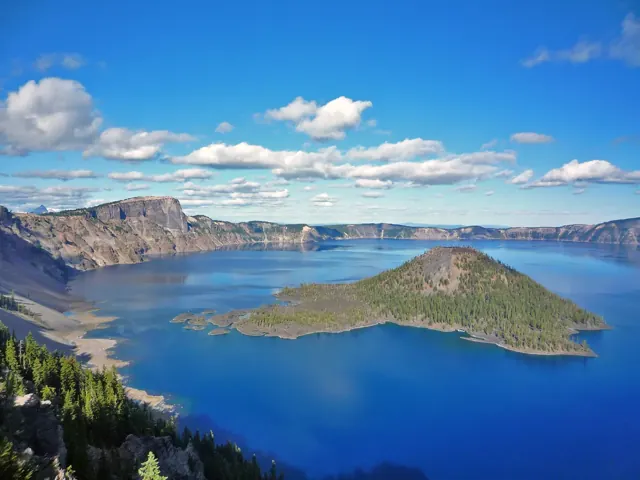
Crater Lake inspires awe. Native Americans witnessed its formation 7,700 years ago, when a violent eruption triggered the collapse of a tall peak. Scientists marvel at its purity—fed by rain and snow, it’s the deepest lake in the USA and one of the most pristine on Earth. Artists, photographers, and sightseers gaze in wonder at its blue water and stunning setting atop the Cascade Mountain Range.
Official-source overview · detailed planning coverage is still being reviewed
At a glance
- State / territory
- Oregon
- Region
- West
The official overview below is available now. Park-specific fees, distances, climate tables, and reviewed day plans are shown only when their supporting records have been reviewed. Check current access and arrangements with the park before travel.
Plan this visit
Build your park visit
Use this interactive tool with JavaScript enabled. Park guides and official information remain available below.
When to go
July, August, and September are your best bets for warm, dry weather. In May, June, and October, sunny days alternate with periods of rain and snow. Winters at Crater Lake are long and snowy. Storms from the Pacific Ocean dump an annual average of 41 feet (13.5 meters) of snow at park headquarters.
When it's raining or snowing, the lake is usually hidden by clouds. Crater Lake is completely invisible about 50% of the time in the winter!
General official weather guidance; historical context, not a forecast.
Arrive and stay
From the west (Medford) - Take Hwy 62 to the West Entrance. Open year-round.
From the south (Klamath Falls) - Take Hwy 97 north to Hwy 62 to the South Entrance. Open year-round.
The North Entrance is on Hwy 138 and is accessed from Interstate 5 east at Roseburg or Hwy 97 south from Bend and Chemult. Winter travelers from Roseburg take Route 138 east to Route 230 south to Route 62 east to the park's west entrance. Travelers from Bend take Route 97 south to Route 62 to the park's south entrance.
Official directionsRisks and official checks
Conditions, access, reservations, and operating hours can change. This website is a planning resource and does not provide live conditions.
Official park informationSources and your trip kit
Where this information comes from
Park overview information is drawn from identified official sources. Published guide facts, assumptions, and editorial decisions retain their own review records.
Source retrieved: 2026-10-01. This is not a live-conditions check.
National Park Service: Crater Lake
Image credit: NPS Photo. See the image credits.
Data release 0 · Independent planning resource. Not affiliated with the National Park Service.