
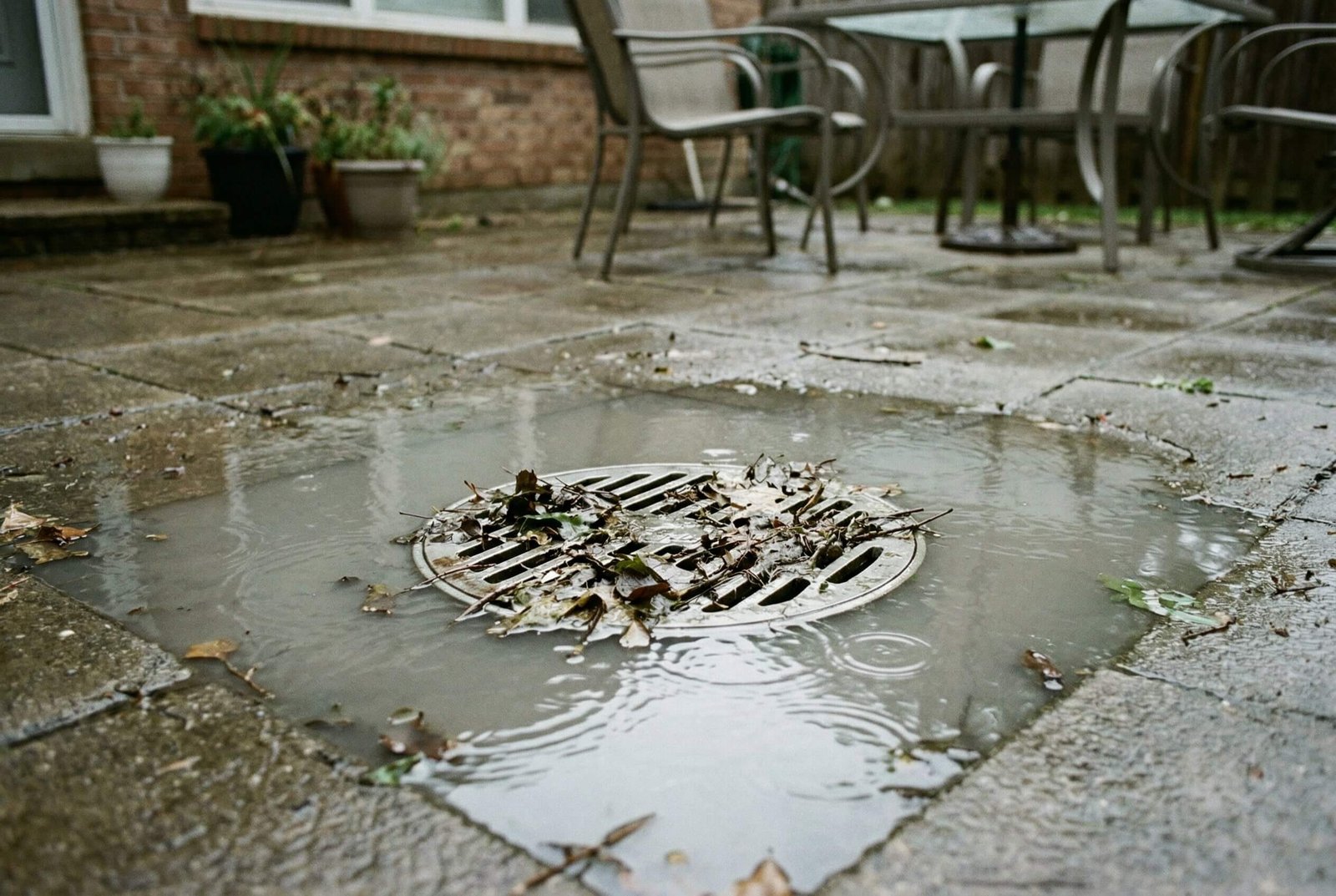
A patio drain that fails to remove rainwater properly is more than just an inconvenience—it’s often the first visible sign of a deeper drainage problem within your home’s outdoor system. What starts as a small puddle after a storm can quickly turn into standing water, slippery surfaces, soil erosion, or even water seeping toward your home’s foundation. For many U.S. homeowners, especially those with concrete patios, paver systems, or backyard living spaces, proper drainage is critical to preventing long-term structural and landscaping damage.
When a patio drain stops working as expected, the issue is rarely random. It usually points to a specific problem somewhere along the drainage path—whether at the surface level, within the underground piping, or at the discharge point where water is supposed to exit your property. Understanding how these systems are designed to work, and what causes them to fail, is the key to diagnosing the issue correctly.
In this article, we’ll break down exactly why a patio drain may not be draining rainwater, what symptoms to watch for, where the problem is likely located, and how professional plumbers approach diagnosing outdoor drainage issues in real-world scenarios.
What This Page Covers
ToggleHow Patio Drain Systems Work in U.S. Homes
Patio drainage systems are designed to control and redirect rainwater away from outdoor living spaces and, more importantly, away from your home’s foundation. In most U.S. homes, especially those with concrete slabs, pavers, or backyard patios, these systems are carefully planned to handle surface runoff during both light and heavy rainfall. When everything is working correctly, water flows efficiently from the patio surface into a drain, through underground piping, and safely away from the property.
Understanding how these systems are built and how water is supposed to move through them is essential for diagnosing why a patio drain may not be draining rainwater properly.
Types of Outdoor Patio Drain Systems
Different homes use different types of patio drainage systems depending on layout, climate, and construction style. The most common types include:
-
Channel drains (also called trench drains)
These are long, narrow drains typically installed along the edge of a patio or across door thresholds. They collect water across a wide surface area and are commonly used in modern patios and pool decks. -
Point drains (yard drains)
These are square or round drains placed at low points in the patio. Water flows toward them from all directions and enters through a grated opening. -
French drains connected to patios
These systems use perforated pipes buried under gravel to collect and redirect water away from the patio area. They are often used in combination with surface drains. -
Slot drains or decorative drains
These are slim, modern-looking drains with minimal visible grates. They function similarly to trench drains but are designed for aesthetics.
Each type is built to capture surface water efficiently, but all rely on proper slope and clear piping to function correctly.
How Rainwater Flows Through a Patio Drain
A patio drainage system works through a simple but precise flow process. Any disruption in this flow can cause water to back up or sit on the surface.
-
Surface runoff collection
Rainwater lands on the patio and flows toward the lowest point, which is intentionally sloped toward the drain. -
Drain inlet and grate function
Water enters the system through a grate or opening. This grate is designed to block large debris while allowing water to pass through. -
Underground piping system
Once inside, water travels through a network of pipes, usually PVC or corrugated plastic, that carry it away from the patio. -
Discharge point
The water exits at a safe location, such as a street curb, storm drain, dry well, or a designated drainage area in the yard.
If any part of this path is blocked, damaged, or improperly designed, the entire system can fail, leading to standing water on the patio.
Difference Between Storm Drains and Sewer Connections
One of the most important—and often misunderstood—aspects of patio drainage is where the water ultimately goes.
-
Dedicated stormwater systems
Most modern homes have separate systems that carry rainwater away from the property without mixing it with household wastewater. These systems are designed to handle large volumes of water during storms. -
Combined sewer systems (common in older U.S. homes)
In some older neighborhoods, stormwater and wastewater share the same pipes. During heavy rain, these systems can become overwhelmed, causing backups that affect outdoor drains like patios. -
Risks of improper connections
If a patio drain is incorrectly connected to a sewer line, it can lead to slow drainage, backups, or even sewage odors coming from the outdoor drain.
Understanding this distinction is critical, because sometimes the issue isn’t just your patio drain—it could be part of a larger drainage system problem affecting your entire property or even your neighborhood.
Common Signs Your Patio Drain Is Not Draining Properly
When a patio drain starts failing, it usually gives clear warning signs before turning into a serious drainage problem. Many homeowners ignore these early symptoms, assuming it’s just temporary pooling after rain. But in reality, these signs often indicate a developing blockage, improper slope, or a deeper issue within the drainage system.
Recognizing these symptoms early can help you understand where the problem may be forming and how severe it might be.
Visible Water Accumulation on Patio
The most obvious sign is water sitting on the patio surface after rainfall.
-
Puddles that remain long after rain stops
-
Water collecting around the drain instead of entering it
-
Areas of the patio that stay wet for hours or even days
A properly functioning patio drain should remove water quickly. If water lingers, it usually means the system is either partially blocked or not receiving water efficiently due to slope issues.
Water Flowing Away From the Drain
In some cases, the problem isn’t the drain itself—it’s how water reaches it.
-
Water pooling in corners or edges of the patio
-
Runoff flowing away from the drain instead of toward it
-
Uneven surface causing unpredictable water paths
This often points to grading or settling issues, where the patio no longer slopes correctly toward the drain.
Overflow During Heavy Rain
During moderate to heavy rain, a failing patio drain may become overwhelmed.
-
Water rising above the drain grate
-
Overflow spreading across the patio surface
-
Water spilling into nearby landscaping or toward the house
This is a strong indicator that the drain system cannot handle the volume of water—either due to a blockage or an undersized drainage setup.
Gurgling or Bubbling Sounds
Unusual sounds from an outdoor drain are often overlooked, but they can reveal internal issues.
-
Gurgling noises when water enters the drain
-
Bubbling at the grate during rainfall
-
Air pockets forming in the pipe
These sounds usually mean there is a partial blockage or trapped air in the system, preventing smooth water flow through the pipes.
Foul Odors From Outdoor Drain
A properly functioning patio drain should not produce noticeable odors.
-
Musty or rotten smells near the drain
-
Sewage-like odors (in rare cases)
-
Strong organic decomposition smell
These odors often result from debris buildup inside the drain or, in more serious situations, a connection to a sewer line issue.
These signs don’t just indicate that water isn’t draining—they help narrow down where the problem might be occurring, whether at the surface, within the pipe, or deeper in the drainage system.
Most Common Causes of Patio Drain Not Draining Rainwater
When a patio drain fails to remove rainwater, the cause is almost always tied to a disruption somewhere along the drainage path. In real-world U.S. homes, these issues typically fall into a few predictable categories—ranging from simple surface blockages to deeper underground pipe problems.
Understanding these causes is critical, because the visible symptom (standing water) is often far removed from the actual source of the problem.
Debris Blockage at the Drain Opening
One of the most frequent and easiest-to-overlook causes is a blockage right at the surface.
Outdoor drains are constantly exposed to environmental debris, especially in patios surrounded by landscaping.
-
Leaves and twigs collecting over the grate
-
Dirt, mud, and sediment washing into the drain during rain
-
Mulch, grass clippings, or decorative stones blocking the opening
-
Algae or organic buildup forming over time
Even a partial blockage at the grate can significantly reduce how quickly water enters the system, causing water to pool on the patio during rain.
Underground Pipe Clogs
If the surface looks clear but water still isn’t draining, the issue is often deeper in the pipe.
Unlike indoor drains, outdoor drainage lines deal with a mix of water, soil, and organic matter, making them more prone to buildup.
-
Sediment accumulation from years of runoff
-
Fine dirt and sand settling inside low points of the pipe
-
Organic debris breaking down and forming sludge
-
Foreign objects accidentally entering the drain
These clogs typically form gradually, which is why many homeowners notice slow drainage before a complete backup occurs.
Tree Root Intrusion in Outdoor Drain Lines
Tree roots are one of the most common hidden causes of outdoor drainage problems, especially in older properties.
-
Roots seek out moisture and enter small cracks in pipes
-
Once inside, they expand and trap debris
-
Over time, they can completely block water flow
-
Roots may also shift or break the pipe
This type of problem is rarely visible from the surface and usually requires professional inspection to confirm.
Improper Patio Slope or Grading Issues
Sometimes the drain itself is working fine—but water simply isn’t reaching it.
Patios are designed with a slight slope to direct water toward the drain. Over time, this slope can change.
-
Settling of soil beneath the patio
-
Poor original construction or grading
-
Paver movement or shifting slabs
-
Low spots forming away from the drain
When this happens, water collects in the wrong areas, making it seem like the drain is failing when the real issue is surface design.
Crushed or Collapsed Drain Pipes
Underground pipes can become damaged due to external pressure or age.
-
Heavy vehicles or equipment compressing the soil above
-
Poor-quality pipe materials degrading over time
-
Ground movement causing pipe misalignment
-
Complete pipe collapse blocking water flow
This is a serious issue because it prevents water from moving at all, often leading to repeated flooding after every rainfall.
Frozen or Compacted Soil Around Drain Line
In colder regions of the U.S., seasonal conditions can affect how well a patio drain works.
-
Frozen ground restricting water absorption
-
Ice forming inside pipes
-
Compacted soil reducing drainage efficiency
While this may be temporary, it can still lead to water buildup during certain times of the year.
In many cases, more than one of these causes may be contributing to the problem at the same time. For example, a partially clogged pipe combined with poor patio slope can significantly reduce drainage performance, especially during heavy rain.
Understanding these common causes helps narrow down where the issue is likely located and what type of problem you’re dealing with.
Hidden Plumbing Issues That Affect Patio Drainage
In many cases, a patio drain that isn’t draining rainwater properly is not caused by a simple surface blockage. The real problem often lies deeper within the drainage system—out of sight and difficult to detect without proper inspection. These hidden issues are especially common in older homes or properties with complex outdoor drainage layouts.
Professional plumbers are trained to look beyond the obvious symptoms because outdoor drain failures are frequently connected to system-wide problems rather than isolated clogs.
Blocked Stormwater System
Even if your patio drain and its immediate pipe are clear, the issue may exist further downstream in the stormwater system.
-
Municipal storm drains can become overloaded during heavy rain
-
Debris buildup in shared drainage lines can restrict flow
-
Neighborhood drainage systems may back up during storms
-
Improper discharge locations can prevent water from exiting properly
When this happens, water has nowhere to go, causing it to back up into your patio drain. This is why some homeowners notice that their drain works fine during light rain but fails during heavy storms.
Improper Installation of Drain System
Poor installation is a common root cause of long-term drainage issues, especially in newer patios or DIY projects.
-
Pipes installed without proper slope (pitch)
-
Incorrect pipe sizing for the amount of runoff
-
Sharp turns or bends that restrict water flow
-
Poor connections between drain components
Even a small installation mistake can reduce the efficiency of the entire system, leading to slow drainage or repeated backups.
Drain Connected to Sewer Line Problems
In some homes—particularly older U.S. properties—outdoor drains may be improperly connected to the main sewer line.
-
Sewer line blockages can affect patio drain performance
-
Wastewater backups may push into outdoor drains
-
Strong sewage odors can emerge from the patio drain
-
Increased risk during heavy rain when sewer systems are overloaded
This type of issue is more serious because it involves the home’s primary plumbing system and may require immediate professional attention.
Silt Accumulation Inside Pipes Over Time
One of the most overlooked causes of poor drainage is gradual silt buildup inside underground pipes.
-
Fine particles of soil and sand settle in low points of the pipe
-
Over time, this reduces the pipe’s internal diameter
-
Water flow becomes slower and less efficient
-
Eventually, the pipe may become partially or fully blocked
This process can take years, which is why many homeowners experience a slow decline in drainage performance before noticing a major problem.
Hidden plumbing issues are often the reason why a patio drain continues to fail even after surface cleaning. These problems require a deeper level of diagnosis and are typically identified using professional inspection tools.
Where the Problem Is Usually Located
When a patio drain is not draining rainwater, the exact location of the problem can vary—but in most real-world cases, it falls into a few predictable zones within the drainage system. Identifying where the issue is likely occurring helps narrow down the cause and determines whether the problem is minor or more serious.
Professional plumbers typically divide the drainage system into sections and evaluate each one systematically.
At the Drain Grate or Surface Level
The first and most accessible location is right at the surface where water enters the drain.
-
Leaves, dirt, or mulch covering the grate
-
Visible debris trapped just below the opening
-
Algae or sludge buildup restricting water entry
-
Small objects lodged in the drain opening
This is the most common problem area and also the easiest to inspect. Even a partial blockage here can significantly slow down how quickly water enters the system.
In the First Few Feet of the Drain Pipe
If the surface appears clear but water still drains slowly, the issue is often just below the drain.
-
Debris slipping past the grate and settling near the inlet
-
Mud and sediment collecting in the first pipe section
-
Early-stage clogs forming in shallow underground piping
This area is one of the most frequent clog zones because it’s where debris first accumulates after entering the system.
Mid-Line Underground Pipe Section
Problems deeper in the drainage line are harder to detect but more serious.
-
Tree root intrusion blocking water flow
-
Pipe misalignment or sagging (creating low spots)
-
Sediment buildup in long horizontal runs
-
Cracks allowing soil to enter the pipe
These issues usually develop over time and may only become noticeable during heavy rain when the system is under stress.
At the Discharge Point or Outlet
The final section of the drainage system—where water exits—is another critical area.
-
Blocked outlet due to dirt, grass, or debris
-
Drain terminating in an area that doesn’t allow proper runoff
-
Water backing up because the exit point is submerged or clogged
-
Improper discharge design causing water to return toward the drain
If the outlet is blocked, water cannot leave the system, causing it to back up all the way to the patio.
In many cases, the problem isn’t limited to just one location. For example, a partially blocked outlet combined with sediment buildup in the pipe can significantly reduce drainage performance.
Understanding these common problem zones helps homeowners and plumbers focus their diagnosis more accurately and avoid unnecessary guesswork.
How Professional Plumbers Diagnose Patio Drain Issues
When a patio drain is not draining rainwater, professional plumbers don’t rely on guesswork—they follow a structured diagnosis process to pinpoint exactly where and why the system is failing. Outdoor drainage problems can appear simple on the surface, but in many cases, the root cause lies deeper within the system.
A proper diagnosis focuses on understanding water behavior, identifying restrictions, and locating the exact point of failure.
Visual Inspection of Drain and Surrounding Area
The first step is always a detailed visual inspection of the patio and drain area.
Plumbers look for clues that indicate how water is behaving on the surface and whether it is reaching the drain correctly.
-
Debris accumulation on or around the drain grate
-
Signs of standing water or staining on the patio surface
-
Uneven areas or low spots affecting water flow
-
Landscaping materials (mulch, soil) blocking the drain
This step helps determine whether the issue is surface-level or likely deeper in the system.
Water Flow Testing
To understand how the system performs under real conditions, plumbers often simulate rainfall.
They use controlled water flow to observe how quickly and efficiently the drain handles incoming water.
-
Water is poured or sprayed onto the patio surface
-
Flow direction toward the drain is observed
-
Entry speed into the drain is evaluated
-
Any backup or overflow is noted
If water struggles to enter or begins to back up quickly, it indicates a restriction either at the inlet or within the pipe.
Drain Camera Inspection
For deeper or recurring issues, a drain camera inspection is one of the most effective diagnostic tools.
A small waterproof camera is inserted into the drain line to provide a real-time view inside the pipe.
-
Identifies clogs, sediment buildup, or blockages
-
Detects tree root intrusion
-
Reveals cracks, breaks, or pipe collapse
-
Locates misaligned or sagging sections
This method allows plumbers to see exactly what’s happening underground without digging.
Checking Drain Outlet and Termination Point
Many drainage problems originate at the discharge point rather than the drain itself.
Plumbers inspect where the water exits the system to ensure it is functioning properly.
-
Verifying that the outlet is not blocked by dirt or vegetation
-
Checking if water is able to flow freely away from the property
-
Ensuring the discharge point is not submerged or improperly positioned
A blocked or poorly designed outlet can cause water to back up through the entire system.
Evaluating Grading and Landscaping Impact
Surface grading plays a critical role in how well a patio drain performs.
Plumbers assess the slope and layout of the patio and surrounding landscape.
-
Determining whether water naturally flows toward the drain
-
Identifying areas where water collects away from the drain
-
Checking for recent landscaping changes that may affect drainage
-
Evaluating soil movement or settling over time
Even a perfectly functioning drain system will fail if water isn’t directed toward it properly.
Professional diagnosis is not just about finding a blockage—it’s about understanding the entire drainage system, from surface flow to underground piping and final discharge.
Warning Signs of Serious Drainage Problems
Not every patio drain issue is minor. While some problems start with simple surface blockages, others can signal deeper structural or system-wide drainage failures. Recognizing these warning signs early is critical, especially because outdoor drainage problems can directly impact your home’s foundation, landscaping, and long-term structural integrity.
Professional plumbers pay close attention to these red flags because they often indicate that the issue goes beyond a basic clog.
Water Entering the Home or Foundation
One of the most serious warning signs is when water starts moving toward or into your home.
-
Water pooling near exterior walls or sliding doors
-
Moisture seeping into basements or crawl spaces
-
Damp spots appearing along interior flooring near patio areas
-
Foundation cracks showing signs of water exposure
When a patio drain fails to redirect rainwater properly, the excess water often finds the path of least resistance—toward your home’s structure. This can lead to costly repairs if not addressed quickly.
Repeated Flooding After Every Rainfall
If your patio floods consistently after rain, it usually indicates a system-level failure rather than a one-time blockage.
-
Water accumulation after even light rain
-
Drain overflowing during moderate storms
-
No improvement despite surface cleaning
-
Increasing severity of flooding over time
This pattern suggests that the drainage system is either undersized, heavily restricted, or improperly designed.
Sinkholes or Soil Erosion Around Patio
Changes in the ground around your patio can point to hidden underground issues.
-
Soil washing away near the drain or along pipe paths
-
Small depressions or sinkholes forming in the yard
-
Exposed pipe sections or shifting ground
-
Uneven patio surfaces developing over time
These signs often indicate leaking, broken, or collapsed pipes beneath the surface, allowing water to escape into the surrounding soil.
Mold or Mildew Near Exterior Walls
Persistent moisture caused by poor drainage can create ideal conditions for mold and mildew growth.
-
Musty odors near patio doors or exterior walls
-
Visible mold or discoloration on surfaces
-
Dampness that doesn’t dry out between rain events
-
Increased humidity inside adjacent rooms
This is not just a drainage issue—it can also affect indoor air quality and health if left unresolved.
These warning signs should not be ignored. They often indicate that the drainage problem has progressed beyond a simple blockage and may require professional evaluation to prevent further damage.
Real-World Plumbing Scenarios Homeowners Face
Patio drain problems don’t always follow a textbook pattern. In real U.S. homes, these issues often develop due to a combination of environmental factors, construction choices, and everyday use. Understanding how these problems show up in real situations can help you relate your own experience to a likely cause.
Professional plumbers frequently see the same patterns repeated across different properties.
Patio Flooding After Landscaping Changes
One of the most common scenarios occurs after homeowners update their landscaping.
A patio that previously drained well may suddenly start holding water after changes like adding mulch beds, new plants, or decorative stone.
-
Mulch or soil washing into the drain during rain
-
Raised garden beds altering natural water flow
-
Landscaping blocking the drain inlet
-
Excess debris entering the system more frequently
Even small changes around the patio can disrupt how water reaches and enters the drain, leading to gradual drainage failure.
New Construction With Poor Drain Design
In newer homes, drainage problems are often tied to design or installation issues rather than wear and tear.
-
Patio built without proper slope toward the drain
-
Drain system undersized for the area
-
Incorrect pipe pitch preventing efficient flow
-
Poorly placed drain that doesn’t capture runoff effectively
These problems may not be noticeable immediately but often appear during the first heavy rainfall.
Older Homes With Failing Drain Systems
In older properties, drainage systems may degrade over time.
-
Aging pipes developing cracks or misalignment
-
Tree roots invading underground drain lines
-
Sediment buildup from years of use
-
Outdated designs that no longer meet current drainage needs
Homeowners in these situations often notice that the drain used to work well but has gradually become less effective.
Heavy Rain Overwhelming Drain Capacity
Sometimes the drain system is technically functional but simply can’t handle the volume of water during intense storms.
-
Patio flooding only during heavy rainfall
-
Drain working fine in light or moderate rain
-
Water backing up temporarily and then slowly clearing
-
Increased runoff from nearby roofs or driveways
This is common in areas experiencing heavier rainfall than what the original drainage system was designed to handle.
These real-world scenarios highlight an important point: a patio drain problem is rarely caused by just one factor. In many cases, it’s the result of multiple conditions combining over time.
Differences Between Minor Drain Issues and Major Problems
Not every patio drain problem requires major concern—but knowing the difference between a minor issue and a serious drainage failure is critical. Many homeowners either ignore early warning signs or assume every issue is severe, when in reality, the situation usually falls somewhere in between.
Professional plumbers evaluate both the behavior of the drain and the pattern of the problem to determine its severity.
Temporary Surface Blockage vs Deep Pipe Clog
A key distinction is whether the issue is limited to the surface or extends into the underground piping.
-
Temporary surface blockage
These are typically caused by leaves, dirt, or debris sitting on or just below the grate. Water may drain slowly but eventually clears once the obstruction shifts or breaks down. -
Deep pipe clog
These occur inside the underground drainage line and tend to worsen over time. Water may back up quickly, drain extremely slowly, or not drain at all during rainfall.
A simple way to observe this is consistency—surface issues may come and go, while pipe clogs usually persist and gradually get worse.
Isolated Drain Issue vs Whole System Failure
Another important difference is whether the problem affects only one drain or the entire drainage system.
-
Isolated issue
Only the patio drain is affected, while other outdoor drains (like yard or driveway drains) function normally. This usually points to a localized blockage or design issue. -
System-wide failure
Multiple drains struggle to handle water, or backups occur during heavy rain across different areas of the property. This often indicates a larger issue, such as a blocked main drainage line or overloaded stormwater system.
System-wide issues are more complex and typically require professional diagnosis.
When It’s a DIY Observation vs Professional Diagnosis Needed
Some drainage issues can be identified through simple observation, while others require specialized tools and expertise.
-
Likely minor issue
Water drains slowly but eventually clears
No repeated flooding pattern
No unusual odors or structural concerns -
Likely major issue
Standing water remains for long periods
Recurring backups after every rain
Gurgling sounds, odors, or signs of soil movement
Water approaching or entering the home
If the problem shows consistent or worsening behavior, it’s usually a sign that the issue goes beyond a simple surface blockage.
Understanding these differences helps homeowners make better decisions about when to monitor the situation and when to take it seriously.
Basic Prevention Tips to Keep Patio Drains Flowing
While patio drain problems often develop over time, many of them are preventable with simple, consistent maintenance and awareness. The goal of prevention is not to “fix” complex drainage issues, but to reduce the chances of blockages, slow drainage, and long-term system strain.
Homeowners who regularly monitor and maintain their outdoor drains typically experience far fewer drainage failures.
Regular Cleaning of Drain Grates
The drain grate is the first point of entry for water—and also the first place where problems begin.
-
Remove leaves, dirt, and debris regularly, especially after storms
-
Check for buildup just below the grate opening
-
Watch for algae or sludge forming over time
-
Ensure the grate is not covered by landscaping material
Keeping this area clear allows water to enter the system without restriction.
Keeping Landscaping Away From Drain Openings
Landscaping can significantly impact how well a patio drain functions.
-
Avoid placing mulch, soil, or decorative stones near the drain
-
Keep plant beds slightly elevated away from the drain area
-
Prevent grass or roots from growing into the drain opening
-
Be cautious with loose materials that can wash into the drain during rain
Small adjustments in landscaping placement can prevent repeated blockages.
Monitoring Water Flow During Rainstorms
One of the most effective ways to catch drainage problems early is simply observing how water behaves during rain.
-
Watch how quickly water reaches the drain
-
Check whether water enters the drain smoothly or backs up
-
Look for pooling in areas away from the drain
-
Notice any changes compared to previous storms
This real-time observation can help identify developing issues before they become serious.
Seasonal Maintenance Checks
Outdoor drainage systems are affected by seasonal changes, making periodic checks important.
-
Inspect drains before and after heavy rain seasons
-
Check for sediment buildup after long dry periods
-
Monitor changes after landscaping or construction work
-
Be aware of seasonal debris like falling leaves
Regular seasonal attention helps maintain consistent drainage performance throughout the year.
These prevention steps are simple but highly effective in reducing the likelihood of patio drainage problems. However, if issues continue despite regular maintenance, it may indicate a deeper underlying problem within the system.
When to Call a Professional Plumber
While some patio drain issues can be observed and monitored by homeowners, certain situations clearly indicate the need for a professional plumber. Outdoor drainage systems can be more complex than they appear, and delaying professional evaluation in serious cases can lead to costly damage to your home and property.
An experienced plumber doesn’t just clear blockages—they identify the root cause, evaluate the entire drainage system, and determine whether the issue is localized or part of a larger problem.
Persistent Standing Water
If water consistently remains on your patio long after rainfall, it’s a strong sign that the drainage system is not functioning properly.
-
Water takes hours or days to drain
-
Pooling occurs in the same spots repeatedly
-
No improvement after clearing visible debris
-
Surface remains damp between rain events
Persistent standing water usually points to deeper issues such as pipe blockages, improper slope, or drainage system failure.
Recurring Drain Backups
A patio drain that backs up repeatedly is rarely dealing with a one-time issue.
-
Water overflows during every rainstorm
-
Drain works temporarily and then fails again
-
Backups are becoming more frequent or severe
-
Multiple outdoor drains show similar behavior
Recurring problems often indicate a restriction deeper in the pipe or a system-wide drainage issue that requires professional diagnosis.
Signs of Underground Pipe Damage
Damage below the surface is one of the most serious causes of drainage failure and cannot be diagnosed visually.
-
Sinkholes or soft spots forming near the patio
-
Soil erosion along the path of the drain line
-
Sudden changes in drainage performance
-
Visible shifting or settling of the patio surface
These signs may indicate broken, collapsed, or misaligned pipes that require specialized tools to inspect and address.
Suspected Sewer Line Connection Issues
If your patio drain shows signs of being connected to or affected by the sewer system, immediate attention is necessary.
-
Sewage odors coming from the drain
-
Gurgling sounds combined with slow drainage
-
Water backing up during heavy rain across multiple drains
-
Drain performance linked to indoor plumbing issues
This type of problem can involve both outdoor drainage and your home’s main plumbing system, making professional evaluation essential.
Calling a professional plumber at the right time can prevent minor drainage issues from turning into major structural or plumbing problems. It also ensures that the diagnosis is accurate and that the root cause—not just the symptom—is properly identified.
Final Thought
A patio drain that isn’t draining rainwater is rarely just a surface problem—it’s usually a signal that something within the drainage system is no longer working as intended. Whether it’s a simple debris blockage, a hidden pipe restriction, or a larger issue with grading or system design, the key is understanding that water behavior always tells a story.
What separates minor issues from serious ones is consistency and pattern. A one-time puddle after a storm may not mean much, but repeated standing water, slow drainage, or overflow during rain is your system clearly telling you there’s a restriction or imbalance somewhere along the flow path. Ignoring these signs can gradually lead to bigger consequences, especially when water begins moving toward your home’s foundation.
From a professional standpoint, the most effective approach is early observation and accurate diagnosis. Paying attention to how your patio handles rain—where water collects, how quickly it drains, and how often problems occur—can help you identify issues before they escalate into structural damage or costly repairs.
In the end, a well-functioning patio drain isn’t just about convenience—it’s a critical part of protecting your home, your outdoor space, and the long-term integrity of your property.