
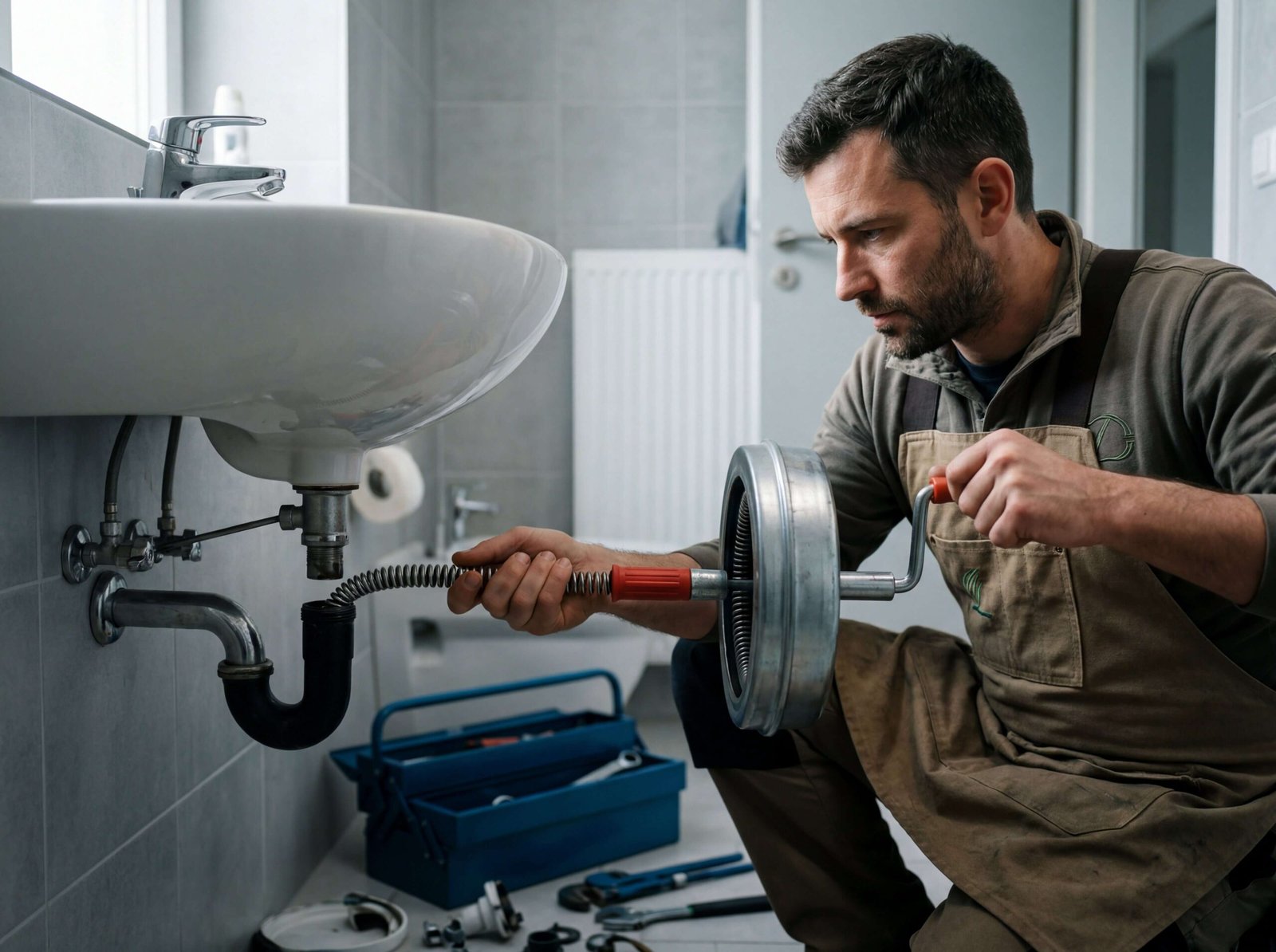
Many homeowners hear the term “plumbing auger” and assume it’s just another name for a drain snake. While they are closely related, that assumption often leads to confusion about what the tool actually does and when it should be used. A plumbing auger is not just a flexible cable—it’s a tool specifically designed to deal with clogs that basic methods can’t handle effectively.
In real-world situations, most drain problems don’t start as complete blockages. They begin as slow drainage caused by buildup inside the pipe. Over time, that buildup becomes compact and harder to remove. At this stage, plungers and simple tools may stop working, not because they’re weak, but because they’re not designed to interact directly with the clog. This is where a plumbing auger becomes the right tool.
The reason an auger is so effective is that it doesn’t rely on pressure or surface-level action. It reaches into the pipe, makes contact with the blockage, and works through it physically. Instead of trying to push the clog through, it can break it apart, loosen it, or pull it back out. This direct interaction is what makes it reliable for real clogs, especially those deeper in the system.
Another important difference is how the tool is used. Many homeowners approach drain tools with the idea of forcing a solution—pushing harder when something doesn’t move. A plumbing auger works best with a different mindset. It’s about controlled movement, understanding resistance, and working through the clog step by step. When used correctly, it becomes predictable and efficient rather than frustrating.
Understanding what a plumbing auger actually is—and how it fits into solving drain problems—changes how you approach clogged drains. It shifts the focus from trial-and-error to a more structured method, where the tool is chosen and used based on the situation rather than guesswork.
What This Page Covers
ToggleWhat a Plumbing Auger Actually Is
A plumbing auger is often described as a type of drain snake, but in practice, it represents a more purposeful and capable version of that idea. The difference is not just in the name—it’s in how the tool is designed to interact with clogs. While many drain tools try to push or loosen blockages, an auger is built to actively engage with them, either by breaking them apart or pulling them out.
More Than Just a “Drain Snake”
The term “drain snake” is often used broadly to describe any flexible cable tool used in drains. A plumbing auger falls under that category, but it is more specific in its design and function. The key distinction is that an auger typically includes a specialized head that is meant to do actual work inside the pipe, not just reach the clog.
In real use, this matters because not all clogs respond to the same approach. A simple snake may reach the blockage but fail to clear it effectively if it cannot grip or break the material. An auger, on the other hand, is designed to interact with the clog in a more controlled and deliberate way. It doesn’t just locate the problem—it works through it.
Core Purpose of an Auger
The main purpose of a plumbing auger is to deal with clogs that require direct mechanical action. Instead of relying on pressure or flushing, it physically engages with the blockage inside the pipe. This makes it one of the most effective drain tools for real-world situations where buildup has become compact or stuck.
An auger can perform three essential functions depending on how it is used and the type of head attached:
- It can break apart clogs by rotating into the material and loosening it
- It can grab and pull debris out of the pipe, especially in cases like hair buildup
- It can create an opening through the blockage to restore flow
What makes it effective is not just the action itself, but the control you have over that action. You can adjust how the tool interacts with the clog based on resistance and movement inside the pipe.
Understanding a plumbing auger this way helps clarify why it’s often the next step when basic drain tools fail. It’s not just a stronger option—it’s a more targeted one, designed to handle clogs that need more than surface-level solutions.
How a Plumbing Auger Is Built
A plumbing auger may look simple from the outside, but its effectiveness comes from how each part is designed to work together inside the pipe. Every component—from the cable to the head to the rotation mechanism—plays a specific role. When you understand how it’s built, you also understand why it behaves the way it does during use.
Cable Design and Structure
The cable is the core of the auger. It’s made from coiled metal that balances flexibility with strength. This balance is critical because the cable needs to move through bends like P-traps and elbows without getting stuck, while still being rigid enough to push forward and reach the clog.
Unlike a straight rod, the coiled design allows the cable to flex naturally as it travels through the pipe. At the same time, it maintains enough structural integrity to transmit force from the handle or motor to the head. This is what allows the auger to work deep inside the drain without collapsing or losing direction.
The length of the cable also affects performance. Shorter cables are easier to control and are suited for shallow clogs. Longer cables allow the tool to reach deeper into the system, but they require more careful handling to maintain control and avoid twisting.
Auger Head Types and Functions
The working end of the auger is the head, and this is where most of the actual clearing happens. Different head designs are used for different types of clogs, and choosing the right one can significantly improve results.
A corkscrew-style head is one of the most common. It is designed to bore into soft or fibrous clogs, allowing the cable to pull material back as it rotates. This is particularly useful for hair and similar debris.
Hook-style heads are better suited for grabbing and retrieving material rather than cutting through it. They are often used when the goal is to remove the clog entirely instead of breaking it apart.
Some augers use cutting or scraping heads, which are designed to handle tougher buildup. These heads can break through more compact material or scrape residue from pipe walls, helping restore flow in more stubborn situations.
Each head type changes how the tool interacts with the clog. The effectiveness of the auger often depends on matching the head to the problem rather than relying on force alone.
Manual vs Powered Augers
The way the auger rotates also plays a major role in how it works. In manual augers, rotation comes from turning a handle. This gives you full control over speed and pressure, allowing you to respond to resistance as you feel it.
Powered augers use a drill or motor to rotate the cable. This provides consistent torque, which helps when dealing with tougher clogs. The trade-off is reduced feedback, meaning you rely more on control and observation than direct feel.
Both versions use the same basic structure, but the method of rotation changes how the tool behaves. Manual augers emphasize precision and control, while powered augers emphasize strength and efficiency.
Understanding how a plumbing auger is built helps explain why it works so well in real situations. It’s not just a flexible cable—it’s a system designed to move through pipes, engage with clogs, and apply the right kind of force exactly where it’s needed.
How a Plumbing Auger Works
A plumbing auger works through a controlled mechanical process. It doesn’t rely on pressure or chemicals—it physically reaches the clog, engages with it, and either breaks it apart or removes it. What makes it effective is not just the tool itself, but how it moves and interacts inside the pipe.
Step-by-Step Working Process
- Feeding the cable into the drain
The process begins by inserting the auger cable into the drain opening. The cable is fed slowly so it can follow the natural path of the pipe. This is important because pipes are not straight—they have bends and turns that the cable needs to navigate without forcing. - Navigating through pipe bends
As the cable moves forward, it passes through curves like P-traps and elbows. The flexibility of the cable allows it to move through these sections while maintaining enough strength to continue forward. At this stage, movement should feel smooth if the path is clear. - Reaching and identifying resistance
Eventually, the cable will meet resistance. This is usually the point where the clog is located. The type of resistance gives clues about the blockage—soft resistance may indicate buildup, while firmer resistance may suggest a more compact clog. - Rotating to engage the clog
Once resistance is found, the auger is rotated. This rotation allows the head to interact with the clog. Depending on the head type, it may begin to bore into the material, hook onto it, or loosen it from the pipe walls. - Breaking or pulling debris
As the rotation continues, the clog starts to break apart or attach to the head. In some cases, debris is pulled back out of the drain. In others, the auger creates a path through the blockage, allowing water to flow again. - Clearing and testing flow
After the resistance reduces, the cable is withdrawn and the drain is tested with water. If the flow improves, the main blockage has been addressed. If not, the process is repeated to remove remaining buildup.
What Happens Inside the Pipe
Inside the pipe, the auger works through direct contact. Unlike tools that rely on pressure, it physically engages with the clog. This interaction is what makes it effective for compact or stubborn blockages.
When the head reaches the clog, it doesn’t just push—it rotates into the material. This allows it to either break the clog into smaller pieces or latch onto it and pull it out. The action depends on the type of head and how the tool is used.
In many cases, the auger creates an opening through the clog first. This restores water flow, but it doesn’t always mean the pipe is fully clean. Additional passes may be needed to remove remaining debris and prevent the problem from returning.
The key to how a plumbing auger works is controlled interaction. It’s not about force—it’s about reaching the clog, engaging with it properly, and working through it step by step. When used this way, the process becomes predictable and far more effective than surface-level solutions.
Types of Plumbing Augers
Not all plumbing augers are the same. The differences go beyond size—they affect how far the tool can reach, how much force it can apply, and what type of clog it can handle. Choosing the right type of auger is what determines whether the clog is properly cleared or only partially opened.
Basic Household Augers
Basic augers are designed for everyday household use. These are typically small hand augers with shorter cables, often around 15 to 25 feet. They are easy to handle, simple to control, and ideal for clogs that are close to the drain opening.
These tools work best in situations where the blockage is not deeply embedded in the system. Bathroom sinks, tubs, and shower drains are the most common use cases. Hair buildup and light debris are exactly the kind of clogs these augers are meant to handle.
What makes them effective is control, not power. You can feel the clog, engage with it carefully, and often pull material back out. However, their limitation is reach and torque. When the clog is deeper or more compact, these tools start to lose effectiveness.
Intermediate Augers
Intermediate augers sit between basic household tools and professional equipment. These include hand-crank augers with longer cables (typically 25 to 50 feet) and drill-assisted versions that add more rotational force.
These augers are designed for deeper clogs and more demanding situations. Kitchen drains are a common example, where grease and food buildup create denser blockages. The additional cable length allows the tool to reach further into the pipe, while the improved rotation helps it work through tougher material.
They also provide a balance between control and strength. You still have a level of manual control, but with enough force to handle more than just surface-level clogs. This makes them one of the most practical options for homeowners dealing with recurring issues.
Professional Augers
Professional augers are built for situations where standard tools are not enough. These include motorized machines, sectional cable systems, and specialized attachments designed for heavy-duty use.
The key difference here is capability. These tools can handle long pipe runs, dense blockages, and more complex plumbing systems. They are commonly used for main drain lines, severe clogs, and situations where the blockage extends beyond typical household reach.
Professional augers often come with interchangeable heads, allowing them to adapt to different types of clogs. They can break through compact material, cut through tougher obstructions, and maintain consistent performance over long distances.
For homeowners, the important takeaway is understanding where basic and intermediate tools stop being effective. When a clog reaches the level that requires a professional auger, continuing with smaller tools usually leads to temporary results rather than a full solution.
Choosing the Right Type
The type of auger you use should match the problem, not just the availability of the tool. A small auger is ideal for quick, shallow clogs. An intermediate auger handles deeper and more stubborn blockages. Professional tools are reserved for situations that go beyond typical household issues.
When you choose based on the actual condition of the drain, the tool works the way it’s intended—and the results become much more reliable.
When to Use a Plumbing Auger
A plumbing auger is not the first tool you should reach for in every situation—but it becomes the right tool when basic methods stop working or when the clog requires direct mechanical action. Knowing when to use it is what prevents wasted effort and helps you solve the problem properly the first time.
- When plungers stop being effective
A plunger works by creating pressure, which is useful for loose or shallow clogs. But when the blockage is compact or located deeper in the pipe, pressure alone is not enough. If you notice that plunging only gives temporary relief or no improvement at all, it usually means the clog needs to be physically engaged. This is where an auger becomes the correct next step. - When slow drains turn into consistent problems
A drain that is slowly getting worse is often a sign of buildup inside the pipe. At this stage, the clog hasn’t fully blocked the line, but it’s forming. Using an auger early allows you to remove that buildup before it compacts into a complete blockage. This is one of the most effective uses of drain tools—addressing the problem before it becomes severe. - When clogs are deeper than surface-level tools can reach
Basic tools like zip cleaners or short snakes are limited by how far they can go. If the clog is further down the line, those tools may not reach it at all. An auger, especially one with a longer cable, is designed to travel deeper into the pipe and reach blockages that are beyond the immediate drain opening. - When clogs keep coming back
Recurring clogs usually mean that the blockage is not being fully removed. A partial opening may allow water to pass, but the underlying buildup remains. An auger can engage more directly with that material and remove it more effectively, reducing the chances of the problem returning. - When the clog needs to be removed, not just loosened
Some clogs respond well to being broken apart, but others need to be pulled out of the pipe entirely. Hair, fibrous debris, and certain types of buildup are better handled this way. An auger is designed for this type of interaction, making it more effective than tools that rely only on pushing or flushing.
Using a plumbing auger at the right time changes the outcome completely. Instead of trying multiple tools without results, you move directly to a method that matches the problem. That shift from trial-and-error to targeted action is what makes the auger such a reliable tool in real-world drain situations.
When NOT to Use a Plumbing Auger
A plumbing auger is a powerful and versatile tool, but it is not the right solution for every situation. Knowing when not to use it is just as important as knowing when to use it. In some cases, using an auger can waste time, create temporary fixes, or even make the problem worse.
Fully Collapsed or Structurally Damaged Pipes
If the pipe itself is damaged—collapsed, cracked, or misaligned—an auger will not solve the problem. You may feel solid resistance that doesn’t change no matter how you rotate or adjust the tool. This kind of resistance is not a clog; it’s a structural issue.
Continuing to use the auger in this situation can lead to the cable getting stuck or putting unnecessary stress on already weakened sections of the pipe. When the issue is structural, the solution is repair or replacement, not clearing.
Chemical-Damaged or Weakened Pipes
Pipes that have been exposed to harsh chemical cleaners over time can become brittle or weakened. In these cases, even controlled use of an auger can cause damage. The cable and head create friction inside the pipe, and if the pipe walls are already compromised, that friction can lead to cracks or leaks.
If you suspect the pipe is weakened—especially in older plumbing systems or where chemicals have been used repeatedly—it’s better to proceed with caution or consider alternative methods rather than applying mechanical force.
Severe Tree Root Intrusion (DIY Limits)
Tree roots in sewer lines are one of the most common causes of serious drain problems, but they are not something a standard household auger can handle effectively. While the auger may be able to penetrate small root masses, it will not remove them completely.
In many cases, the tool will create a small opening that temporarily restores flow, but the roots remain and continue to grow. This leads to recurring blockages and ongoing issues. Dealing with root intrusion properly requires specialized equipment designed to cut and clear roots more thoroughly.
Situations Where the Auger Cannot Advance
If the auger consistently stops at the same point and does not progress despite controlled use, it’s a sign that something is not right. This could be due to a severe blockage, a pipe defect, or an obstruction that the tool is not designed to handle.
Forcing the cable forward in this situation increases the risk of kinking the auger or damaging the pipe. When progress stops completely, it’s a signal to reassess rather than push harder.
When the Problem Is Beyond a Simple Clog
Not every drainage issue is caused by a clog. Slow drainage or backups can also be related to venting issues, pipe design problems, or buildup that extends throughout the system rather than being concentrated in one spot.
An auger is designed to deal with localized blockages. If the issue is broader or systemic, using the tool may provide limited or temporary improvement without addressing the real cause.
Recognizing the Limits
The most important skill when using any drain tool is knowing when to stop. If the auger is not making meaningful progress, or if the problem returns quickly after use, it usually means the situation requires a different approach.
Using a plumbing auger effectively is not about applying more force—it’s about understanding where it works and where it doesn’t. Recognizing those limits saves time, protects your plumbing, and helps you move toward the correct solution more quickly.
How to Use a Plumbing Auger Safely
Using a plumbing auger safely is not about being overly careful—it’s about staying in control of the tool at every stage. Most problems happen when the auger is forced, rushed, or used without paying attention to how it’s behaving inside the pipe. When handled correctly, the auger is predictable and effective. When handled poorly, it becomes difficult to manage and less reliable.
Step-by-Step Safe Use
- Start with controlled cable feeding
Insert the auger cable slowly into the drain. Let it follow the natural path of the pipe rather than pushing it aggressively. This helps the cable move through bends without stress and keeps it aligned from the beginning. - Advance gradually, not continuously
Feed the cable forward in small increments. Push slightly, pause, then continue. This pattern allows the auger to adjust to the shape of the pipe and reduces the risk of the cable binding or looping. - Rotate with steady, controlled motion
Once resistance is felt, begin rotating the auger. The rotation should be consistent, not fast or aggressive. The goal is to let the head engage with the clog gradually rather than forcing it through. - Respond to resistance instead of pushing through it
Resistance is feedback. When you feel it, slow down and work the area. If you push harder without adjusting, the cable may bend or push the clog deeper. Controlled rotation and slight forward pressure are more effective than force. - Pull back carefully when retrieving
When withdrawing the auger, do it slowly and with control. Debris may be attached to the head, and pulling too quickly can cause it to fall back into the pipe or create sudden tension in the cable. - Repeat the process if needed
Clearing a clog often takes more than one pass. Each pass improves the condition of the pipe, either by removing debris or loosening remaining buildup. Stopping after the first improvement often leads to recurring problems.
Pipe Safety Considerations
The auger interacts directly with the inside of your pipes, so understanding pipe condition is important for safe use.
- Adjust approach based on pipe material
PVC pipes require a lighter touch because they are softer and more prone to scratching. Metal pipes can handle more friction but may already be weakened by corrosion. In both cases, controlled movement is key. - Be cautious with older plumbing systems
Older pipes may not handle aggressive use well. If you feel unusual resistance or hear grinding, it’s better to stop and reassess rather than continue pushing forward. - Avoid excessive pressure in tight bends
Pipes are not straight, and forcing the auger through bends increases stress on both the tool and the pipe. Let the cable move naturally through curves instead of trying to push past them quickly.
Why Safe Use Improves Results
Safe use is not just about avoiding damage—it directly improves how well the auger works. When the cable moves smoothly and the head engages the clog properly, the tool becomes more effective with less effort.
Rushing the process or using excessive force often leads to the opposite outcome. The cable becomes harder to control, the clog is only partially cleared, and the risk of tool or pipe issues increases.
When you treat the auger as a controlled system rather than a force-based tool, the entire process becomes more predictable. You get better results, fewer complications, and a much clearer understanding of what’s happening inside the pipe as you work.
Common Mistakes When Using an Auger
A plumbing auger is one of the most effective drain tools when used correctly, but it’s also easy to misuse. Most problems don’t come from the tool itself—they come from how it’s handled. These mistakes often lead to incomplete clearing, recurring clogs, or unnecessary stress on the plumbing system.
Forcing the Cable Instead of Working the Clog
The most common mistake is treating the auger like a pushing tool. When resistance is felt, many people try to force the cable forward. This usually makes things worse. The clog may get pushed deeper into the pipe, or the cable may bend and lose alignment.
The correct approach is to stop pushing and start working the clog. Rotate the auger, apply light forward pressure, and let the head engage gradually. The tool is designed to interact with the blockage, not push through it.
Using the Wrong Head Type
Different auger heads are designed for different types of clogs. Using a cutting head on a soft hair clog may break it apart but leave debris behind. Using a hook-style head on a dense blockage may not provide enough cutting action to clear it.
When the head doesn’t match the clog, the tool becomes less effective even if used properly. Understanding the type of clog and choosing the right head improves results significantly without needing more force.
Not Removing Debris Properly
Many people stop once water starts draining again. This is one of the biggest reasons clogs return. The auger may create an opening through the blockage, but much of the material can remain inside the pipe.
A proper clearing often requires pulling debris out, especially in cases like hair buildup. This may involve multiple passes with the auger. Skipping this step leads to temporary results rather than a complete solution.
Over-Rotating or Losing Control
Rotation is what allows the auger to work, but too much rotation—especially without forward movement—can cause the cable to twist or kink. This reduces control and can make the tool harder to manage.
The key is to keep rotation steady and controlled, while coordinating it with gradual forward movement. When rotation and feeding are out of balance, the auger stops functioning as intended.
Stopping Too Early
It’s common to make one pass, see improvement, and assume the job is done. In reality, effective clearing often takes multiple passes. The first pass may loosen the clog, but additional passes are needed to remove remaining material.
Stopping too early leads to recurring clogs, especially in drains with buildup along the pipe walls. Taking the time to complete the process properly results in a longer-lasting solution.
Ignoring Signs of a Bigger Problem
If the auger cannot advance, meets the same resistance repeatedly, or the clog returns quickly after clearing, it may indicate a deeper issue. Continuing to use the tool in the same way won’t solve the problem.
Recognizing these signs helps you avoid repeated effort without progress. Sometimes the limitation is not your technique—it’s the situation itself.
When you avoid these mistakes, the plumbing auger becomes much more predictable and effective. Instead of struggling with the tool, you’re using it the way it was designed to work—engaging the clog, removing it properly, and restoring flow with confidence.
Plumbing Auger vs Other Drain Tools
A plumbing auger is one of the most effective drain tools, but it doesn’t replace every other tool. Each tool solves a different type of problem inside the pipe. Understanding how an auger compares to other options helps you choose the right approach instead of relying on trial and error.
Auger vs Plunger
A plunger works using pressure. It pushes and pulls water to create movement inside the pipe, which can dislodge loose clogs. This makes it useful for shallow blockages where the material is not tightly compacted.
A plumbing auger works differently. It doesn’t rely on pressure—it physically reaches the clog and interacts with it. This makes it far more effective for clogs that are deeper, denser, or stuck to the pipe walls.
In practical terms:
- A plunger is best for quick, surface-level clogs
- An auger is best for deeper or more stubborn blockages
If a plunger gives only temporary relief or no improvement, it usually means the clog needs direct mechanical action, which is exactly what an auger provides.
Auger vs Basic Drain Snake
The terms are often used interchangeably, but there is a difference in how they are typically used. A basic drain snake is usually a lighter, simpler tool designed to reach and loosen clogs. It works well for minor issues but may not be as effective for tougher blockages.
A plumbing auger is more purpose-built. It includes stronger cables and specialized heads designed to break apart or pull out debris. This makes it more capable when dealing with compact or recurring clogs.
The key difference is not just strength—it’s how the tool engages with the clog. A basic snake may reach the blockage, but an auger is more likely to actually clear it.
Auger vs Hydro Jetting
Hydro jetting uses high-pressure water to clean the inside of pipes. Instead of targeting a single clog, it washes away buildup along the pipe walls. This makes it effective for heavy grease, scale, or widespread residue.
A plumbing auger, by contrast, focuses on a specific blockage. It is used to break through or remove a clog so water can flow again.
In real use:
- An auger is used to restore flow by clearing a blockage
- Hydro jetting is used to clean the pipe thoroughly after or instead of a clog
For homeowners, an auger is the more practical tool for most situations. Hydro jetting is typically used in more advanced cases or when a deeper level of cleaning is needed.
Choosing the Right Tool for the Situation
Each tool has a role, and using them correctly depends on understanding the problem:
- Use a plunger for quick, shallow clogs
- Use a basic snake for light debris near the drain
- Use a plumbing auger for deeper or more stubborn blockages
- Use advanced cleaning methods when buildup affects the entire pipe
The mistake is not choosing the wrong tool—it’s expecting one tool to solve every type of clog. When you match the tool to the situation, the process becomes more efficient and the results become more reliable.
Cost of Plumbing Augers (U.S.)
The cost of a plumbing auger depends on the type of tool, its reach, and how much power it provides. Understanding these differences helps you decide whether to buy, upgrade, or simply rent when needed. The goal is not to spend more—it’s to match the tool to how often and how seriously you deal with drain problems.
Basic vs Advanced Pricing
At the lower end, basic household augers are the most affordable. These are small, hand-operated tools designed for light clogs and short pipe runs. They are widely available and typically cost:
- Basic hand augers (15–25 ft): around $15 to $40
These tools are ideal for occasional use and common household issues like hair clogs in bathroom drains. They provide good value because they can handle most everyday situations without requiring a large investment.
Moving up, intermediate augers offer more reach and better performance. These include hand-crank models with longer cables and drill-assisted versions that provide additional torque:
- Hand-crank augers (25–50 ft): around $40 to $100
- Drill-powered augers: around $80 to $200
These tools are more versatile and can handle tougher clogs, especially in kitchen drains or deeper pipe sections. For homeowners dealing with recurring issues, this range often provides the best balance between cost and capability.
At the higher end, professional-grade augers are significantly more expensive. These are motorized machines designed for heavy-duty use and long pipe runs:
- Electric drain augers (machine units): around $300 to $1,000+
These tools are built for serious blockages and are typically used by professionals. While they are powerful, they are not always necessary for standard home maintenance.
Buy vs Rent Decision
The decision to buy or rent depends on how often you expect to use the tool and the type of problems you face.
Buying makes sense when:
- You deal with clogs regularly
- Most issues are within the range of basic or intermediate tools
- You want quick access without relying on rentals
Renting is often the better choice when:
- The clog is severe or uncommon
- You need a high-powered machine only once or occasionally
- You want to avoid storing or maintaining a large tool
In many cases, homeowners benefit from owning a basic or intermediate auger and renting a professional machine only when necessary. This approach keeps costs low while still giving you access to the right level of capability when the situation demands it.
Cost vs Effectiveness
The effectiveness of a plumbing auger is not determined by price alone. A higher-cost tool does not automatically mean better results. What matters is whether the tool matches the type of clog you are dealing with.
A simple hand auger can solve most household problems if used correctly. A more expensive machine becomes useful only when the situation requires more reach or force. Understanding this prevents overspending and ensures that the tool you use is both practical and effective.
Choosing based on real need rather than price leads to better outcomes—and avoids turning a simple drain issue into an unnecessary expense.
How Professionals Use Augers Differently
The difference between a homeowner using a plumbing auger and a professional using the same tool is not the tool itself—it’s the approach. Professionals don’t rely on force or guesswork. They rely on technique, understanding, and controlled execution. That’s what allows them to clear clogs more effectively and with fewer attempts.
Technique Over Force
Professionals rarely push harder when they encounter resistance. Instead, they slow down and work the clog deliberately. They adjust rotation, change pressure, and allow the auger head to engage properly. This controlled approach prevents the cable from binding and keeps the tool aligned inside the pipe.
What makes this effective is consistency. Instead of trying different things randomly, they follow a structured method. They know when to advance, when to pause, and when to pull back. This reduces the chances of pushing the clog deeper or creating new issues.
Reading the Pipe and the Clog
One of the biggest advantages professionals have is their ability to “read” what’s happening inside the pipe. They can feel the difference between types of resistance and understand what it means.
- Soft, uneven resistance often indicates buildup like grease or soap
- Tangled or snagging resistance may suggest hair or fibrous debris
- Hard, consistent resistance can point to a dense clog or obstruction
This feedback helps them decide how to proceed. Instead of treating every clog the same way, they adjust their approach based on what they feel through the tool.
Choosing the Right Setup
Professionals don’t just pick up an auger and start working—they select the right setup for the situation. This includes choosing the correct cable length, head type, and level of power needed.
If the clog is close and simple, they may use a smaller, more controlled auger. If it’s deeper or more severe, they move to a tool with more reach or torque. This prevents unnecessary effort and improves the chances of clearing the clog in fewer passes.
Clearing vs Opening the Drain
Another key difference is how professionals define success. Many homeowners stop when water starts draining again. Professionals aim for a more complete result.
They understand that creating a small opening in the clog is not the same as removing it. That’s why they often make multiple passes, pulling out debris and working the pipe until the blockage is properly cleared. This reduces the likelihood of the problem returning.
Efficiency Through Experience
Experience allows professionals to work faster without rushing. They recognize patterns, anticipate challenges, and avoid common mistakes. This efficiency is not about speed—it’s about making the right decisions at each step.
They also know when the auger is no longer the right tool. If the situation requires a different approach, they switch methods instead of forcing the same tool to do more than it should.
What Homeowners Can Learn From This
The most valuable takeaway is not to copy every professional technique, but to adopt the mindset. Focus on control, pay attention to feedback, and avoid forcing the tool. Treat the process as a step-by-step system rather than a quick fix.
When you approach a plumbing auger this way, you get closer to professional-level results—not by using different tools, but by using the same tool more effectively.
Long-Term Strategy Using a Plumbing Auger
A plumbing auger is not just a tool for emergencies. When used with the right approach, it becomes part of a long-term system for managing your home’s drains. Instead of reacting to clogs after they happen, you begin to prevent buildup, handle issues early, and reduce the chances of serious blockages.
Building a Practical Home Toolkit
For most homeowners, a plumbing auger should be a core part of their basic drain toolkit. It sits between simple tools like plungers and more advanced equipment. This position makes it one of the most useful tools to have available because it can handle both early-stage problems and moderate clogs.
A practical setup usually includes:
- A basic auger for everyday maintenance and quick fixes
- An intermediate auger if you deal with deeper or recurring clogs
- Access to higher-powered tools only when needed
This approach avoids over-investing in equipment while still giving you the ability to handle most real-world situations. The goal is not to own every tool, but to have the right level of capability ready when problems arise.
Preventive vs Reactive Use
Most homeowners only use drain tools when something goes wrong. A more effective strategy is to use the auger before the problem becomes severe. Slow drainage, minor buildup, or early signs of clogging are the right time to act.
Using the auger in these situations allows you to:
- Remove buildup before it compacts
- Restore proper flow early
- Prevent recurring clogs from forming
This doesn’t mean using the tool constantly, but it does mean paying attention to how your drains behave. When you act early, the process is easier, faster, and less likely to require stronger tools later.
Recognizing Patterns in Your Drains
Every home develops patterns over time. Kitchen drains may build up grease, bathroom drains may collect hair, and certain lines may clog more frequently than others. A long-term strategy involves recognizing these patterns and responding to them proactively.
If a specific drain clogs repeatedly, it’s a sign that the issue is not being fully resolved. Using the auger more thoroughly in that area—or adjusting how you maintain it—can reduce how often the problem returns.
This shift from reacting to patterns to managing them is what makes drain maintenance more predictable.
Knowing When to Upgrade Your Approach
As you use a plumbing auger more often, you begin to understand its limits. Some clogs will clear easily, while others will require more effort or a different tool. Recognizing this helps you decide when to upgrade your approach instead of repeating the same process.
If clogs become deeper, more frequent, or harder to clear, it may be time to:
- Use a longer or more capable auger
- Change the type of head being used
- Consider stronger tools for specific situations
Upgrading is not about replacing your current tool—it’s about expanding your ability to handle different levels of problems effectively.
Creating a Reliable System
A long-term strategy is not about doing more work—it’s about doing the right work at the right time. When you combine early intervention, proper tool use, and an understanding of your plumbing system, you reduce both the frequency and severity of clogs.
Over time, this creates a reliable system where:
- Drains flow more consistently
- Problems are handled before they escalate
- Tools are used efficiently and with purpose
This is how professionals think about drain maintenance. Not as isolated fixes, but as an ongoing system where the right tool—used at the right time—keeps everything working the way it should.
Final Thoughts
A plumbing auger is one of the few drain tools that truly solves problems instead of just temporarily improving them. Its strength comes from how it works—it doesn’t rely on pressure or shortcuts. It reaches the clog, interacts with it directly, and clears it in a controlled way. That’s why it becomes the go-to tool when basic methods stop working.
What makes the biggest difference is not just having an auger, but knowing how to use it correctly. When used with patience and control, it can handle most common household clogs effectively. When used with force or without understanding, it often leads to incomplete results or unnecessary complications. The tool rewards technique more than strength.
It’s also important to understand its role. A plumbing auger is not meant to solve every drain problem. It is designed for blockages that need mechanical action—nothing more, nothing less. When used within those limits, it performs reliably. When pushed beyond them, it becomes less effective and can lead to repeated issues.
The most practical approach is simple. Use the auger when the situation calls for it, apply a controlled method, and take the time to clear the clog properly rather than just restoring flow. This mindset leads to better results, fewer recurring problems, and a clearer understanding of how your drains behave over time.
When you treat a plumbing auger as part of a system—not just a tool—you move from reacting to problems to managing them. That shift is what turns drain maintenance from a frustrating task into something predictable and manageable.