
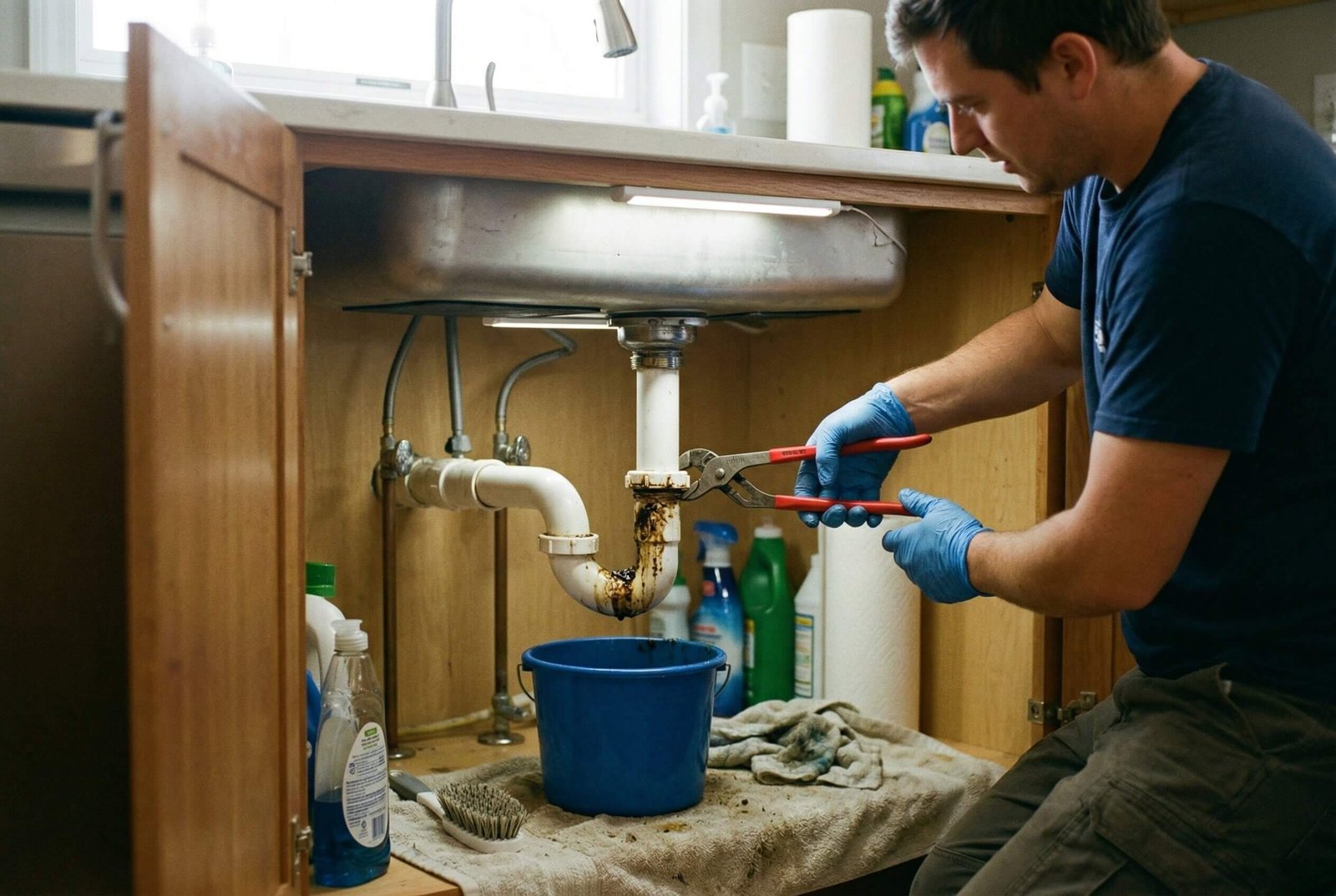
Grease buildup inside kitchen sink pipes is one of the most common causes of slow drains and recurring clogs in U.S. homes. When cooking oil, butter, or food grease goes down the drain, it may seem harmless in liquid form, but as it cools, it solidifies and sticks to the inner walls of the pipes. Over time, this creates a thick, sticky layer that traps food particles and debris, eventually leading to partial or complete blockages.
The challenge with grease is that it doesn’t just form one clog—it builds up gradually along the pipe, restricting water flow and causing repeated drainage problems. That’s why removing grease requires more than just a quick fix. In this guide, you’ll learn how to remove grease from kitchen sink pipes using safe DIY methods, effective tools, and professional solutions when needed. By following the right approach step-by-step, you can clear existing buildup and restore proper flow without damaging your plumbing system.
What This Page Covers
ToggleIdentify Grease Buildup Before Removing It
Before you try to remove grease from kitchen sink pipes, it’s important to confirm that grease is actually the cause of the problem. Many drain issues look similar, but grease buildup has specific patterns and behaviors. Identifying it correctly helps you choose the right method and avoid wasting time on ineffective fixes.
Signs of Grease in Kitchen Drain Pipes
Grease buildup usually develops gradually, so the symptoms appear over time rather than suddenly.
Common signs include:
- Slow draining water that gets worse over time
- Sticky or oily residue around the drain opening
- Foul or rancid smell coming from the sink
- Frequent clogs even after cleaning
These signs indicate that grease is coating the pipe walls and narrowing the passage.
Light Buildup vs Heavy Grease Blockage
Not all grease problems are the same. The severity determines which method will work.
Light buildup means a thin layer of grease lining the pipe. Water still drains, but slowly. This type is easier to remove with hot water, dish soap, or enzyme cleaners.
Heavy grease blockage occurs when grease hardens into a thick mass that restricts or blocks water flow completely. In this case, stronger methods like snaking or professional cleaning may be required.
Surface Grease vs Deep Pipe Buildup
Grease can accumulate at different points in the drain system.
Surface buildup is near the drain opening or inside the P-trap. This is easier to access and remove manually.
Deep buildup occurs further inside the pipe, often within the wall or branch line. This type is harder to reach and usually requires tools like a drain snake or advanced cleaning methods.
Warning Signs of Severe Grease Blockage
Some symptoms indicate that grease buildup has become a serious issue.
Watch for these warning signs:
- Water backing up into the sink
- Gurgling sounds from the drain
- Multiple drains in the home slowing down
- Clogs returning quickly after cleaning
These signs suggest that grease has accumulated deeper in the system and may require more advanced or professional solutions.
Understanding whether you’re dealing with light buildup or a severe blockage is key. Once you identify the level and location of grease buildup, you can move forward with the most effective removal method.
Quick Fixes to Break Down Grease (Low Risk)
If you’ve confirmed grease is the cause, start with simple, low-risk methods before moving to stronger solutions. These approaches are safe for most U.S. residential plumbing systems and are often enough to remove grease from kitchen sink pipes when the buildup is still soft or moderate. The goal here is to break down grease and flush it out without damaging pipes or pushing it deeper.
Hot Water Flush for Fresh Grease
Fresh grease is still soft and easier to remove. Hot water can melt and loosen it before it hardens along the pipe walls.
Boil a full kettle of water and pour it slowly into the drain in stages. Give it a few seconds between pours so the heat can work through the buildup instead of cooling too quickly.
This method works best for early-stage grease issues. If the clog is already solid or water is not draining at all, hot water alone will not be effective.
Dish Soap + Hot Water Degreasing Method
Dish soap is specifically designed to break down oils, making it one of the most effective household solutions for grease removal.
Start by pouring a generous amount of liquid dish soap into the drain. Let it sit for 10–15 minutes so it can coat the grease inside the pipes. Then follow with hot water to flush the loosened buildup.
This method works well for moderate grease accumulation and is often more effective than hot water alone.
Manual Removal of Grease Sludge at Drain Opening
Sometimes grease buildup collects near the drain opening or just below the strainer, forming a sticky sludge that restricts water flow.
To remove it safely:
- Wear gloves for protection
- Use a flashlight to inspect inside the drain
- Remove visible sludge by hand or with a tool
- Avoid pushing grease further down
If your sink has a garbage disposal, ensure it is turned off and unplugged before attempting any manual removal.
Plunging to Loosen Grease Blockage
A plunger can help break apart grease buildup by applying pressure and movement inside the pipe.
Follow these steps:
- Fill the sink with enough water to cover the plunger
- Seal the plunger tightly over the drain
- Push and pull rapidly for 15–20 seconds
- Check if water begins to drain
Plunging is effective for loosening grease that has started to solidify but hasn’t formed a complete blockage yet.
These low-risk methods are often enough to clear grease buildup before it turns into a major clog. If the drain still doesn’t improve, it usually means the grease has hardened deeper inside the pipes and requires stronger solutions.
Intermediate Methods to Remove Grease Buildup
If quick fixes didn’t restore proper flow, the grease has likely hardened or spread deeper into the drain system. At this stage, you need more targeted methods that can break apart buildup and physically remove it. These techniques are still safe for homeowners and are often enough to fully remove grease from kitchen sink pipes without professional intervention.
Baking Soda and Vinegar Reaction
This method helps loosen grease that is stuck to the inner walls of the pipes. While it won’t dissolve thick grease plugs completely, it can break up softer layers and make them easier to flush out.
Pour about half a cup of baking soda into the drain, followed by one cup of vinegar. Let the mixture sit for 15–20 minutes as it reacts and loosens buildup. Afterward, flush thoroughly with hot water.
This works best for moderate grease buildup and is often used before moving to more aggressive methods.
Using a Drain Snake to Break Grease Clumps
A drain snake is one of the most effective tools for dealing with hardened grease deeper in the pipe. Instead of trying to dissolve the grease, it physically breaks it apart or pulls it out.
Insert the snake into the drain and slowly feed it forward until you feel resistance. Rotate the handle to break through the grease or hook onto it. Then pull it out carefully and repeat as needed.
You may remove:
- Thick grease clumps
- Food debris stuck in grease
- Sludge buildup
This method is highly effective when grease has formed solid blockages beyond the P-trap.
Wet/Dry Vacuum to Extract Grease Sludge
A wet/dry vacuum can be used to pull out softened grease instead of pushing it further down the pipe. This is especially helpful after using hot water or baking soda methods.
To use it:
- Set the vacuum to liquid mode
- Create a tight seal over the drain
- Run the vacuum for several seconds
This works best for loose or partially broken grease buildup near the upper portion of the pipe.
Cleaning the P-Trap to Remove Grease Deposits
The P-trap is one of the most common places for grease to accumulate and solidify. Cleaning it can often resolve stubborn drainage issues.
Follow these steps:
- Place a bucket under the P-trap
- Loosen the slip nuts and remove the trap
- Empty and clean out all grease buildup
- Rinse thoroughly and remove any residue
- Reinstall securely and test the drain
This method gives direct access to a major clog point and is often enough to restore normal flow.
At this stage, most grease-related problems can be resolved. If the drain still doesn’t improve, it usually means the buildup extends deeper into the pipe system and requires stronger or professional-level solutions.
Advanced Methods to Clear Grease From Pipes
If grease buildup hasn’t cleared after intermediate steps, it’s likely hardened deeper in the drain line or coating a larger section of the pipe. At this stage, you need stronger methods to fully remove grease from kitchen sink pipes without damaging the plumbing. These approaches are more effective but require careful use, especially in older U.S. homes.
Enzyme Drain Cleaners for Grease Digestion
Enzyme cleaners are one of the safest and most effective ways to break down grease over time. They use natural bacteria to digest organic material, including oils and food residue, without harming pipes.
Pour the recommended amount into the drain and let it sit for several hours or overnight. This allows the enzymes to break down grease buildup along the pipe walls gradually.
Best for:
- Recurring grease buildup
- Moderate pipe coating
- Ongoing maintenance after clearing a clog
While not instant, this method helps restore flow safely and prevents future buildup.
Chemical Degreasers (Risks Included)
Chemical degreasers can dissolve grease quickly, but they come with significant risks. These products generate heat or strong reactions that can damage pipes, especially PVC or older metal lines.
Use with caution:
- Follow instructions strictly
- Never mix with other cleaners
- Avoid repeated use
- Ensure proper ventilation
These should only be used as a last resort when other methods fail. They may not be effective on solid grease plugs and can create long-term plumbing issues if overused.
High-Pressure Flushing to Remove Grease Layer
High-pressure flushing helps remove grease coating along the pipe walls rather than just breaking a single clog.
You can use:
- A hose with a pressurized nozzle
- Drain cleaning attachments designed for stronger flow
Run water through the drain in controlled bursts to push out loosened grease. This method works best after using dish soap or enzyme cleaners to soften the buildup.
Deep Snaking for Hardened Grease
When grease has formed a solid blockage deeper in the pipe, a longer drain auger is required to reach it.
Feed the snake further into the pipe until resistance is felt. Rotate steadily to break apart or hook the grease mass, then pull it out carefully.
Effective for:
- Hardened grease plugs
- Deep blockages inside wall pipes
- Stubborn buildup that won’t dissolve
At this stage, you’re dealing with more serious grease buildup. If these methods still don’t restore proper drainage, it’s a strong indication that the problem requires professional tools or a full pipe cleaning.
Professional Methods to Remove Grease From Kitchen Pipes
When grease buildup is thick, widespread, or keeps coming back, professional plumbers use specialized equipment to fully remove grease from kitchen sink pipes. These methods don’t just clear a single blockage—they clean the entire pipe interior, restoring proper flow and preventing future clogs.
Hydro Jetting for Complete Grease Removal
Hydro jetting is the most effective professional method for removing grease. It uses high-pressure water (typically 3,000–4,000 PSI) to scour the inside of the pipes and wash away all buildup.
It removes:
- Thick grease layers coating pipe walls
- Sludge and food residue trapped in grease
- Partial blockages that cause recurring clogs
Unlike basic methods, hydro jetting restores the pipe close to its original diameter. Plumbers usually inspect the pipes first to ensure they can handle the pressure, especially in older homes.
Motorized Auger for Heavy Grease Blockage
A motorized auger (power snake) is used when grease has hardened into a dense clog. It uses a rotating cable to break apart the blockage and open the pipe.
This method is effective for:
- Solid grease plugs
- Deep blockages beyond the P-trap
- Compacted debris mixed with grease
While it clears the clog, it may not remove all grease buildup along the pipe walls like hydro jetting does.
Camera Inspection for Grease Diagnosis
If grease problems are recurring or unclear, plumbers use a drain camera to inspect the inside of the pipe.
This helps identify:
- Exact location of grease buildup
- Thickness and severity of the coating
- Areas where buildup is most severe
- Pipe condition and potential damage
This ensures the correct method is used instead of trial-and-error.
Pipe Repair if Grease Caused Damage
Long-term grease buildup can lead to pipe issues such as narrowing, corrosion, or improper flow due to restricted diameter.
In these cases, plumbers may recommend:
- Replacing damaged sections of pipe
- Adjusting pipe slope for better drainage
- Upgrading older plumbing materials
This is typically needed only when grease buildup has caused structural problems over time.
Professional methods provide the most complete and long-lasting solution, especially for severe or recurring grease issues. While they cost more, they eliminate buildup at the source and reduce the chances of future clogs.
Tools Used to Remove Grease From Kitchen Sink Pipes
To effectively remove grease from kitchen sink pipes, the right tools make a significant difference. Grease behaves differently from typical clogs—it coats pipe walls and hardens over time—so both cleaning and breaking tools are needed depending on severity. Starting with basic tools and progressing to more advanced equipment helps you clear buildup safely without damaging your plumbing system.
Basic Tools
These are simple, low-cost tools used for early-stage grease buildup or maintenance.
- Plunger – Helps loosen soft grease buildup by creating pressure
- Bucket – Essential when removing the P-trap to catch greasy water
- Dish soap – Breaks down oils and helps flush grease out
- Hot water source (kettle) – Melts and softens grease inside pipes
These tools are often enough for light buildup and preventive cleaning.
Intermediate Tools
When grease has started to harden or build up deeper in the pipe, intermediate tools provide better reach and effectiveness.
- Drain snake (hand auger) – Breaks apart grease clumps and clears blockages
- Wet/dry vacuum – Extracts loosened grease and sludge
- Drain cleaning attachments – Increase water pressure for better flushing
These tools are useful when basic methods fail to restore proper flow.
Professional Tools
For severe or recurring grease buildup, professional plumbers use advanced equipment to fully clean the pipes.
- Power auger (motorized snake) – Breaks through dense, hardened grease plugs
- Hydro jet machine – Uses high-pressure water to clean pipe interiors completely
- Inspection camera – Identifies grease buildup location and pipe condition
These tools not only remove the clog but also eliminate grease buildup along the pipe walls, providing a long-term solution.
Using the right tool at the right stage ensures effective grease removal while minimizing the risk of pipe damage. For minor issues, basic tools are often enough, but deeper buildup may require more advanced solutions.
Cost to Remove Grease From Kitchen Sink Pipes
The cost to remove grease from kitchen sink pipes depends on how severe the buildup is, how far it extends into the plumbing system, and whether you handle it yourself or hire a professional. Grease problems can range from light coating to fully hardened blockages, so pricing varies based on the level of work required.
DIY Cost Range
If the grease buildup is light or moderate, you can often resolve it using basic tools and cleaning products at a low cost.
Typical DIY expenses include:
- Dish soap, baking soda, vinegar: $5 – $20
- Enzyme drain cleaners: $15 – $40
- Plunger: $10 – $25
- Hand auger (drain snake): $20 – $50
- Wet/dry vacuum (if not owned): $50 – $150
Most homeowners can remove minor grease buildup for under $50 if they already have basic tools.
Plumber Cost in the U.S.
For deeper or hardened grease buildup, professional services are often required to fully clear the pipes.
Typical pricing includes:
- Basic drain cleaning: $100 – $250
- Snaking grease blockages: $150 – $400
- Hydro jetting service: $300 – $800
- Camera inspection: $150 – $300
For most kitchen sink grease issues, homeowners typically pay between $150 and $350 depending on severity.
Factors Affecting Cost
Several factors influence the final cost of grease removal:
- Thickness and extent of grease buildup
- Location of the blockage (near trap vs deep pipe)
- Length and condition of the pipes
- Accessibility of plumbing
- Time required for cleaning
Heavy buildup along long sections of pipe will cost more than a localized clog.
Emergency Cost
If the grease blockage causes a full backup or requires urgent service, emergency pricing applies.
Typical additional costs:
- After-hours service fee: +$100 to $300
- Weekend or holiday rates: higher base charges
- Urgent hydro jetting: premium pricing
Emergency grease removal can range from $300 to $1,000 depending on severity and timing.
Starting with DIY methods can save money, but if grease buildup is deep or recurring, professional cleaning is often the most effective long-term solution.
When NOT to Remove Grease Yourself
While many homeowners can safely remove grease from kitchen sink pipes using DIY methods, there are situations where continuing on your own can make the problem worse. Grease buildup often extends deeper than it appears, and using the wrong approach can push it further into the system, harden it, or even damage your pipes.
Recurring Grease Clogs
If your sink keeps clogging even after cleaning, it’s a strong sign that grease is coating a larger section of the pipe. What you’re removing each time is only a portion of the buildup, while the rest remains inside.
Repeated DIY attempts may temporarily improve flow but won’t solve the root issue. In these cases, deeper cleaning methods like hydro jetting are usually required to fully remove grease from the pipe walls.
Multiple Drain Issues
If grease buildup has spread beyond the kitchen sink, you may notice other drains in your home slowing down or backing up. This indicates that the problem is not limited to a single pipe.
Signs include:
- Bathroom sinks draining slowly
- Gurgling sounds in multiple fixtures
- Water backup in different areas
This usually points to a deeper blockage in the main drain line, which requires professional tools.
Fully Blocked Pipe
If water is not draining at all, the grease has likely hardened into a solid blockage. At this stage, basic methods like hot water or soap will not work.
Trying to force the clog using plungers or chemicals can:
- Push the blockage deeper
- Compact the grease further
- Increase the difficulty of removal
Professional equipment is often needed to break through and clear the pipe.
Risk of Pipe Damage
Certain DIY methods can damage your plumbing system if used incorrectly, especially in older homes.
Risks include:
- Overusing chemical cleaners that weaken pipes
- Applying too much force with a drain snake
- Loosening or misaligning pipe connections
- Exposing pipes to repeated heat stress
In these situations, it’s best to stop DIY efforts and call a professional plumber. Early intervention prevents further damage and ensures the grease is removed safely and completely.
How to Prevent Grease Buildup in Kitchen Pipes
Once you’ve removed the buildup, preventing it from coming back is the real win. Grease problems are almost always habit-driven, so small daily changes can keep your system clear and help you consistently remove grease from kitchen sink pipes before it turns into a clog.
Never Pour Grease Down the Drain
This is the most important rule. Even when hot, grease cools inside pipes and sticks to the walls, creating a base layer for future buildup.
Adopt these habits:
- Let grease cool and solidify, then throw it in the trash
- Use a container or jar to collect used cooking oil
- Wipe greasy pans with paper towels before washing
Avoiding grease disposal down the sink dramatically reduces clog risk.
Proper Disposal of Cooking Oil
Liquid oils may seem harmless, but they also coat pipe walls and contribute to buildup over time.
Better disposal options:
- Pour cooled oil into a sealed container and discard it
- Reuse cooking oil when appropriate
- Use absorbent materials (like paper towels) to remove excess oil
This keeps your drain system free from oil-based residue.
Regular Hot Water Maintenance
Hot water helps prevent grease from settling and sticking inside the pipes.
A simple routine:
- Flush the drain with hot water once or twice a week
- Run hot water after washing greasy dishes
- Combine with dish soap occasionally for better results
This helps clear small amounts of grease before they accumulate.
Monthly Enzyme Cleaning Routine
Enzyme cleaners provide long-term protection by breaking down organic buildup inside the pipes.
Use them as part of a regular schedule:
- Apply once a month for maintenance
- Let it sit overnight for best results
- Use more frequently if your kitchen sees heavy grease use
This method keeps pipes clean from the inside without damaging them.
Preventing grease buildup is about consistency, not effort. By following these habits, you can maintain smooth drainage, reduce the risk of clogs, and avoid costly plumbing repairs in the future.
Final Thoughts
Removing grease from kitchen sink pipes is not just about clearing a single clog—it’s about dealing with a buildup problem that develops over time. Grease doesn’t stay in one place; it spreads along the pipe walls, slowly restricting flow and trapping debris. That’s why the most effective way to remove grease from kitchen sink pipes is to follow a step-by-step approach, starting with simple methods and progressing to stronger solutions only when needed.
For most homeowners, early-stage grease buildup can be handled with hot water, dish soap, and basic tools. As the problem becomes more severe, methods like snaking, P-trap cleaning, or enzyme treatments become necessary to break apart and remove hardened grease. The key is to avoid jumping straight to harsh chemicals or aggressive techniques, which can damage pipes or create long-term issues.
It’s equally important to recognize when the problem is beyond DIY. Recurring clogs, multiple slow drains, or complete blockages are signs that grease has spread deeper into the system. In these cases, professional cleaning methods like hydro jetting provide the most reliable and long-lasting results.
Ultimately, prevention is what keeps your plumbing system healthy. By avoiding grease disposal, maintaining your drain regularly, and acting early when problems appear, you can keep your kitchen sink flowing smoothly and avoid repeated repairs.