
Most homeowners think drain problems “just happen.” One day the sink is slow, the shower starts backing up, or a bad smell shows up out of nowhere. But in real homes, drains don’t fail randomly — they follow patterns, and those patterns change with the seasons.
In winter, grease hardens faster and pipes are under temperature stress. In summer, higher usage from showers, cooking, and guests increases buildup inside pipes. Fall brings leaves and outdoor debris that can affect external drainage systems, while spring introduces heavy water flow that tests how well your drains are actually functioning. Each season creates a different type of pressure inside your plumbing system.
This is why a one-time cleaning or a generic “drain maintenance routine” isn’t enough. What works in summer won’t protect you in winter. What prevents buildup in fall won’t handle spring water load. From a plumber’s perspective, drains need to be managed in cycles — not just cleaned when there’s a problem.
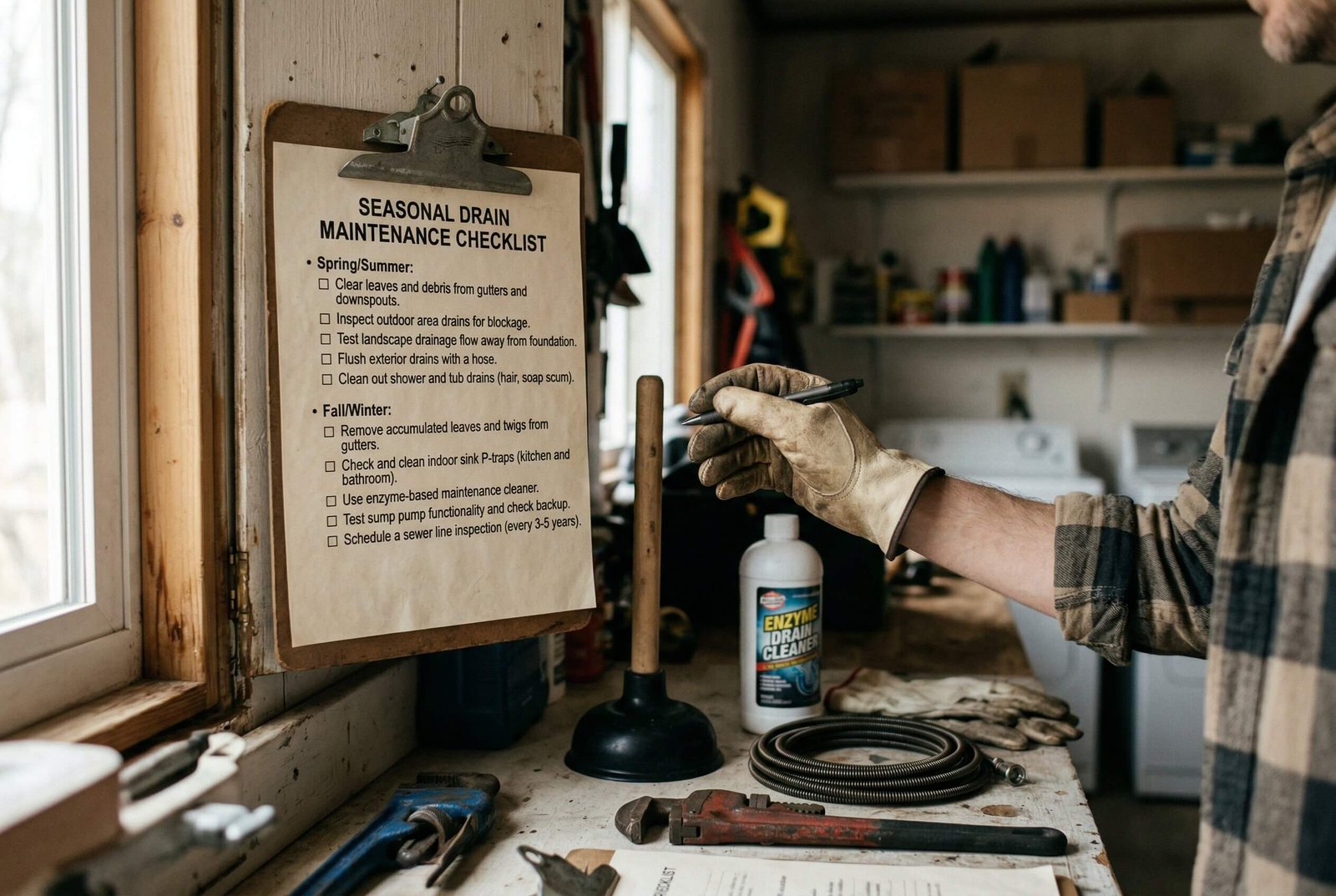
A seasonal drain maintenance checklist gives you that structure. Instead of reacting to clogs, you stay ahead of them. Instead of emergency fixes, you follow a system that keeps your pipes flowing smoothly all year.
What This Page Covers
ToggleWhat Seasonal Drain Maintenance Really Means
Most homeowners follow a single routine all year — maybe running hot water, using a cleaner occasionally, or reacting when something slows down. The problem is, drains don’t operate the same way in every season, so a fixed routine eventually fails to keep up.
Seasonal drain maintenance means adjusting how you care for your drains based on what your plumbing system is dealing with at that time of year. In winter, the focus is on preventing grease from hardening and protecting pipes from cold stress. In summer, it shifts toward managing heavy usage and organic buildup like food, soap, and hair. Fall is about clearing debris and preparing the system for colder months, while spring focuses on handling increased water flow and flushing out buildup from winter.
From a plumber’s point of view, this isn’t extra work — it’s smarter work. Instead of doing more cleaning, you’re doing the right type of maintenance at the right time.
Think of it like maintaining a car. You wouldn’t use the same approach in extreme heat and freezing cold. Your drains work the same way. When you match your maintenance to seasonal conditions, you reduce stress inside the pipes, prevent buildup from turning into blockages, and avoid sudden failures that seem to come “out of nowhere.”
That’s the real goal here — not just clean drains, but predictable, problem-free performance all year.
Maintenance vs Cleaning vs Unclogging (Quick Clarity)
A lot of homeowners treat all drain work as the same thing. If water slows down, they clean it. If it stops, they unclog it. But from a plumber’s perspective, these are three completely different actions — and mixing them up is one of the biggest reasons drain problems keep coming back.
Maintenance is what prevents problems from forming in the first place. It’s a system — small, consistent actions that keep buildup from sticking, keep water flowing freely, and reduce stress inside your pipes. Seasonal drain maintenance falls into this category. Done properly, it keeps your drains working without ever reaching the failure stage.
Cleaning is when buildup has already started forming inside the pipe walls. This includes grease, soap residue, hair, food particles, or mineral deposits. Cleaning removes that layer before it becomes a full blockage. It’s still preventive — but it’s a step behind maintenance.
Unclogging is what happens when the system has already failed. Water is backing up, draining very slowly, or not moving at all. At this point, you’re no longer preventing anything — you’re fixing a problem that has already disrupted normal flow.
Here’s the key insight most homeowners miss:
If you rely on cleaning or unclogging, you’re always reacting late.
Seasonal drain maintenance reduces how often you need both. By adjusting your routine throughout the year, you stop buildup from reaching the stage where cleaning is necessary — and you almost eliminate the need for emergency unclogging.
Why Seasonal Drain Maintenance Matters
Most drain problems don’t come from one big mistake — they build slowly, then show up all at once when the season changes. That’s why many homeowners experience sudden clogs in winter, bad smells in summer, or backups during heavy rain. The issue isn’t random failure. It’s a lack of seasonal preparation.
When you follow a seasonal drain maintenance routine, you reduce the stress your plumbing system faces throughout the year. In colder months, you prevent grease from solidifying inside pipes and avoid pressure caused by temperature changes. In warmer months, you control organic buildup from increased usage. During rainy seasons, you ensure your system can handle extra water flow without backing up.
The biggest advantage is cost control. Emergency plumbing calls are expensive because they happen when the system has already failed. A simple seasonal checklist costs very little in comparison and prevents those situations from developing in the first place.
It also improves how your drains perform daily. Water flows faster, odors are minimized, and you don’t deal with recurring slow drains that never fully go away. Over time, this reduces wear and tear inside your pipes, which means fewer repairs and a longer lifespan for your entire plumbing system.
From a real-world plumbing perspective, this is the difference between managing your system and constantly fixing it. Seasonal maintenance puts you in control, instead of waiting for problems to force action.
What Causes Seasonal Drain Problems
Drain issues don’t appear suddenly — they develop because different types of buildup behave differently throughout the year. Each season changes how materials move, stick, or harden inside your pipes. If you understand what’s happening in each season, you can prevent most problems before they even start.
Here’s how seasonal conditions affect your drains:
- Winter (Cold Weather Stress)
- Grease and fats harden faster inside pipes
- Hot water cools quickly, causing buildup to stick to pipe walls
- Pipes contract slightly in cold temperatures, reducing flow efficiency
- Higher risk of partial blockages turning into full clogs
- Summer (High Usage & Organic Buildup)
- More showers, laundry, and cooking increase drain usage
- Hair, soap, and food waste accumulate faster
- Warm temperatures accelerate decomposition, leading to odors
- Garbage disposals are often overused during gatherings
- Fall (Debris & Preparation Season)
- Leaves and outdoor debris enter external drains
- Gutter systems can affect connected drainage lines
- Early grease buildup begins as temperatures drop
- Missed maintenance here leads to winter clogs
- Spring (Water Flow & System Stress)
- Increased rainwater puts pressure on drainage systems
- Ground movement can affect underground pipes
- Winter buildup gets pushed through the system
- Basement and floor drains are more vulnerable to backups
The key takeaway is simple:
Different seasons create different types of stress inside your drains.
If you treat your plumbing the same way all year, you’re always going to miss something. But when you adjust your maintenance based on these seasonal causes, you stop problems at the source — before they turn into slow drains, bad smells, or full blockages.
Early Warning Signs That Change With Seasons
Most homeowners wait for a full clog before taking action. But in real plumbing systems, drains always give early warning signs — they just show up differently depending on the season. If you catch these signs early, you can fix the issue with simple maintenance instead of dealing with a major blockage later.
Here are the seasonal warning signs to watch for:
- Winter Warning Signs
- Water draining slower than usual, especially in kitchen sinks
- Grease sticking inside pipes despite using hot water
- Intermittent slow flow (works fine sometimes, slows other times)
- Pipes making slight tightening or pressure sounds
- Spring Warning Signs
- Gurgling noises after heavy rain
- Water levels fluctuating in toilets or floor drains
- Basement or lower drains showing slow drainage
- Occasional backflow smells after storms
- Summer Warning Signs
- Bad odors coming from kitchen or bathroom drains
- Slower drainage in showers due to hair and soap buildup
- Garbage disposal not clearing waste efficiently
- Frequent need to flush drains with hot water
- Fall Warning Signs
- Outdoor drains clogging with leaves or debris
- Slight slowdowns returning after working fine in summer
- Kitchen drains starting to hold grease again
- Increased buildup just before temperatures drop
One important thing to understand:
These are not “minor issues” — they are early-stage problems.
If you ignore them, they turn into full clogs. But if you act at this stage with the right seasonal maintenance, you can clear buildup easily and keep your drains running smoothly without needing aggressive cleaning or professional intervention.
Early Warning Signs That Change With Seasons
Winter Warning Signs
- Water draining slower than usual, especially in kitchen sinks
- Grease sticking inside pipes despite using hot water
- Intermittent slow flow (works fine sometimes, slows other times)
- Pipes making slight tightening or pressure sounds
Spring Warning Signs
- Gurgling noises after heavy rain
- Water levels fluctuating in toilets or floor drains
- Basement or lower drains showing slow drainage
- Occasional backflow smells after storms
Summer Warning Signs
- Bad odors coming from kitchen or bathroom drains
- Slower drainage in showers due to hair and soap buildup
- Garbage disposal not clearing waste efficiently
- Frequent need to flush drains with hot water
Fall Warning Signs
- Outdoor drains clogging with leaves or debris
- Slight slowdowns returning after working fine in summer
- Kitchen drains starting to hold grease again
- Increased buildup just before temperatures drop
Most homeowners wait for a full clog before taking action. But in real plumbing systems, drains always give early warning signs — they just show up differently depending on the season. If you catch these signs early, you can fix the issue with simple maintenance instead of dealing with a major blockage later.
One important thing to understand:
These are not minor issues — they are early-stage problems.
If you ignore them, they turn into full clogs. But if you act at this stage with the right seasonal maintenance, you can clear buildup easily and keep your drains running smoothly without needing aggressive cleaning or professional intervention.
Seasonal Drain Maintenance System
This is where most homeowners get it wrong — they either overdo maintenance randomly or ignore it until something breaks. What actually works is a simple seasonal system where you do specific tasks at the right time of year. Not more work — just better timing.
When you follow this system, you stop reacting to clogs and start preventing them before they form.
Winter Drain Maintenance Checklist
Winter is when most kitchen drain problems start. Grease hardens faster, pipes are under temperature stress, and small buildup turns into solid blockage if ignored.
- Avoid pouring grease or oily liquids down the drain (even with hot water)
- Run hot water for 20–30 seconds after each kitchen use to keep flow moving
- Use dish soap with hot water to help break down light grease buildup
- Limit garbage disposal use for heavy or sticky food waste
- Check for early slow drainage — don’t ignore it in cold weather
- Insulate exposed pipes to reduce temperature impact
The goal in winter is simple: keep everything moving and prevent buildup from sticking.
Spring Drain Maintenance Checklist
Spring is about flushing out everything that built up during winter and preparing your system for increased water flow.
- Flush drains with hot water to clear loosened buildup
- Check basement and floor drains for slow movement or backup signs
- Clean outdoor drains and remove debris around openings
- Test sump pump functionality if your home has one
- Use a light enzyme cleaner to break down organic material
Spring maintenance helps reset your system after winter stress.
Summer Drain Maintenance Checklist
Summer increases daily usage — more showers, more cooking, more waste going through your drains. This is when organic buildup grows fastest.
- Clean shower and sink strainers regularly (hair and soap control)
- Run regular hot water flushes after heavy use
- Clean garbage disposal with proper methods (not harsh chemicals)
- Prevent food scraps from entering the drain unnecessarily
- Address odors early before they build up
The goal in summer is to control buildup before it accumulates.
Fall Drain Maintenance Checklist
Fall is preparation season. What you do here determines how smoothly your drains handle winter.
- Remove leaves and debris from outdoor drains and gutters
- Clean kitchen drains thoroughly before cold weather begins
- Reduce grease exposure as temperatures start dropping
- Inspect for any slow drains and fix them early
- Consider a deeper cleaning before winter if buildup is noticeable
Fall maintenance is about setting your system up for colder months.
Basic Weekly & Monthly Maintenance Routine (Year-Round Foundation)
Seasonal maintenance works best when it sits on top of a simple, consistent routine. Think of this as your baseline system — small habits that keep buildup from forming, so seasonal tasks become easier and more effective.
This isn’t time-consuming. It’s about doing a few things regularly so problems never get a chance to develop.
Weekly Drain Maintenance Routine
- Run hot water through kitchen and bathroom drains for 30–60 seconds
- After washing dishes, follow with hot water + a small amount of dish soap
- Remove visible debris from sink and shower strainers
- Check for early signs of slow drainage or unusual smells
- Listen for gurgling or changes in flow (especially after heavy use)
The weekly goal is simple: keep water flowing freely and stop buildup before it sticks.
Monthly Drain Maintenance Routine
- Perform a deeper hot water flush for all main drains
- Clean sink and shower strainers thoroughly (not just surface cleaning)
- Inspect and rinse P-traps if accessible (especially kitchen sinks)
- Use a mild cleaning method (like enzyme cleaner or natural solution)
- Check rarely used drains (guest bathroom, basement) and run water to prevent drying traps
Monthly maintenance is where you remove early buildup before it turns into a problem.
Why This Routine Supports Seasonal Maintenance
Without this foundation, seasonal checklists become reactive instead of preventive. You’ll constantly be dealing with partial clogs instead of maintaining a clean system.
When you follow both:
- Weekly routine = prevents buildup
- Monthly routine = removes early buildup
- Seasonal routine = adapts to environmental stress
That combination is what keeps drains consistently clear without needing aggressive cleaning or emergency fixes.
Intermediate Seasonal Maintenance Methods
Once your basic weekly and monthly routine is in place, the next step is using light cleaning methods to control buildup before it turns into a clog. This is where most homeowners either overdo it with harsh chemicals or underdo it and let buildup grow.
Intermediate methods sit right in the middle — stronger than routine flushing, but still safe when used correctly.
Baking Soda and Vinegar (When It Helps — and When It Doesn’t)
This method is useful for breaking down light organic buildup and reducing mild odors, especially in bathroom and kitchen drains.
When it works:
- Early-stage buildup (not full clogs)
- Odor control in warm months
- Soap and light grease residue
When it doesn’t work:
- Thick grease buildup in winter
- Hair clogs deep inside pipes
- Fully blocked drains
Use it occasionally, not as a weekly habit. Overusing it won’t improve results and can create a false sense of “clean pipes” when buildup is still present.
Enzyme Drain Cleaners for Organic Buildup
Enzyme-based cleaners are one of the safest ways to maintain drains over time. They break down organic material like food, grease, and soap slowly without damaging pipes.
- Best used monthly or during seasonal transitions
- Ideal for kitchen, bathroom, and laundry drains
- Works gradually, not instantly
These are especially effective in summer and spring when organic buildup is more active.
Hot Water Flushing Strategy (Done Correctly)
Most people run hot water randomly and assume it helps. In reality, timing and consistency matter more.
- Use hot water after heavy kitchen use to prevent grease buildup
- Combine with dish soap to improve effectiveness
- Avoid relying on hot water alone for existing buildup
Hot water supports maintenance — it doesn’t replace cleaning.
Limitations of DIY Seasonal Cleaning
This is where real-world plumbing experience matters. DIY methods can maintain a system, but they cannot fix deeper problems.
- They don’t remove heavy or hardened buildup
- They can’t reach deep into the pipe system
- Overuse (especially chemicals) can damage pipes over time
The goal of these methods is simple:
Delay and reduce buildup — not eliminate the need for deeper cleaning when required.
If you find yourself repeating these methods frequently with little improvement, it’s a sign the problem has moved beyond maintenance and needs a more advanced approach.
Advanced Seasonal Maintenance Approaches
At some point, basic and intermediate methods stop being enough. Buildup becomes thicker, flow slows down more often, and simple flushing or light cleaning doesn’t restore full performance. This is where advanced maintenance comes in — not as a regular habit, but as a strategic reset when your system starts showing signs of deeper buildup.
Descaling for Mineral and Hard Water Buildup
In many U.S. homes, especially in hard water areas, minerals slowly build up inside pipes. This creates a rough surface where grease, soap, and debris stick more easily over time.
- Descaling helps remove mineral deposits lining the pipe walls
- It improves water flow and reduces future buildup sticking
- Usually needed once or twice a year depending on water quality
This isn’t something you do casually. It’s done when you notice reduced flow that doesn’t improve with basic cleaning.
Deep Cleaning Before Seasonal Transitions
One of the smartest times to perform deeper maintenance is before major seasonal shifts, especially:
- Before winter (to remove grease buildup)
- After winter (to clear accumulated residue)
This type of cleaning goes beyond surface-level methods and helps reset the system so the next season doesn’t amplify existing problems.
When DIY Methods Stop Working
This is a key turning point most homeowners miss. If you notice:
- Slow drains returning quickly after cleaning
- Repeated need for flushing or treatments
- Multiple drains showing similar issues
It usually means buildup is deeper inside the system — not just near the surface.
At this stage, continuing DIY methods wastes time and can make things worse by pushing buildup further down the pipe.
The Risk of Over-Cleaning
More cleaning doesn’t always mean better results. In fact, overdoing it can damage your plumbing.
- Frequent chemical use can weaken pipes
- Aggressive cleaning can loosen buildup unevenly and cause blockages
- Mixing different cleaning methods can create unpredictable reactions
The goal of advanced maintenance is targeted intervention, not constant cleaning.
From a plumber’s perspective, this stage is about knowing when to step up — and when to stop. Done correctly, advanced maintenance restores flow and prepares your system for the next season without causing long-term damage.
Professional Drain Maintenance (Season-Based Timing)
There’s a point where no amount of DIY maintenance will fully solve the problem. Not because you’re doing it wrong — but because some buildup and issues exist deeper inside the system where household methods simply can’t reach.
Professional drain maintenance isn’t just for emergencies. In well-maintained homes, it’s used strategically — at the right time of year — to reset the system and prevent bigger problems from developing.
When to Call a Plumber (Season-Based Triggers)
Instead of waiting for a full blockage, it’s smarter to call based on patterns:
- Before winter if kitchen drains are slowing down or grease buildup is noticeable
- After winter if multiple drains feel sluggish despite cleaning
- During spring if you notice gurgling, backups, or basement drain issues
- Anytime recurring clogs return quickly after DIY maintenance
These are signs the problem is deeper than surface-level buildup.
Hydro Jetting (Full System Reset)
Hydro jetting is one of the most effective professional maintenance methods. It uses high-pressure water to clear out grease, sludge, soap, and debris from inside pipe walls.
- Restores pipes close to original condition
- Removes buildup that DIY methods cannot reach
- Especially useful before winter or after heavy seasonal buildup
This is not something homeowners can replicate — and it’s often the difference between temporary relief and long-term performance.
Camera Inspection for Recurring Seasonal Issues
If the same problem keeps coming back every season, there may be an underlying issue such as:
- Partial blockages deep in the line
- Pipe damage or misalignment
- Tree root intrusion (common in main sewer lines)
A camera inspection allows plumbers to see exactly what’s happening inside the pipes instead of guessing.
Preventive Service vs Emergency Service
There’s a big difference in cost and outcome:
- Preventive maintenance is planned, controlled, and less expensive
- Emergency service happens when the system fails — usually at the worst time
From a real-world standpoint, most expensive plumbing calls could have been avoided with timely preventive maintenance.
Professional maintenance isn’t something you need often — but when used at the right time, it protects your entire system and reduces the chances of major seasonal failures.
Tools Used in Seasonal Drain Maintenance
You don’t need a truck full of equipment to maintain your drains properly. Most seasonal drain maintenance can be handled with a small set of simple, practical tools — the same ones plumbers recommend homeowners keep on hand.
The key is not just owning the tools, but knowing when and why to use them during different seasons.
Drain Strainers (Your First Line of Defense)
- Prevent hair, food, and debris from entering pipes
- Essential for kitchen sinks, showers, and bathroom drains
- Especially important in summer when usage is higher
- Should be cleaned weekly to remain effective
This is the easiest way to reduce buildup before it even starts.
Hand Auger (Drain Snake for Light Use)
- Used to remove minor clogs or buildup close to the drain opening
- Useful when slow drainage starts and basic cleaning isn’t enough
- Ideal for bathroom sinks, showers, and small kitchen blockages
It’s not for deep system cleaning — but it’s very effective for early-stage issues.
Enzyme Cleaners (Safe Maintenance Support)
- Break down organic material like grease, food, and soap
- Work gradually without damaging pipes
- Best used monthly or during seasonal transitions
These are maintenance tools, not quick fixes — consistency matters more than frequency.
Hot Water and Dish Soap (Simple but Powerful Combo)
- Helps break down light grease buildup
- Supports regular maintenance after kitchen use
- Works best as part of a routine, not as a solution to clogs
When used correctly, this is one of the most effective everyday maintenance methods.
Pipe Insulation (Winter Protection Tool)
- Protects exposed pipes from cold temperatures
- Reduces risk of grease hardening and flow restriction
- Helps maintain consistent drainage performance in winter
Often overlooked, but very important in colder climates.
Basic Inspection Tools (What to Watch For)
- Flashlight for checking visible drain openings
- Gloves for safe manual cleaning
- Bucket for inspecting and cleaning P-traps
These simple tools help you catch problems early before they develop deeper in the system.
The goal isn’t to turn you into a plumber — it’s to give you just enough capability to maintain your system effectively between professional services.
Seasonal Drain Maintenance Schedule (Simple System)
A good drain system doesn’t come from doing random tasks — it comes from following a simple schedule that repeats throughout the year. This is what keeps everything consistent without overthinking or overworking your maintenance.
Think of this as your plug-and-play system. Follow it, and your drains stay under control.
Monthly Maintenance Tasks
These are your baseline actions that keep buildup from forming:
- Run hot water flush for all main drains
- Clean sink and shower strainers thoroughly
- Use enzyme cleaner in kitchen and bathroom drains
- Check for early signs (slow flow, odors, gurgling)
- Run water in rarely used drains to keep traps filled
This level keeps your system stable and prevents early buildup from sticking.
Quarterly Maintenance Tasks
Every 3–4 months, you step it up slightly to remove deeper buildup:
- Perform a deeper flush using hot water + dish soap
- Inspect and clean P-traps where accessible
- Check outdoor drains and remove debris
- Review seasonal performance (any recurring slow drains?)
- Adjust routine based on season (more grease control, more hair control, etc.)
Quarterly maintenance is where you correct small issues before they grow.
Seasonal Deep Checks (4 Times Per Year)
These align with the seasonal checklists you’ve already seen:
- Winter prep: Focus on grease control and pipe protection
- Spring reset: Flush and inspect after winter buildup
- Summer control: Manage high usage and organic waste
- Fall prep: Clear debris and prepare for colder temperatures
This is the layer that keeps your system aligned with environmental changes.
Annual Professional Maintenance
Even with perfect DIY care, one professional check per year can prevent long-term issues:
- Hydro jetting (if buildup is noticeable or recurring)
- Camera inspection for recurring seasonal problems
- Main line inspection (especially for older homes)
This acts as a full system reset, ensuring nothing hidden turns into a major problem later.
How This System Works Together
- Monthly = prevention
- Quarterly = correction
- Seasonal = adaptation
- Annual = deep reset
When all four layers work together, you don’t just maintain your drains — you control how they behave throughout the year.
👉 Ready for the next section (Cost of Drain Maintenance in the U.S.)?
Cost of Drain Maintenance in the U.S.
Most homeowners think drain maintenance is an extra expense. In reality, it’s one of the cheapest ways to avoid some of the most expensive plumbing problems.
The cost depends on how you maintain your system — DIY vs professional — and whether you’re preventing issues or fixing them after they happen.
DIY Drain Maintenance Costs (Low & Predictable)
Basic seasonal maintenance is very affordable:
- Drain strainers: $5–$20 each
- Enzyme cleaners: $10–$25 per month
- Occasional tools (auger, gloves, etc.): $15–$50 one-time
Most homeowners spend $50–$150 per year maintaining their drains properly.
This is your lowest-cost layer — and it prevents most common issues.
Basic Professional Drain Cleaning Costs
When you need help for minor or moderate issues:
- Standard drain cleaning: $100–$600 depending on severity
- Drain snaking: $100–$275 for typical clogs
- Kitchen or bathroom drain cleaning: around $110–$215
These are common service calls — usually needed when maintenance is inconsistent.
Advanced Cleaning (Hydro Jetting & Deep Cleaning)
For deeper buildup or full system reset:
- Hydro jetting: typically $300–$800
- Average cost: around $350–$600
- Severe cases: can reach $1,000+ depending on complexity
This is not routine — it’s used when buildup is deep or recurring.
Inspection & Additional Services
- Camera inspection: $100–$500
- Sewer line cleaning: $200–$800 depending on access
These help identify hidden problems before they turn into major repairs.
Emergency Plumbing Costs (What You’re Avoiding)
When maintenance is ignored, costs increase fast:
- Emergency drain clearing: $300–$600+
- Sewer backups or damage: $1,000–$3,000+
- Major pipe repair or replacement: $3,000+
These are the situations seasonal maintenance is designed to prevent.
Prevention vs Repair (Real-World Perspective)
Here’s how it plays out in real homes:
- Consistent maintenance: ~$100–$300/year
- Occasional service calls: ~$200–$600/year
- Emergency repairs: $1,000–$5,000+
The difference isn’t small — it’s massive.
From a plumber’s point of view, this is simple:
Drain maintenance is not a cost — it’s cost control.
Spend a little consistently, and you avoid spending a lot suddenly.
Common Seasonal Drain Maintenance Mistakes
Most drain problems aren’t caused by lack of effort — they’re caused by doing the wrong things at the wrong time. Homeowners often believe they’re maintaining their drains properly, but a few common mistakes keep buildup forming and problems repeating.
Understanding these mistakes helps you avoid wasted effort and unnecessary plumbing issues.
Treating All Seasons the Same
One of the biggest mistakes is using the same routine all year.
- Grease behaves differently in winter than in summer
- Water flow stress changes during rainy seasons
- Usage patterns increase during certain months
A fixed routine ignores these changes, which is why problems often appear suddenly when the season shifts.
Waiting for Visible Problems
Many homeowners only act when:
- Water drains slowly
- Odors become noticeable
- A clog forms
By this point, the problem has already developed inside the pipes. Seasonal maintenance is meant to prevent reaching this stage — not react to it.
Overusing Chemical Drain Cleaners
This is one of the most damaging habits.
- Frequent chemical use can weaken pipes over time
- It often clears only part of the buildup
- Residue can remain and make future buildup worse
Chemicals may offer temporary relief, but they rarely solve the root problem.
Skipping Fall and Winter Preparation
Fall and early winter are the most important times for maintenance — and the most ignored.
- Grease buildup starts forming as temperatures drop
- Outdoor debris enters drainage systems
- Pipes become more vulnerable to blockage
Missing this window leads to most winter drain problems.
Relying Only on Hot Water
Hot water helps, but it’s not a complete solution.
- It doesn’t remove established buildup
- It can push grease further down instead of clearing it
- It creates a false sense of maintenance
Hot water should support your routine — not replace it.
Ignoring Outdoor and Basement Drains
Many homeowners focus only on visible indoor drains.
- Outdoor drains clog with leaves and debris
- Basement drains are often the first to show backup issues
- Seasonal water flow can overwhelm neglected drains
Ignoring these areas increases the risk of larger system problems.
Repeating DIY Methods Without Results
If you keep using the same method and the problem returns quickly, it’s a sign the issue is deeper.
- Repeated flushing or cleaning without improvement
- Slow drains returning within days
- Multiple drains showing similar issues
At this point, continuing DIY efforts delays the real solution.
From a real-world plumbing perspective, avoiding these mistakes is just as important as following the right maintenance steps. Fix the approach, and most drain problems stop before they even begin.
How to Maintain Different Drains Across Seasons
Not all drains behave the same. A kitchen drain deals with grease and food waste, while a shower handles hair and soap. Basement and outdoor drains deal with water flow and debris. If you treat them all the same, you’ll always miss something.
The key is adjusting maintenance based on both drain type and season.
Kitchen Drain
The kitchen drain is the most sensitive to seasonal changes, especially in colder months.
- In winter:
- Avoid grease completely — it hardens quickly inside pipes
- Use hot water + dish soap after every heavy use
- In summer:
- Manage food waste and avoid overloading the garbage disposal
- Clean strainers more frequently due to higher usage
- Year-round:
- Never rely on hot water alone for grease control
- Use enzyme cleaners occasionally to break down buildup
Kitchen drains fail mostly due to grease — control that, and you prevent most issues.
Bathroom Sink and Shower Drains
These drains deal mainly with hair and soap buildup, which increases with usage.
- In summer:
- Clean strainers frequently (hair buildup increases)
- Watch for slow drainage due to soap residue
- In winter:
- Soap buildup can harden slightly and stick inside pipes
- Year-round:
- Use strainers consistently
- Remove visible hair before it enters the drain
Most bathroom clogs are preventable with simple physical control of debris.
Bathtub Drain
Bathtub drains often show slow buildup over time rather than sudden clogs.
- In high-use seasons:
- Monitor for gradual slowing due to soap + hair layers
- During seasonal transitions:
- Flush and clean before buildup becomes thick
- Year-round:
- Avoid letting debris accumulate unnoticed
Bathtub issues are usually slow-forming — early attention prevents major cleaning later.
Laundry Drain
Laundry drains handle lint, detergent residue, and fine debris.
- In winter:
- Detergent residue can stick more inside pipes
- In summer:
- Increased usage leads to faster buildup
- Year-round:
- Ensure lint traps are working properly
- Avoid excessive detergent use
Laundry drain problems are often overlooked until they affect the entire system.
Basement and Floor Drains
These are critical for handling excess water, especially during seasonal changes.
- In spring:
- Check for proper drainage during heavy rain
- Watch for slow flow or backup signs
- In fall:
- Clear debris and ensure drains are open
- Year-round:
- Run water occasionally to keep traps filled
These drains are your backup system — neglecting them increases risk during heavy water flow.
Main Sewer Line
This is the most important and most ignored part of the system.
- In spring and fall:
- Watch for signs of pressure or slow drainage across multiple fixtures
- Year-round:
- Be alert to recurring clogs in different drains
- Periodically:
- Consider inspection if problems repeat seasonally
Main line issues often show up as “random” problems across the house — but they’re rarely random.
From a plumber’s perspective, maintaining drains properly isn’t about doing more — it’s about treating each drain based on what it actually handles. Combine this with seasonal awareness, and most common plumbing problems become predictable and preventable.
Long-Term Drain Care Strategy
Most homeowners think in terms of fixing problems. Plumbers think in terms of managing systems over time. That’s the shift that makes the biggest difference.
A long-term drain care strategy isn’t about doing more work — it’s about building a simple system that runs in the background and prevents problems before they start.
Think in Cycles, Not One-Time Fixes
Drains don’t stay clean after one good effort. Buildup starts forming again immediately — just slowly.
- Winter → grease risk
- Summer → organic buildup
- Fall → debris and preparation
- Spring → water flow stress
When you think in cycles, you stop expecting permanent fixes and start maintaining consistent performance.
Combine Routine + Seasonal + Professional Care
A complete system has three layers:
- Routine (Weekly/Monthly): prevents buildup from forming
- Seasonal Adjustments: handles environmental changes
- Professional Maintenance: resets the system when needed
Most drain problems happen when one of these layers is missing.
Focus on Prevention, Not Cleaning
Cleaning feels productive, but prevention is what actually works long-term.
- Stop grease, hair, and debris before they enter pipes
- Use strainers consistently
- Adjust habits based on season
The less buildup that enters the system, the less you need to remove later.
Watch Patterns, Not Just Problems
Instead of reacting to a clog, pay attention to patterns:
- Same drain slowing every winter
- Odors returning every summer
- Gurgling during heavy rain
Patterns tell you where your system needs attention before failure happens.
Keep It Simple and Repeatable
The biggest mistake is overcomplicating maintenance.
- A few consistent habits beat occasional deep cleaning
- Simple routines are easier to follow long-term
- Consistency matters more than intensity
If your system is too complex, you won’t stick to it.
From a real-world plumbing perspective, the goal isn’t perfect pipes — it’s predictable performance. When you follow a long-term strategy, you stop dealing with surprises and start running your plumbing like a system that just works.
Final Thoughts
Most drain problems don’t come from major failures — they come from small things building up over time and getting worse with each season. What feels like a sudden clog is usually the result of months of unnoticed buildup finally reaching its limit.
That’s why seasonal drain maintenance works so well. It matches how your plumbing system actually behaves throughout the year. Instead of reacting to problems, you stay ahead of them by adjusting your approach as conditions change.
You don’t need complicated tools or constant effort. A simple system — weekly habits, monthly checks, and seasonal adjustments — is enough to keep most household drains running smoothly. Add occasional professional maintenance when needed, and you cover the deeper issues that DIY methods can’t reach.
The biggest shift is mindset:
Stop treating drains as something you fix, and start treating them as something you manage.
When you do that, you reduce costs, avoid emergencies, and keep your plumbing system working reliably year-round.