
A sewage smell coming from drains is one of the most unpleasant plumbing issues homeowners may experience. The odor is often described as a rotten egg smell, sulfur-like gas, or the strong scent of wastewater. These smells can come from sinks, showers, bathtubs, floor drains, or even toilets, and they may appear occasionally or persist throughout the home.
In a properly functioning plumbing system, sewer gases produced inside the sewer line are safely contained within the drain pipes. Water-filled drain traps and plumbing vents work together to prevent these gases from entering the living space. When everything in the system is working correctly, homeowners should not notice sewer odors inside the house.
However, when something disrupts the normal balance of the plumbing system, sewer gases may begin escaping through drains. This can happen when a drain trap dries out, when airflow inside the vent system is restricted, or when a sewer line blockage interferes with normal wastewater movement.
In some situations, the odor may originate from bacteria buildup inside the drain pipe rather than the sewer line itself. In other cases, the smell may signal a deeper issue within the sewer system that requires closer inspection.
Understanding why sewage smells come from drains helps homeowners recognize what may be happening inside the plumbing system. By identifying the possible causes and warning signs, it becomes easier to determine whether the odor is related to a simple drain issue or a developing sewer line problem.
What This Page Covers
ToggleHow Sewer Gas Exists in Drain Systems
Sewer gas is a natural byproduct of wastewater flowing through residential plumbing and municipal sewer systems. Every time water from sinks, toilets, showers, or appliances enters the drain system, it carries organic waste that begins breaking down inside the sewer environment. As this waste decomposes, it produces a mixture of gases that travel through sewer pipes.
Under normal conditions, these gases remain safely contained within the plumbing system. Drain traps and vent pipes work together to prevent sewer gases from entering the home while still allowing the plumbing system to function properly.
Understanding how sewer gas forms and how plumbing systems manage it helps explain why unpleasant odors may appear when something inside the system stops working correctly.
What Sewer Gas Is
Sewer gas is a mixture of gases produced during the decomposition of organic waste inside sewer pipes. When wastewater moves through the plumbing system, bacteria begin breaking down the organic materials contained in the waste.
This process releases gases such as:
• Hydrogen sulfide
• Methane
• Ammonia
• Carbon dioxide
Hydrogen sulfide is the gas most responsible for the rotten egg smell often associated with sewer odors. Even small amounts of this gas can produce a strong and unpleasant odor that becomes noticeable inside the home.
Although sewer gases are normally present inside the plumbing system, they are not meant to enter living spaces.
Why Sewer Gas Normally Stays Inside Pipes
Residential plumbing systems are designed to contain sewer gases within the drain pipes while still allowing wastewater to move through the system. Two major plumbing components work together to achieve this: drain traps and vent pipes.
Drain traps create a water barrier that blocks sewer gases from traveling back through the drains. Vent pipes allow gases to safely escape above the roof of the house instead of entering the home.
When these components function correctly, sewer gases remain inside the plumbing system and are safely released outside.
The Role of Drain Traps (P-Traps)
Every plumbing fixture in a home includes a drain trap, commonly called a P-trap. This curved section of pipe is located beneath sinks, tubs, showers, and other fixtures.
The shape of the trap allows a small amount of water to remain inside the pipe after the fixture is used. This standing water forms a seal that blocks sewer gases from traveling back up through the drain opening.
The water barrier inside the trap prevents gases from passing into the home while still allowing wastewater to flow through the pipe.
As long as the trap remains filled with water, sewer odors should not enter the house through that drain.
How Vent Pipes Remove Sewer Gas
Plumbing systems also include vent pipes, which extend upward through the roof of the house. These pipes allow sewer gases to safely exit the plumbing system and disperse into the outdoor air.
Vent pipes serve several important functions in the drainage system:
• Release sewer gases outside the home
• Allow fresh air to enter the plumbing system
• Maintain balanced air pressure inside the pipes
• Help wastewater flow smoothly through the drain system
When vent pipes become blocked or restricted, sewer gases may not escape properly. This can increase pressure inside the plumbing system and allow odors to enter the home through nearby drains.
What It Means When Sewage Smell Comes From Drains
When a sewage smell begins coming from a household drain, it usually means that sewer gas is escaping from the plumbing system into the living space. In a properly functioning drain system, sewer gases remain sealed inside the pipes and are safely vented outside through roof vents. If that seal is broken or airflow inside the pipes becomes disrupted, those gases may travel back through drains and produce noticeable odors.
The smell may appear in a single drain or in multiple fixtures throughout the home depending on where the issue occurs. In some cases, the problem may be related to a simple condition such as a dry drain trap. In other situations, the odor may indicate airflow problems, pipe damage, or a developing sewer line blockage.
Understanding what causes sewer gas to escape through drains helps explain why these odors sometimes appear suddenly or persist over time.
Sewer Gas Escaping the Drain System
The most direct reason sewage odors appear is that sewer gas has found a path out of the drain system. Normally, the plumbing system keeps these gases sealed inside the pipes. However, when the system loses its ability to contain them, the gases may escape through nearby drains.
This can occur when:
• The water seal in a drain trap disappears
• Air pressure changes inside the drain system
• Vent pipes cannot release gases properly
• Sewer line restrictions increase pressure inside pipes
When any of these situations occur, sewer gases may travel upward through the drain pipes and become noticeable inside the home.
Loss of Water Seal in the Trap
One of the most common reasons for sewer odors is the loss of the water seal inside the drain trap. As explained earlier, the trap holds water in a curved section of pipe beneath the fixture. This water acts as a barrier that prevents sewer gases from entering the room.
If the water inside the trap disappears, that barrier no longer exists.
This can happen when:
• A drain has not been used for a long time
• Water slowly evaporates from the trap
• Pressure changes pull water out of the trap
• A plumbing issue siphons the trap dry
When the trap dries out, sewer gas can pass freely through the pipe and enter the home through the drain opening.
Airflow Problems in Plumbing Pipes
Airflow problems inside the plumbing system can also allow sewer odors to escape through drains. The plumbing vent system is responsible for maintaining balanced air pressure inside the drain pipes.
If airflow through the vent system becomes restricted, pressure changes may occur when water flows through the pipes. These pressure changes can push sewer gas through nearby drains.
Airflow issues may occur due to:
• Blocked roof vent pipes
• Partial sewer line blockages
• Heavy debris buildup inside drain pipes
• Structural problems in the sewer line
When airflow inside the system becomes unstable, sewer gases may be forced out through drains rather than vented safely above the roof.
Common Causes of Sewage Smell From Drains
A sewage smell coming from household drains can develop for several different reasons. In most cases, the odor appears when sewer gas escapes the plumbing system due to drainage problems, airflow issues, or pipe conditions that allow gases to travel back through the drains.
Sometimes the cause may be relatively simple, such as a dry drain trap or bacteria buildup inside a pipe. In other cases, the smell may indicate a deeper plumbing issue involving the sewer line or vent system. Identifying the most common causes helps homeowners understand why these odors appear and what conditions may be affecting the plumbing system.
Dry Drain Trap
One of the most frequent causes of sewage odor is a dry drain trap. The curved pipe beneath sinks, tubs, showers, and floor drains is designed to hold water that blocks sewer gases from entering the home.
When the water inside the trap evaporates or disappears, the barrier that normally blocks sewer gas no longer exists.
This often happens in drains that are used infrequently, such as:
• Guest bathroom sinks
• Basement floor drains
• Utility room drains
• Shower drains in unused bathrooms
Once the water seal disappears, sewer gases can travel freely through the pipe and become noticeable inside the room.
Sewer Line Blockage
A partial blockage in the sewer line can also lead to sewage odors coming from drains. When wastewater cannot move smoothly through the sewer pipe, it may begin accumulating inside sections of the drain system.
As wastewater sits inside the pipes, decomposing organic material produces gases that may escape through nearby drains.
Sewer blockages may develop due to:
• Grease buildup in kitchen drain pipes
• Paper and debris accumulation
• Tree roots growing inside the sewer line
• Foreign objects flushed into the drain system
When these blockages disrupt normal wastewater flow, sewer gases may be pushed back toward the drains.
Vent Pipe Blockage
Plumbing vent pipes allow sewer gases to exit the system safely through the roof of the house. If the vent pipe becomes blocked or restricted, sewer gases may not be able to escape properly.
This can cause pressure to build inside the plumbing system and force gases through nearby drains.
Common causes of vent blockages include:
• Leaves or debris entering roof vents
• Bird nests inside vent openings
• Dirt or small objects blocking the pipe
• Ice buildup in colder climates
When the vent system cannot release sewer gas efficiently, the odors may appear inside the home.
Bacteria Buildup in Drains
In some cases, the sewage smell may not originate from the sewer line at all. Instead, the odor may come from bacteria buildup inside the drain pipe itself.
Organic materials such as soap residue, food particles, and hair can accumulate along the interior walls of drain pipes. Over time, bacteria feeding on this material may produce unpleasant odors.
This type of buildup is often found in:
• Kitchen sink drains
• Bathroom sink drains
• Shower drain pipes
• Garbage disposal units
These bacteria produce gases that can create a smell similar to sewer odors.
Sewer Pipe Damage
Structural damage to the sewer pipe can also allow sewer gases to escape. Cracks, loose joints, or broken sections of pipe may create openings where gases leak from the drain system.
When this happens, sewer odors may travel through nearby drains or appear in areas of the home close to the damaged pipe.
Pipe damage may occur due to:
• Aging sewer pipe materials
• Ground shifting or soil movement
• Tree root intrusion
• Corrosion in older metal pipes
When the pipe structure is compromised, sewer gases may escape more easily.
Loose Drain Pipe Connections
Loose or improperly sealed drain pipe connections may also allow sewer odors to escape from the plumbing system. If pipe fittings or connections beneath sinks or behind walls are not fully sealed, sewer gases may leak through these gaps.
These leaks can allow odors to enter rooms even if the drain itself appears to be functioning normally.
Loose pipe connections may develop due to:
• Aging plumbing components
• Improper installation of pipe fittings
• Vibration or movement in the plumbing system
• Gradual loosening of pipe joints
When these connections weaken, sewer gases may escape into the surrounding space.
Where Sewage Odors Usually Appear
Sewage odors can emerge from several locations within a home depending on where sewer gas is escaping from the plumbing system. Because every fixture connects to the drain network, odors may travel through the pipes and become noticeable in specific drains or rooms.
Sometimes the smell appears in only one drain, which often suggests a localized issue such as a dry trap or bacteria buildup. In other cases, odors may be present in multiple drains at the same time, which can indicate airflow problems or sewer line conditions affecting the entire plumbing system.
Certain drains tend to reveal sewer odors more frequently than others.
Bathroom Sink Drains
Bathroom sink drains are one of the most common locations where sewage smells become noticeable. These sinks are used regularly, but they also accumulate soap residue, toothpaste, hair, and organic debris inside the drain pipe.
Over time, bacteria may begin breaking down this buildup and producing unpleasant odors.
Bathroom sink odors may occur due to:
• Bacteria buildup inside the pipe
• Partially blocked drain lines
• Vent airflow problems
• Dry traps in rarely used sinks
In some cases, the odor may become stronger when running water because the airflow movement pushes trapped gases out through the drain opening.
Shower and Bathtub Drains
Shower and bathtub drains are also common sources of sewer-like odors. These drains often collect soap residue, hair, and body oils that accumulate inside the drain pipe over time.
Bacteria feeding on this organic buildup can produce strong smells that resemble sewage.
Homeowners may notice:
• A rotten egg smell near the shower drain
• Odors becoming stronger after running hot water
• Smells appearing after long periods without using the drain
In some cases, the odor may originate from the drain trap if the water seal inside the trap has evaporated.
Kitchen Sink Drains
Kitchen sinks frequently produce unpleasant odors because food particles, grease, and organic waste regularly pass through the drain system.
If grease or food debris accumulates inside the pipe, bacteria may break down the material and produce gases that resemble sewer smells.
Common causes of kitchen drain odors include:
• Food buildup in the drain pipe
• Grease accumulation along pipe walls
• Bacteria growth inside the garbage disposal
• Slow drainage allowing organic waste to sit in the pipe
These conditions can cause strong smells near the sink even if the sewer line itself is functioning normally.
Basement Floor Drains
Basement floor drains are another location where sewage odors may appear. These drains are often used less frequently than other fixtures, which means the water inside the trap may evaporate over time.
When the trap dries out, the barrier that normally blocks sewer gases disappears.
Basement floor drain odors may occur due to:
• Dry drain traps
• Sewer line airflow problems
• Partial sewer line blockages
• Vent system issues
Because basement drains are usually the lowest point in the plumbing system, they may also reveal odors when pressure changes occur in the sewer line.
Laundry Room Drains
Laundry room drains can sometimes produce sewer odors, especially when washing machines discharge large amounts of water into the plumbing system.
The sudden release of water may disturb airflow inside the pipes and push sewer gases through nearby drains.
Odors near laundry drains may be associated with:
• Vent airflow issues
• Partial sewer line restrictions
• Organic residue buildup inside pipes
• Drain traps losing their water seal
These situations can allow sewer gas to travel through the drain system and become noticeable in the laundry area.
Drain Behaviors That Often Occur With Sewer Odors
When sewage smells begin coming from drains, they are often accompanied by other unusual behaviors in the plumbing system. These symptoms can provide important clues about what is happening inside the drain pipes or sewer line. Because sewer gas problems are frequently related to airflow disruptions or developing blockages, the plumbing system may begin showing signs that wastewater is not moving through the pipes normally.
Homeowners who notice sewer odors should pay attention to how their drains behave during normal water use. Certain patterns may indicate whether the issue is localized to a single drain or affecting the entire plumbing system.
Common drain behaviors that often appear alongside sewer odors include:
• Gurgling drains
Drains may produce bubbling or gurgling sounds when water flows through the pipes. This occurs when trapped air inside the plumbing system escapes through nearby drains due to pressure changes.
• Slow draining fixtures
Sinks, showers, or bathtubs may take longer than usual to empty. Restricted wastewater flow inside the pipes can cause water to move more slowly through the drain system.
• Bubbling toilets
Toilets may produce bubbling sounds or show slight water movement in the bowl when other fixtures are used. This often indicates airflow disturbances in the sewer line or vent system.
• Water backing up into drains
In more severe situations, wastewater may begin rising into lower drains such as bathtubs, showers, or basement floor drains. This can occur when the sewer line becomes significantly restricted.
• Strong odors after using plumbing fixtures
Some homeowners notice that the sewage smell becomes stronger immediately after running water in sinks or flushing toilets. Water movement through the pipes may push trapped sewer gas toward nearby drains.
• Multiple drains affected at the same time
When odors and unusual drain behaviors appear in several fixtures throughout the house, the cause may involve the main sewer line rather than a single drain pipe.
These symptoms often indicate that the plumbing system is experiencing pressure imbalances or restricted wastewater flow that allows sewer gas to escape through drains.
Why Sewage Smells Sometimes Appear Suddenly
Many homeowners notice that sewage odors from drains seem to appear suddenly, even if the plumbing system has been functioning normally for years. In many cases, the smell is not caused by an immediate failure but by gradual changes inside the plumbing system that reach a point where sewer gases begin escaping through the drains.
Small changes in water usage, airflow inside the pipes, or seasonal conditions can alter how the drain system behaves. When these changes affect the water seals in traps or the airflow inside the plumbing system, sewer gas may begin entering the home.
Several common situations can cause sewer odors to appear unexpectedly.
Seasonal Plumbing Changes
Seasonal weather conditions can influence how plumbing systems function. Temperature changes may affect both the water inside drain traps and the airflow within sewer pipes.
During warm weather, water inside rarely used drain traps may evaporate faster, allowing the protective water seal to disappear. When this happens, sewer gases can travel through the drain opening and create noticeable odors.
In colder climates, winter weather can sometimes affect vent pipes on the roof. Ice or frost buildup may partially restrict airflow in the vent system, which can cause sewer gases to seek alternate paths through household drains.
Changes in Home Water Usage
Changes in daily water usage can also affect the behavior of the plumbing system. If certain fixtures or drains go unused for extended periods, the water inside their traps may slowly evaporate.
This often occurs in areas such as:
• Guest bathrooms that are rarely used
• Basement floor drains
• Laundry room drains
• Spare bathroom showers
When the water seal disappears from these drains, sewer gases may travel upward through the pipe and produce odors in the room.
Sudden increases in water usage may also disturb the balance of airflow inside the plumbing system, especially if a partial blockage already exists in the sewer line.
Temperature and Pressure Changes in Sewer Lines
Temperature changes inside underground sewer pipes can also influence how sewer gases move through the plumbing system. As temperatures change, air pressure inside the pipes may fluctuate.
These pressure shifts may push sewer gases through areas where the plumbing system has weak seals or airflow disruptions.
This may happen when:
• Outdoor temperatures change rapidly
• Large volumes of wastewater enter the drain system
• Pressure builds inside the sewer line due to blockages
When pressure inside the sewer pipe increases, sewer gas may travel through nearby drains and become noticeable inside the home.
Situations That Increase the Risk of Sewer Gas Odors
Some homes are more likely to experience sewage odors from drains because certain plumbing or property conditions make it easier for sewer gases to escape the drainage system. These conditions may involve the age of the plumbing system, the design of the sewer line, or environmental factors around the property.
When these factors are present, the plumbing system may become more vulnerable to airflow disruptions, pipe deterioration, or drain conditions that allow sewer gases to travel back through household drains.
Understanding these risk factors can help explain why sewer odors may occur more frequently in certain homes.
Older Plumbing Systems
Older homes often have plumbing systems that are more susceptible to sewer gas problems. Over time, drain pipes may deteriorate, develop small cracks, or form loose joints that allow gases to escape.
Older plumbing systems may contain materials such as:
• Cast iron drain pipes
• Clay sewer pipes
• Concrete sewer lines
These materials can weaken as they age. Cast iron pipes may corrode internally, while clay pipes may develop cracks or loose connections between pipe sections.
When pipe integrity declines, sewer gases may leak through small openings in the plumbing system.
Homes With Infrequently Used Drains
Drains that are not used regularly are more likely to lose the water seal inside the trap. Since the water inside the trap acts as a barrier against sewer gases, evaporation over time can allow sewer gas to enter the home.
This situation often occurs in:
• Guest bathrooms
• Basement floor drains
• Laundry room drains
• Secondary bathroom showers
If these drains remain unused for extended periods, the water inside the trap may slowly evaporate, leaving the drain open to sewer gas.
Sewer Lines With Tree Root Intrusion
Tree roots growing inside the sewer line can create conditions that increase the likelihood of sewer odors. Roots may enter sewer pipes through small cracks or joints and expand inside the pipe.
As the roots grow, they trap debris traveling through the sewer line. This buildup may restrict wastewater flow and cause pressure changes inside the pipe.
When wastewater movement becomes restricted, sewer gases may be pushed back through nearby drains, producing strong odors inside the home.
Poor Plumbing Ventilation
The plumbing vent system is responsible for maintaining balanced airflow inside the drain pipes. If the vent system is partially blocked or not functioning properly, sewer gases may not be able to escape through the roof as intended.
When vent airflow becomes restricted, pressure inside the drain system may increase. These pressure changes can force sewer gases through nearby drains.
Vent problems may develop due to:
• Debris blocking roof vents
• Bird nests inside vent pipes
• Structural damage to vent piping
• Improper vent installation
When the vent system cannot release sewer gases effectively, odors may become noticeable inside the home.
How Plumbers Diagnose Sewer Odor Problems
When sewage odors begin coming from drains, plumbers focus on identifying where sewer gas is escaping from the plumbing system. Because drain pipes run through walls, floors, and underground sewer lines, diagnosing the exact source of the odor often requires careful inspection and testing.
Professional plumbers typically evaluate both the interior plumbing system and the main sewer line. By observing how the drains behave and using specialized inspection tools, they can determine whether the odor is caused by a simple drain issue or a deeper sewer system problem.
Checking Drain Traps
One of the first areas plumbers inspect is the drain trap, also known as the P-trap. Every drain trap should contain a small amount of water that blocks sewer gases from traveling up through the drain pipe.
If a trap has dried out or lost its water seal, sewer gas can move directly through the pipe and enter the room.
Plumbers may check for conditions such as:
• Empty or partially dry drain traps
• Traps that are not holding water properly
• Improper trap installation
• Air pressure pulling water from the trap
If the trap is dry, restoring the water seal may eliminate the odor quickly.
Inspecting Plumbing Vent Pipes
Because plumbing vents control airflow inside the drain system, plumbers often inspect the vent system when sewer odors are reported. Vent pipes allow sewer gases to exit the plumbing system safely through the roof.
If the vent pipe becomes blocked or restricted, sewer gas may not be able to escape properly. Instead, the gases may travel through nearby drains.
Vent inspections may include checking for:
• Leaves or debris inside roof vents
• Bird nests blocking vent openings
• Ice buildup in colder climates
• Damage to vent piping
Ensuring the vent system is open and functioning correctly helps restore proper airflow within the plumbing system.
Sewer Cleanout Inspection
Many homes include a sewer cleanout, which is an access point connected to the main sewer pipe. This cleanout allows plumbers to inspect the condition of the sewer line without removing plumbing fixtures.
By opening the cleanout, plumbers can observe how wastewater is moving through the pipe.
Signs plumbers may look for include:
• Standing wastewater inside the pipe
• Slow movement of water through the sewer line
• Debris buildup in the drain system
• Evidence of partial blockages
These observations help determine whether the odor may be related to a developing sewer line restriction.
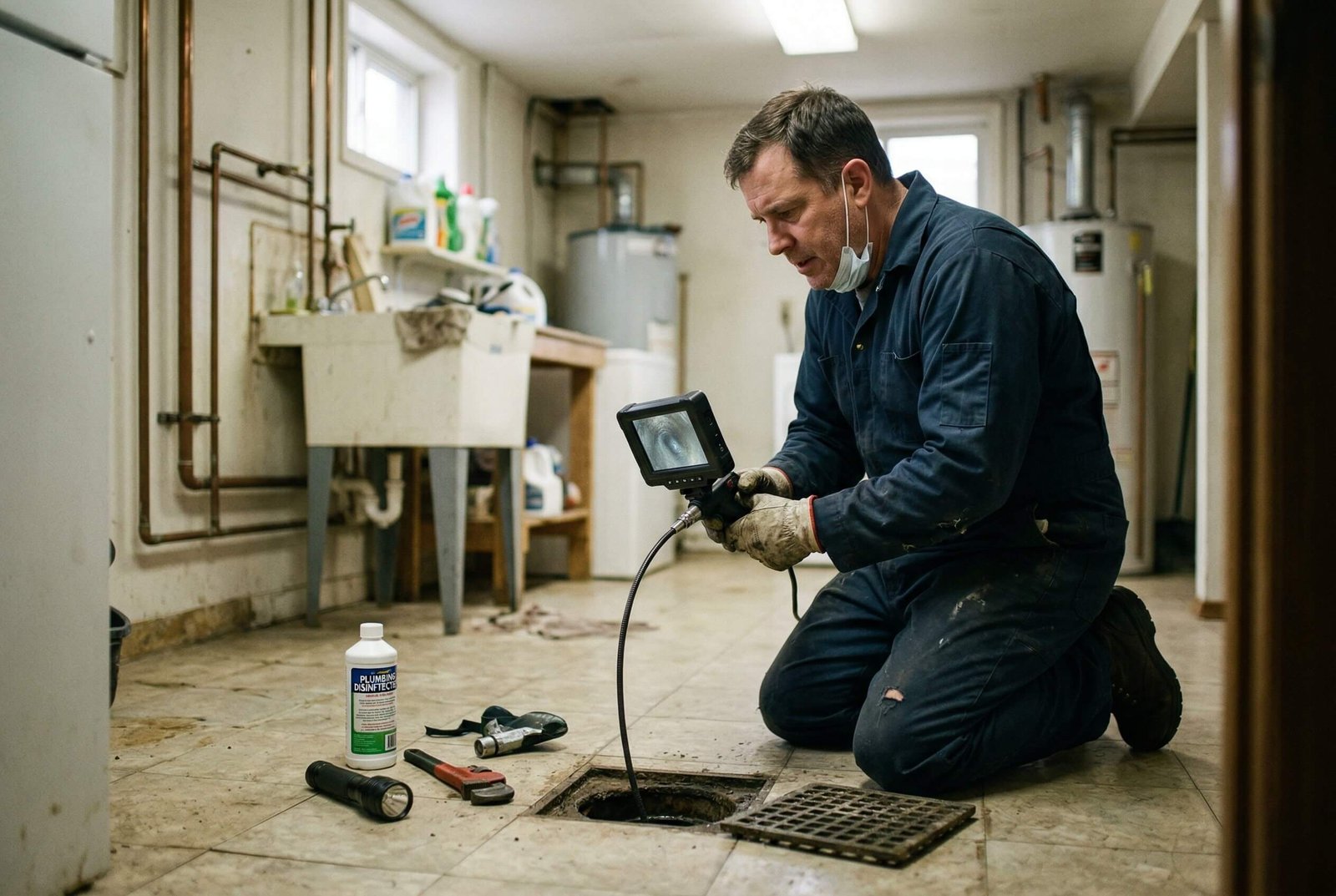
Sewer Camera Inspection
One of the most accurate ways to diagnose sewer odor problems is through a sewer camera inspection. This method involves inserting a waterproof camera attached to a flexible cable into the sewer pipe.
As the camera travels through the pipe, it sends live video footage to a monitor. This allows plumbers to examine the interior condition of the sewer line.
Camera inspections can reveal issues such as:
• Tree roots growing inside the pipe
• Grease buildup restricting the pipe
• Cracks or broken sections of pipe
• Misaligned pipe joints
• Sagging sections that trap wastewater
By identifying the exact condition of the sewer pipe, plumbers can determine whether the sewage odor is caused by structural damage, blockages, or airflow issues within the drain system.
Warning Signs That a Sewer Line Problem May Be Developing
A sewage smell coming from drains may sometimes indicate more than a simple drain issue. In many homes, sewer odors can be an early signal that the main sewer line is beginning to develop a blockage or structural problem. Because the sewer line carries wastewater from the entire house, problems in this pipe can gradually affect multiple drains and plumbing fixtures.
Recognizing the warning signs of a developing sewer line issue can help homeowners understand when the plumbing system may require closer inspection. While occasional odors may be caused by minor drain conditions, persistent smells combined with other symptoms often suggest that something deeper is affecting the sewer system.
Common warning signs that a sewer line problem may be developing include:
• Multiple drains smelling at the same time
If sewage odors appear in several drains throughout the home, the cause may involve the main sewer line rather than a single drain pipe. Shared sewer line problems can affect multiple fixtures at once.
• Sewage backups in drains
Wastewater backing up into bathtubs, showers, or floor drains is a strong indication that the sewer line may be restricted. When wastewater cannot exit the home properly, it may rise back through the plumbing system.
• Persistent drain odors that do not go away
If sewer smells remain even after cleaning drains or running water through them, the odor may originate deeper in the plumbing system or sewer pipe.
• Gurgling sounds in pipes
Drains that produce bubbling or gurgling noises may be experiencing airflow disruptions caused by blockages in the sewer line or vent system.
• Water draining slowly throughout the house
When several fixtures begin draining more slowly than usual, it may suggest that wastewater is struggling to move through the sewer pipe.
When these symptoms appear together, they may indicate that the sewer system is no longer functioning normally. In these situations, professional plumbing inspection is often necessary to determine the location and cause of the problem.
Minor Prevention Habits That Help Reduce Sewer Odors
While sewage smells from drains are often caused by underlying plumbing conditions, certain homeowner habits can help reduce the chances of sewer odors developing inside the home. These practices focus on maintaining healthy drain conditions and preventing situations that allow sewer gases to escape the plumbing system.
Although these habits cannot eliminate every possible cause of sewer odors, they can help maintain proper drainage and airflow within the plumbing system.
Maintaining Water in Drain Traps
One of the simplest ways to prevent sewer odors is ensuring that drain traps remain filled with water. The water inside the trap creates a seal that blocks sewer gases from traveling up through the drain pipe.
Drains that are used frequently usually maintain this water seal automatically. However, drains that are rarely used may slowly lose water due to evaporation.
Homeowners may benefit from occasionally running water in:
• Basement floor drains
• Guest bathroom sinks
• Laundry room drains
• Spare bathroom showers
Refilling the trap restores the barrier that prevents sewer gases from entering the home.
Avoiding Grease Buildup
Grease poured down kitchen drains can contribute to pipe buildup that eventually restricts wastewater flow. When grease cools inside the pipes, it may solidify and stick to the pipe walls.
Over time, this layer can trap other materials moving through the drain system.
Common substances that collect in grease buildup include:
• Food particles
• Soap residue
• Paper products
• Organic debris
As the buildup thickens, it can interfere with the normal flow of wastewater and create pressure changes that allow sewer gases to escape through nearby drains.
Monitoring Drain Behavior
Observing how drains behave during daily use can help homeowners notice early warning signs of plumbing problems. Because sewer issues often develop gradually, subtle changes may appear before serious odors or backups occur.
Homeowners may watch for signs such as:
• Drains taking longer to empty
• Occasional gurgling sounds from pipes
• Sewer odors appearing near certain drains
• Bubbling toilets when other fixtures are used
Recognizing these symptoms early can help identify conditions affecting the plumbing system.
Understanding Sewer Line Location
Knowing where the sewer line runs across the property can also help homeowners protect the underground pipe. Sewer lines usually extend from the house to the municipal sewer connection near the street.
Being aware of this route can help prevent activities that may damage the pipe or contribute to structural issues.
Protective measures may include:
• Avoiding heavy vehicle traffic above the sewer line
• Being cautious when digging in the yard
• Monitoring tree growth near the pipe path
• Avoiding construction directly above the sewer pipe
Protecting the sewer line from physical stress helps reduce the risk of cracks or pipe movement that could allow sewer gases to escape.
Final Thoughts on Sewage Smell Coming From Drains
A sewage smell coming from drains is usually a sign that sewer gas is escaping somewhere within the plumbing system. In a properly functioning system, drain traps and vent pipes work together to keep these gases contained inside the pipes and safely released outside the home. When something disrupts this balance, unpleasant odors may begin appearing from sinks, showers, floor drains, or other plumbing fixtures.
In many cases, the cause may be relatively simple, such as a drain trap that has dried out or bacteria buildup inside a drain pipe. However, persistent sewer odors can also indicate deeper issues within the plumbing system, including airflow problems, partial sewer line blockages, or structural damage to the sewer pipe.
Because all drains in the home are connected to the same sewer system, problems affecting the sewer line may produce symptoms throughout the house. Homeowners may notice additional warning signs such as gurgling drains, slow drainage, bubbling toilets, or water backing up into lower fixtures.
Understanding the possible causes of sewer odors can help homeowners recognize when the plumbing system may require attention. If sewer smells occur frequently, appear in multiple drains, or continue despite normal drain usage, it may indicate that the sewer system is struggling to maintain proper airflow and wastewater movement.
In these situations, a professional plumbing inspection can help identify the source of the odor and determine whether the issue involves a simple drain condition or a developing sewer line problem.