
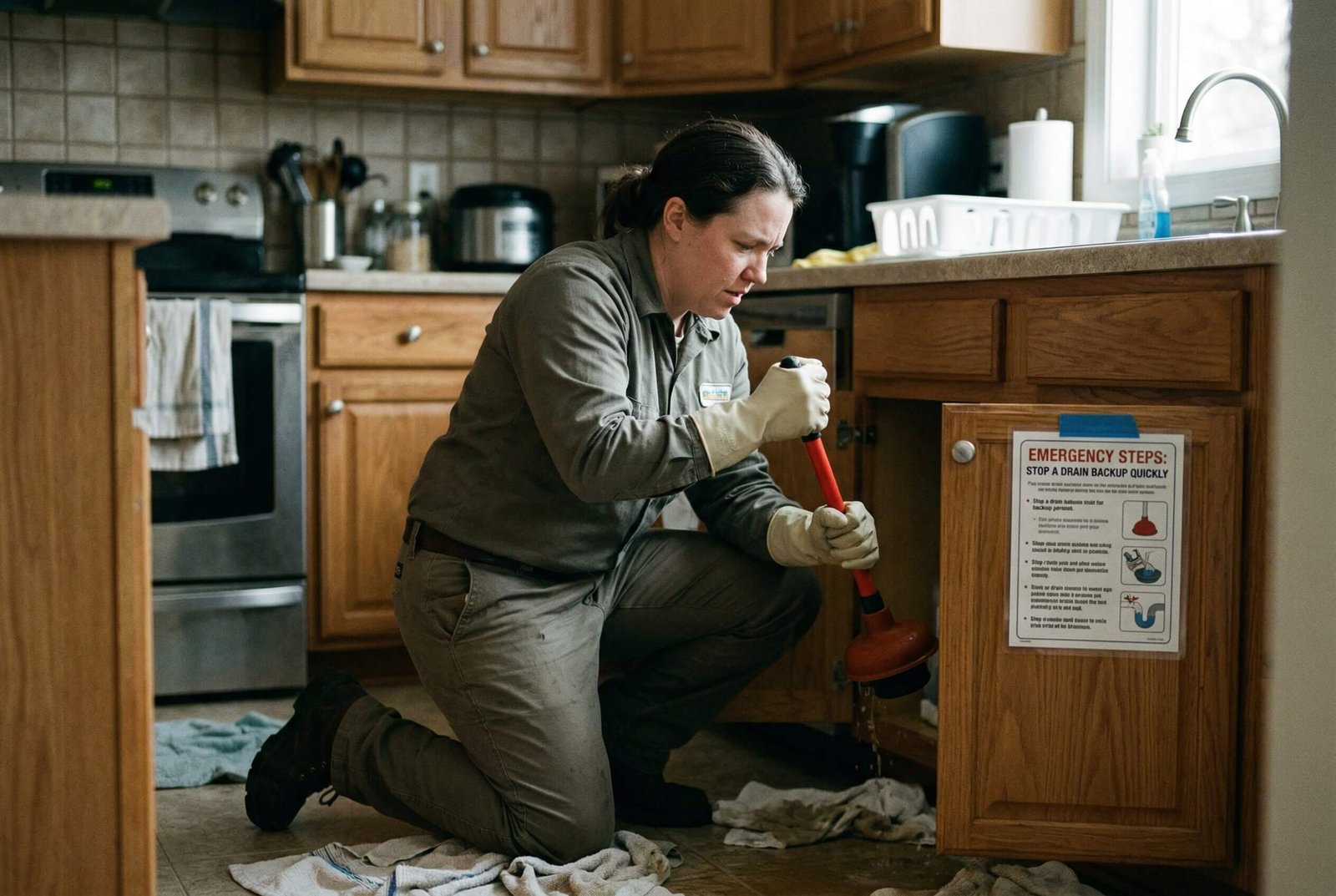
A drain backup is one of those situations that can shift from manageable to damaging in a matter of minutes. What starts as slow drainage or a strange gurgling sound can quickly turn into water rising where it shouldn’t, spilling onto floors, and in some cases, bringing contaminated sewage into your living space. The speed at which this escalates is not random—it’s driven by pressure building inside your drain system. When water has nowhere to go, it will always find the lowest point to escape.
The biggest mistake homeowners make in this moment is reacting without a clear order of action. Many people try to “fix” the clog immediately—running more water, using chemicals, or attempting aggressive DIY solutions—without first stopping the conditions that are making the backup worse. In reality, the priority is not solving the blockage right away. The priority is controlling the situation so it doesn’t cause further damage.
Drain backups become especially serious when multiple fixtures are involved or when water begins reversing direction instead of draining away. At that point, you are no longer dealing with a simple clog—you are dealing with a system under pressure. If that pressure isn’t relieved properly, it can force water into areas it was never meant to go, including other drains, lower-level fixtures, or even out onto your floors.
Acting quickly is important, but acting in the right sequence is what actually protects your home. The goal in the first few minutes is simple and focused: stop additional water from entering the system, reduce internal pressure, and contain any overflow before it spreads. Everything else—diagnosing the cause, clearing the blockage, or calling for help—comes after the situation is stabilized.
If you stay calm and follow the right steps, most drain backup situations can be controlled before they turn into costly repairs. This guide will walk you through exactly how to do that, starting with understanding when a backup is truly an emergency and what signs you should never ignore.
What This Page Covers
ToggleWhat Counts as a Drain Backup Emergency
Not every slow or clogged drain is an emergency. Many drain problems start small and stay contained to a single fixture, which means they can often be handled without urgency. The key difference with a true drain backup is direction and behavior. When water stops draining and begins to rise, reverse, or appear in places it shouldn’t, the situation has moved beyond a nuisance and into something that requires immediate attention.
A standard clog usually affects one drain and builds slowly. You might notice water draining slower than usual or pooling briefly before clearing. In contrast, a drain backup behaves unpredictably because the system is under pressure. Instead of water moving down and away, it starts pushing back through the lowest or weakest point in your plumbing system.
Difference Between a Slow Drain and a True Backup
A slow drain gives you time. A backup does not.
In a slow drain, water still eventually moves through the pipe, even if it’s delayed. The system is restricted, but not blocked completely. In a backup, water has nowhere to go. That’s when you’ll see it rise in the same fixture or show up in a completely different one. This reversal is what turns a manageable issue into an urgent one.
When a Backup Becomes Urgent
A drain backup becomes an emergency the moment it starts affecting your home beyond a single contained area or introduces contamination risk. At that point, the focus shifts from fixing the problem to preventing damage.
Common signs that indicate urgency include:
- Water rising instead of draining
- Overflow from a sink, toilet, or floor drain
- Sewage smell or visible dirty water
- Multiple fixtures reacting at the same time
- Water appearing in a lower-level drain (basement or shower)
Each of these signs points to pressure building inside the system, which means the problem is no longer isolated.
Real-World Scenarios That Signal an Emergency
Understanding how these situations appear in real homes makes it easier to recognize them quickly.
One of the most common patterns is flushing a toilet and noticing water rise in a nearby shower or bathtub. This tells you both fixtures are connected to the same blocked line, and the system is redirecting water wherever it can escape.
Another example is using a kitchen sink and seeing water back up into the sink basin or even into a nearby floor drain. In more serious cases, homeowners discover water coming up through a basement drain after using an upstairs fixture. This is a strong indication that the main line is overwhelmed and pushing water to the lowest point available.
These situations are not just inconvenient—they signal that the drainage system cannot handle any additional flow. Continuing to use water at this stage will almost always make the problem worse.
Recognizing the difference between a simple clog and a true drain backup is what allows you to act early and avoid unnecessary damage. Once you identify that you’re dealing with a backup, the next step is understanding the warning signs that usually appear just before things escalate.
Early Signs That a Backup Is About to Happen
Most drain backups don’t happen without warning. In real homes, there is usually a short window—sometimes hours, sometimes days—where the system shows signs of stress before it fails. The problem is that these signals are often subtle, and homeowners either ignore them or misread them as minor clogs. Recognizing these early patterns is what gives you a chance to act before water starts coming back up.
What you’re really looking for is a change in how your plumbing system behaves. Drains that used to work normally begin to slow down, sounds start appearing where there were none before, and fixtures begin reacting to each other in ways they shouldn’t. These are all signs that pressure is building somewhere in the line.
Warning Patterns Most Homeowners Miss
The earliest signs are usually inconsistent, which is why they’re easy to overlook. A sink might drain slowly one day and seem fine the next. A toilet might flush normally but make a slight gurgling noise afterward. These small irregularities are often the first indication that something deeper in the system is starting to restrict flow.
Pay attention to patterns like:
- A drain that was slow and suddenly becomes much slower
- Gurgling sounds after using a sink, tub, or toilet
- Water levels rising slightly before draining away
- A fixture that behaves differently when another one is used
These are not random issues. They are early pressure signals inside your plumbing system.
Pressure Build-Up Inside the Drain System
A drain backup is almost always the result of pressure building behind a blockage. As water continues to flow into the system, it has fewer pathways to escape. Instead of moving freely through the pipes, it starts compressing against the obstruction. Eventually, that pressure needs release—and when it finds one, it pushes water backward.
This is why backups often appear suddenly. The system doesn’t fail gradually at the end—it builds quietly and then releases all at once. Understanding this helps you realize that the problem didn’t just happen in that moment; it was developing underneath the surface.
Real-World Example of Escalation
A very common situation starts in the kitchen. The sink begins draining slowly, which many homeowners ignore or temporarily manage. Later, someone flushes a toilet, and suddenly the kitchen sink fills with water instead of draining. What changed wasn’t the sink—it was the added pressure from another fixture pushing against the same blockage.
In another scenario, a homeowner might notice mild gurgling in a bathroom sink for a day or two. Then, after using the washing machine or running a shower, water begins rising in the lowest drain in the house. That’s the system reaching its limit.
These early signs are your opportunity to act before a full drain backup emergency develops. Once water starts reversing direction or appearing where it shouldn’t, you’re no longer in the warning stage—you’re in active response mode.
The next step is knowing exactly what to do the moment that happens, so you can stop the situation from getting worse.
First Response: What to Do the Moment You Notice a Backup
The moment you see water rising instead of draining, your role shifts from fixing the problem to controlling the situation. This is where most damage either happens or is prevented. In a drain backup emergency, every action should be focused on one goal: stop adding pressure to the system and keep the water contained.
Trying to diagnose or fix the blockage at this stage is not only ineffective—it often makes things worse. The system is already overwhelmed. What it needs first is stability, not intervention. If you handle these first few minutes correctly, you can prevent overflow, contamination spread, and costly damage to floors and walls.
Stop All Water Usage Immediately
The first and most important move is to stop every source of water entering the drain system. This includes sinks, toilets, showers, washing machines, and even small actions like running a tap to “check” the issue. Every drop of water you add increases pressure behind the blockage and pushes the backup further into your home.
Make sure everyone in the house understands this right away. In real situations, backups often get worse simply because someone in another room continues using water, unaware of what’s happening. Stopping usage is what gives the system a chance to stabilize instead of escalating.
Identify the Source and Affected Fixtures
Once water usage has stopped, take a moment to observe where the backup is happening. This helps you understand whether the issue is isolated or affecting multiple parts of the home.
If only one fixture is involved—like a single sink or toilet—the problem may be local. But if you notice activity in multiple fixtures, such as a toilet affecting a shower or water appearing in a floor drain, that points to a deeper issue in the main line.
This quick assessment is not about solving the problem—it’s about understanding how cautious you need to be with your next steps.
Prevent Overflow From Spreading
If water is already rising or has started to spill, your next priority is containment. Even a small amount of overflow can spread quickly across flooring and into areas that are difficult to dry later.
Start by protecting the immediate area. Move nearby items away from the affected zone, especially anything that can absorb water or be damaged easily. Use towels or barriers to limit how far the water can travel. The goal is to keep the situation controlled in one area instead of allowing it to expand into multiple parts of the home.
If the backup involves dirty or foul-smelling water, treat it as potentially contaminated. Avoid direct contact and keep people and pets away from the area. Containment is not just about protecting property—it’s also about reducing exposure.
Why This First Response Matters
These initial actions don’t fix the blockage, but they do something more important—they stop the situation from getting worse. In many cases, homeowners who act quickly at this stage avoid major cleanup, structural damage, and emergency repair costs.
Once the system is stabilized and the spread is controlled, you can move into the next phase: taking specific, step-by-step actions to stop the backup completely and assess whether the situation is safe to handle or needs professional help.
Step-by-Step: How to Stop a Drain Backup Quickly
Once you’ve stopped water usage and contained the immediate spread, the next phase is about stabilizing the system and preventing the backup from restarting. At this point, you are not trying to fully fix the underlying blockage—you are trying to stop active flow, reduce pressure, and confirm that the situation is under control.
This process needs to be done in the right order. Skipping steps or rushing into aggressive fixes can easily push the blockage deeper or trigger another overflow.
Step 1: Shut Off Water Flow at the Source
Even after stopping normal usage, water can still enter the system from certain fixtures or stored pressure. If the backup is actively rising or close to overflowing, it’s worth shutting off water at the nearest source.
For example, if a toilet is the main problem point, turn off the supply valve behind the toilet. If multiple fixtures are involved or the situation feels unstable, shutting off the main water supply to the house is the safest move. This ensures that no additional water enters the system while you assess the situation.
The goal here is simple—no new water should be entering the drainage system until you’re sure it can handle it.
Step 2: Relieve Immediate Pressure in the System
A drain backup is essentially trapped water under pressure. Once you’ve stopped adding new water, that pressure begins to stabilize on its own. This is why stopping usage early is so critical—it prevents the system from reaching a point where water is forced out aggressively.
Give the system a few minutes and observe. If water levels stop rising and begin to settle, that’s a sign that pressure is no longer building. If it continues to rise even without water usage, that usually indicates a deeper blockage, often in the main line.
This step is about patience. Letting the system settle is often more effective than trying to force a quick fix.
Step 3: Contain the Backup Area
Even if the water has stopped rising, you still need to manage what’s already there. Backups rarely stay perfectly contained, especially on flat surfaces where water can spread slowly.
Use absorbent materials like towels to create a boundary around the affected area. Place buckets or containers under active drips or slow overflow points. If the backup is near flooring edges or transitions, pay attention to where water might seep underneath.
The objective is to keep the situation controlled and prevent secondary damage, especially in areas that are harder to clean or dry later.
Step 4: Check Nearby Fixtures for Spread
After stabilizing the main problem area, take a quick look at other nearby fixtures. This helps confirm whether the backup is isolated or affecting the system more broadly.
Check sinks, tubs, toilets, and floor drains—especially those at lower levels of the home. If you notice water levels changing or slow movement in other fixtures, it’s a sign that the blockage is still influencing the system.
This step gives you a clearer picture of how serious the situation is without needing tools or invasive inspection.
Step 5: Assess Whether Flow Has Stabilized
At this point, you should have a sense of whether the backup is under control or still active. A stable situation means water is no longer rising, no new overflow is occurring, and other fixtures are not reacting.
If everything has settled, you’ve successfully stopped the immediate backup. That doesn’t mean the problem is solved—it means you’ve prevented further damage for now.
If the situation is still unstable—water continues to rise, spreads to other fixtures, or returns quickly—this is where you stop any DIY attempts and prepare for professional help.
Stopping a drain backup quickly is not about aggressive action—it’s about controlled, correct action. Once the system is stable, the next step is understanding what safe actions you can take without making the situation worse.
Safe Actions You Can Take Right Away
Once the backup has been stabilized, the situation often feels less urgent—but this is where careful judgment matters most. At this stage, the goal is not to “fix everything,” but to take limited, safe actions that can help improve flow or prevent the situation from restarting. Anything beyond that risks turning a controlled situation back into an active drain backup emergency.
The key principle here is simple: only work at the surface level and only when the problem appears isolated. If there is any sign that the issue involves multiple fixtures or the main line, your role is to monitor and contain—not to push deeper into the system.
Limited Plunging (When It Helps and When It Doesn’t)
Plunging can be effective, but only under the right conditions. It works best when the blockage is close to the fixture, such as a toilet or sink that is backing up on its own. In these cases, a few controlled plunges can sometimes restore partial flow and relieve localized pressure.
However, if multiple fixtures are involved or you’ve already seen water move between drains, plunging becomes less useful and can even shift pressure elsewhere in the system. For example, plunging a toilet connected to a main line blockage may push water into a shower or floor drain instead.
Use plunging only when the problem is clearly isolated and the water level is stable—not rising.
Removing Visible Surface Blockages
If you can see debris at the surface—such as hair, food waste, or soap buildup—it’s safe to remove it carefully. These types of blockages are often shallow and can contribute to slow drainage or minor backups.
The important part is to stop at what you can easily reach. Do not attempt to dig deeper into the drain or force tools downward without understanding what’s below. Many homeowners accidentally compact blockages further into the pipe, making the problem harder to resolve.
If removing surface debris improves drainage slightly, that’s useful information—it suggests the issue may be local rather than deeper in the system.
Using Basic Containment Methods
Even after the immediate backup is controlled, small amounts of water may still seep or drain slowly. Keeping the area contained prevents minor issues from becoming bigger ones.
Use towels to absorb residual water and place buckets under any slow drips. If needed, create a simple barrier to stop water from spreading into adjacent areas. This is especially important on flooring surfaces where water can travel unnoticed.
Containment is not a one-time step—it’s something you maintain until you’re confident the situation won’t restart.
Ventilation and Personal Safety
If the backup involved dirty water or a noticeable odor, proper ventilation becomes important. Open windows if possible and allow fresh air to circulate. This reduces exposure to unpleasant or potentially harmful air from the drain.
When working near the affected area, wear gloves and avoid direct contact with any standing water. Even if the water doesn’t look heavily contaminated, it’s better to treat it cautiously.
Monitoring the Situation
After taking these limited actions, your main role shifts to observation. Watch how the system behaves over the next period of time. If water levels remain stable and no new backup occurs, you’ve successfully controlled the immediate risk.
If the problem returns quickly, spreads to other fixtures, or shows signs of pressure building again, that’s a clear signal that the issue goes beyond what can be handled safely at the surface.
Safe actions can help in the right situation, but just as important is knowing what not to do. Many drain backup emergencies get worse because of well-intended but risky actions. The next section will walk you through the mistakes that commonly turn a controlled backup into a much bigger problem.
Actions That Make a Drain Backup Worse
Once a drain backup is under control, it’s easy to feel like you can “fix it quickly” and move on. This is where many homeowners unintentionally turn a contained situation into a larger and more expensive problem. The issue is not effort—it’s direction. Certain actions increase pressure, spread contamination, or damage the pipe system, even if they seem logical in the moment.
Understanding what to avoid is just as important as knowing what to do. A controlled backup can stay manageable if left alone—but the wrong move can restart it within seconds.
Running Water to “Test” the Drain
One of the most common mistakes is turning the water back on to check if the drain is working again. It seems harmless, but this is exactly what rebuilds pressure inside the system.
If the blockage is still present, even partially, the added water has nowhere to go. Instead of draining, it pushes back through the same weak point that just overflowed—or worse, through a different fixture that wasn’t affected before. This is how a single-drain issue turns into a multi-fixture backup.
Testing should only happen after you are confident the system is clear, not while it is still unstable.
Using Chemical Drain Cleaners
Chemical cleaners are often the first thing people reach for, but they are one of the least effective solutions during a drain backup emergency. These products rely on sitting in the pipe and slowly breaking down material. In a backup situation, the water is already stagnant or reversing, which means the chemical cannot reach the blockage properly.
More importantly, these chemicals can sit in standing water, creating a hazardous mix that is unsafe to touch and difficult to clean. If a plumber needs to work on the drain afterward, it also increases risk during inspection or repair.
In urgent backups, chemical cleaners do not solve the problem—they add another layer of risk.
Aggressive DIY Snaking
Using a drain snake without understanding the blockage can easily make things worse. When done carefully on a simple clog, it can help. But in a backup situation—especially one involving multiple fixtures—the blockage is often deeper in the system.
Pushing a snake aggressively can compact debris further into the pipe, making it harder to remove later. In older plumbing, it can also damage pipe walls or get stuck, creating a second problem on top of the original one.
Without a clear idea of where the blockage is and what it consists of, deeper mechanical attempts should be avoided.
Continuing to Use Toilets or Sinks
This is one of the fastest ways to restart a backup. Even small amounts of water—like flushing a toilet or rinsing hands—add pressure to a system that hasn’t fully recovered.
In many real situations, a backup seems resolved, only to return immediately because someone used another fixture in the house. The system needs time and stability. Until you’re sure the issue is cleared, no fixture should be used normally.
Ignoring Signs of Contamination
If the backup involves dirty water, strong odor, or visible waste, it should be treated as contaminated. Ignoring this and handling it casually increases the risk of spreading bacteria to other areas of the home.
Walking through affected areas without protection, using regular household items for cleanup, or delaying proper containment can extend the impact far beyond the original problem area.
Why Avoiding These Actions Matters
Most drain backup emergencies don’t get worse on their own—they get worse because the system is stressed further after the initial event. Avoiding these common mistakes keeps the situation stable and prevents additional pressure from building again.
Once you know what not to do, the next step is understanding what the system is telling you—specifically, whether the problem is isolated to one fixture or coming from deeper in the main line. That distinction determines everything that comes next.
How to Tell Whether the Backup Is Local or Main-Line Related
Once you’ve stabilized the situation and avoided the common mistakes, the next important step is understanding where the problem is actually coming from. This is the point where experienced plumbers quickly narrow things down, because the difference between a local clog and a main-line issue completely changes what’s safe to do next.
You don’t need tools or technical knowledge to get a strong indication. Your plumbing system will already be showing clear patterns—you just need to read them correctly.
Single Fixture Backup
If only one fixture is affected—such as a single sink, toilet, or shower—the problem is usually local. This means the blockage is somewhere in the pipe connected directly to that fixture, not deeper in the system.
In these cases, the backup typically stays contained. You won’t see water appearing in other drains, and other fixtures will behave normally. This is where limited DIY actions like careful plunging or surface-level clearing can sometimes help.
However, even with a single fixture, you should still be cautious. If the issue returns quickly after temporary relief, it may not be as isolated as it first appears.
Multiple Fixtures Backing Up
When more than one fixture is involved, the situation changes immediately. This is one of the clearest signs of a main-line problem, where the blockage is deeper in the system and affecting multiple connections at once.
For example, flushing a toilet and seeing water rise in a shower, or running a sink and noticing activity in another drain, means the system is redistributing pressure. This is not something that can be safely handled at the surface.
At this point, your role is no longer to fix—it’s to prevent further damage and prepare for professional help.
Lowest Drain Reacting First
Water always follows gravity, so the lowest drain in your home becomes the release point when the system is under pressure. This is why basement floor drains or ground-level showers are often the first places where backups appear.
If you notice water coming up from a basement drain after using an upstairs fixture, it strongly indicates that the main drain line cannot handle the flow. The blockage is forcing water to escape at the lowest available point.
This pattern is one of the most reliable indicators of a deeper issue.
Toilet and Shower Interaction
A very common and telling sign is the interaction between toilets and nearby drains. If flushing a toilet causes water to rise in a shower, tub, or floor drain, it means those fixtures are connected to the same blocked line.
This happens because the toilet releases a large volume of water quickly. When that water hits a blockage, it pushes back into the nearest connected fixture. This is not a surface-level clog—it’s a system-wide pressure problem.
Recognizing the Pattern Like a Plumber
Plumbers don’t guess—they look for patterns. The combination of multiple fixtures reacting, lower drains backing up first, and water appearing in unexpected places points directly to a main-line issue.
On the other hand, a single fixture acting alone with no cross-reaction usually means the problem is contained and closer to the surface.
Understanding this distinction helps you avoid one of the biggest mistakes homeowners make—treating a main-line backup like a simple clog. Once you recognize that the issue is deeper, the safest decision is to stop all DIY efforts and move toward the next step.
The next section will explain exactly when you should stop trying to handle the situation yourself and why pushing further can do more harm than good.
When You Should Stop DIY Immediately
There’s a clear point in every drain backup where continuing to handle it yourself stops being helpful and starts becoming risky. The challenge is that many homeowners cross that line without realizing it. What feels like persistence—trying one more method, pushing a little further—can actually worsen the blockage, spread contamination, or cause damage inside the pipes.
An experienced plumber doesn’t try to force every situation. They recognize when the problem is beyond surface-level access and requires proper equipment and diagnosis. Knowing when to step back is not a limitation—it’s what prevents a manageable drain backup from turning into a costly repair.
Sewage Backup Conditions
If the water involved is dirty, foul-smelling, or contains visible waste, the situation should be treated as a sewage-related drain emergency. At this point, the issue is no longer just about drainage—it’s about health and safety.
Sewage exposure carries bacteria and contaminants that shouldn’t be handled without proper protection. Attempting to clean, plunge, or open drains in this condition increases the risk of spreading contamination across floors, tools, and other surfaces in your home.
This is a clear stop point for DIY. The priority shifts to containment and minimizing exposure until professional help arrives.
Repeated or Persistent Backups
If you’ve already stabilized the situation once and the backup returns quickly, it’s a strong indication that the underlying blockage hasn’t been resolved. Temporary relief doesn’t mean the system is clear—it often means the blockage has only shifted slightly.
Repeated backups are common when the problem is deeper in the line, such as grease buildup, compacted debris, or partial obstruction. Continuing to apply the same methods usually pushes the problem further rather than removing it.
At this stage, further DIY attempts rarely solve the issue and often make professional repair more difficult.
Multiple Fixtures Affected
The moment more than one fixture is involved, the situation should be treated as a system-level problem. This is not something that can be fixed from a single access point like a sink or toilet.
Trying to address a main-line issue with localized tools—like plungers or basic snakes—doesn’t reach the actual blockage. Instead, it redistributes pressure within the system, which can cause the backup to appear in new areas.
This is one of the most important decision points. If multiple fixtures are reacting, it’s time to stop DIY completely.
Water Damage Beginning to Spread
When water starts moving beyond the immediate area—spreading across floors, seeping into edges, or reaching adjacent rooms—the risk shifts from plumbing to structural damage.
At this point, time becomes critical. The focus should be on limiting further spread, not attempting repairs. Flooring materials, baseboards, and subflooring can absorb water quickly, leading to longer-term issues if not addressed properly.
Continuing DIY efforts while water is spreading divides your attention and delays the actions that actually reduce damage.
Suspected Deep Blockage or Pipe Issue
Certain causes of drain backups are simply not accessible without professional equipment. Tree root intrusion, pipe collapse, heavy grease buildup, or foreign objects lodged deep in the line require tools like inspection cameras and specialized clearing methods.
If the behavior of the system suggests a deeper issue—especially recurring backups, slow drainage across multiple fixtures, or sudden system-wide failure—trying to reach it with basic tools is unlikely to work.
In some cases, it can even damage the pipe further or compact the blockage.
Backups Returning Immediately After Relief
If you manage to get water to drain temporarily and it backs up again shortly after, that’s a clear signal that the problem is still present and unstable.
This pattern is common when the blockage is only partially cleared or when pressure builds again as soon as water usage resumes. Continuing to repeat the same steps often leads to frustration and increases the chance of a larger overflow.
Recognizing this pattern early helps you avoid unnecessary effort and potential damage.
Why Stopping at the Right Time Matters
The goal during a drain backup emergency is not to solve everything yourself—it’s to protect your home and avoid making the situation worse. Knowing when to stop is part of that process.
Once you reach any of these conditions, the safest and most effective next step is to move toward professional help. Understanding what that process looks like—and what a plumber actually does in these situations—can help you feel more prepared and confident in that decision.
What a Plumber Will Do in a Drain Backup Emergency
When a professional arrives during a drain backup emergency, the goal is not just to “clear the clog.” An experienced plumber focuses on three things in order: identify exactly where the problem is, remove the blockage safely, and make sure it doesn’t immediately come back. This approach is what separates a temporary fix from a reliable solution.
Understanding what happens during this process helps you set the right expectations and also reinforces why certain situations cannot be handled effectively with basic tools at home.
Emergency Diagnosis Process
The first step is always diagnosis. A plumber doesn’t start by using tools—they start by observing patterns, just like you’ve been doing. They’ll ask what happened, which fixtures were involved, and how the backup behaved. This information helps narrow down whether the issue is local or in the main line.
They may check multiple fixtures, look at the lowest drains, and observe how the system responds when small amounts of water are introduced carefully. In many cases, they can identify the general location of the blockage within minutes just from these patterns.
If the situation suggests a deeper or recurring issue, they may recommend using a drain inspection camera. This allows them to see inside the pipe and confirm the exact cause instead of guessing.
Clearing Methods Based on the Problem
Once the problem is located, the method used depends on what’s causing the blockage and where it sits in the system.
For simpler or localized clogs, a professional-grade drain snake is often enough. This is more powerful and flexible than basic DIY tools and can reach deeper into the line without damaging it.
For heavier buildup—such as grease, sludge, or compacted debris—hydro jetting may be used. This involves high-pressure water that clears the pipe walls more thoroughly than mechanical tools.
If a camera inspection reveals something more serious, like tree roots or structural pipe damage, the approach may change entirely. In those cases, clearing the line is only part of the solution—the underlying issue must also be addressed.
Identifying the Root Cause
One of the most valuable parts of a professional visit is understanding why the backup happened in the first place. Without this step, the same problem can return repeatedly.
Common causes include grease buildup in kitchen lines, foreign objects flushed into toilets, root intrusion in older sewer lines, or gradual pipe deterioration. A plumber will assess these possibilities and explain what they’re seeing, often using inspection footage if available.
This is where professional insight matters most. The goal is not just to restore flow, but to reduce the chances of another drain backup emergency in the near future.
Ensuring the System Is Stable Before Leaving
Before finishing the job, a good plumber will test the system carefully to make sure water is flowing properly again. This is done in a controlled way to avoid triggering another backup.
They may run water through multiple fixtures, observe how quickly it drains, and confirm that no other areas are reacting. If needed, they’ll recommend follow-up actions, such as further inspection or preventive maintenance.
This final step is important because it confirms that the system is not just temporarily relieved, but actually functioning as it should.
Knowing what a plumber does during a drain backup helps you understand why certain problems require professional tools and experience. It also prepares you for the next critical aspect—understanding the health and safety risks involved, especially when contaminated water is present.
Emergency Health and Safety Risks Homeowners Should Understand
During a drain backup, the visible problem is water—but the real risk often goes beyond what you can see. Even a small amount of backed-up water can carry contaminants, create unsafe surfaces, and affect areas of your home that aren’t immediately obvious. Understanding these risks helps you make better decisions in the moment and avoid treating the situation too casually.
The key is to approach every backup with awareness, not panic. You don’t need to overreact, but you do need to recognize when the situation involves more than just a plumbing inconvenience.
Sewage Contamination Risk
If the water involved is discolored, has a strong odor, or contains visible waste, it should be treated as contaminated. This type of water can carry bacteria and other harmful substances that shouldn’t come into direct contact with your skin or household surfaces.
Even when the water looks relatively clean, it may still have passed through parts of the drainage system that introduce contaminants. This is especially true in main-line backups, where water can travel back through multiple sections of pipe before emerging.
The safest approach is to avoid direct contact, use gloves if you need to be near the area, and keep the affected zone contained until proper cleanup can be done.
Slip and Fall Hazards
Water spreading across floors creates an immediate safety issue. Smooth surfaces like tile, wood, or laminate can become slippery quickly, especially when mixed with residue from the drain.
In emergency situations, people often move quickly and overlook this risk. A fall in a wet area can cause injury and complicate the situation further. Slowing down, watching your footing, and keeping the area as controlled as possible reduces this risk significantly.
Hidden Water Damage
What you see on the surface is only part of the picture. Water can travel underneath flooring, seep into baseboards, and reach areas that aren’t immediately visible. Even a small amount of unnoticed moisture can lead to longer-term issues if it isn’t addressed properly.
This is why containment and drying are so important after the backup is controlled. Allowing water to sit—even if it seems minor—can lead to deterioration of materials over time.
Mold Risk After Water Intrusion
When moisture remains in hidden areas, it creates conditions where mold can develop. This doesn’t happen instantly, but it can begin within a relatively short period if the area stays damp.
Proper drying after a backup is just as important as stopping the water itself. Ventilation, airflow, and removing moisture from affected surfaces help reduce the chances of future problems.
Electrical Risk in Wet Areas
If the backup occurs near electrical outlets, appliances, or utility areas—especially in basements—the risk increases. Water and electricity in close proximity can create dangerous conditions, even if the water level seems low.
In these cases, it’s important to avoid contact with electrical components and, if necessary, limit access to the area until it can be assessed safely.
Why “Cleaning It Up Later” Can Be a Mistake
It’s common to think that once the water stops, the problem is over and cleanup can wait. In reality, delays often allow moisture to spread, contaminants to settle, and damage to develop unnoticed.
Taking early steps to manage the area—even basic ones like drying surfaces and isolating the space—can make a significant difference in how much long-term impact the backup has.
Understanding these risks doesn’t mean you need to overreact—it means you can respond with awareness and control. Once the immediate situation is handled safely, the next step is knowing what basic tools and supplies can help you manage a drain backup more effectively when it happens.
Drain Emergency Tools and Supplies Worth Keeping at Home
Most homeowners only think about tools after a drain backup has already started. By that point, time is lost searching for basic items while water continues to spread. The reality is that having a few simple supplies ready in advance can significantly reduce damage and stress during a drain emergency.
You don’t need professional equipment or a large toolkit. What matters is having the right items that help you stop, contain, and manage the situation safely until it’s under control or a plumber arrives.
Essential Items Every Home Should Have
There are a few basic tools that directly support the steps you’ve already learned—stopping flow, containing water, and handling the situation safely.
- A proper plunger (separate types for toilet and sink use)
- Thick gloves for handling wet or contaminated areas
- Old towels or absorbent cloths for quick containment
- A bucket for collecting or redirecting water
- A flashlight for inspecting drains and darker areas
Each of these items plays a specific role. Towels and buckets help control spread, gloves protect you during handling, and a flashlight allows you to see what’s happening clearly—especially in lower or enclosed spaces.
Useful Additions That Improve Response
While not absolutely required, a few additional items can make your response faster and more effective in certain situations.
- A wet/dry vacuum (for non-sewage water only)
- Protective footwear or washable boots
- Basic hand auger for limited, surface-level clogs
- Disinfecting supplies for post-backup cleanup
These tools don’t solve the root problem, but they help you manage the situation more efficiently. For example, a wet/dry vacuum can remove standing water quickly when it’s clean water, reducing the time it sits on your floors.
Why Preparation Makes a Real Difference
Drain backups are unpredictable, but your response doesn’t have to be. In real situations, the difference between minor inconvenience and noticeable damage often comes down to how quickly you can act in the first few minutes.
If you already have these tools within reach, you can move immediately into containment and control without hesitation. If not, even a short delay can allow water to spread further than expected.
Preparedness is not about expecting the worst—it’s about making sure you’re not forced to react blindly when something does go wrong.
Once you understand how to respond and what tools help, the next practical concern is cost. Knowing what a drain backup emergency might cost—and how delays can increase that cost—helps you make more confident decisions about when to act and when to call for help.
Cost of Handling a Drain Backup Emergency
Cost is often the reason homeowners hesitate during a drain backup. It’s natural to wonder whether the situation can be handled without calling for help. But in real-world cases, the cost of the service itself is only one part of the equation. The bigger factor is how quickly the situation is controlled and whether additional damage is prevented.
Understanding how pricing typically works helps you make a clear, informed decision instead of delaying action and increasing the overall expense.
Emergency Visit vs Standard Service
Drain problems handled during normal hours are usually less expensive than emergency calls. When a plumber is called after hours, on weekends, or during an active overflow, the service is considered urgent. That urgency often includes higher labor rates and faster response expectations.
The difference isn’t just about timing—it’s about the nature of the situation. Emergency calls require immediate availability and prioritization, which is reflected in the cost.
However, waiting for standard hours is not always the better option. If water is actively backing up or spreading, delaying the call can lead to damage that costs far more than the difference in service fees.
Typical Service Breakdown
The total cost depends on what the plumber needs to do once they arrive. A simple, localized clog that can be cleared quickly is usually on the lower end. These are situations where the blockage is close to the fixture and doesn’t involve the main drain line.
More complex cases—especially main-line backups—require deeper work. This may include using professional-grade equipment to reach the blockage or inspecting the pipe internally to understand the cause. These steps add to the cost, but they also provide a more reliable solution.
In some cases, the initial clearing is only part of the process. If the blockage is caused by something like buildup or recurring issues, additional work may be recommended to prevent the problem from returning.
Main Line Emergency Pricing
When the issue involves the main drain line, costs tend to be higher because of the complexity and equipment required. These situations affect the entire plumbing system and often require more time to diagnose and resolve properly.
Main-line problems are also more likely to involve follow-up recommendations, such as inspection or maintenance, especially if the cause isn’t immediately obvious.
While this can feel like a larger upfront cost, it often prevents repeated emergencies that would add up over time.
After-Hours and Weekend Factors
Timing plays a significant role in pricing. Calls made outside of regular business hours typically include additional charges. This reflects the need for immediate response and availability during off-hours.
If the situation is stable and contained, some homeowners choose to wait until standard hours. But this decision should only be made if there is no active risk of overflow, contamination, or spreading damage.
Why Delaying Can Increase Total Cost
One of the most common patterns in drain backup emergencies is delay followed by escalation. A homeowner tries to manage the issue for longer than they should, the situation worsens, and the final cost includes both plumbing work and damage repair.
Water that spreads into flooring, walls, or hidden areas increases cleanup and restoration costs. What might have been a straightforward service call can turn into a larger project involving drying, repairs, and sanitation.
Acting at the right time doesn’t always mean acting immediately—but it does mean recognizing when the situation has moved beyond what can be safely handled at home.
Cost is important, but control is more important. Once the backup is stopped and the situation is stable, the next step is knowing what to do afterward to prevent lingering issues and reduce the chances of it happening again.
What to Do After the Backup Is Controlled
Once the water has stopped rising and the immediate pressure is relieved, it’s easy to feel like the situation is over. In reality, this phase is just as important as the initial response. What you do next determines whether the problem stays resolved or quietly turns into a secondary issue—such as odor, hidden moisture damage, or another drain backup in the near future.
The focus now shifts from emergency control to cleanup, assessment, and prevention. Taking the right steps here ensures that the impact of the backup ends where it should, instead of lingering in your home.
Cleaning and Sanitizing the Area
Start by addressing any visible water or residue left behind. Even if the backup seemed minor, the affected area should be treated carefully—especially if there was any odor or discoloration in the water.
Use appropriate cleaning methods to remove surface contamination. Avoid spreading the water to other areas during cleanup, and focus on containing and lifting it away from the affected zone. If the backup involved potentially contaminated water, it’s important to treat all surfaces it touched as needing proper sanitation.
This step is not just about appearance—it’s about reducing the chance of lingering bacteria or odor developing over time.
Drying and Preventing Hidden Moisture
After cleaning, drying becomes the priority. Water that remains trapped in flooring edges, corners, or under surfaces can lead to longer-term problems if left unchecked.
Increase airflow in the area by opening windows or using fans if available. The goal is to remove moisture as quickly as possible. Pay attention to areas where water may have pooled or seeped slightly out of sight.
Even a small amount of unnoticed moisture can take time to evaporate naturally, and during that time it can begin to affect materials around it.
Monitoring for Recurring Symptoms
Over the next day or two, keep an eye on how your drains behave. A system that has fully recovered will return to normal operation without unusual sounds, slow drainage, or water level changes.
If you notice any of the earlier warning signs returning—such as gurgling, slow flow, or minor backup behavior—it suggests the underlying issue may not be fully resolved. In that case, it’s better to address it early rather than wait for another emergency.
This monitoring phase is often overlooked, but it’s one of the best ways to catch problems before they escalate again.
Identifying the Likely Cause
Think back to what was happening before the backup occurred. Was there a pattern of slow drainage? Was a specific fixture used heavily? Did multiple drains show signs at the same time?
Understanding the likely cause helps you avoid repeating the same conditions. For example, if the issue started in the kitchen, buildup from grease or food waste may be a factor. If multiple fixtures were involved, the main line may need attention.
You don’t need a technical diagnosis at this stage, but having a general idea helps guide your next steps.
Deciding on Follow-Up Action
Even if the backup has stopped, it’s worth considering whether a follow-up inspection or maintenance step is needed—especially if the situation involved multiple fixtures or returned quickly after temporary relief.
Taking action after the event, rather than waiting for another one, often leads to a more controlled and less stressful outcome.
Handling the aftermath correctly ensures that the problem ends where it should. The next step is understanding how to reduce the chances of facing the same situation again by recognizing patterns and maintaining your drain system proactively.
How to Reduce the Chance of Future Drain Backup Emergencies
Most drain backup emergencies don’t come out of nowhere—they build over time. The difference between a one-time issue and a recurring problem usually comes down to how well the early signs are recognized and how the system is used day to day. Prevention is not about constant maintenance; it’s about paying attention to patterns and avoiding the conditions that lead to pressure buildup in the first place.
A well-functioning drain system gives small warnings before it fails. Learning to recognize and act on those warnings is what keeps minor issues from turning into full emergencies.
Recognizing Early Warning Patterns
One of the most effective ways to prevent a drain emergency is to treat small changes in drainage behavior seriously. Slow drains, occasional gurgling, or water levels rising slightly before draining are not isolated quirks—they are early signals of restriction inside the pipe.
If the same fixture shows repeated slow drainage, or if different fixtures begin showing similar symptoms over a short period, it’s often a sign that buildup is forming deeper in the system. Addressing these patterns early—before water starts reversing—prevents pressure from reaching a critical point.
Ignoring these signs is what allows a manageable situation to develop into a drain backup emergency.
Proper Drain Usage Habits
What goes into your drains plays a direct role in how often problems occur. Over time, certain materials don’t break down easily and begin to collect inside the pipes, narrowing the pathway for water.
In kitchens, grease and food waste are the most common contributors to buildup. Even small amounts, when repeated over time, can coat the inside of pipes and trap other debris. In bathrooms, hair and soap residue tend to combine and form blockages closer to the surface.
Toilets are another major source of preventable issues. Items that are not designed to break down in water—such as wipes or paper products other than standard toilet paper—can quickly create obstructions that affect the entire system.
Keeping usage consistent with what the system is designed to handle is one of the simplest and most effective preventive steps.
Maintenance for High-Risk Drains
Not all drains in a home carry the same level of risk. Kitchen sinks, basement floor drains, and main sewer lines tend to handle heavier loads or more complex waste, making them more prone to buildup over time.
Paying occasional attention to these high-risk areas—especially if you’ve experienced slow drainage before—can help prevent larger issues. This doesn’t require constant effort, but it does require awareness.
If a particular drain has caused trouble in the past, it’s more likely to do so again unless the underlying cause is addressed.
When to Schedule Inspection
In some cases, prevention goes beyond basic habits. Homes with older plumbing systems or a history of recurring backups may benefit from periodic inspection to ensure that the main line is clear and structurally sound.
This is especially important if backups have occurred more than once or if multiple fixtures have been affected in the past. Identifying issues early—before they result in another emergency—helps avoid both stress and higher repair costs.
Why Prevention Is About Awareness, Not Complexity
Preventing a drain backup emergency doesn’t require technical expertise. It comes down to noticing patterns, using drains properly, and responding early when something changes.
Most serious backups are the result of small, repeated issues that were allowed to build over time. By addressing those early signals and maintaining consistent habits, you significantly reduce the chances of facing another urgent situation.
The final step is building a simple long-term strategy so that if a problem does arise again, you’re prepared to respond quickly and confidently without hesitation.
Long-Term Drain Emergency Prevention Strategy
Preventing a drain backup once is helpful. Preventing it from becoming a recurring problem requires a simple, consistent strategy. In real homes, the difference between occasional issues and repeated emergencies often comes down to how well the homeowner understands their own system and responds to early signals.
This is not about constant maintenance or complicated routines. It’s about knowing your system, staying prepared, and acting early when something changes.
Know Which Drains Are Most Vulnerable
Every home has certain drains that handle more stress than others. Kitchen sinks deal with grease and food waste, basement or floor drains sit at the lowest point of the system, and the main sewer line carries everything out of the house.
These areas are naturally more vulnerable to buildup or blockage. If a drain has caused issues before, it should be considered a priority area going forward. Paying attention to how these drains behave over time gives you early warning before pressure builds again.
Keep Basic Emergency Supplies Ready
When a backup happens, the first few minutes matter most. Having basic supplies ready—like towels, gloves, a bucket, and a proper plunger—allows you to act immediately instead of reacting under pressure.
Preparedness doesn’t mean expecting frequent problems. It simply means you won’t lose valuable time if one occurs. Quick containment and control are what prevent small issues from turning into larger ones.
Learn Your Home’s Warning Signs
Every plumbing system develops its own patterns. Some homes show early signs through slow kitchen drainage, others through gurgling in bathroom fixtures, and some through activity in lower-level drains.
Once you’ve experienced a backup or even a near-backup, those patterns become easier to recognize. Treat these signs as early alerts rather than isolated issues. Acting at this stage is far easier and less disruptive than dealing with a full drain emergency.
Understand When Recurring Symptoms Need Attention
One of the most overlooked risks is repetition. If the same type of issue happens more than once—especially within a short time—it’s usually a sign that the root cause hasn’t been addressed.
Temporary relief does not equal resolution. Repeated slow drainage, recurring clogs, or minor backups are all indicators that something deeper may be developing in the system.
Addressing these patterns early, even if it means seeking professional inspection, helps prevent sudden emergencies later.
Treat “Small” Problems Seriously
Most major drain backups begin as small, manageable issues. A slow drain, a slight odor, or occasional gurgling may not seem urgent at the time, but these are often the early stages of a larger blockage forming.
Taking these signs seriously doesn’t mean overreacting—it means responding appropriately before pressure builds. This is one of the most effective ways to avoid emergency situations entirely.
A long-term strategy doesn’t eliminate every possible problem, but it puts you in control. You’re no longer reacting blindly—you’re recognizing patterns, responding early, and staying prepared.
The final step is bringing everything together so you can approach any drain backup situation with clarity and confidence.
Final Thoughts
Drain backups feel urgent because they are—but they are also manageable when handled correctly. The difference between a controlled situation and a costly emergency often comes down to how quickly and calmly the first steps are taken.
The goal is not to fix everything immediately. It’s to stop the flow, reduce pressure, and prevent the situation from spreading. Once that’s done, you can make better decisions about what comes next, whether that involves safe, limited action or calling for professional help.
Knowing what counts as a true drain emergency, recognizing early warning signs, and understanding what actions are safe gives you a clear advantage. You’re no longer guessing—you’re following a process that protects both your home and your safety.
In most cases, the homeowners who avoid major damage are not the ones who act fastest—they’re the ones who act in the right order. Staying calm, controlling the situation, and knowing when to step back are what make the biggest difference.
If you treat small warning signs seriously and stay prepared with a simple response plan, many drain emergencies can be reduced to short, manageable events instead of long, stressful ones.